


Table of Contents
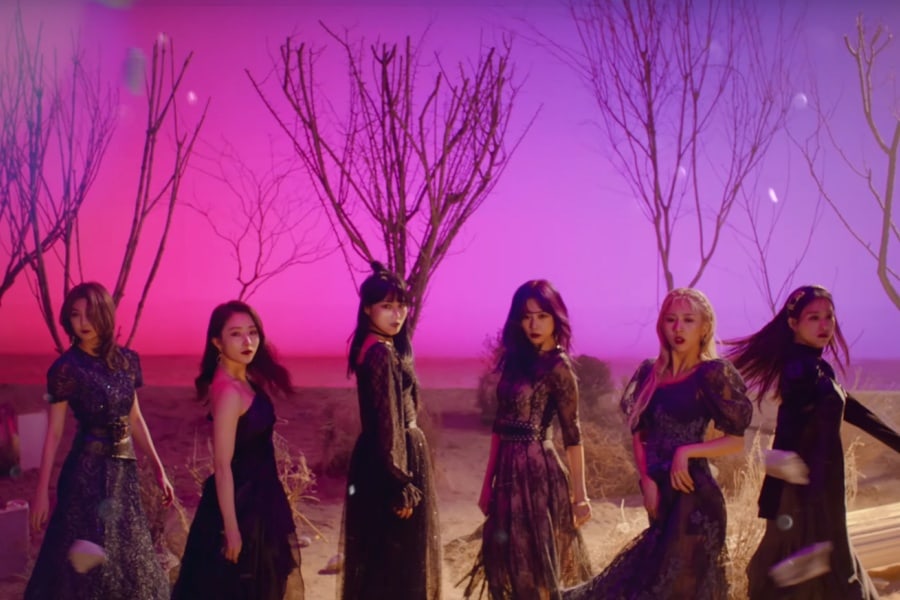
Watch Dreamcatcher's "Scream" music video with the sound off, and you can basically see the whole strategy. Medieval witch-hunt imagery, seven members in ritual robes, a chorus you can practically headbang to: this is a 걸그룹 (girl group) built on rock guitars, not the standard 3rd-generation K-pop bright-and-bubbly template. When Happyface Entertainment launched Dreamcatcher in January 2017 as a rebrand of the failed MINX unit, most industry insiders (myself included) assumed the metal-adjacent 콘셉트 (concept) would burn out inside two comebacks. Six years and one company spin-off later, that call looks worse every quarter.
Why Scream and Dystopia: The Tree of Language actually mattered
"Scream," dropped February 18, 2020, was the title track for Dreamcatcher's first full-length album Dystopia: The Tree of Language. That "first full album" line matters more than it sounds. Almost every 3세대 (3rd-generation) K-pop group debuts, releases three or four mini-albums, and cashes in with a proper LP well before year three. Dreamcatcher took over three years and eight mini-albums to get there. In a 컴백 (comeback) cycle where labels usually rush a full album to lock down music-show wins, Happyface let the group build up seven members' worth of storytelling first, closing out the Nightmare series with "Deja Vu" and only then opening a new chapter with witch-hunt imagery. That patience is unusual for a small-agency K-pop act, and it is the first sign the group was being managed differently from the standard playbook.
The appeal of "Scream" as a lead single is not the hook, it is the sonics. Rock guitars, electronic drops, and rap verses stacked inside a K-pop chorus structure. Producers Ollounder and Leez, who have been the group's primary sound architects since debut, understand something most K-pop production teams still get wrong: rock does not have to mean "male band nostalgia." It can be the sound of 걸그룹 stagecraft when you actually invest in the choreography that goes with it. Fans quietly noticed that the "Scream" MV even blocked out choreography space for member Handong, who was finishing Idol Producer promotions in China. That was a deliberate signal to Nightmares (the fandom) that the group is coming back to seven, not permanently six.

The 록 (rock) girl group lane that 2NE1 left empty
Here is a piece of industry math that gets lost in fan discourse. When 2NE1 officially disbanded in November 2016 (just weeks before Dreamcatcher's January 2017 debut), the K-pop industry lost the only proven 걸그룹 slot for "loud, aggressive, non-cutesy" as an aesthetic. 4Minute had gone the same year. Everyone else, from Red Velvet to TWICE to GFRIEND, was doubling down on either innocent-concept work or the still-nascent girl-crush lane that BLACKPINK would go on to define as high-fashion swagger. Nobody was actually making rock-flavored K-pop for girl groups, because the received wisdom was that Korean female idol fans wanted synth-pop and cinematic ballads, not guitars.
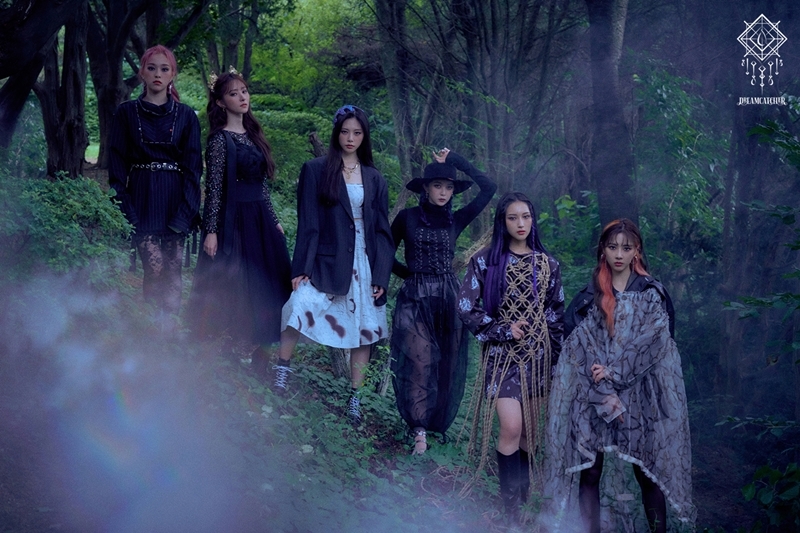
Dreamcatcher's bet, and it is the bet Happyface's small-agency status forced on them, was that if you cannot compete with HYBE or SM budgets for the mass market, you build a devoted subculture instead. Rock plus horror-fantasy storytelling. Seven members each assigned a specific nightmare. Music videos that connect across releases into a wider mythology (Nightmare series, Dystopia series, Apocalypse series). It is closer to how a metal band builds a discography than how a K-pop label plans a girl group. Because 2NE1 vacated the loud lane and nobody else wanted it, Dreamcatcher basically had no direct competitor for five straight years. That is not a colorful marketing story, it is a real 콘셉트 moat.
Why 70 percent of the 팬덤 lives overseas (and what that costs at home)
Talk to anyone who works Dreamcatcher's touring logistics and you will get the same rough number back: roughly 70 percent of the active 팬덤 (fandom) is international, not Korean. That ratio is inverted for most 3세대 K-pop girl groups, where Korean fans still make up the majority of album sales and lightstick purchases. For Dreamcatcher, Latin America and Europe are the real revenue engines. Their 2019 and 2022 European tours sold out repeatedly, sometimes ahead of much bigger Korean acts, while Seoul concerts have historically been smaller-venue affairs at places like Yes24 Live Hall or Blue Square.
The industry read on this is complicated. On one hand, overseas dominance is a badge of honor and a real revenue base (touring margins in Europe often beat music-show promotion economics at home). On the other, weak Korean chart performance keeps the group off the top-tier variety and music-show bookings that build the Korean mainstream 팬덤. Rock and metal-adjacent K-pop simply does not fit Korean radio programming or the family-friendly K-idol variety format that dominates KBS, MBC, and SBS weekend slots. That is why "Scream" earned enthusiastic reviews from Western K-pop press but never cracked a proper Korean music-show trophy in 2020. The trade-off is baked in.
The 2020 Dreamcatcher Company spinoff (rarer than fans realize)
In January 2020, weeks before "Scream" dropped, Happyface Entertainment officially spun off Dreamcatcher's business into a dedicated subsidiary called Dreamcatcher Company. On paper that reads like a routine corporate restructure. In K-pop industry terms, it is anything but. Small-agency idols rarely get a dedicated company built around them mid-contract, and even more rarely do the members themselves negotiate any real equity or profit-share position in the spinoff. Members reportedly took an active role in the transition and gained meaningful stake in the new entity's success, which is closer to how HYBE eventually structured its Bang Si-hyuk-plus-BTS ownership dynamics than to how a typical mid-tier K-pop label operates.
Why this matters: Korean fans and international press love calling a group "self-produced" whenever they write a lyric or two. Real self-production is a legal and equity question, not a songwriting credit. Dreamcatcher's 2020 spinoff, done at the exact moment the group launched its most ambitious album to date, gave the members something almost no small-agency K-pop act ever gets: skin in the game. The seven-year contract cliff, which typically kills small-agency groups when members leave for bigger labels, hits differently when the members partially own the label they would be leaving.

Why Nightmares skew 25-plus, and what the industry misses about it
The K-pop fandom stereotype is teenage girls screaming at a music show pre-recording. For most 3세대 K-pop girl groups, that stereotype is roughly correct: peak fandom age is 14 to 22, driven by school-age fan cafes and Weverse-native engagement. Nightmares are different. Anecdotal reports from InSomnia and Nightmare fansite polls, plus the visible demographics at overseas Dreamcatcher tour dates, point to a 팬덤 skew of 25 to 35, considerably older than typical for their generation. A meaningful chunk of the fanbase came in via rock and metal adjacency (people who already listened to Evanescence, BABYMETAL, or Nightwish), not through mainstream K-pop entry points.
Why this appeals: an older 팬덤 spends differently. Merchandise, tour tickets, physical album box sets, artist-designed lightstick accessories: Nightmares reliably drop money on premium-tier items rather than mass-buying entry-level photocards. That is a real business advantage for a smaller label. It also means the fandom age curve is durable. Where teen fandoms tend to churn as members age out and switch groups, an older, taste-driven 팬덤 stays loyal because the loyalty was built on the sound (rock, metal, and cinematic storytelling), not on parasocial teen-idol dynamics. The Dreamcatcher case, six years in and still touring internationally, is basically proof-of-concept for the "small agency plus dedicated older fandom plus rock aesthetic" playbook. It is the model most 4세대 girl groups are still not brave enough to copy.
Feel the K-pop concept universe for yourself
If Dreamcatcher's medieval nightmares, seven-member mythology, and 록 sonics pulled you in, the wider world of Korean pop culture is worth exploring the same way: with the details that make each 콘셉트 hit different. The Daebak Box ships hand-picked Korean snacks, K-pop merch, and pop culture goods straight from Seoul every month, so you can settle in with a proper Nightmare marathon of Scream, Boca, and MAISON without leaving your couch.


