


Table of Contents
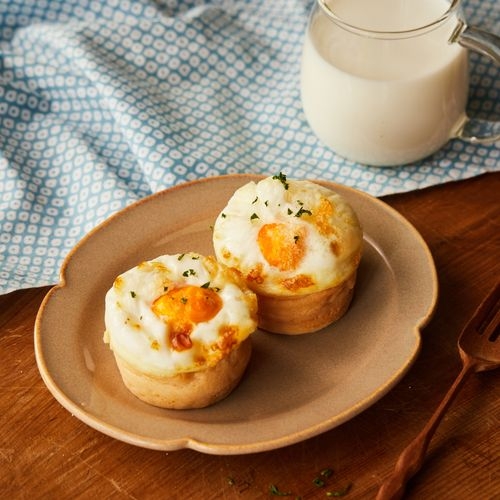
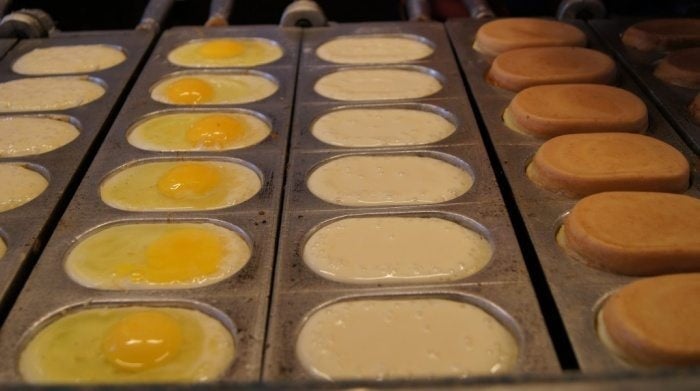
Every Korean winter has a soundtrack, and it is the click of a metal ladle against a black steel griddle at 7:30 in the morning outside 신촌 station. That is a 계란빵 (gyeran-ppang, egg bread) vendor pouring batter, cracking a whole egg into each oval mold, and clamping the whole rack shut before the commuter crowd has time to check their phones. Foreign coverage of Korean street food loves to write about spicy 떡볶이 and pungent 순대, and it almost always skips the one snack that Koreans actually buy the most of in December: the sweet-savory little egg loaf that fits in one hand and does the job of a full breakfast.

Where 계란빵 actually came from (not Myeongdong, actually Inha University)
Most English blogs will tell you 계란빵 is a "traditional" Korean snack, which is exactly the sort of lazy framing that erases who invented it. The verifiable origin is 1984, at a cart outside the back gate of 인하대학교 (Inha University) in 인천, run by a vendor who was trying to figure out how to serve a broke college student a hot breakfast for the price of a single egg. That is the entire creative brief: one egg, one small loaf, one warm object you can eat while walking to a 9 a.m. class. The idea spread up the 1호선 line to Seoul within about three years, first through 명동 and 신촌 because those were the two neighborhoods with the highest ratio of hungry students to portable calories, and by the early 1990s it was a fixed feature of the winter cart circuit. Nobody trademarked it. Every vendor tweaked the batter ratio. That informal, un-branded evolution is why every 계란빵 tastes slightly different depending on which subway station you exit.
Why the one-hand single-bite design is engineered for Korean commuting
The appeal of 계란빵 is not the flavor exactly. Plenty of things are sweet and savory. What Koreans respond to is the geometry: it is the rare street food that gives you carbs, complete protein, and a small hit of sugar in a single object you can hold in one gloved hand without needing a napkin, chopsticks, or a place to sit. That matters because Korean winter mornings are engineered around the subway commute, and no commuter is going to wrestle with a bowl of 어묵탕 on the platform. A vendor wraps a fresh 계란빵 in a small paper sleeve, hands it over hot, and the customer keeps walking. That is the design brief the whole snack was optimized for, and it explains why 계란빵 sells hardest at 07:30 to 09:00 on weekdays outside subway exits, and again at 22:00 to 23:00 on the way home from 학원 (hagwon) or the office.
The winter cart economy: 계란빵, 붕어빵, 호떡 as the same vendor's SKU rotation
Anyone who has walked past a 포장마차 in November has probably noticed something specific: the same vendor is usually cooking three products at once. 붕어빵 (bungeoppang, fish-shaped red bean cakes) on the left iron, 호떡 (hotteok, sweet syrup pancakes) on the flat top, and 계란빵 on the right rack. That is not incidental. Korean street cart operators are running a seasonal business that only opens roughly October through March, and the three-product mix is a deliberate hedge. 붕어빵 is the cheapest to produce and moves fastest. 호떡 has the highest margin because sugar and cinnamon cost almost nothing. 계란빵 is the premium SKU, because the whole egg cost baked in makes it the tallest ticket item on the cart, usually 2,500 to 3,500 won a piece in 2025 versus 1,000 for a 붕어빵. Vendors who work this rotation right can clear meaningful income during the six-month season, then vanish for the summer, which is why the same corner of 종로3가 will have a completely empty sidewalk in July.
The 2015 to 2020 franchise boom: 계란한번 and the nostalgia trade
Here is the piece of the story every food-blog explainer misses. Around 2015 to 2020, Korea's franchise ecosystem noticed that millennial office workers were paying a premium for hyper-nostalgic street food in a clean brick-and-mortar setting instead of standing on a cold sidewalk. Chains like 계란한번 (Gyeran Hanbeon), 계란공방, and 계란빵놀이 opened dozens of small storefronts in university districts, mainly 홍대, 건대, and 이대, positioning 계란빵 not as a 2,000-won street snack but as a 4,500-won cafe item with add-on cheese, corn, potato, or bacon. That reframing worked because it caught the exact moment when 20-something Koreans were rediscovering 1980s and 90s snack food as an aesthetic (그때 그 시절, "back in that era"), and 계란빵 photographed beautifully on Instagram thanks to the sunny yolk sitting on top of the bread. The franchise wave essentially doubled the addressable price ceiling of the category in five years, which is a rare thing to pull off for a snack that was originally invented to be cheap.
Post-COVID: how the mall food court doubled the unit price
Then COVID hit, street cart traffic cratered in 2020 to 2021, and 계란빵 did the thing very few Korean street foods have managed: it made the jump indoors, into the food halls of Starfield 하남, COEX, and 여의도 The Hyundai. The mall version costs more, 5,000 to 6,000 won a piece as of 2025, because real estate at Starfield is roughly ten times the per-square-meter rent of a sidewalk corner in 신촌, and that gets passed straight to the customer. What is interesting is that shoppers pay it. The premium 계란빵 stall at COEX regularly has a 20 minute line on weekends, which tells you something about Korean consumer psychology: people are not paying for the bread, they are paying for a warm indoor version of a memory. That is the same industry mechanic that let Paris Baguette turn cheap 단팥빵 into a 3,500-won cafe product, and it is how 계란빵 completed the rare journey from cart to mall in about seven years.
How to make 계란빵 at home: the 20-minute muffin-tin cheat
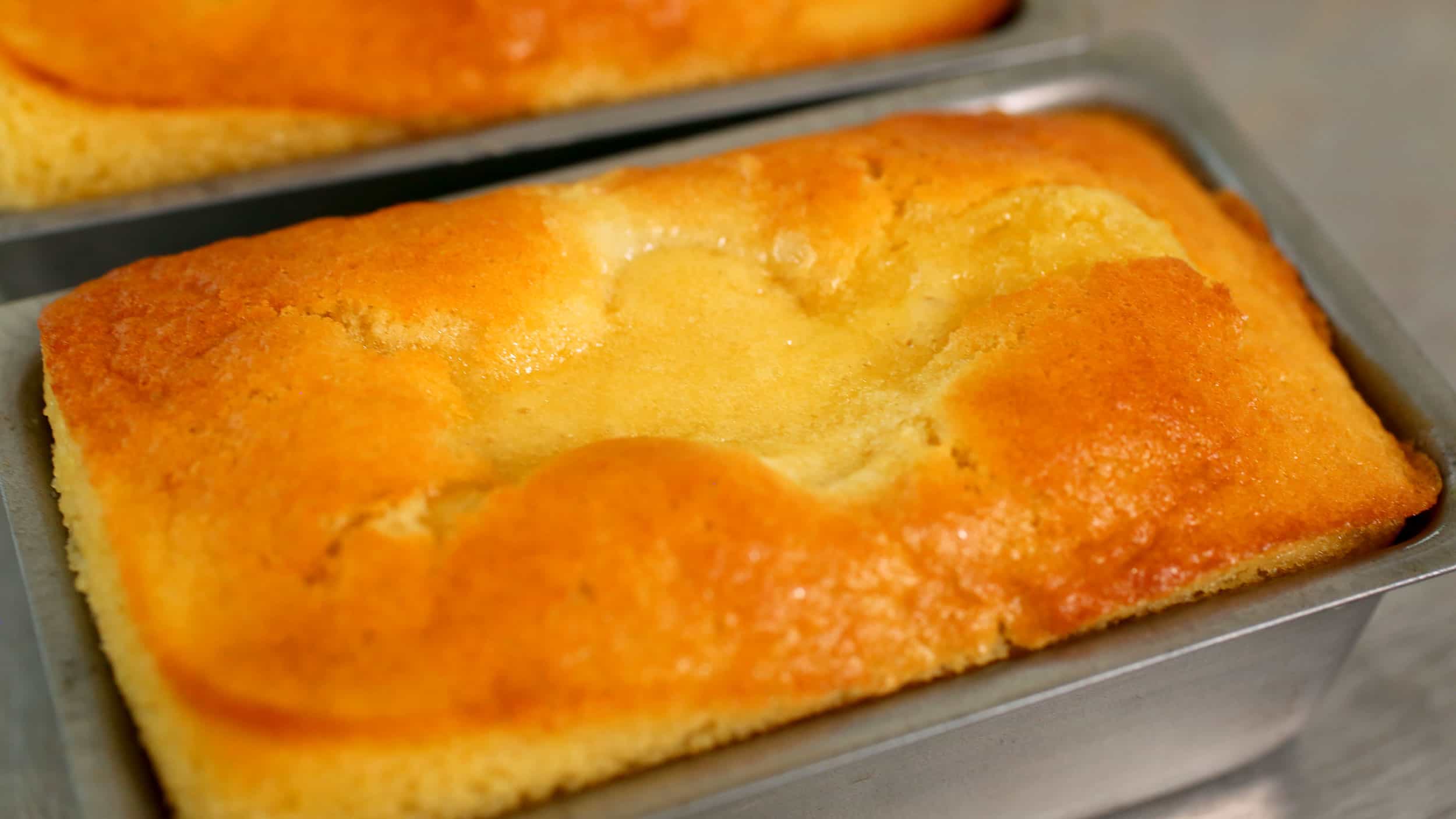
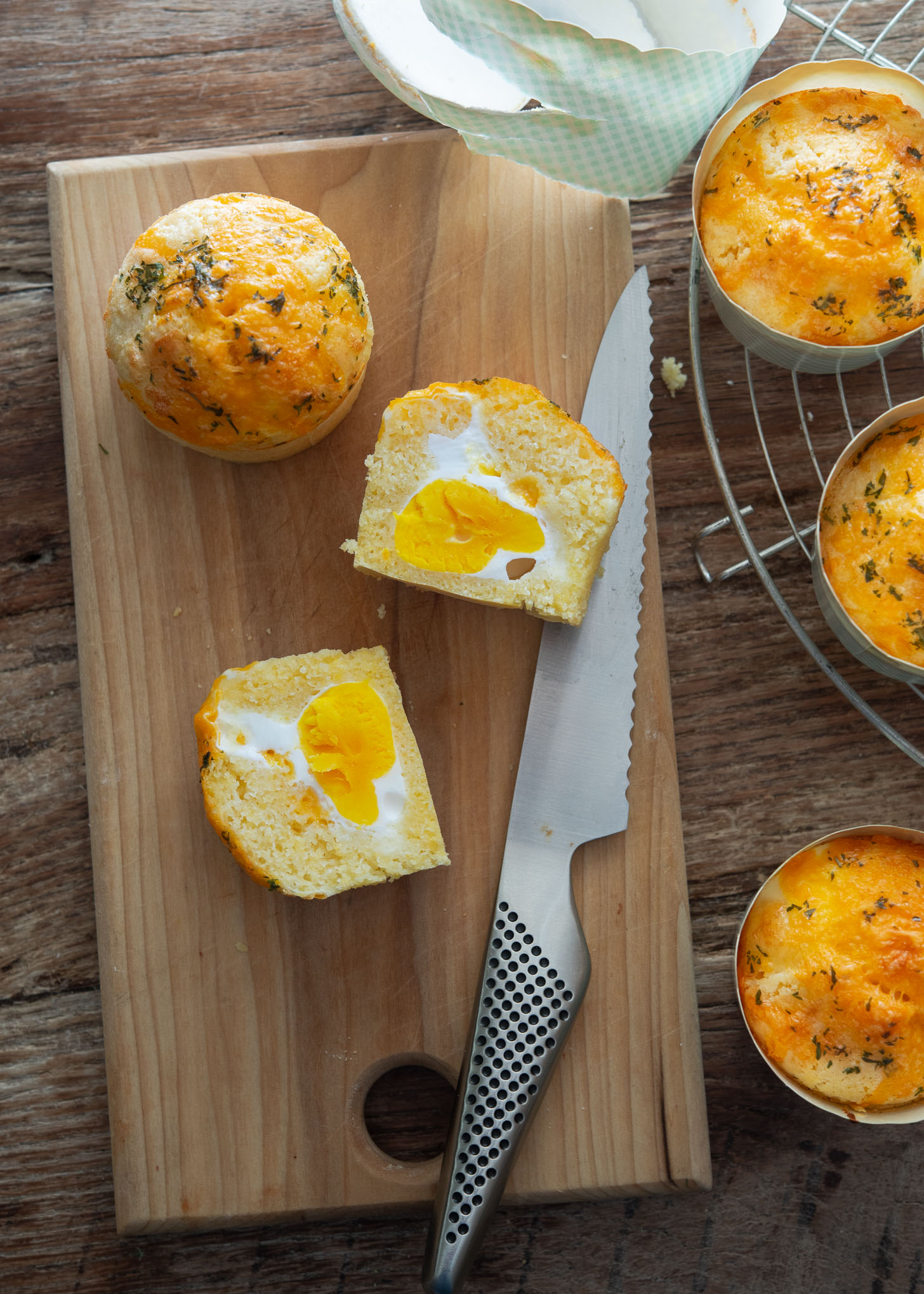
You do not need the vendor's specialized rack. A standard muffin tin does the job, which is exactly how Sue at My Korean Kitchen and Holly at Beyond Kimchee both got around the equipment problem. The batter is embarrassingly simple: about 3/4 cup of self-rising flour or pancake mix, 1/3 cup of sugar (less than a Costco muffin, more than a sandwich bread), a pinch of salt, 1 large egg for the batter, 1/3 cup of milk, 1/3 cup of melted butter, and a splash of vanilla. Brush a muffin tray with butter, spoon batter to fill each cup one third of the way, crack one small egg on top of each, hit it with a pinch of salt, and bake at 180 degrees C for about 25 minutes until the egg white sets but the yolk stays slightly runny. Cheese, chopped bacon, and a dusting of dried parsley are the three most common Seoul-style toppings, and skipping the vanilla is the number one home-cook mistake because that is the aroma that makes it smell like it came from a 명동 cart.
Why CNN put 계란빵 on the 50 best breads list
In October 2025, CNN slotted 계란빵 into its "50 of the world's best breads" list alongside French baguette, Italian ciabatta, and Mexican tortilla, describing it as "buried treasure within every loaf." The interesting question is why now. 계란빵 has been on Seoul carts for 40 years. The answer is that the last five years of K-content, from Squid Game street-food shots to Netflix's Street Food Asia episode on Seoul, forced Western food editors to actually look at the winter Korean cart circuit instead of just the summer barbecue restaurants. Once they did, the design case for 계란빵 became obvious: it is the most defensible cold-weather portable breakfast anyone in the world has invented in the last 50 years, and every Korean grandmother could have told you that in 1990. The pun-worthy 계란빵 finally got the credit it deserved, just about four decades late.
Explore Korean Snacks with Daebak
Love Korean food? Get authentic Korean snacks and ramen delivered straight to your door with the SnackFever Box by Daebak.


