

Table of Contents
Ask any Korean over 30 to name the most visually striking festival in the country, and you will get one of three answers: the Boryeong Mud Festival, the Andong Mask Dance Festival, or the Jinju Namgang Yudeung Festival (진주 남강 유등축제). In March 2026, the Ministry of Culture, Sports and Tourism officially named those exact three as Korea's new global festivals, so the instinct was correct. But if you asked me, as someone who has spent more than a decade working around K-content marketing and Korean regional tourism, the Jinju lantern festival is not just on that list. It is the one that photographs the best, the one with the longest verifiable history, and the one whose entire visual identity is built for the phone screen without ever having tried to be.
The 1592 Origin Is Real, Not Marketing Fluff
Most Korean festivals with a headline like "400 years of tradition" are stretching the truth. This one is not. In October 1592, during the first stage of the 임진왜란 (Imjin War, the Japanese invasion of Korea), General Kim Si-min ordered soldiers inside 진주성 (Jinjuseong Fortress) to float oil lanterns down the Namgang River. The lanterns had two jobs. First, they were a tactical obstacle, a wall of light on the water designed to deter Japanese troops from wading the river at night. Second, they were communication devices, a way for soldiers inside the fortress to signal loyal support units outside and to send small notes to the families they had left behind in the surrounding villages. Korean military historians take this seriously. The lantern strategy is documented in Joseon-era battle records, not invented for a tourism brochure.
What makes the origin story matter for a visitor in 2026 is that the modern festival is not a costume-play revival. It is the continuation of a floating-lantern ritual that villagers on the Namgang kept alive as a memorial for the war dead, then formalized into a public play in 1949, and finally turned into a regional festival in 2002. The line from military signal to public spectacle is unusually clean, and it is why the festival gets away with framing itself as heritage rather than themed entertainment. Very few Asian festivals of this scale can trace themselves back to a specific dated battle. This one can.
Why It Photographs Better Than Any Other Korean Festival
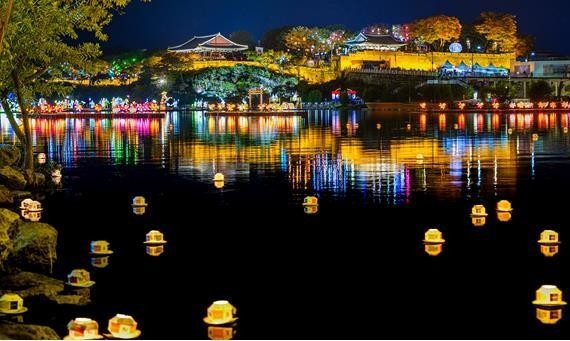
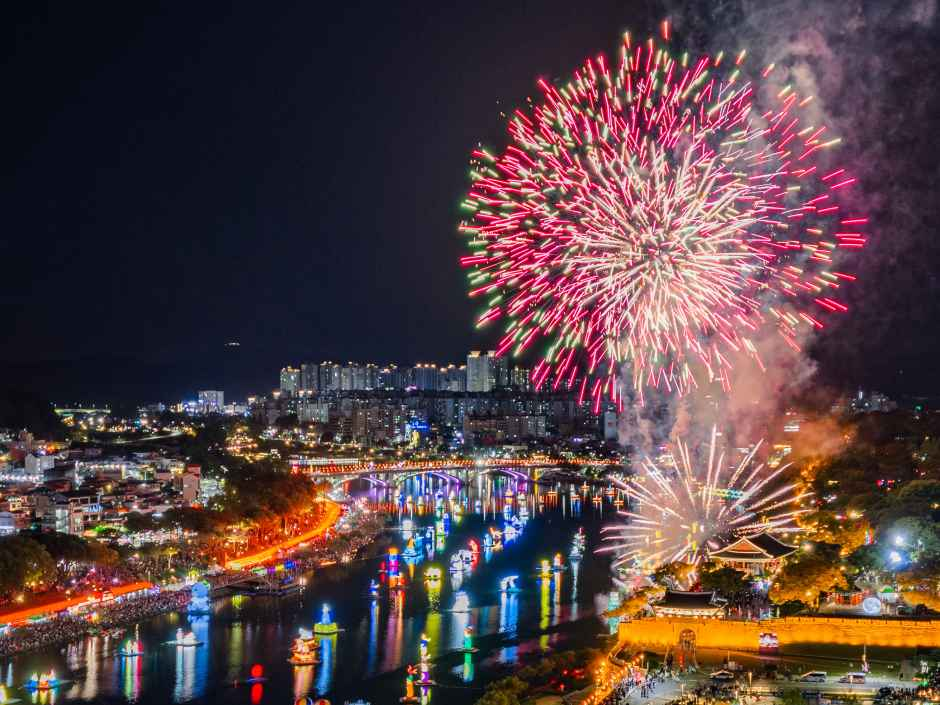
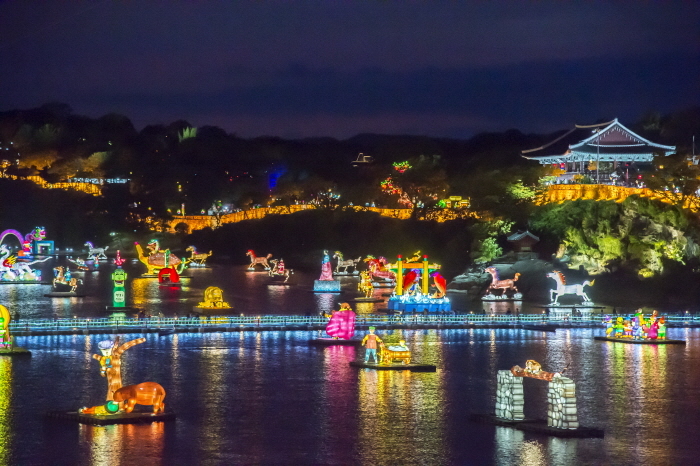
Here is the appeal point that Western travel writers keep missing. The Jinju Namgang Yudeung Festival is the only major Korean festival whose primary medium is light on water. That combination is technically hard to beat on a phone camera. Water reflects the lanterns, doubles the color, and softens the edges of a static night scene into something that reads as motion. You do not need a mirrorless camera to get a Namgang lantern shot that looks like a professional photograph. Any iPhone from the last five years will render it beautifully, and the algorithm rewards exactly this kind of image. That is why the festival's Instagram tag volume outpaces the Boryeong Mud Festival by a factor of roughly three during October, even though Boryeong draws bigger foreign crowds in absolute numbers.
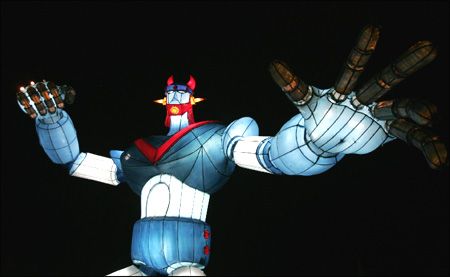
The second reason is scale. The riverbank installations under Jinjuseong Fortress stretch for more than a kilometer, and the largest lantern sculptures now push past 10 meters in height. When the festival lights the Han Dynasty court scene, the dragon parade, or the Nongae memorial lantern, you are looking at a physical object the size of a two-story house, glowing on a river with a Joseon-era fortress wall behind it. That composition does not exist anywhere else in Korea at this scale. Hanok villages photograph well in daylight, cherry blossoms photograph well in spring, but 인생샷 territory (the "life shot," the single photo you would use as your profile picture forever) is the Yudeung Festival's home turf.
The Chinese Lantern Controversy (2010 to 2016) Actually Matters
This is the part of the Jinju story that never makes it into English-language travel guides, and it is one of the more instructive Korean regional-tourism case studies I know. Between roughly 2010 and 2016, the festival organizers were quietly importing a growing share of their large exhibition lanterns from Chinese workshops in Sichuan and Zigong. The Chinese lantern industry is genuinely world-class, the pricing was aggressive, and for a mid-tier city like Jinju with a limited budget, the math was hard to argue against. The problem was that Korean lantern craftsmen in Jinju (which had been the traditional center of yudeung making since the Joseon era) started losing commissions to imports, and when the local craft community went public in 2015 and 2016, the backlash was immediate.
What changed the equation was not just cultural pride. Zigong, the Chinese lantern city, had launched its own competing international lantern festival, and Korean media picked up the story that Zigong was branding Jinju as a client. That framing was politically radioactive in a year when Korea-China cultural tensions were rising over K-content bans. By 2017, the Jinju festival committee had publicly pivoted to 100 percent Korean-made lanterns, restored production contracts to local artisans, and rebuilt the festival's marketing around the phrase 진주 유등 (Jinju yudeung) as a domestic craft category. The lesson for anyone watching Korean regional festival economics: sourcing story is not a soft asset, it is the entire brand.
The Numbers Behind the Spectacle
Roughly 2.5 million visitors attend the festival across its two-week October run, a figure the Jinju city government has been reporting consistently since around 2018. That number is worth sitting with. Jinju is a city of about 340,000 people. For two weeks, its population effectively multiplies by eight. The festival's annual operating budget sits at around 12 billion won (roughly 8.5 to 9 million dollars, depending on exchange), of which the city itself covers a majority through Jinju municipal funding, with the remainder split between the Ministry of Culture and private sponsorship. That is a serious municipal outlay for a city Jinju's size, and it only makes sense if the return on the local economy justifies it.
It does. The Jinju Chamber of Commerce estimates that local F&B, hotel, and rental car revenue jumps by roughly 40 percent during festival weeks compared to the same weeks in September or November. Real estate agents in the Chogye-myeon and Sangdae-dong districts (both within walking distance of the riverfront) note short-term rental rates that triple during the run. Sancheon and Sacheon, the two neighboring cities the March 2026 Ministry designation specifically named as beneficiaries of extended festival tour packages, saw double-digit hotel occupancy growth in the last two seasons purely on Jinju spillover. This is the pattern that made the Ministry give the festival a global designation in the first place. It is one of the few Korean regional festivals whose economic impact is measurable to the neighborhood block level, and that is the case for scaling it internationally.
What To Actually Do When You Get There
The 2026 festival runs October 3 to 18, with the core lantern displays lit from sunset (around 6:30 pm in early October) to 11 pm. The festival grounds cover roughly 1.4 kilometers of riverbank on both sides of the Namgang between the Jinju Bridge and the Cheonsu Bridge, with the Jinjuseong Fortress interior functioning as the daytime historical anchor. The single-day admission is 10,000 won for adults and 5,000 won for students aged 7 to 18, which is unusually reasonable for a festival of this scale. Do not skip the ticketed area. The floating lantern corridor is inside the paid section, not the free riverbank walk.
The three things you actually need to do, in order. First, walk the Jinjuseong Fortress interior in daylight (from about 3 pm) so the battlefield context is fresh when the lanterns light up at sunset. The 1592 Battle of Jinjuseong is where the whole story starts, and the fortress itself is one of the best-preserved late Joseon military sites in the south. Second, buy a wish lantern (typically 3,000 to 5,000 won), write on it, and float it yourself. Watching your own paper lantern drift into a river full of thousands of other people's lanterns is not something Instagram translates. Third, cross the pontoon bridge that the festival lays across the river during the run. That bridge is the single best photo vantage point because it puts you inside the lantern corridor rather than beside it, and the reflection angles change every 20 meters.
Getting to Jinju from Seoul is a 3.5-hour KTX ride via Jinju Station, or a 4-hour intercity bus from Seoul Nambu Terminal. From Busan it is closer to 90 minutes by bus. Book accommodation at least six weeks out. The city sells out during the peak festival weekends, and the hotels that stay bookable are usually the ones with obstructed views. If you can, aim for the second week of the festival (around October 10 to 14) when the weekday crowds are lighter and the fireworks schedule is at its most complete. That is when you get the festival at its best without the two-hour queues at the riverbank entry gates.
Explore Korean Culture with Daebak
Bring a taste of Korea home between festival trips. The Daebak Box ships curated snacks, drinks, and lifestyle goods from Korea straight to your door every month, hand-picked by our team in Seoul.


