


Table of Contents
The SnackFever interns' favourite Korean snacks list is exactly the kind of internal document you never see published, and after a decade sitting through K-content industry meetings where subscription-box curation is over-optimized by consultants, it is also the kind of list I trust most. When the people packing your box every month volunteer what they actually reach for at the 편의점 (convenience store) after work, you get a much more honest read on what a Korean 과자 (snack) aisle in 2018-era Seoul actually rewarded. This is the roster of picks the team put together, with the industry read on why each one earned its place, and what the shape of the list tells you about how Daebak curates SnackFever.
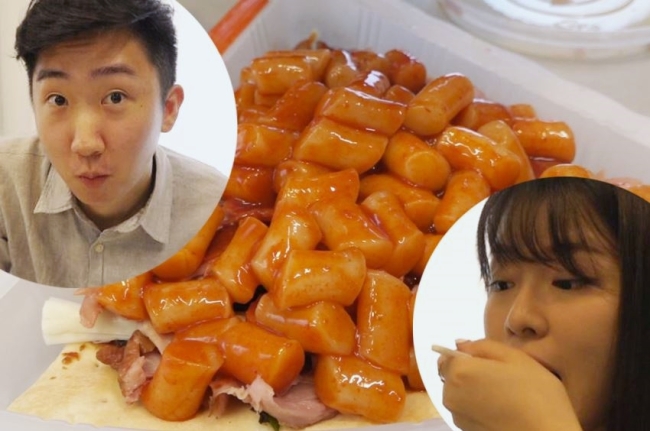
Sweet Sticks and Cookie Bites: Where Angela, Catherine, and Lindsey Landed
Two interns (Angela and Catherine) both landed on Pepero, which is not the boring pick that a casual outsider would call it. Pepero is Lotte Confectionery's chocolate-coated biscuit stick launched in 1983, and roughly 65 percent of its annual sales concentrate around November 11 (Pepero Day). That is a 40+ year marketing engineered anniversary that Lotte's rivals still cannot replicate, and it is why a $2 stick snack pulled 42.6 billion won in first-half sales in 2025. Angela's line, "Super cheap, lots of flavors and SO. GOOD.", is the accurate customer-side read on why Pepero sits at the top of every SnackFever curation shortlist: it is one of the few snacks that hits price sensitivity, variety, and gifting occasion in a single SKU. Catherine's addendum about the EXO faces on the packaging points at the other thing Pepero does well, which is running limited-edition K-pop collabs that convert idol fandom into snack purchases (Lotte has run these with EXO, BTS, ITZY, and NewJeans over the years).
Lindsey chose Lotte Kancho, the bite-sized cookies filled with chocolate. Kancho is the sneakier pick because it is what Korean parents actually buy for kids as an everyday 간식 (snack), so its appeal is generational muscle memory rather than TikTok momentum. Nobody chases Kancho. It is always there, and that is exactly why it belongs in a rotational subscription box: it is a quiet baseline that reminds subscribers of Korean childhood without doing the heavy lifting of being the month's headline snack.
The Chip Kingdom: Why the Team Kept Coming Back to Salty Crunch

Half the team's picks land in the chip category, and the industry reason is that Korean chip R&D has genuinely out-innovated the Western market for a decade. Tess picked Maple Honey Butter Chips, the special-edition run of Haitai Calbee's original Honey Butter Chip, which in 2014 triggered a national supply shortage so severe that convenience stores capped purchases at one bag per customer and Twitter dialogue compared buying a bag to buying illicit drugs. The Honey Butter Craze was not a fluke of virality. It was the first Korean chip to explicitly cross the sweet-savoury line at national scale, and it opened the door for every subsequent flavor experiment in the aisle. Tess's read ("crispy, sweet, and salty, perfect for snacking on during movies or studying") is exactly the multi-occasion category the SnackFever curators think in.
Tiffany and Ashley both picked Orion's Corn Soup Turtle Chips, the four-layer 꼬북칩 that Orion took eight years to develop before launching in March 2017. Turtle Chips are now Orion's flagship overseas snack, on shelves in Costco UK, Carrefour France (1,200 stores), and as of late 2025 at SPAR in South Africa and retail partners in the UAE. Ashley's one-liner ("Reminds me of childhood") is the appeal point most Western coverage misses. Turtle Chips do not compete on flavor intensity. They compete on a four-layer 쫄깃-then-crunchy mouthfeel that stackable chip formats in the US market have never delivered. It is a texture play, and it is why Tiffany described the bag going fast.
Lexie chose 꼬깔콘 (Kkokkalcorn), the cone-shaped Lotte Wellfood corn chip that pulled 41.2 billion won in H1 2025 sales, ranking sixth on Korea's top-ten snack list. She explicitly ties it to her first Korea trip, buying bags at Seokchon Lake at night. That specificity is worth flagging: Kkokkalcorn's appeal in Korea is inseparable from the ritual of putting one on each fingertip and eating them off, which is a snack-as-play behavior Western chip brands do not engineer for. Kalina's Nongshim Shrimp Chips (Saewookkang) pick rounds out the aisle. Saewookkang is the number one selling snack product in Korea, 57.8 billion won in H1 2025, launched in 1971 and still holding the top spot for a reason: four raw shrimp per 90 gram bag steamed and fried, and a crunch profile that pairs correctly with cheap Korean beer. Kalina's "just the right amount of flavour, light but nice crunch" is the exact under-flavored specification that Saewookkang has held for 55 years, which is what makes it the aisle's baseline chip.
Sweet-Fruit Snacks: The Category That Sneaks Up on You
Maegan picked Peach Jelly, the peach-shaped jellies that show up in seasonal SnackFever boxes. Anjelica picked Banana Kick, the melt-in-mouth corn puff with banana sweetness (Jungkook of BTS is a documented Banana Kick fan, which is not why she picked it, but is why the SnackFever team probably orders it in bulk). Britt picked Orion's Chewy Sour Candy (아이셔), the tart-then-more-tart candies whose name literally means "oh it's sour", a native-Korean linguistic joke that translated snack packaging never manages to carry. Nicole picked Banana Rice Crackers, which is the second banana pick on this list and worth pausing on: Korean snack aisles run heavier on banana flavor than any other Asian market, and the reason traces back to a specific 1974 moment (the government wanted people to drink more milk, bananas were still a luxury, Binggrae launched Banana Flavored Milk, and banana became the aspirational flavor that every subsequent snack brand chased).
The pattern in these four picks is that none of them are the aisle's headliner. They are the second-tier sweet snacks that Korean grandparents buy for grandchildren and college students buy for study snacks, and they are the exact texture-and-price segment that a rotational box needs to fill. If a curator only stocks Pepero and Choco Pie, subscribers get bored by month three. Peach Jelly and Banana Kick are the layer underneath that keeps the box interesting.
Drinks the Team Actually Grew Up On
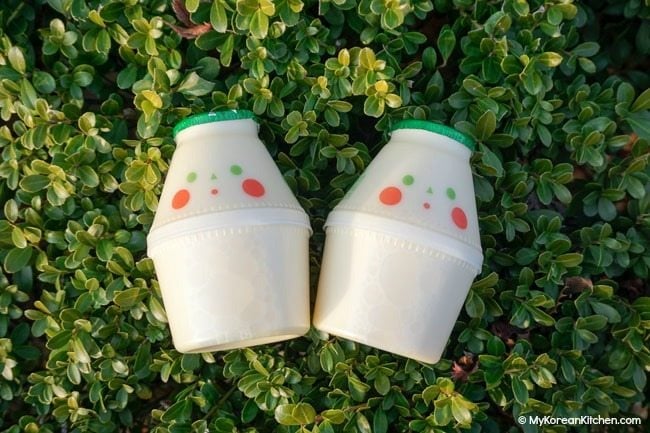
Stephanie picked Binggrae Banana Milk, which she qualified as "not really a snack, but so good." The correct industry read is that Binggrae Banana Milk is not just a drink either. It is the single most culturally significant packaged beverage in modern Korean history. Binggrae launched it in 1974 to solve the government's push to increase milk consumption at a moment when banana was still a luxury import, and the chubby plastic bottle was shaped after traditional Korean 달항아리 (moon jar) porcelain. Binggrae is currently pursuing national cultural heritage listing for that bottle, an effort that puts it in the same registry as Hyundai's Pony (Korea's first domestically developed car) and Geumseong's first washing machine. If you have never processed banana milk as a heritage-tier product, that is because Western coverage has never treated it as one. Every K-pop idol variety show clip you have ever seen with a Binggrae bottle in frame is a placement earned by that heritage weight, not a random product shot.
Kyle picked Aloe Vera Drinks, and this is the pick that reveals the most about SnackFever's demographic. Aloe vera juice in Korea has an early-2000s cafe association (특히 홍대 카페 scene) that older millennials remember distinctly and Gen Z has quietly rediscovered as clean-label functional beverage. Kyle's line ("perfect amount of sweet, could empty a couple of bottles at a time") is the exact use pattern that makes aloe vera drinks a natural pair with spicy snacks in the same box: the drink cools the palate after tteokbokki chips, which is the format play the SnackFever curators lean into.
Convenience Store Sit-Downs: When a Snack Is Really a Meal
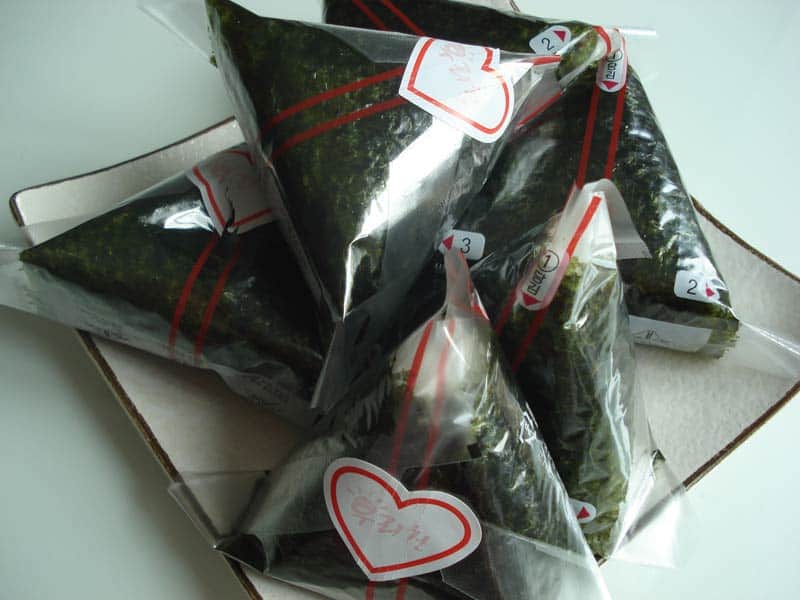
Ryann picked triangle 김밥 (samgak-gimbap), and immediately hedged with "not sure if it constitutes a snack." She should trust her instinct. Triangle gimbap is the exact 편의점 category that blurs the snack-versus-meal line, which is the whole reason CU, GS25, and 7-Eleven Korea invented an entire cold-cabinet architecture around it. The wrapper engineering (two thin plastic sheets sandwiching the seaweed to keep it crispy) was originally a Japanese invention, but Korean chains iterated on the fillings until tuna mayo, bulgogi, kimchi-jeon, and spicy chicken variants outperformed the Japanese originals. Sarah's Chicken Hot Gangjeong pick sits in the same category. It is a sweet-savoury-spicy protein snack that reads as an entire meal after 10 PM. The reason Sarah is "sad that the stores near me don't sell it" is that the US Korean grocery import pipeline for that specific format is genuinely broken, and one of the operational reasons SnackFever exists is to route around that gap.
The Viral Trend Pick: Sindangdong Tteokbokki Chips
Samantha's single-line pick ("These are the bomb") for Sindangdong Tteokbokki Chips is the sleeper industry entry in this whole list. Haitai's Sindangdong Tteokbokki Chips are engineered to replicate the sweet-spicy gochujang flavor of tteokbokki (Korean street food's most iconic dish) in a chip format, using Sunchang gochujang paste to hit the flavor authenticity that other spicy-chip attempts miss. What makes this pick interesting from a curator standpoint is that it captures the exact moment in mid-2018 when Korean snack R&D moved from "add a familiar flavor to a chip" (honey butter, corn soup) to "recreate an entire street food dish in a chip" (tteokbokki, samgyeopsal, dakgalbi). That transition is the thing that has kept Korean chip innovation running ahead of Western brands, and SnackFever's job is to catch each new "street food translated into a chip" as it launches. Samantha spotting Sindangdong as her top pick in 2018 was, in retrospect, the team catching the wave early.
What This List Says About How Daebak Curates SnackFever
Read the 15 picks together and the shape of the box gets obvious. Two picks each for Pepero and Turtle Chips (the pop culture engines). Multiple picks for banana-forward flavors (Kick, rice crackers, milk) because banana is Korea's aspirational sweet note. A single-pick each on Kkokkalcorn, Saewookkang, and Sindangdong Tteokbokki Chips, which are the three most historically significant chip products of the last 50 years in Korea. A slot for a convenience store hot food (Chicken Hot Gangjeong, Triangle Kimbap). A slot for a heritage beverage (Binggrae Banana Milk). And a slot for a sleeper-hit tteokbokki chip that would go on to define the next decade of chip R&D. That is not a random affinity list. It is the exact profile of a well-designed subscription box, which is what curator-led boxes tend to look like when the curators are the same people opening the packaging on the receiving end. Industry studies of curation-driven vs random-sample subscription boxes have consistently found 15 percent higher retention on curator-led selections, and this is why: the people picking the snacks are the people who would cancel if the picks got boring.
The other thing the list tells you is what Korean 과자 (snack) culture actually looks like at ground level. It is not premium yakgwa boxes or Michelin-adjacent dessert bars. It is a two-generation deep muscle memory for specific brand SKUs (Pepero, Saewookkang, Choco Pie, Binggrae Banana Milk) plus a fast-moving upper layer of experimental chip R&D (Turtle Chips, Tteokbokki Chips, Honey Butter) plus a base of quiet everyday cookies and jellies that nobody Instagrams but everybody eats. The interns picked from all three layers, which is what makes their list read like an accurate map of the aisle rather than a top-ten clickbait roundup. How many have you tried?
Get These Same Snacks Delivered
If reading through the intern picks has you wanting to try the same rotation, the SnackFever Box by Daebak ships a curated selection of these Korean snacks straight to your door each month, put together by the team that made this list.


