


Table of Contents
Anyone who has watched Korean prime-time TV in November knows the strange, quiet feeling that settles over the country when the holiday CFs (광고, gwang-go, commercials) start airing. These are not Super Bowl-style spectacle ads engineered to sell a widget in thirty seconds. Korean 명절 (myeongjeol, holiday) commercials are short films, often ninety seconds to three minutes long, with production budgets that routinely clear ₩500 million and cinematography that rivals K-drama pilots. They melt hearts because they are engineered to. After more than a decade watching this industry closely, my read is that Korea's holiday CF tradition has quietly become the most sophisticated emotional-storytelling ad format in Asia, and four commercials in particular capture why the whole world eventually catches on and cries.
Why Korean Holiday CFs Hit Different
The industry mechanic worth understanding first is that Korean 광고 agencies treat 추석 (Chuseok, Korean Thanksgiving), 설날 (Seollal, Lunar New Year), and Christmas as three distinct emotional registers, not as one generic "holiday season." Chuseok CFs lean on 정 (jeong, the deep affection Koreans carry for family and hometown), Seollal CFs lean on generational continuity and 세배 (sebae, New Year bows), and Christmas CFs lean on urban loneliness dissolving into connection. Western holiday ads mostly stack product shots on top of an emotional bed. Korean holiday CFs invert the ratio: the film is 90 percent story, and the product often does not appear until the last five seconds, sometimes not at all. This is what makes them so effective. Global viewers who stumble on them via YouTube reruns are not being sold to; they are being told a story that happens to end with a logo.
1. CJ CheilJedang Bibigo: The Chuseok Homecoming Film
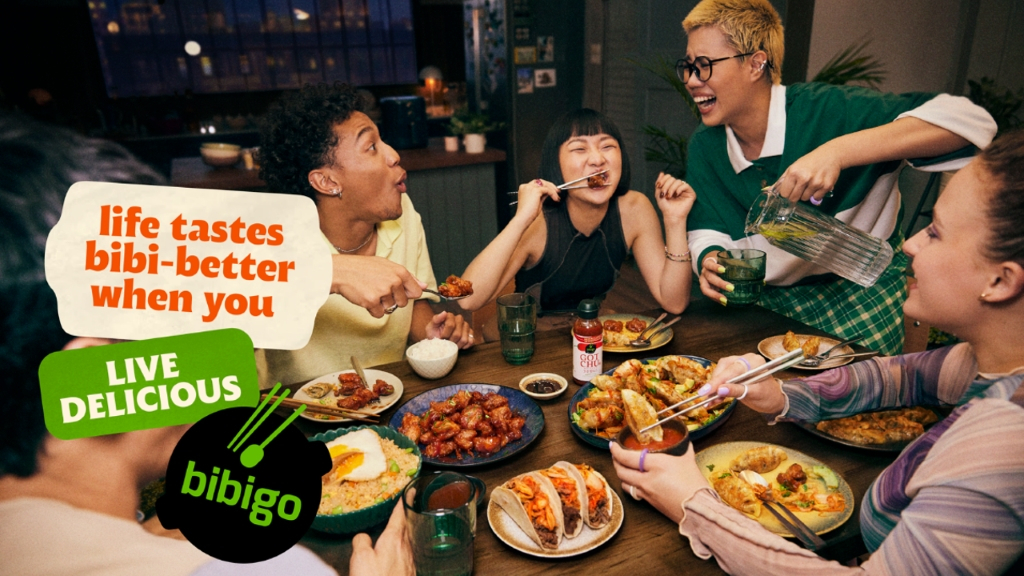
The gold standard is anything CJ CheilJedang has produced for Bibigo over the past ten Chuseoks. CJ operates the largest food-marketing budget in Korea, and its Bibigo Chuseok films are the industry benchmark: sweeping drone shots of the KTX pulling into rural stations, extended families crowding around 만두 (mandu, dumplings) being folded by grandmother's hands, and a soundtrack that always ends with a quiet piano version of a folk song. The appeal point is not the dumplings. It is the fact that Bibigo's creative team casts real multi-generational families and lets the camera linger on 할머니 (halmeoni, grandmother) tearing up when her adult grandchildren walk through the door. Korean viewers who grew up in the countryside watch these ads and see their own train ride home. Diaspora Koreans watching from Los Angeles or Sydney see the reunion they cannot have this year. The CF becomes a mirror, not a menu.
2. Lotte Pepero: "Lonely Christmas" and the Sweet-Sad Format
The second must-watch is Lotte's Pepero December CF, which Koreans just call "Lonely Christmas" even though the brand keeps changing the title. Pepero (the chocolate-covered biscuit stick) sits at a very specific intersection of Korean holiday culture: 빼빼로데이 (Pepero Day, November 11) is a homegrown couples' holiday, and Christmas in Korea is famously a date night rather than a family day. Lotte Wellfood plays with that tension every year. The classic format opens on a lonely twenty-something walking through a snow-dusted Seoul, cuts to a moment of near-miss connection with a stranger holding a red Pepero box, and ends with the shy smile that Korean audiences read as the beginning of an entire drama. In 2025, Lotte named Stray Kids global ambassadors and turned the whole thing into a K-pop-flavored fantasy, but the emotional grammar has not changed: sweet, slightly sad, and quietly optimistic that a stick of chocolate can start something.

3. Samsung Galaxy: The Video-Call Chuseok
Samsung's holiday CFs are their own genre and the third essential watch. Samsung Electronics has spent years producing Chuseok and Seollal spots that revolve around the video-call moment: a son who cannot make it home for the holiday, a grandmother who does not know how to operate the phone, a Galaxy that quietly bridges the distance. The industry read on why this format works so well is that Samsung's creative team understood earlier than most brands that Korea's holiday CFs were not really about product features. They were about 그리움 (geurium, longing), which is the emotional currency that runs through every Korean family separated by the KTX, by immigration, or by work in a distant city. The Galaxy is a plot device, not a hero. That inversion is why Samsung's Chuseok CFs rack up tens of millions of YouTube views every year while the same company's spec-sheet product ads barely crack a million.

4. Coca-Cola Korea: The Big Cinematic Christmas
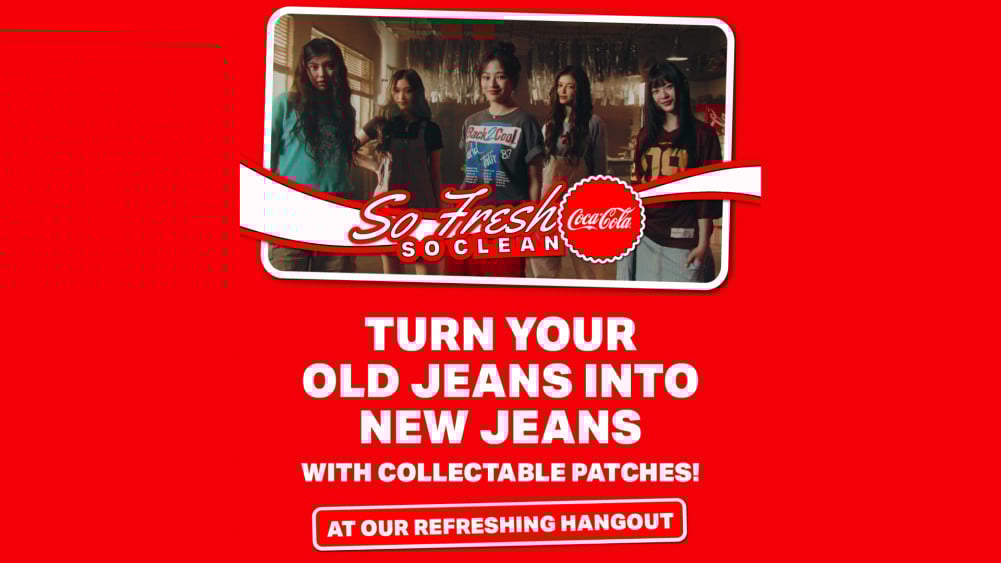
Coca-Cola Korea's holiday CF is the fourth pillar, and it is the one that most obviously borrows from the global playbook and then Koreanizes it. The brand has been running full cinematic Christmas spots in Korea since the mid-2010s, and the local team has consistently gone bigger than the global template: real Seoul skylines, K-pop soundtracks, and an ensemble cast that recent years have leaned hard into. The 2025 campaign built around NewJeans (later NJZ) is the template modernized. The "Old Jeans into New Jeans" spot did not even feature a Coke can on screen for most of its runtime, which is a very Korean choice. Global viewers watching a Coca-Cola Korea Christmas CF are essentially watching a mini K-pop MV with a Coca-Cola logo waiting at the end. The appeal for younger Korean audiences and for the global Hallyu wave is that the CF format has fully collapsed into K-content itself. You are not deciding whether to watch an ad. You are watching a music video that happens to be sponsored.
Why These CFs Travel Globally
The reason these four CFs keep melting hearts outside Korea is worth naming plainly. They all obey the same rule that Korean holiday advertising has quietly perfected over three decades: sell the feeling first, and let the product be the closing gift. The 정 that grandmother pours into a bowl of mandu, the 그리움 that a video call fails to close, the shy Christmas hope of a stranger with a Pepero box, the K-pop cinematic reset of a Coca-Cola bottle. These are not marketing tricks. They are the muscle memory of a country that survived a devastating civil war, rebuilt itself in one generation, and now spends every 명절 season quietly reminding its citizens (and the global Hallyu audience watching on YouTube) that the point of a holiday is who you sit next to, not what you buy. That is what Bibigo, Lotte, Samsung, and Coca-Cola Korea have all figured out. That is what their four commercials are really selling.
Bring Korean Holidays Home with Daebak
Love Korean culture? Bring the taste of a Korean 명절 home with the Daebak Box, a curated monthly subscription of Korean snacks, K-pop items, and lifestyle goods delivered straight from Seoul to your door.


