


Table of Contents
Ask a Korean when they last ate three meals in a day, and you'll probably get a laugh. In Korea, the standard cadence is closer to four: 아침 (breakfast), 점심 (lunch), 저녁 (dinner), and 야식 (late-night snack). That fourth slot isn't a guilty add-on. It's a legitimate meal category with its own delivery apps, price points, and dedicated menus. Understanding this rhythm tells you more about Korean daily life than any Michelin guide ever will, and after a decade working around Korean food brands and Hallyu content, I can tell you it's the single most useful thing to know before your first trip.

아침 (Breakfast): Hot Soup, Rice, and Zero Croissants
Western breakfast talk starts with pastries, cereal, or maybe eggs. Korean breakfast doesn't. The default aim is warming your core, and that means a bowl of hot soup poured over rice with a couple of banchan on the side. 국밥 (gukbap, literally 'soup rice') in every regional form, from 콩나물국밥 (soybean sprout) to 순대국밥 (blood sausage) to 돼지국밥 (Busan-style pork), exists specifically because working-class Koreans wanted one bowl that would fuel a physical day. Even now, a haejangguk shop opening before 7 a.m. near a subway station will have a line of taxi drivers and construction workers before the sun clears the buildings.
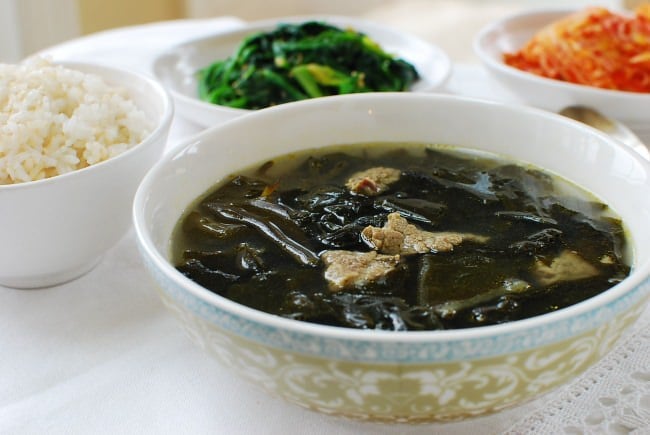
The appeal isn't complexity. It's the ritual of scooping a spoonful of hot broth, adding a bite of kimchi, and finishing with a mouthful of soft-cooked rice. That texture contrast (briny fermented crunch against warm slippery grain) is what Koreans mean when they say a meal 든든하다 (deundeun-hada), roughly 'solid enough to hold you up.' Meanwhile, 미역국 (seaweed soup) sits at a different emotional register: it's what mothers eat for weeks after childbirth, and what everyone gets on their birthday. Don't be surprised if a Korean friend texts you '생일 축하해, 미역국 먹었어?' on your birthday. The soup itself is the greeting.
점심 (Lunch): The 12-to-1 Office Sprint
Korean office lunch runs on rails between roughly 12:00 and 1:00, and every food-service business in the country is built around that hour. Walk into any 종로 (Jongno) or 강남 (Gangnam) lunch strip at 12:15 and it's a controlled stampede: coworkers walking in packs of four to six, hitting a 백반 (baekban) shop for a set meal that lands within eight minutes of ordering. This isn't leisure eating. It's fuel management inside a compressed window, which is why Korean lunch culture invented some of the most efficient portable formats on Earth.
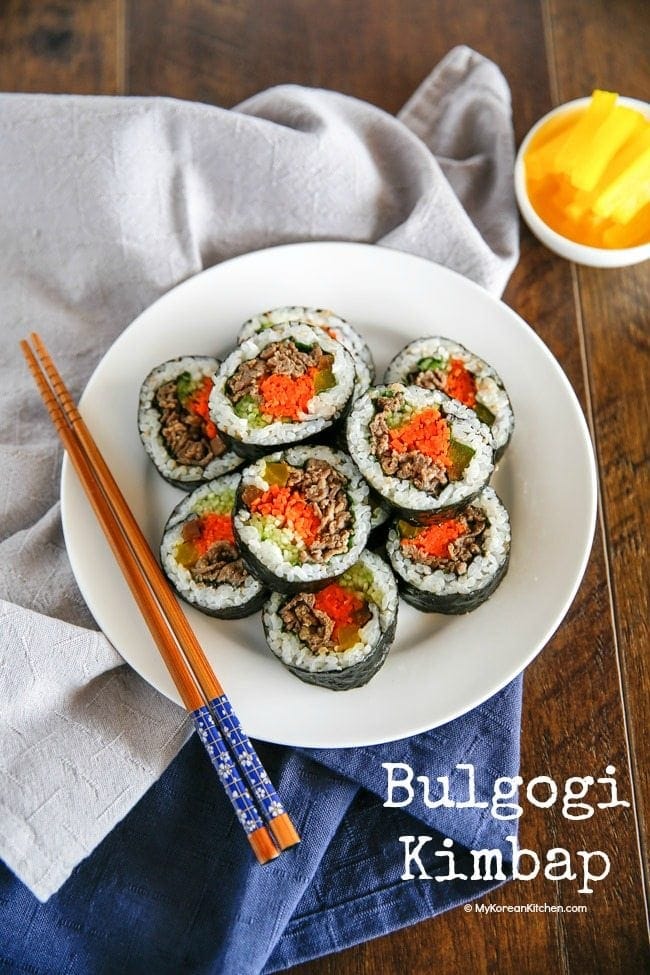
김밥 (kimbap) is the obvious hero: rice, seasoned vegetables, protein, and pickled radish rolled in laver, sliced into coin-sized pieces that need no utensils and won't drip in your bag. It's the ideal desk food, the ideal picnic food, and yes, the ideal 도시락 (dosirak, lunchbox) filler when your kid has a field trip. The reason chains like 김밥천국 (Kimbap Cheonguk) and 바르다김선생 (Bareun Kimbap) can scale is that kimbap is engineered to hold up for hours at ambient temperature without falling apart, which no sandwich can honestly claim. On the sit-down side, the standard 정식 (jeongsik) format lays out rice, a stew, three or four banchan, and a protein for around 8,000 to 10,000 won, and the whole meal is designed to be finished in twenty minutes flat so you can be back at your desk by 12:55.
저녁 (Dinner) and 회식 (Hoesik): Samgyeopsal Is the Default
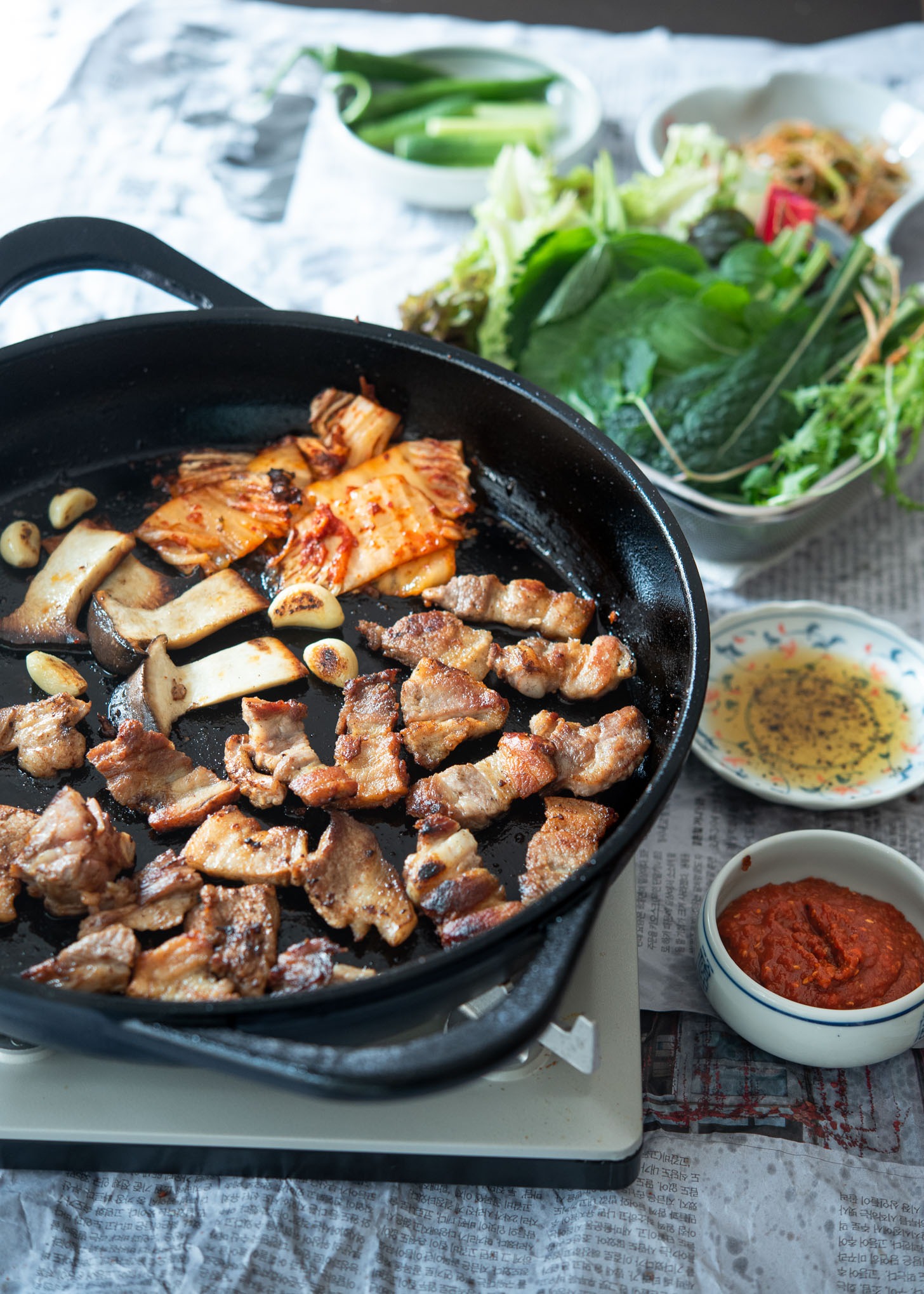
Ask a Korean office worker where dinner with the team happens, and the answer is almost always some variation of a 삼겹살 (samgyeopsal) spot. Unmarinated pork belly, grilled at the table, is the default social meal for a reason: it turns dinner into an activity. Someone has to man the grill. Someone else refills the soju. The lettuce and perilla leaves keep circulating. It's participatory in a way that Western restaurant dining just isn't, and that participatory dimension is what makes it the go-to format for 회식 (hoesik, the after-work team dinner that still holds real cultural weight in Korean workplaces).
The genius of samgyeopsal is what it doesn't do. No marinade, no complex sauce, no seasoning beyond salt. Instead, you build every bite yourself: a lettuce leaf, a piece of grilled pork, a scoop of ssamjang, a strand of raw garlic if you're brave, maybe a sliver of grilled kimchi that's been sitting in the rendered fat. Wrap it, shoot it into your mouth in one go, chase it with a small glass of soju. The Korean word for that construction is 쌈 (ssam), and it's the whole point. That's not accidental in K-drama, either. Showrunners lean on samgyeopsal shots (Reply 1988, Itaewon Class, Vincenzo) precisely because the format telegraphs intimacy and casualness faster than any dialogue can. Two characters sharing a grill signals more about their relationship than a whole scene of exposition ever could.
야식 (Yasik): Korea's Late-Night Economy Is a Real Industry
Outside Korea, 'late-night snack' sounds like a bad habit. Inside Korea, 야식 is a market. Baemin (배달의민족) and Coupang Eats have entire product architectures dedicated to the 10 p.m. to 2 a.m. slot, and the two dominant yasik categories, 치킨 (fried chicken) and 라면 (ramyeon), support billion-dollar delivery volumes on their own. This isn't cultural fluff. In the first half of 2026, Baemin reported that late-night delivery orders surged 520% year-on-year, and chicken orders alone climbed 281% among international users treating late-night delivery as a proper Korea experience.
The reason yasik is a legitimate meal category and not just snacking comes down to Korean work-life geometry. Office hours run long, 회식 pushes dinner into a 'meal but also drinking' hybrid, and by the time you're actually home at 11 p.m., you're either winding down with a beer or genuinely hungry again. Fried chicken paired with beer even has its own portmanteau, 치맥 (chimaek, chi from chicken and maek from maekju), and it's become one of Korea's clearest cultural exports thanks to K-dramas like My Love from the Star driving international demand for the combo. Add the fact that a packet of instant ramyeon like Shin Ramyun costs under 2,000 won and takes four minutes, and yasik becomes not a splurge but a functional part of the daily meal system. Trying to explain Korean daily life without acknowledging yasik is like explaining Italian culture and leaving out espresso.
Why the Four-Meal Rhythm Actually Matters
The four-meal cadence isn't just food volume. It's a map of how Koreans structure a day around social obligation and recovery. 아침 sets the physical baseline (hot soup, rice, warmth). 점심 is transactional and fast because the working day is compressed. 저녁 is where hoesik happens, which is really about workplace hierarchy and team bonding disguised as a meal. And 야식 is the personal decompression window that resets you before sleep, alone or with roommates, over delivery containers on the floor.
What outsiders often miss is that these meals are cultural instruments, not just calorie schedules. If you want to understand why Korean workplaces feel intense but also strangely warm, watch the hoesik at a samgyeopsal spot on a Thursday night. If you want to understand Korean solo living, watch a 20-something with a bowl of ramyeon at midnight, phone propped against the wall, watching a variety show on Netflix. The food isn't really the point. The rhythm is, and once you internalize it, everything else about Korean daily life clicks into place.
Explore Korean Snacks with Daebak
Want to eat like a Korean across the whole day? Get authentic Korean snacks and instant ramyeon delivered straight to your door with the SnackFever Box by Daebak.


