


Table of Contents
Korean dumplings, called mandu (만두), are one of the most beloved comfort foods in Korean cuisine. From the steaming pots of manduguk dumpling soup served at Seollal Lunar New Year, to the hand-folded kimchi mandu sold at neighborhood markets, to the bubbling tabletop hot pots called mandu jeongol, mandu shows up in dozens of forms across Korean cooking. Mandu may have originally crossed into Korea from China centuries ago, but today it is firmly one of the most distinctly Korean dishes, with regional variations and family recipes that anchor Korean food culture from the royal palace to the convenience store.
This guide walks through everything worth knowing about Korean mandu: the major types, regional specialties, how to enjoy manduguk and mandu jeongol, and where to find authentic Korean mandu outside Korea.
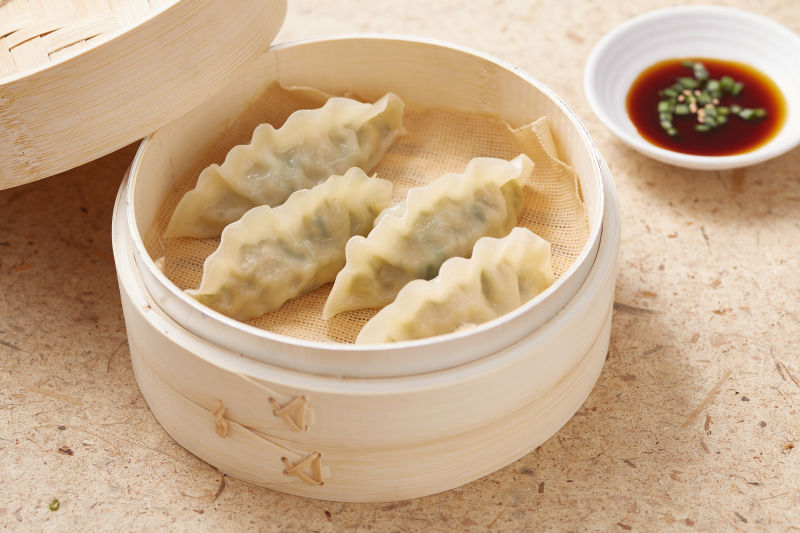
What Is Mandu?
Mandu is the Korean word for dumpling, applied to any dish where a wheat-flour wrapper is folded around a filling of meat, vegetables, and seasonings. The word itself comes from the Chinese mantou, but Korean mandu has evolved into a distinct cuisine: where Chinese baozi tends to be plump and bun-like, Korean mandu wrappers are thin, the fillings are more vegetable-heavy, and the cooking methods range across boiling, steaming, pan-frying, and deep-frying within the same household.
Records of Korean mandu go back to the Goryeo dynasty (918-1392), when dumplings were a banquet dish for royals and aristocrats. By the Joseon dynasty (1392-1910), regional mandu styles had developed across the peninsula, and the Institute of Traditional Korean Food now documents more than 50 distinct varieties of Korean mandu, each tied to a region, a season, or a holiday.
The Major Types of Korean Mandu
The most common Korean mandu types are organized by their filling and cooking method. Kimchi mandu (김치만두) is filled with chopped aged kimchi, tofu, and ground pork, and is the most popular home-style mandu in Korea. Gogi mandu (고기만두) is the meat-forward version, with seasoned ground pork or beef as the main filling. Mul mandu (물만두, "water dumpling") is small, thin-skinned, and boiled, served with vinegar soy sauce. Jjin mandu (찜만두) is the steamed version, usually larger and bun-like.

Beyond the basics, gun mandu (군만두) is the pan-fried or deep-fried mandu found in Chinese-Korean restaurants. Wang mandu (왕만두) is the king-sized version, often eaten as a snack from steaming carts at traditional markets. Saeu mandu (새우만두) is the shrimp variant, popular in modern Korean restaurants. Buchu mandu (부추만두) leans heavily on Korean chives. Frozen versions of all of these have become a permanent fixture in Korean refrigerators and convenience stores.
Regional Korean Mandu Specialties
Korean regions each have their own signature mandu. Pyongyang mandu (평양만두) is the North Korean style: large, thin-skinned, and filled mainly with cabbage and beef, served in clear beef broth. Gaeseong mandu (개성만두) is the Joseon royal court style, often shaped into elaborate forms and stuffed with refined fillings of chicken, pheasant, or beef. Andong jjim mandu is a regional specialty from the Gyeongsang region using steamed dough wrappers. Daegu napjak mandu (납짜면만두), the "flat dumpling," is the Daegu street-food specialty: very flat, semi-circular, lightly filled, and pan-fried.
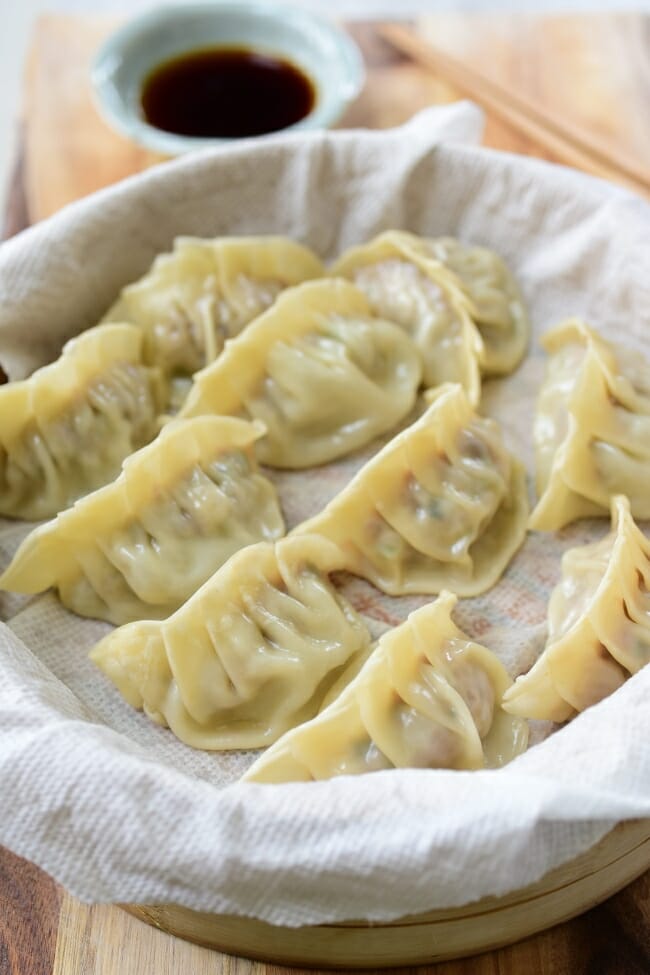
One of the most elegant mandu variations is seongnyu mandu (석류만두), the "pomegranate dumpling" of the Joseon royal court. The mandu is folded so that it resembles a pomegranate fruit, with the bright filling visible at the top. Traditionally filled with chicken, pheasant, radish, manna lichen, water parsley, and pine nuts, seongnyu mandu was served in clear soup at palace banquets. Modern Korean royal-cuisine restaurants in Seoul still serve it as a refined appetizer.
Manduguk: The Seollal Lunar New Year Soup
Manduguk (만둘국) is the most culturally significant Korean mandu dish. Eaten on Seollal Lunar New Year morning, manduguk is made by boiling mandu in clear beef broth, often combined with thin rice cake slices to make tteok manduguk (떡만둘국). Korean families across the northern provinces eat manduguk for Seollal in the belief that the closed dumpling form symbolizes good fortune "wrapped up" inside, and that eating one bowl makes you a year older.

The basic manduguk recipe is straightforward: simmer beef shank with garlic and green onion to make a clear stock, drop in fresh or frozen mandu and rice cake slices, and serve garnished with egg strips and water parsley. Many Korean families freeze homemade mandu in batches throughout the year specifically for this Seollal tradition, with each household having its own filling ratio that gets passed down through generations.
Mandu Jeongol and Modern Mandu Dishes
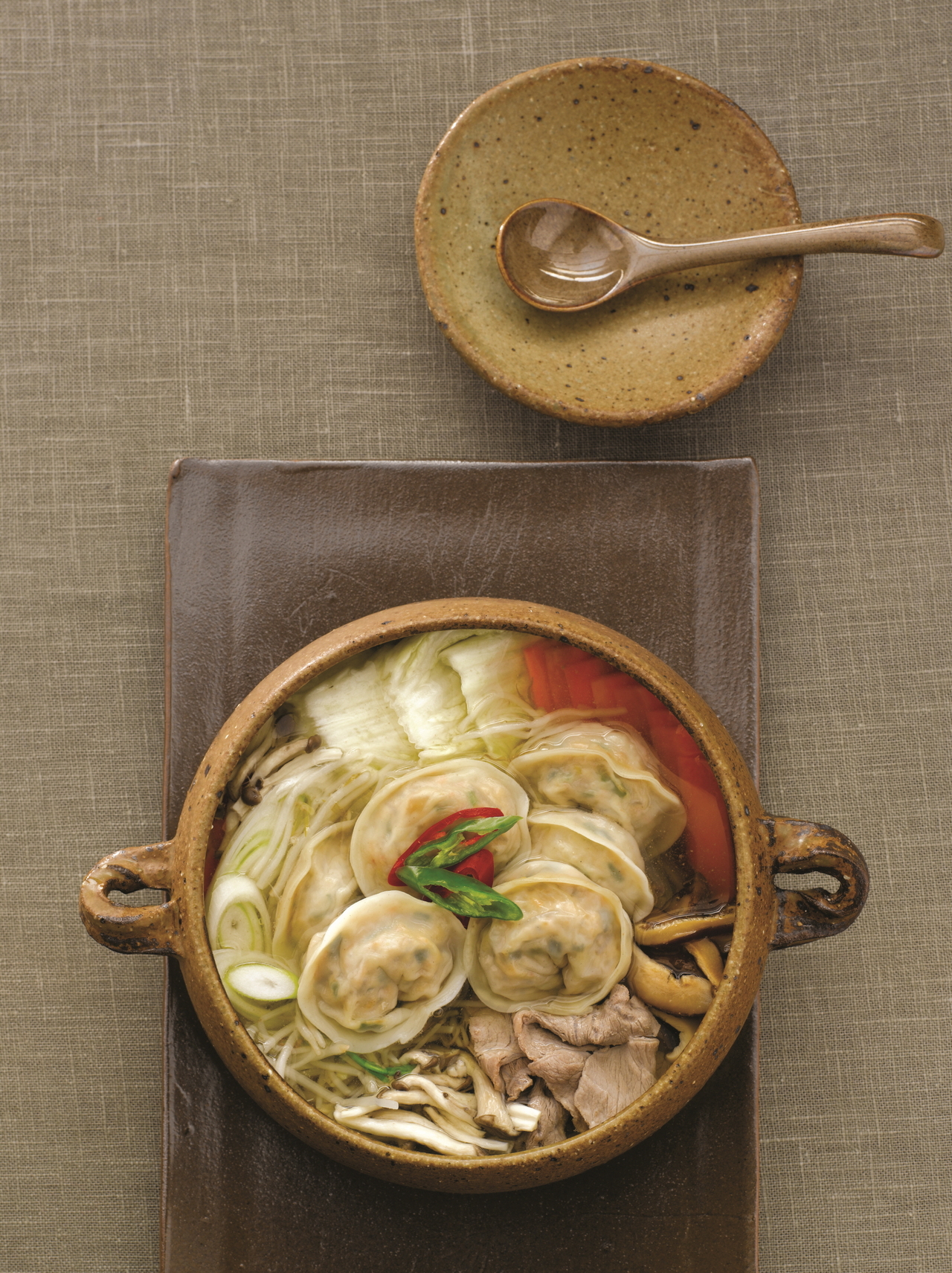
Modern Korean restaurants have expanded mandu into more elaborate formats. Mandu jeongol (만두전골) is a Korean hot pot version: mandu, sliced beef, mushrooms, cabbage, and vegetables simmered together in a savory broth at the table. The dish encourages communal dining, with everyone dipping the cooked mandu in a soy-vinegar sauce. A spicy variant adds gochugaru chili powder for the now-popular spicy hot pot version.
Other modern mandu dishes worth seeking out include muchim gun mandu (무침군만두), pan-fried mandu tossed with sweet and spicy sauce, and mandu pizza, a Korean fusion dish that has appeared on K-drama menus. Korean food brands have also commercialized mandu heavily: CJ Bibigo's frozen mandu reached 670 billion won in global sales in 2023, including 420 billion won from the United States alone, making it one of the most exported Korean foods of the decade.
How to Enjoy Mandu at Home
For home cooks, the easiest entry into Korean mandu is buying frozen mandu from a Korean grocery store. Major Korean brands include CJ Bibigo, Pulmuone, and Ottogi, with kimchi mandu, gogi mandu, and shrimp mandu being the most reliable starter options. To cook, steam frozen mandu for 12 to 15 minutes in a steamer, pan-fry with a touch of oil and water for crisp gun mandu, or drop directly into boiling beef broth for an instant manduguk.
For ambitious home cooks, making mandu from scratch is a satisfying weekend project. Use store-bought round dumpling wrappers, prepare a filling of ground pork, kimchi, tofu, chopped chives, and seasonings, and fold each dumpling by hand. Korean families often make 100 to 200 mandu in a single session and freeze them on trays for use throughout the year, especially before Seollal.
Where to Find Korean Mandu Outside Korea
Korean mandu is now widely available outside Korea. The CJ Bibigo brand stocks H Mart, 99 Ranch, Walmart, Costco, and Whole Foods globally, with the kimchi mandu and chicken-and-vegetable mandu being the bestsellers. Pulmuone and Sempio also distribute Korean mandu internationally. Korean-Chinese restaurants in major cities serve gun mandu, jjajangmyeon, and other Chinese-Korean fusion dishes, and dedicated Korean dumpling restaurants have opened in New York (Mandoo Bar), London, and Sydney.
For visitors to Korea, the best mandu experiences are at long-running Seoul dumpling specialists. Gaeseong Mandu Koong in Insadong serves royal court-style mandu, Gubok Mandu in Myeongdong is famous for its handmade mul mandu, and the traditional markets in Tongin, Gwangjang, and Namdaemun all have stalls dedicated to wang mandu street food. Mandu is one of the few Korean foods that genuinely tastes equally good in a Michelin-starred restaurant and at a 3,000-won street stall.
Explore Korean Snacks with Daebak
Love Korean food? Get authentic Korean snacks and ramen delivered straight to your door with the SnackFever Box by Daebak.


