


Table of Contents
Chuseok (추석) is Korea's harvest moon holiday, and if you have ever noticed how MBC, KBS, and SBS suddenly flood the schedule with family dramas the week before, that is not sentiment. That is a calculated 시청률 (ratings) play. Broadcasters plan their Chuseok slate six months out because 명절 (holiday) episodes reliably deliver a viewership bump from three generations sitting on the same couch. The five titles below are the ones the industry itself still references when pitching family-genre projects, and each of them lands a specific insight about the modern Korean 가족 (family).
Why Chuseok family K-dramas are broadcast gold
Here is the industry mechanic almost nobody outside Korea sees. Chuseok is the one holiday where the entire multi-generational household is in the same room for three days straight, and 할머니, 부모님, teenagers all fight for the remote. Broadcasters figured out decades ago that if they line up a family drama with a warm 시댁 (in-laws) storyline, mothers and grandmothers commit first, and everyone else watches because leaving the room is socially awkward. Studio Dragon and CJ ENM still cite this dynamic in pitch decks when they sell family projects abroad, especially to Vietnam, the Philippines, and Indonesia, where the three-generation household is still culturally dominant.
Why does the export part work so cleanly? Because Korean family dramas do something Western prestige TV rarely does: they treat the older generation as active romantic and comedic leads, not just wisdom-dispensing side characters. The mother-in-law arc is a genre unto itself. That is why "family K-drama" travels better than most people think, and it is why the five below have all had unusually long tails on streaming.
Reply 1988 (응답하라 1988): the Chuseok benchmark itself
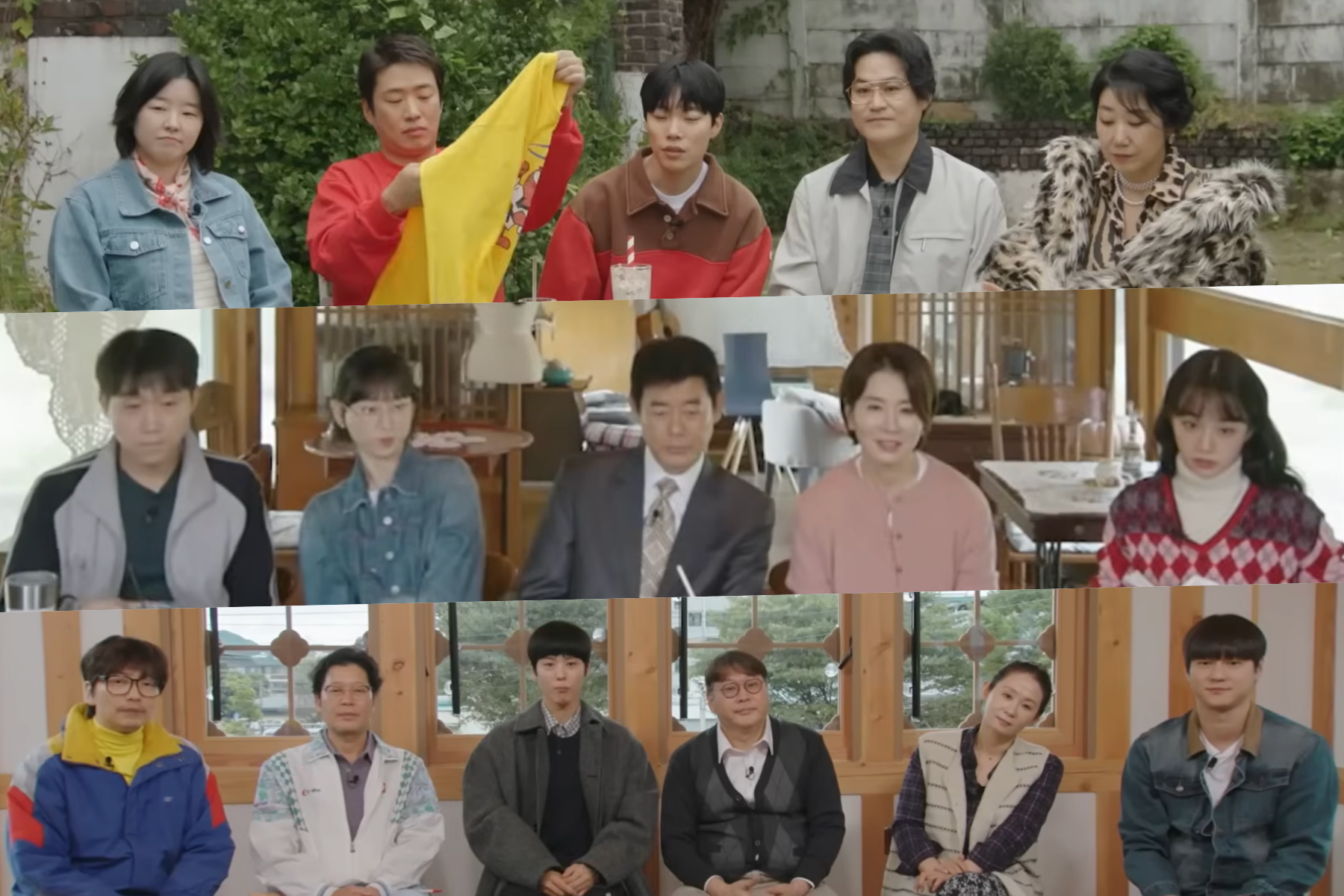
If you work in Korean content, you know the Reply 1988 finale broke tvN's ratings ceiling at 18.8 percent, but the more interesting stat is this: the 10th anniversary special that aired in December 2025 pulled the entire Ssangmundong cast back on set, and Studio Dragon still names this show internally when explaining what "family warmth" is supposed to feel like on screen. Director Shin Won-ho and writer Lee Woo-jung essentially wrote a love letter to the alleyway (골목) culture of 1988 Seoul, where five families in one neighborhood share side dishes over the wall and raise each other's kids by default.
The appeal is not nostalgia. It is the way the show refuses to write parents as background furniture. Sung Dong-il and Lee Il-hwa play Deok-sun's parents as full comic-dramatic leads, and the Chuseok-adjacent scenes where 엄마 fights with 시댁 over trivial things are the beats that make Southeast Asian and Latin American audiences say, "This is my family too." That universal recognition is exactly what Chuseok programming targets. If you watch only one drama on this list with your family, this is the one.
18 Again (18 어게인): the father who never got to be young
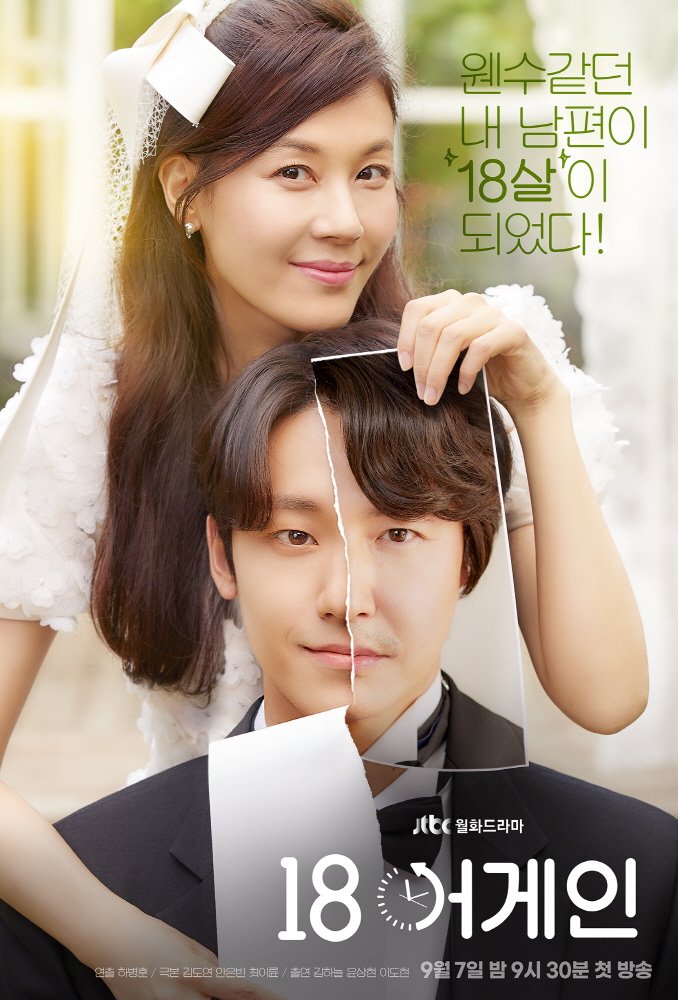
JTBC's 18 Again is technically a remake of the American film 17 Again, but the localization is a masterclass in why Korean family dramas hit differently. Hong Dae-young becomes a father at 18 and gives up a basketball career to raise his twins. Two decades later, on the verge of divorce, he wakes up back in his 18-year-old body (Lee Do-hyun's breakout role, and I remember every casting director in Seoul flagged him after this).
The Korean twist that Hollywood would never touch: the drama refuses to frame young parenthood as a mistake. Instead, it uses the body-swap gimmick to show how much silent 정 (deep, unspoken affection) a father can build over 20 years without ever saying it. The umbrella scene, where Lee Do-hyun tilts an umbrella to keep his daughter dry while he gets soaked, went viral in K-drama Twitter for a reason. That is a specifically Korean parental love language: sacrifice you are supposed to notice but never speak aloud. Watch this one with your dad. Do not explain why.
Our Blues (우리들의 블루스): family as a village project

Writer Noh Hee-kyung is a giant in the industry (Dear My Friends, It's Okay That's Love, That Winter The Wind Blows), and Our Blues is arguably her most ambitious project: 20 episodes structured as an omnibus, filmed 80 percent on location in Jeju, with an ensemble headed by Lee Byung-hun, Shin Min-ah, Han Ji-min, Kim Woo-bin, Cha Seung-won, and Kim Hye-ja. This is not a normal K-drama cast list. This is a "we called in every favor" cast list, and it only comes together because Noh Hee-kyung asked.
What she is really writing about is a broader definition of 가족 (family): the family you are born into, the family you build, the family that emerges when a fishing village grows old together. The haenyeo (해녀) grandmothers played by Go Doo-shim and Kim Hye-ja are the emotional spine of the series, and their storyline about a mother-daughter reconciliation in the final arcs is the single best 명절 (holiday) rewatch on this list. If Reply 1988 is about the alleyway, Our Blues is about the harbor. Both are arguments that Korean family is a collective infrastructure, not a nuclear unit.
Hi Bye, Mama! (하이바이, 마마!): grief as a chuseok conversation
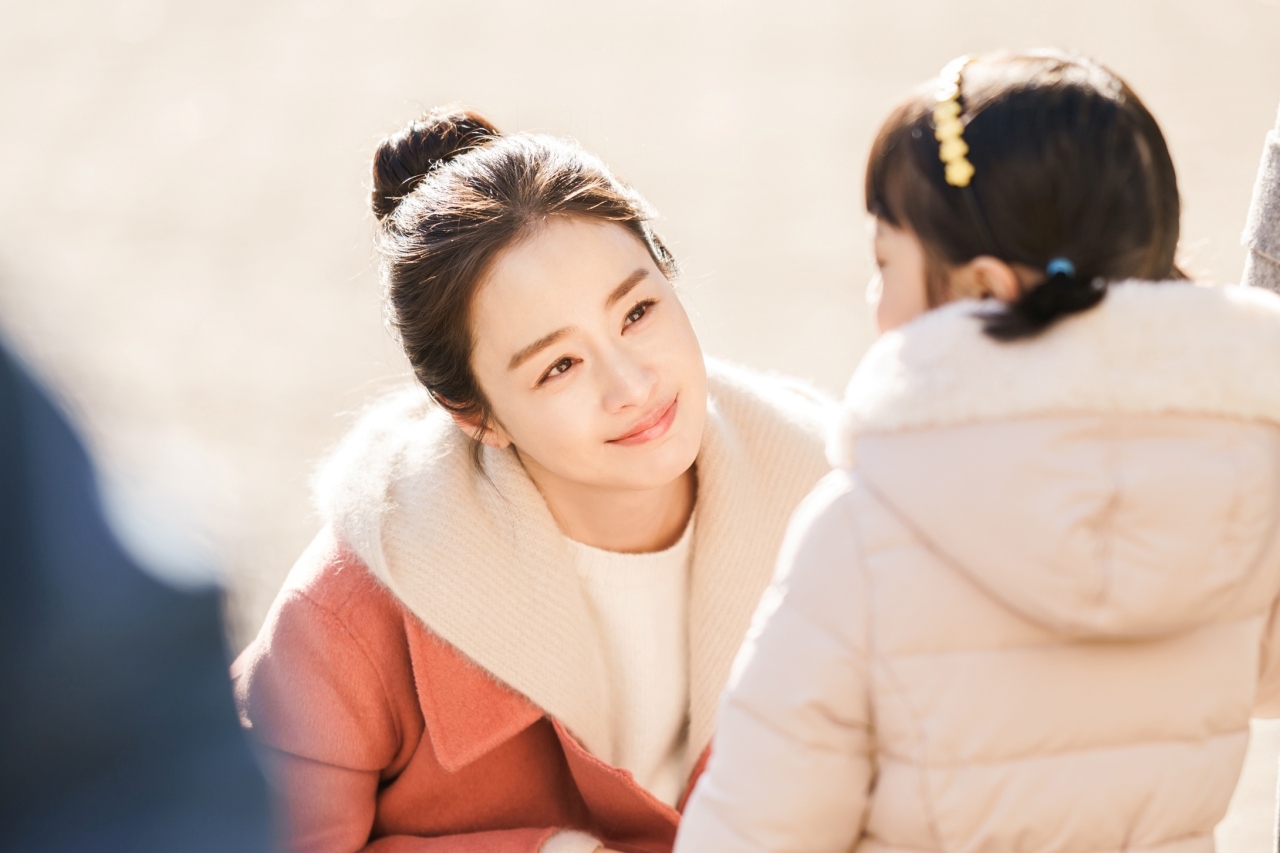
Kim Tae-hee's return after a five-year hiatus was the industry story of early 2020, and she chose Hi Bye, Mama! specifically because it was the closest role she had ever played to herself: a mother of two. The premise is high concept (a wife dies, becomes a ghost for five years, gets 49 days to become human again and meet the daughter she never got to raise), but writer Kwon Hye-joo uses that fantasy layer to do something Korean dramas rarely do onscreen: sit with the specific 명절 loneliness of families where one seat at the Chuseok table is permanently empty.
Here is why the show matters beyond the tears. In Korean culture, grief traditionally goes underground after the 49-day mourning period. Hi Bye, Mama! reopens that conversation by asking what happens if the dead came back for one holiday. The husband (Lee Kyu-hyung, doing career-best work) has remarried, and the show handles the second wife with unusual grace. She is not a villain. She is another woman doing her best. That is a specifically Korean writerly move: the mother-in-law and stepmother tropes usually go one way, and Kwon Hye-joo refused. It is a cry, but it is a smart cry.
Doctor Cha (닥터 차정숙): the 시댁 drama for 2020s viewers
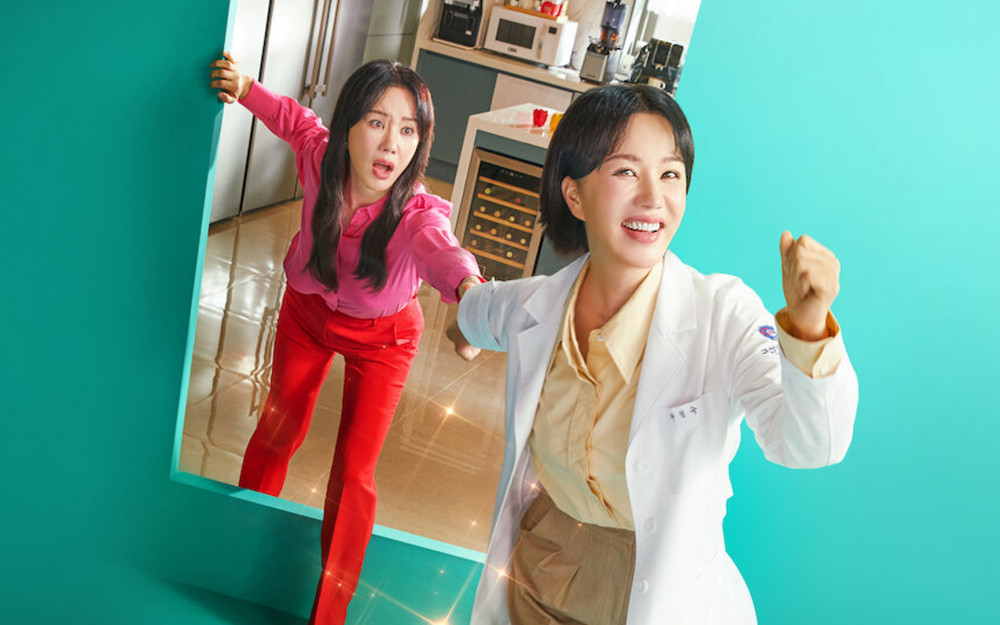
JTBC's Doctor Cha closed with an 18.5 percent rating, breaking the record Itaewon Class had held on the channel for years, and it did that with a 50-year-old female lead. Read that again. Uhm Jung-hwa plays Cha Jeong-suk, a Seoul National University trained doctor who quit her residency 20 years ago to marry into a chaebol-adjacent surgeon's family, and now, at 46, restarts her residency alongside interns who could be her own children. The industry treated this show as proof that middle-aged female-led dramas were a commercial category, not a public service project.
The 시댁 (in-laws) dynamic here is the sharpest on this list. Cha Jeong-suk's mother-in-law is not a cartoon villain, she is a woman who has invested 20 years in her son's career and cannot understand why the daughter-in-law now wants her own life. That is the actual conversation happening in many Korean households right now, and the show hit a nerve because it refused to give either woman an easy exit. If your Chuseok gathering ever includes a "when are you going to have kids" moment, this is the drama that speaks for you. Bonus: Uhm Jung-hwa also produced her own soundtrack cameo, because of course she did.
How to build your Chuseok watchlist this year
Practical curation from someone who has watched the Chuseok programming grid for years: pair Reply 1988 with Our Blues if you want the collective-family thesis, pair 18 Again with Hi Bye Mama for the tearjerker night, and save Doctor Cha for after the family goes to bed and the 며느리 (daughter-in-law) crowd wants to actually process something. All five are on Netflix, Viki, or tvN's own platforms, and all five subtitle well. That is not a small thing. Family dramas are the hardest genre to subtitle because so much of the meaning sits in honorifics and unsaid tension.
One last industry note. When Korean broadcasters plan a Chuseok slate, they always leave one prime slot for a new family drama premiere, because a good first episode drops right when 3 generations are captive. If a Chuseok premiere hits, it usually runs 16 to 20 episodes and lands in every year-end awards conversation. Watch which family drama premieres on Chuseok week 2026. That is the one the industry is betting on.
Explore More of Korea with Daebak
Want to bring a little piece of Korea into your life? The Daebak Box is packed with the best Korean snacks, ramen, and cultural goodies delivered monthly to your door.


