


Table of Contents
Sujeonggwa (수정과) is one of those Korean things Westerners cannot quite categorize. Waiters serve it at the end of a meal in a small chilled cup, the flavor is dark, spicy, and sweet all at once, and if you ask what it is, the answer you get is usually "cinnamon tea." That is technically wrong on both counts. It contains no tea leaves, and Koreans classify it as 후식 (dessert), not a beverage. That confusion is a big part of why this 600-year-old court drink never made it to the global stage the way ramyeon or 떡볶이 did.
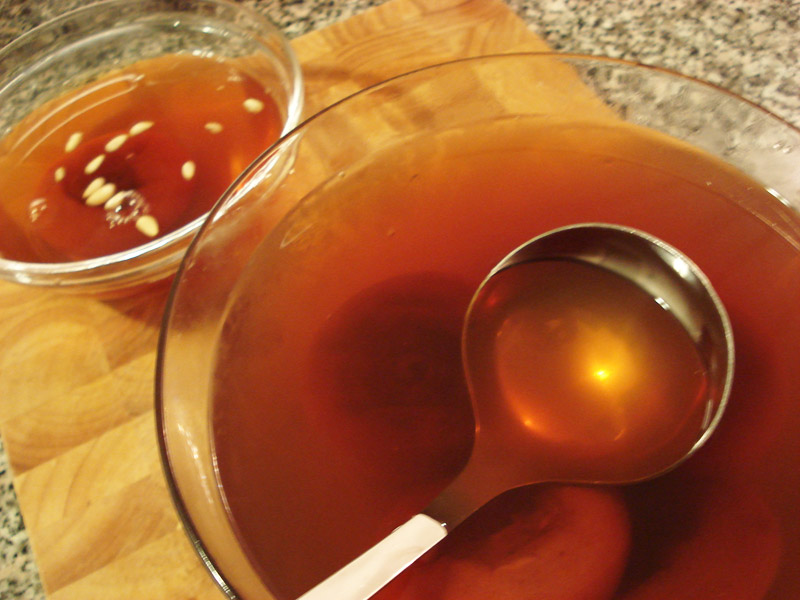
The court drink foreign audiences keep misfiling as tea
Sujeonggwa dates back to the Joseon dynasty (1392 to 1910), where it lived in the palace kitchens as part of 궁중요리 (court cuisine). It was served after heavy meat-based feasts, usually with pieces of dried persimmon soaked inside, as a digestive. That last part matters more than most food blogs let on. The 계피 (cinnamon) and 생강 (ginger) base is not chosen for flavor first. Cinnamon boosts warmth and gastric flow, ginger cuts the lingering fat and richness of Korean meat courses like 갈비 and 잡채. Court chefs were not dessert stylists. They were quietly engineering a functional digestif that also happened to taste like nothing else in East Asia.
The category confusion is where every foreign write-up trips. Chinese medicinal broths get shelved as tonics. Japanese sweet drinks like amazake get shelved as beverages. Sujeonggwa is neither. Ask a Korean grandmother and she will tell you it is 후식, plate territory not cup territory, closer in cultural function to a scoop of sorbet than to a mug of chai. Foreign audiences default to "tea" because that is the closest Western category, and that mislabel is exactly why global adoption stalled.
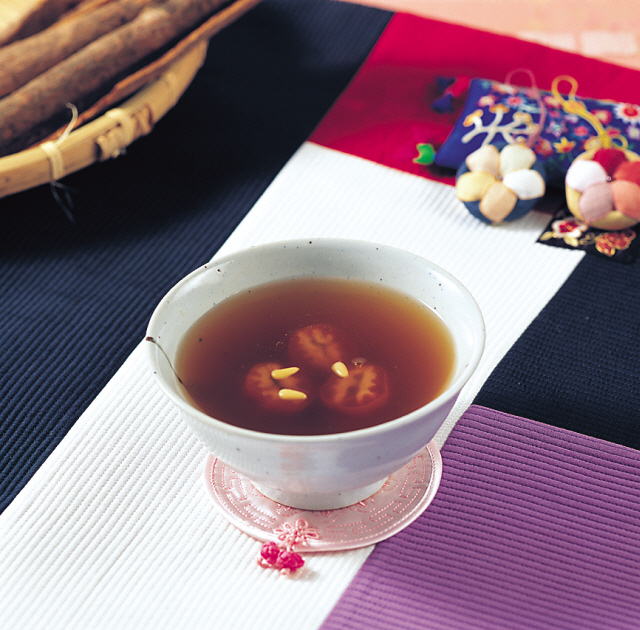
The four-ingredient minimalism nobody markets
Look at the recipe and you notice something almost absurd. Four ingredients. 계피 (cinnamon sticks), 생강 (ginger), 곶감 (dried persimmon), 잣 (pine nuts). Sugar or honey optional. That is it. No leaves, no fermentation, no dairy, no acidity beyond what the persimmon donates as it steeps.
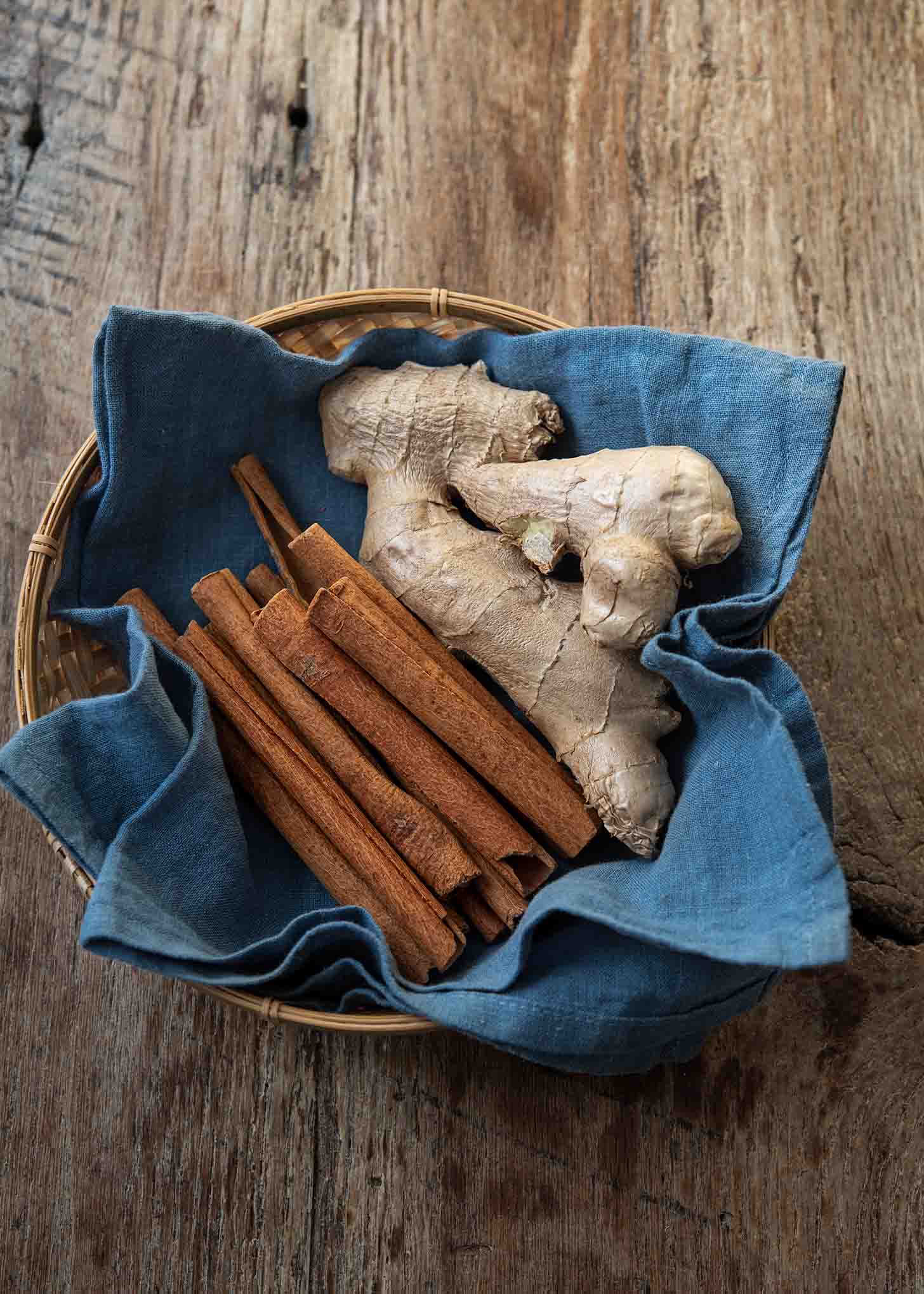
The technique is where Korean cooks get precise. You simmer cinnamon in one pot, ginger in another, then blend the two liquids at the end. Boil them together and you get a muddy, medicinal taste that skews toward Chinese herbal soup. Keep them separate and the cinnamon stays clean and warm while the ginger holds its sharp edge. Once chilled, you drop in a dried persimmon and let it plump for a few hours or overnight, so it releases sweetness slowly into the liquid. Pine nuts float on top right before serving.
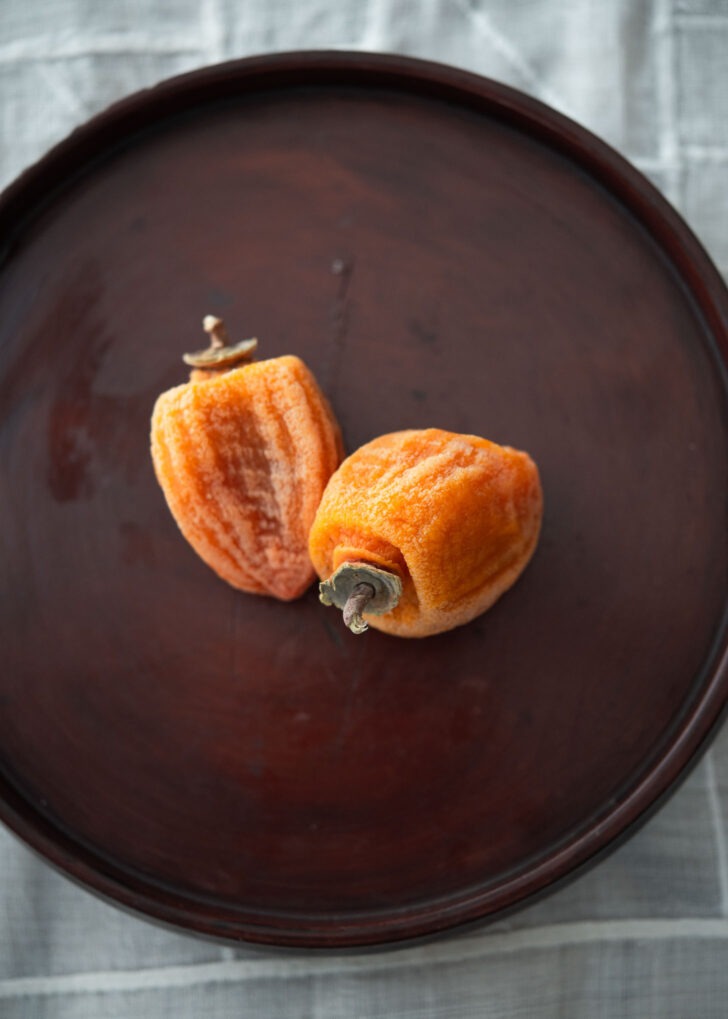
That kind of restraint is the appeal, and also the reason nobody has figured out how to market the drink to Western consumers. There is no signature ingredient story a beverage brand can hang a campaign on. Cinnamon means something in the West, but it means Cinnamon Toast Crunch and Yankee Candle, not warm digestive punch. Ginger reads as spice, not base. Dried persimmon is barely on the Western produce radar. You cannot build a botanical, plant-forward, wellness-first pitch when the average American shopper does not know what three of the four ingredients are.
The $50M canned market that never crossed over
Inside Korea, sujeonggwa is a real category. Nongshim and Woongjin both sell canned or bottled sujeonggwa year-round, and the domestic RTD (ready-to-drink) market for traditional Korean drinks, sujeonggwa plus 식혜 (its sweet rice cousin), sits at roughly $50 million annually. Winter and Chuseok drive the seasonal spike, when the drink lands on ancestral rite tables (차례상) alongside rice cakes and fruit.
That number should have moved internationally by now. It has not, and the reason is structural. Sujeonggwa is too complex for a beverage brand's global marketing narrative and too simple for Korean restaurant menus to differentiate around. Beverage marketers need a hook. Sujeonggwa's hook is a category ambiguity (drink or 후식) and an ingredient list Western consumers cannot parse without a footnote. Korean restaurants abroad tend to treat it as a free after-meal ceremony, a small courtesy pour rather than a headline menu item, because charging $6 for what looks like cinnamon water sounds insane to anyone who has not tasted it. Both sides of the industry are quietly sitting on the drink instead of pushing it.
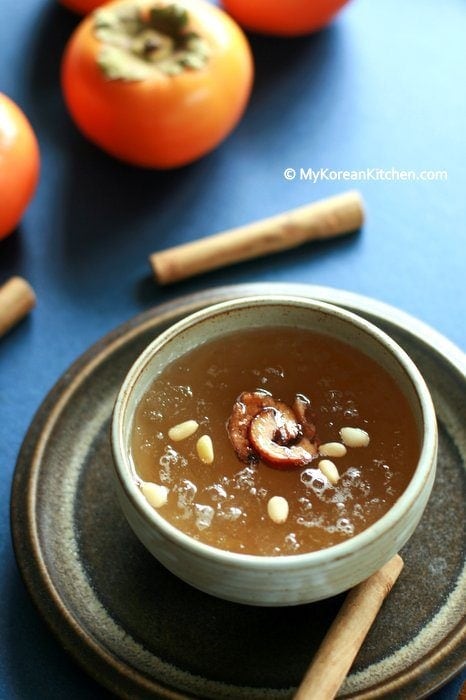
The K-content wave has moved 김치찌개, 떡볶이, and 삼겹살 into global consciousness because those foods have a clear visual language. Sujeonggwa is visually quiet. It is a dark liquid in a small bowl. You do not photograph it for TikTok. You do not caption it in English without a paragraph of context. The exact traits that make it a masterpiece of Joseon culinary minimalism (four ingredients, quiet ritual, functional digestive) are what keep it out of the global exports story.
What foreign fans miss when they finally try it
The appeal, once you actually drink a chilled cup at the end of a large meal, is not the taste in isolation. It is the aftershock. Rich Korean cuisine builds a heaviness in the palate that Western meals do not typically produce, grilled meats, sesame oil, fermented pastes, all layered inside two hours of banchan-driven eating. Sujeonggwa cuts through that in one sip. The cinnamon warms, the ginger sharpens, the persimmon rounds it out, and you finish the meal feeling reset rather than overfull. That is the mechanic Joseon court chefs engineered around, and it is why the drink survived 600 years without changing. If you have never tried it, start with less sugar than most recipes call for. Sujeonggwa is not supposed to taste like a soft drink. It is supposed to taste like something a Joseon queen might have been served after a duck feast, which is roughly what happened.
Bring Korea to Your Kitchen
Want to snack your way through the Korean flavors this drink pairs with? The SnackFever Box delivers a curated haul of Korea's most popular snacks and treats straight to your door every month.


