

Table of Contents
Here is the honest state of Korean rock in 2026. When Western press writes about Korean music, ninety percent of the copy goes to K-pop, five percent to indie darlings like Silica Gel or Se So Neon, and the last five percent to the trot ladies. Korean heavy metal, which literally seeded the whole modern Korean music industry, gets a footnote. After more than a decade watching Hallyu labels operate, I can tell you that footnote hides one of the most important pipelines in Korean pop history. Seo Taiji was Sinawe's bassist before he was the guy who invented modern K-pop. Lee Seung-chul was Boohwal's vocalist before he was the ballad king of Melon charts. The K-pop industry did not appear out of nowhere in 1992. It was built on the technical chops that Korean metal bands drilled into a generation of young musicians in Hongdae basements in the 1980s.

What follows is not a fanboy list. It is the operating map of Korean metal, the bands that mattered, the industry mechanics that shaped them, and the modern successors keeping the scene alive in Mullae-dong and Hongdae basements today. The through line is simple. Korean rock never died. It just went underground, and the underground still feeds Korean music with talent Korea's mainstream labels quietly poach every few years.
시나위 (Sinawe): The Band That Accidentally Invented K-Pop's Talent Pipeline
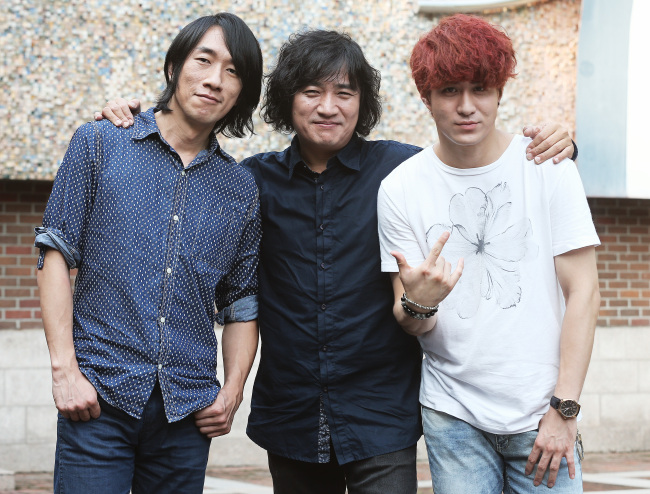
If you only remember one Korean metal band, remember 시나위. Founded in 1986 by guitarist Shin Dae-chul (신대철), Sinawe is officially recognized as Korea's first heavy metal band, and their debut LP Heavy Metal Sinawe reportedly moved 400,000 copies in a country where the concept of a domestic metal album barely existed. The number matters less than the roster. Sinawe's rotating lineup in the late 1980s and early 1990s reads like a hall of fame of Korean pop that never happened. Bassist for a brief stint in 1990: a seventeen-year-old kid named Jung Hyun-cheol, who quit Sinawe in 1991 to form Seo Taiji and Boys and single-handedly rewrite the rules of Korean pop music in 1992.
Vocalist Yim Jae-beom passed through Sinawe. So did Kim Jong-seo, who later became one of Korea's most respected rock vocalists. Bada Kim, later a member of the pop girl group S.E.S., also spent time in the Sinawe ecosystem. This is the pattern nobody outside Korea talks about. Sinawe functioned as an unofficial conservatory for Korean pop talent in a decade when there was no HYBE training academy, no SM Entertainment audition circuit, and no formal idol pipeline. If you were a young Korean musician in the 1980s who wanted to actually learn how to perform, Sinawe was the school. Shin Dae-chul was the strictest and most technically demanding bandleader in Seoul, which is exactly why label scouts started watching Sinawe's members like early A&R does with pre-debut trainees today.
The appeal point for foreign listeners is not just the historical footnote. Sinawe's early recordings are genuinely aggressive by 1980s Asian metal standards, with clean twin-guitar harmonies that show the band listening to Iron Maiden and Judas Priest on smuggled tapes. Korean music production was still figuring out how to record distorted guitar in 1986, and Sinawe's engineers were doing it with censorship board oversight breathing down the neck of every recording session. That context is what makes the first two albums so raw. It is also why Shin Dae-chul kept the band going through seven inactive years and returned in 2013 with Mirrorview, still recording on his own terms.
부활 (Boohwal): The Melodic Metal Band That Trained Korea's Ballad Kings
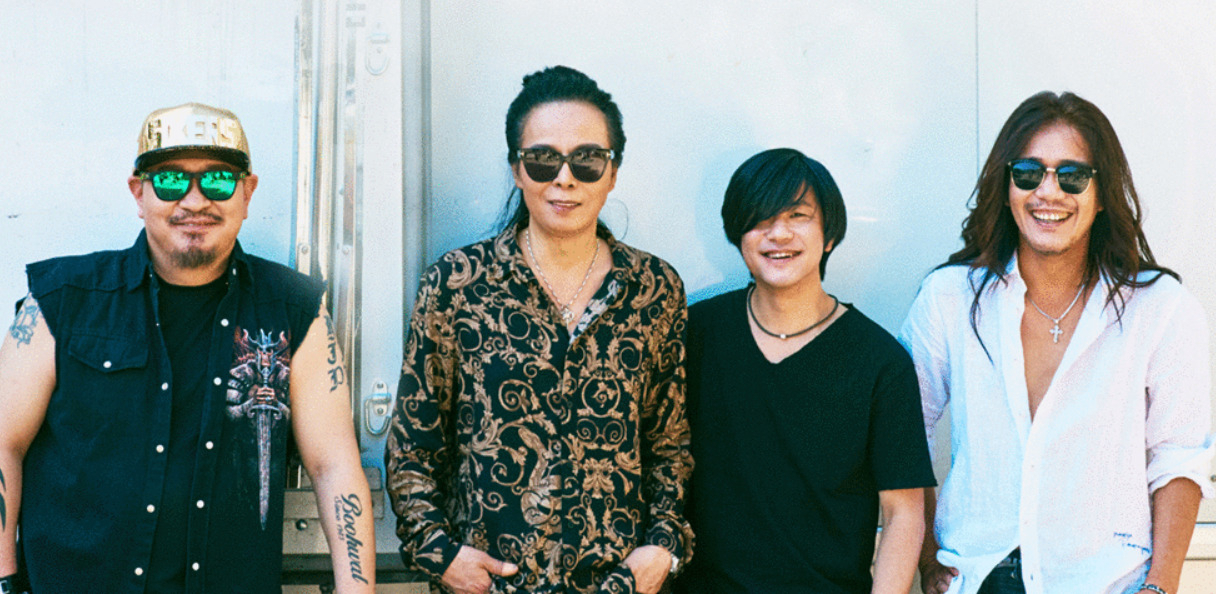
부활 means resurrection, and the band's ability to keep resurrecting itself through vocalist changes is what separates them from every other Korean rock outfit. Founded in 1985 by guitarist Kim Tae-won (김태원), Boohwal was the melodic answer to Sinawe's harder edge. Where Shin Dae-chul chased Iron Maiden, Kim Tae-won leaned into Whitesnake and Bon Jovi, writing rock songs with the sort of hook a Korean listener could sing at noraebang without hitting a screaming high note. That decision, whether Kim knew it or not at the time, is why Boohwal songs like 희야 (Heeya), 네버 엔딩 스토리 (Never Ending Story), and 비와 당신의 이야기 (Rain and Your Story) are still karaoke standards in 2026, forty years after the band's debut.
The industry insight most fans miss is that Boohwal is the reason Lee Seung-chul (이승철) exists as a solo artist. Lee joined Boohwal in 1986 as the second vocalist after Kim Jong-seo left, made the band famous with Heeya, and departed in 1989 to launch a solo career that turned him into one of Korea's biggest ballad singers of the 1990s and 2000s. Boohwal essentially built Lee Seung-chul's brand and then handed him to the mainstream ballad market. This pattern repeats. Kim Jong-seo went solo. Jung Dong-ha (later of the modern rock band Nemesis) went solo. Park Wan-kyu went solo. Boohwal is the closest thing Korean rock has to a training center for arena-scale vocalists, and Kim Tae-won keeps rebuilding the band around the next voice with the discipline of a football manager assembling a squad.
What makes Boohwal specifically Korean is the balance of hard rock instrumentation with the melodic sentimentality that Korean listeners call 한 (han), that particular strain of deep, lingering sorrow you hear in trot and old ballads. Kim Tae-won writes guitar solos that sound technically Western but resolve into chord progressions that feel emotionally Korean. That fusion is why Boohwal has outlived every trend in Korean pop for forty years running.
백두산 (Baekdoosan): The Third of the Big Three, Now Guitar Hero Territory
Complete the trinity with 백두산, the Daegu-formed band led by guitarist Kim Do-kyun (김도균). Korean music press in the 1980s lumped Sinawe, Boohwal, and Baekdoosan together as the Big 3 of Korean heavy metal because all three were vehicles for a virtuoso guitarist with a distinct voice at the mic. Baekdoosan debuted in 1986 with the memorable title Too Fast! Too Loud! Too Heavy!, which tells you everything you need to know about the band's stance. Kim Do-kyun then moved to England, worked with vocalist Yim Jae-beom on the international side project Asiana, and returned to Korea in 1999 to reactivate Baekdoosan.
Here is why Kim Do-kyun matters to the modern conversation. He is now essentially Korea's most respected guitar mentor, appearing on variety shows like Superband as a judge, running masterclasses, and functioning as the elder statesman that young Korean rock guitarists actually study under. When JYP Entertainment or SM Entertainment need a session guitarist who can actually shred on an idol group's rock-flavored B-side, the phone tree eventually leads back to musicians Kim Do-kyun trained. In 2003, he collaborated with Shin Dae-chul (Sinawe) and Kim Tae-won (Boohwal) on the project D.O.A. Dead or Alive, which is the Korean metal equivalent of the three founding fathers cutting an album together and confirming to everyone that the scene had a shared history worth preserving.
Crash and the Korean Extreme Metal Underground: Small but Internationally Respected
If Sinawe, Boohwal, and Baekdoosan are the classic heavy metal pillars, Crash is the band that dragged Korean metal into extreme territory. Formed in Seoul in 1991 by vocalist and bassist Ahn Heung-chan, drummer Jung Yong-wook, and guitarist Yoon Doo-byung, Crash chose thrash and death metal at the exact moment Korean pop was pivoting into the Seo Taiji dance boom. That timing sounds tragic but became an advantage. Crash never competed with idols for domestic mass market. Instead they recorded their 1993 debut Endless Supply of Pain with Colin Richardson, the same producer who worked on Napalm Death, Bolt Thrower, and Cannibal Corpse records. That production credential put Korean extreme metal on the international map before Korean pop had even figured out the international map existed.
The Korean extreme metal underground remains small in absolute terms. Roughly five to ten active independent labels handle death metal, grindcore, black metal, and metalcore releases, and the entire ecosystem depends on maybe two dozen bands touring the same rotation of venues. But the scene punches far above its weight internationally. Foreign metal magazines have started calling Korea a new home for grindcore, and the American expat documentary K-Pop Killers (2018) by Ian Henderson and Michael O'Dwyer put a global spotlight on the Mullae-dong metalworking district and its cluster of live houses. The appeal for extreme metal fans is exactly the technical proficiency that Korean training culture forces on musicians. Korean extreme metal bands rehearse like idol groups, ten hours a day, six days a week, and the result is instrumental tightness that veterans in Texas or Germany can immediately hear.
N.EX.T and Shin Hae-chul: The Rock Genius Who Turned the Scene Into a Cultural Institution
Any honest map of Korean rock has to reserve a large section for Shin Hae-chul (신해철), the singer, producer, and cultural commentator who founded N.EX.T (New Experiment Team) in 1992. Shin was not a pure metal frontman. His genius was refusing to stay inside any single genre. N.EX.T records fold heavy metal into jazz fusion, into rap, into Korean folk, into concept-album prog rock, and the results still sound wildly ahead of their time when you revisit them in 2026. His nickname 마왕 (Mawang, Demon Lord) was earned through the combination of that experimental ambition and his willingness to say uncomfortable things about Korean society on late-night radio, which is where he built a second career as one of Korea's most influential cultural commentators.
Shin's tragic 2014 death after a botched intestinal surgery cut off what would have been a fourth act of his career. The 10th anniversary tribute concert Mawang 10th: Ghost Stage at Inspire Arena in 2024 pulled in Psy, Nell, Guckkasten's Ha Hyun-woo, Super Junior's Yesung, Mamamoo's Solar, JYP rookie rock band Xdinary Heroes, and reunited N.EX.T with new vocalists. That guest list is the point. Shin's influence cuts across the entire Korean music industry, from mainstream K-pop idols to rock purists, because he refused to acknowledge the boundary between them. The lesson every Korean rock producer took from Shin's career is that experimentalism is the correct default posture. Play it safe and Korean audiences will bore of you inside three years. Take swings and, even if you die too young, the industry will still be talking about your records a decade later.
Nell, YB, Jannabi: The Modern Heirs Keeping Hongdae Alive

Korean metal in its pure 1980s form does not dominate the mainstream anymore. What replaced it is a wider Korean alternative and rock scene where the DNA of Sinawe and Boohwal still runs through the guitar tones and the training discipline. Nell is the obvious modern example. Formed in Hongdae in 1999 and picked up personally by Seo Taiji after he watched them play a live club, Nell built a moody, psychedelic alternative rock sound that Korean rock fans hold up as one of the most influential of the 2000s. Their song 기억을 걷는 시간 (Time Spent Walking Through Memories) has been covered by NCT's Doyoung, INFINITE's Sunggyu, and Girls' Generation's Taeyeon, which tells you everything about how mainstream K-pop absorbs the underground rock vocabulary quietly.
YB (Yoon Do-hyun Band) is the other essential modern name. Founded in 1996 by vocalist Yoon Do-hyun, YB has been Korea's most reliable arena rock band for three decades, and their 2025 album Odyssey deliberately dove back into metal territory with growling vocals and heavier guitar work than the band had recorded in years. That was not a nostalgia move. Yoon Do-hyun beat a rare cancer in 2024 and came back with a genre statement, then partnered with Croatian hard rock band Jelusick on an ODYSSEY collaborative project backed by the Korea Creative Content Agency (KOCCA). When KOCCA funds a Korean-Croatian rock collaboration, that is Korean cultural export policy quietly acknowledging that rock is still worth investing in as a soft-power vector. Jannabi (잔나비), meanwhile, built their entire fanbase by busking on Hongdae streets over 100 times and playing underground clubs 70-plus times before charting nationally in 2019 with For Lovers Who Hesitate. That is not a marketing story. That is the same underground-first career arc Sinawe followed forty years earlier.
Where to Actually Hear Korean Metal Right Now: Hongdae and Mullae-dong
The two neighborhoods that matter for a rock fan visiting Korea are Hongdae (홍대) in western Seoul, and Mullae-dong for the harder extreme metal side. In Hongdae, Club FF (founded 2004) and Prism Live Hall (opened 2012) are the two established rock venues that consistently book acts worth going out for. Rolling Hall, which turned 30 in 2025 at the same time as YB, is the mid-sized club that hosted YB's Metalogic anniversary show and remains the training ground for Korean rock bands too big for a basement but not yet ready for an arena. Club Steel Face and Club Victim handle the newer punk and hardcore programming, while Club SHARP in Mangwon-dong is the current home base for punk, ska, and hardcore since the pandemic closed GBN Live House.
The economics of these clubs are brutal. A typical Hongdae live venue seats 200 to 400 and charges 20,000 to 30,000 won per ticket, meaning even a packed night grosses under $10,000 before splits with four to five bands, sound engineers, and rent. That is why the Live Club Cooperative Association launched Live Club Day, a monthly ticket that gets you into ten venues on one wristband for around 20,000 won. It is also why the Busan International Rock Festival matters so much to the scene. The 2024 edition drew 60,000 attendees over three days at Samnak Ecological Park and earned the Culture Ministry's Best Cultural Tourism Festival award, which is national-level validation that Korean rock is still worth cultural investment even in the K-pop era.
The Bigger Picture: Why the Metal Scene Still Matters to K-Pop

The reason I opened this piece by saying Korean metal seeded K-pop is not romantic overstatement. Every Hallyu label eventually needs session players who can actually record a rock track when a producer asks for one. When BTS wanted the driving guitar of Fake Love, when TWICE experimented with rock arrangements on More & More, when Xdinary Heroes debuted as JYP's dedicated rock idol project in 2021, the session musicians and instructors those artists worked with came out of the Korean rock and metal ecosystem that Sinawe, Boohwal, and Baekdoosan seeded in the 1980s. The K-pop industry does not admit this openly because it complicates the clean idol narrative. But the moment you follow the credits, you find the same names circulating from Hongdae basements to Cheongdam-dong recording studios.
The underground scene stays underground because Korean mass media follows K-pop cameras. That does not mean the metal scene is dying. It means the metal scene is doing what it has always done, which is train the next generation of Korean musicians who will eventually be poached by pop, film, or advertising. If you want to understand where Korean music is actually going in the next ten years, ignore the idol charts for a weekend and go to a Rolling Hall show. The kids on that stage are the ones the labels are already watching.
Bring Korean Rock Culture Home With the Daebak Box
If Korean rock culture pulled you in and you want to keep exploring the country's music, food, and everyday obsessions, the Daebak Box is the monthly subscription our Seoul team curates specifically for fans who want the real Korea beyond idol packaging. Each box ships authentic snacks, drinks, and lifestyle picks straight from Korean brands, along with the cultural notes that put every item in context. It is the shortest path to the Korea that Sinawe, Boohwal, and the Hongdae scene actually come from.


