


Table of Contents
If you have ever wandered down the ramyeon aisle of a Korean grocery store, you have probably spotted the word bokkeum (볶음) stamped on packets and posters again and again. The word looks intimidating, but the meaning is wonderfully simple: bokkeum is anything that is stir-fried. Once you start noticing it, you realize that a huge slice of Korea's most addictive food, from sizzling pork on a hot plate to chewy rice cakes drowning in red sauce, is technically a bokkeum dish. This guide unpacks what bokkeum means, why it matters, and which dishes you absolutely have to try.
What does "bokkeum" actually mean?
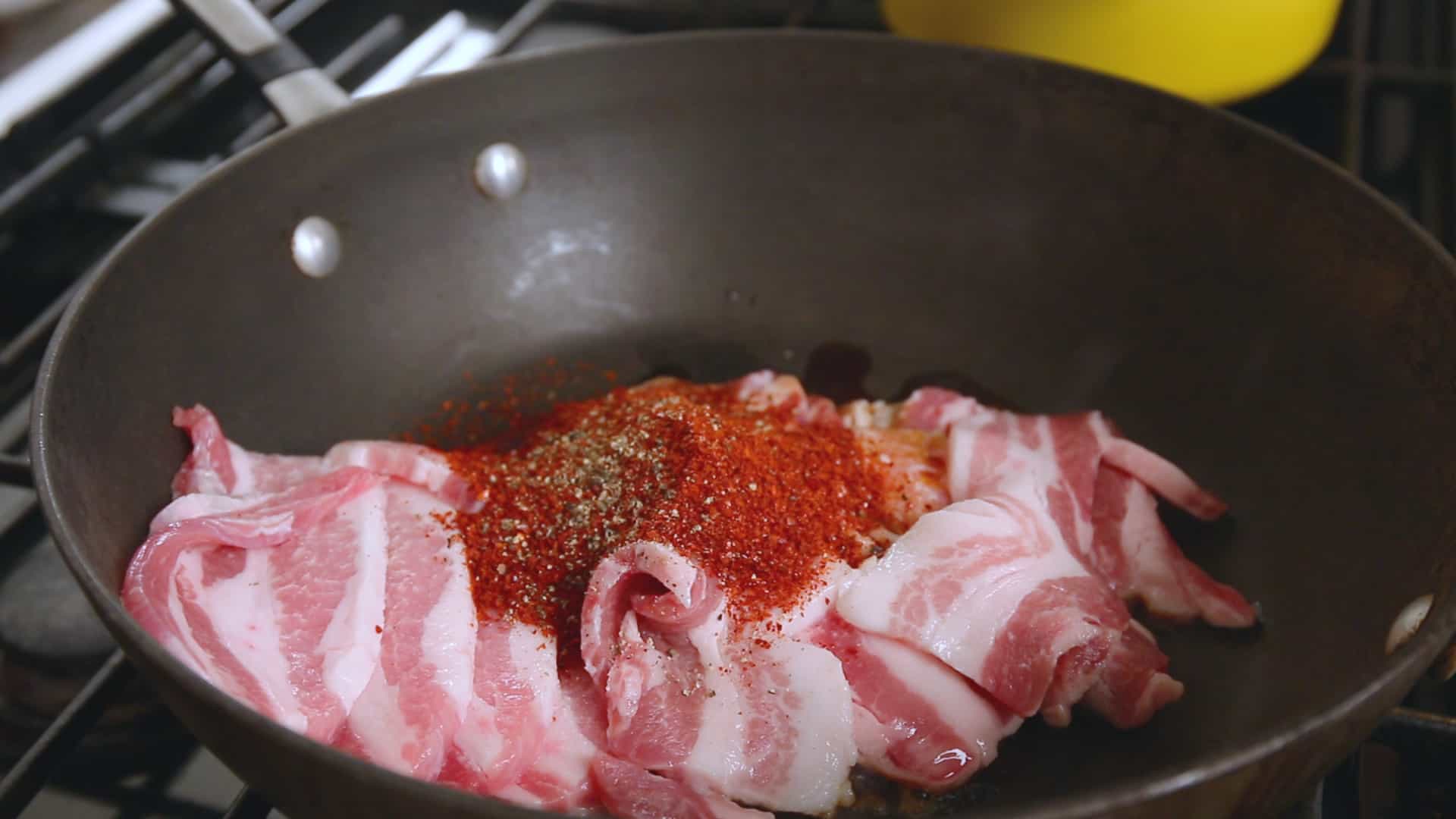
Bokkeum (볶음) comes from the verb bokkda (볶다), meaning to stir-fry or pan-fry over high heat with minimal liquid. It is one of the foundational cooking methods in Korean cuisine, alongside grilling (gui), boiling (jorim), and stewing (jjigae). A bokkeum dish typically starts with aromatic oil, then layers in protein or vegetables, and finishes with a punchy sauce, often built around gochujang (red chili paste), soy sauce, garlic, and sesame oil. The result is something glossy, deeply seasoned, and packed with the kind of caramelized edges that only high-heat cooking can deliver.
Because the technique is so flexible, bokkeum shows up everywhere on the Korean table. It can be a main dish, a side dish (banchan), an anju (drinking food), or even fried rice. Some bokkeum dishes are blazing hot with chili. Others, like japchae, are sweet, savory, and gentle. The shared DNA is always the same: high heat, quick cooking, big flavor.
Jeyuk bokkeum: the spicy pork classic
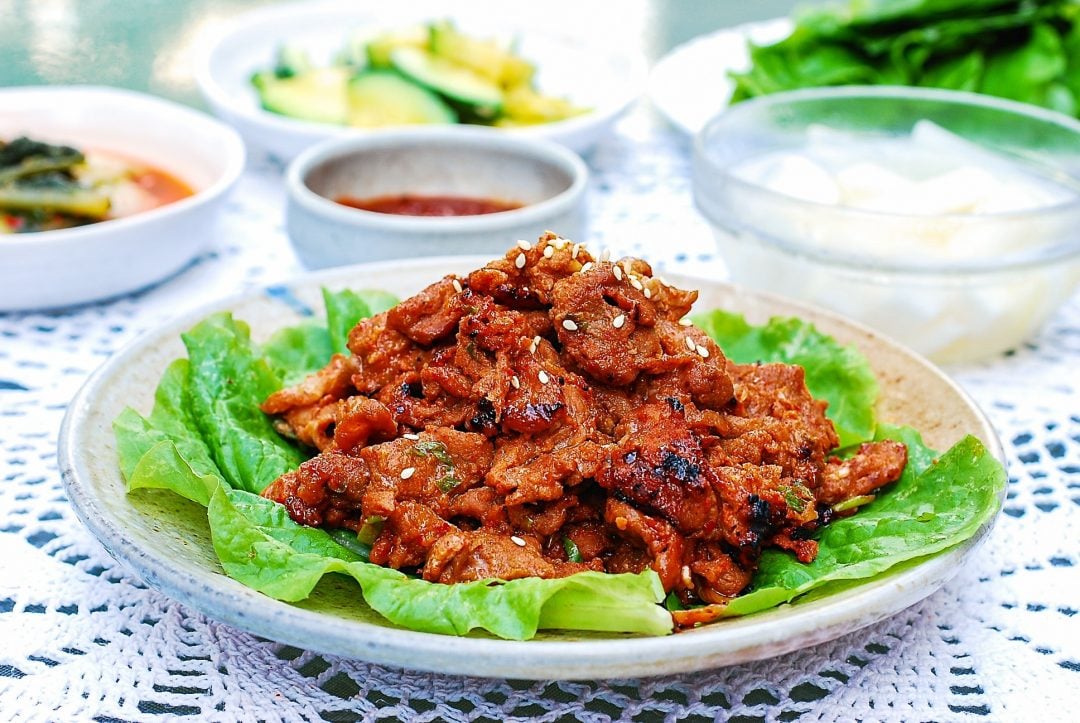
If there is one bokkeum dish that defines Korean home cooking, it is jeyuk bokkeum (제육볶음), also called dwaejigogi bokkeum (돼지고기볶음). Thinly sliced pork, usually shoulder or belly, is marinated in a fiery red sauce of gochujang, gochugaru, soy sauce, sugar, garlic, and ginger, then seared in a hot pan until the edges crisp and the sauce turns sticky. According to Korean Bapsang, fresh garlic and ginger are essential, both for flavor and for cutting through the richness of the pork.
Jeyuk bokkeum is the classic packed-lunch protein and the default order at thousands of Korean office-district restaurants. The traditional way to eat it is wrapped in a lettuce or perilla leaf with a smear of ssamjang, a sliver of raw garlic, and a piece of green chili, all tucked around a piece of pork and rice. It is messy, glorious, and gone in seconds.
Ojingeochae bokkeum: the addictive banchan
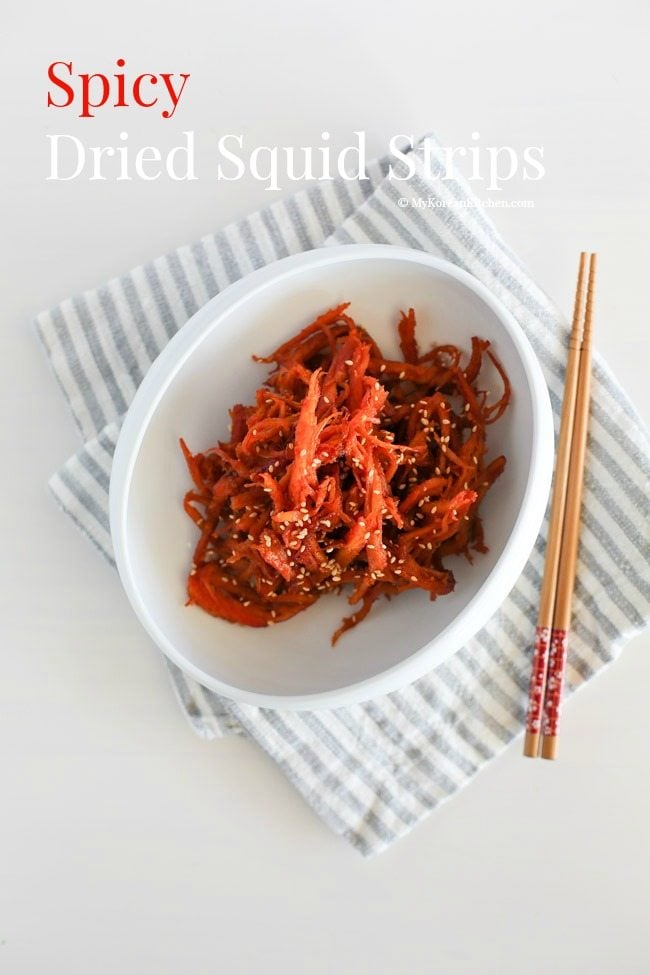
Bokkeum is not always a main course. Many of the most beloved Korean banchan are stir-fries served in small portions alongside rice and soup. Ojingeochae bokkeum (오징어채 볶음) is the perfect example. Shredded dried squid is briefly soaked, then tossed in a glossy sauce of gochujang, soy sauce, honey, and garlic until each strand is coated in spicy-sweet lacquer. The result is chewy, salty, and slightly sticky, the kind of side dish you keep stealing bites of straight from the container.
Sue from My Korean Kitchen notes that this banchan is especially popular with kids, who love the chewy texture and sweet finish. It is also a classic anju, served on small plates with cold beer or soju. For a spicier seafood option, nakji bokkeum (낙지볶음), stir-fried baby octopus, brings fiery chili heat and tender, springy octopus tentacles. Many Koreans consider it one of the spiciest dishes in the entire cuisine.
Dakgalbi: the Chuncheon stir-fry phenomenon
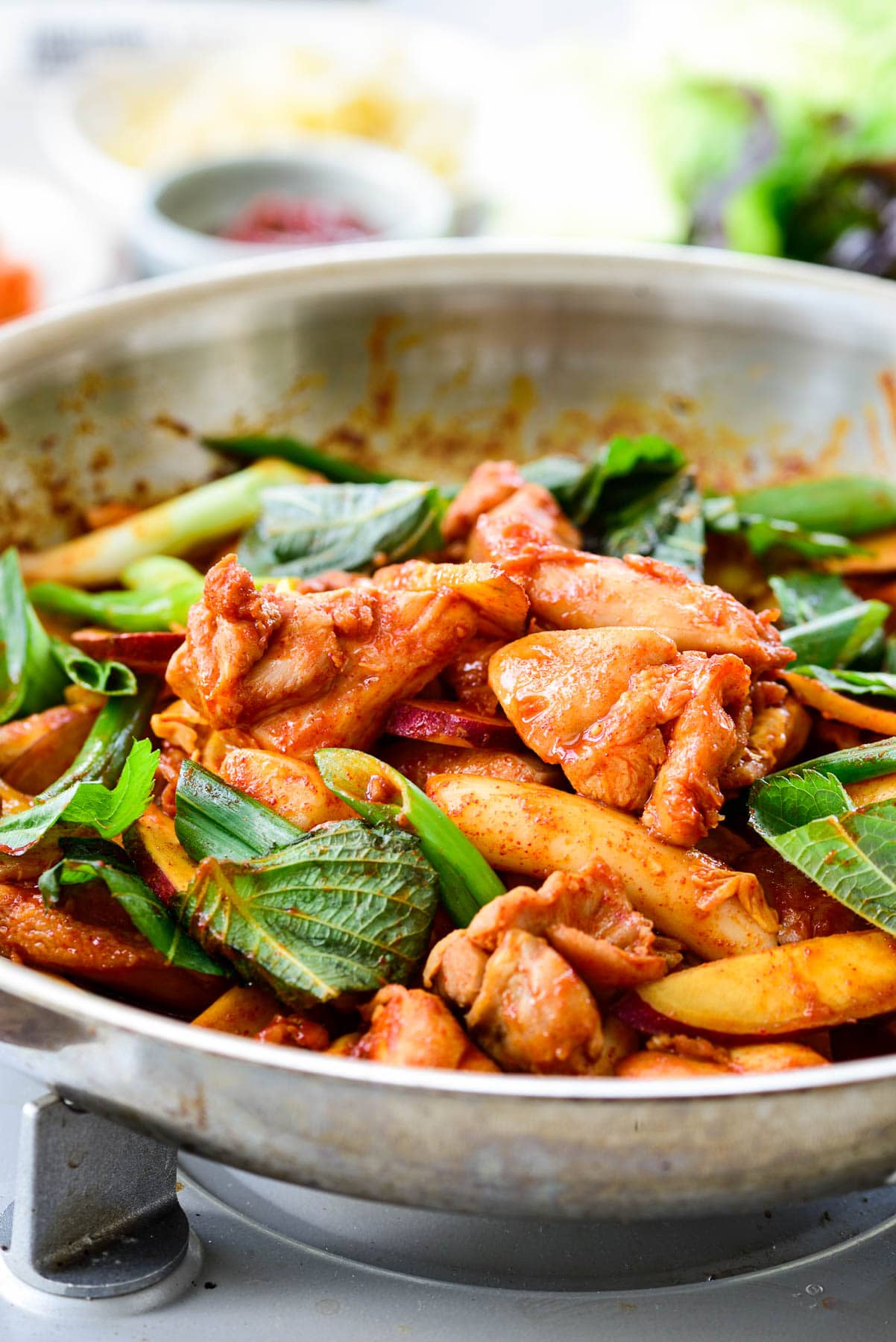
Few bokkeum dishes are as theatrical as dakgalbi (닭갈비), the spicy stir-fried chicken from the lakeside city of Chuncheon in Gangwon Province. Bite-sized chicken thigh is marinated in a punchy gochujang-gochugaru sauce, then cooked at the table on a wide cast-iron pan with sweet potato chunks, cabbage, rice cakes, and perilla leaves. The pan keeps going until the sauce reduces, the chicken caramelizes, and everything melts together into one bubbling skillet.
Many restaurants finish the meal by clearing the pan, adding cold rice, gim (seaweed), and sesame oil, then frying everything together until a golden crust forms on the bottom, a tradition known as bokkeumbap. According to Korean Bapsang, modern versions of dakgalbi often include a generous blanket of melted mozzarella on top, a twist that took over Korean food courts in the 2010s and is now a fixture on social media.
Tteokbokki and other street-food stars
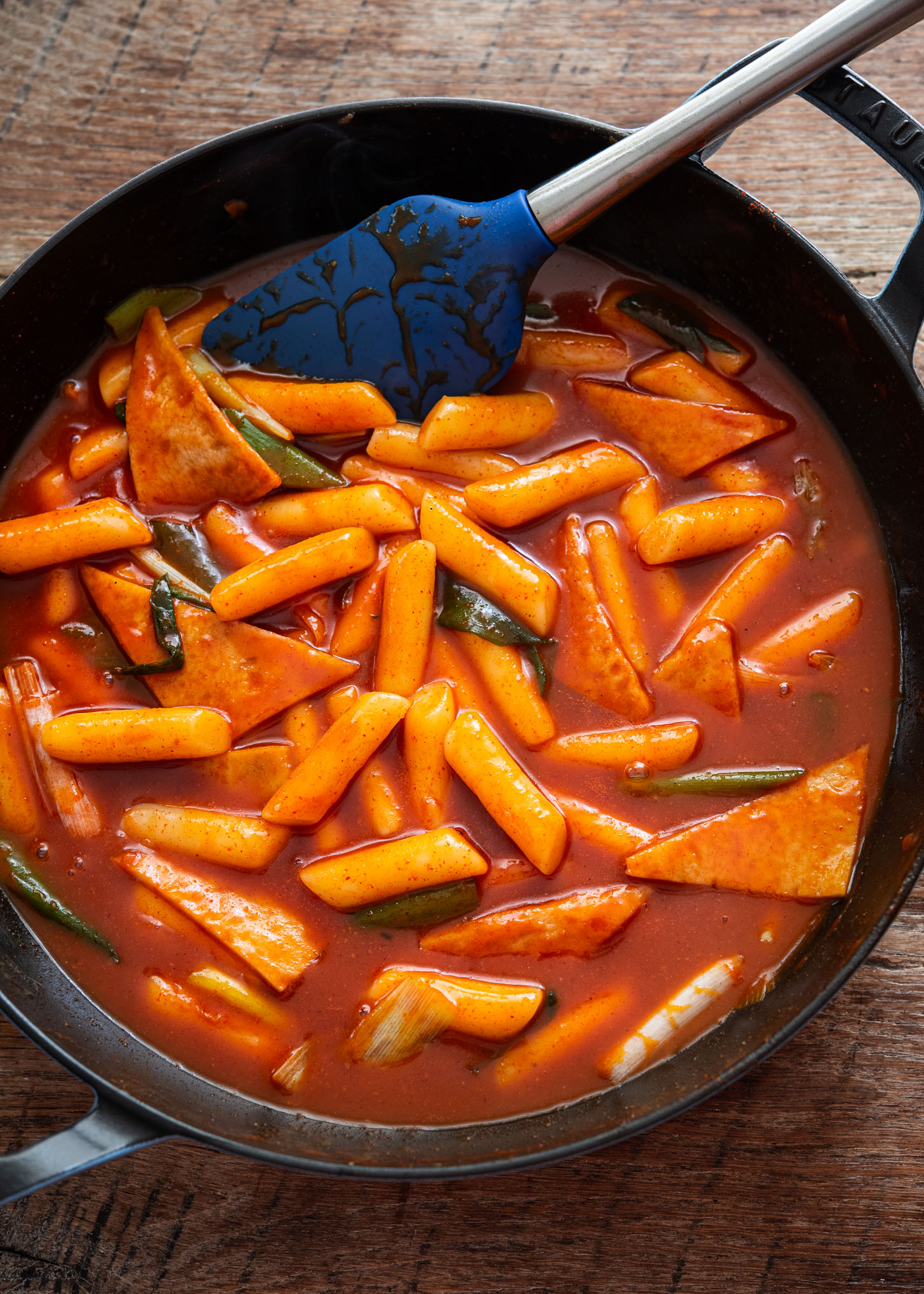
You cannot talk about bokkeum without talking about tteokbokki (떡볶이), arguably Korea's most famous street food. Cylindrical rice cakes simmer in a deep red gochujang and gochugaru sauce until they are chewy, slightly puffed, and coated in a glossy, sweet-spicy glaze. Add fish cakes, boiled eggs, scallions, and sometimes ramen noodles, and you have the snack that fuels late-night study sessions, drinking parties, and Friday-night convenience-store runs across the country.
The team at Beyond Kimchee explains that authentic tteokbokki uses anchovy stock as the base, which gives the sauce its savory backbone underneath the heat. Other beloved street-style bokkeum include kimchi bokkeumbap (kimchi fried rice), japchae (sweet potato glass noodles with vegetables and beef), and dakttongjip (stir-fried chicken gizzards), the latter a famous anju in Daegu's Pyeonghwa Market, where an entire alley is named after the dish.
How to enjoy bokkeum at home
The beauty of bokkeum is how forgiving it is. You do not need a wok, just a hot heavy pan, a few core Korean pantry items (gochujang, gochugaru, soy sauce, sesame oil, garlic), and whatever protein or vegetables you have on hand. Slice your ingredients thin so they cook quickly, keep the heat high, and resist the urge to stir constantly. A few moments of stillness in the pan is what gives bokkeum its signature caramelized edges.
Once you understand the technique, the list of bokkeum dishes feels endless: spicy squid, glass noodles, kimchi fried rice, chicken gizzards, anchovies, even mushrooms. From street-cart snacks to homestyle banchan to fiery anju, bokkeum is the wok-tossed heartbeat of Korean cooking. And once you start exploring it, you will never look at the word the same way again.
Explore Korean Snacks with Daebak
Love Korean food? Get authentic Korean snacks and ramen delivered straight to your door with the SnackFever Box by Daebak.


