

Table of Contents
I have worked in the K-content space for over a decade, and the Chinese remake pipeline is one of the most misunderstood parts of the Hallyu business. Between 2012 and 2016, Chinese studios were paying Korean networks anywhere from $1 million to $5 million per K-drama IP license, and KBS, SBS, and MBC drama divisions ran real profit centers off it. The public thinks Chinese remakes are compliments to Korean creativity. Inside the industry, they are pure math: Korean IP plus Chinese production clears NRTA (formerly SAPPRFT) censorship faster than importing the original ever could, and the format sells because the source material has already been market-tested. That balance broke in mid-2016 when Beijing informally rolled out 한한령 (the "Limit Order" retaliation for THAAD), and the whole remake pattern shifted from a boom to a workaround. Here is what actually happened.
The IP License Economy That Made KBS, SBS, and MBC Rich Between 2012 and 2016
Before 한한령, the Chinese K-drama market was structured like a two-lane highway. Lane one was direct import: iQIYI, Youku, and Tencent Video bidding for streaming rights on hit K-dramas, with SBS's My Love from the Star (별에서 온 그대) reportedly selling to iQIYI in 2013 for around $40,000 per episode, a figure that jumped to well past $200,000 per episode for tier-one titles by 2015. Lane two, and this is where the real margin lived, was the remake IP sale (리메이크 판권). A Korean drama's format rights would sell to a Chinese production house for a flat $1 million to $5 million, sometimes with backend on Chinese streaming views. The Korean network kept airing the original at home, licensed the streaming to a Chinese platform, then sold the remake rights to a completely separate Chinese studio. Three revenue lines off one script. That is why SBS's drama division reported record profitability in the 2013 to 2015 window, and why Studio Dragon (spun out of CJ E&M in 2016) was structured from day one to treat format sales as a first-class revenue category.
Meteor Garden 2018: Why Boys Over Flowers's Shadow Still Powered a Pan-Asian Hit
Meteor Garden 2018 (流星花园) is technically a remake of the 2001 Taiwanese drama, and both draw from Kamio Yoko's Japanese manga Hana Yori Dango. But the reason this Chinese production hit as hard as it did on Tencent Video, and later on Netflix outside China, is that mainland audiences had spent nearly a decade watching the 2009 KBS Boys Over Flowers (꽃보다 남자) circulate through gray-market streaming and DVD. Producer Angie Chai came back to remake her own 2001 version at Tencent Video's request, and the resulting production ran heavier on the Boys Over Flowers formula (Gu Jun Pyo's arrogance-to-tender arc, the F4 idol-styling, the pink-lit swimming pool set piece) than on the original manga. Dylan Wang as Dao Ming Si went from unknown to national heartthrob within eight weeks of the July 2018 premiere. Tencent Video reported over 700 million views on episode one alone in mainland China, and Netflix picked it up for international distribution within months. The industry read: even under 한한령, an IP with visible K-drama DNA still travels. What audiences respond to is the specific emotional grammar Korean scripts perfected around 2005 to 2010, meaning the reluctant chaebol male lead, the working-class heroine, the second-lead syndrome scaffolding. That grammar is portable in ways Chinese original scripts of the same era were not.

Love Through a Millennium and the Fantasy-Romance Template That Just Kept Working
Love Through a Millennium (相爱穿梭千年), the 2015 Hunan TV and SBS Media Holdings co-produced remake of Queen In Hyun's Man (인현왕후의 남자), is the case study for how the remake system was supposed to work before 한한령. SBS negotiated a co-production structure that gave it partial production credit and Chinese distribution revenue, not just a flat IP fee. The original 2012 tvN drama had ridden a very specific K-drama trend, the time-slip romance format that would later peak with Signal and Goblin, and the appeal in translation was that the Joseon-to-modern setup mapped cleanly onto a Ming-to-modern rewrite that did not trigger Chinese period-drama scrutiny. That is the quiet reason so many time-slip and body-swap K-dramas got remade: SAPPRFT approved period settings much faster than contemporary romance with visible Korean cultural markers. The remake still faced censorship on the supernatural elements, but the emotional structure carried through, and Hunan TV's ratings vindicated the bet. Behind the scenes, SBS's drama licensing team used Love Through a Millennium as the template pitch deck to sell the next round of remake rights.

Pretty Li Hui Zhen: The Chinese Remake That Beat Its Original in Its Own Market
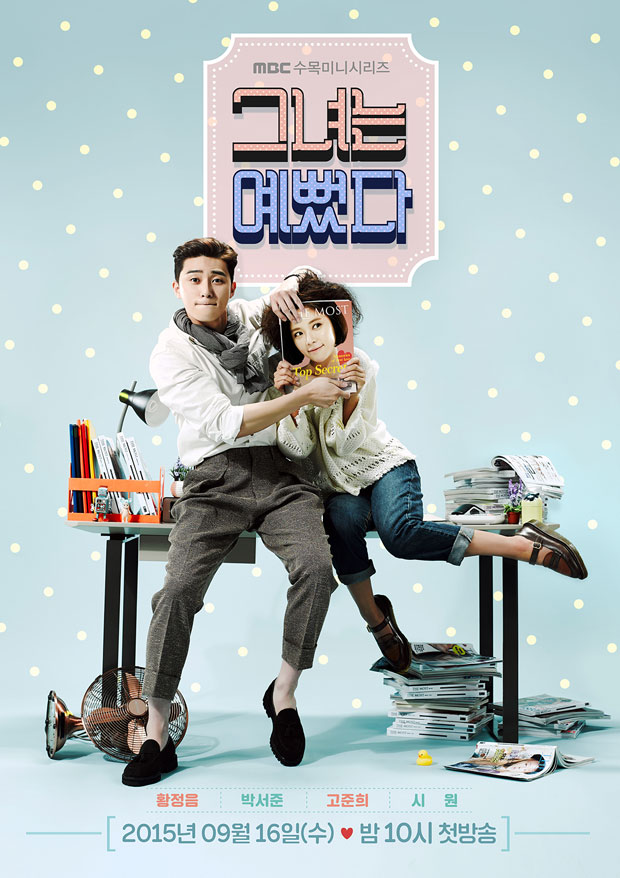
Pretty Li Hui Zhen (漂亮的李慧珍) is the remake Korean industry watchers still argue about. Hunan TV's 2017 Chinese version of MBC's 2015 She Was Pretty (그녀는 예뻤다) starred Dilraba Dilmurat and Peter Ho, and it out-rated the original on Chinese platforms, with Youku and Hunan reporting over 4 billion cumulative views by the end of the run. Why? The She Was Pretty premise, an ugly-duckling first love who reunites with her childhood crush now that he is a magazine editor, hit two cultural veins Chinese audiences were primed for in 2017: workplace romance in a media industry setting (Chinese viewers read this as aspirational post-Weibo, post-Little Red Book) and the makeover reveal beat that Korean rom-coms had polished to a shine since the 2000s. The Chinese remake bumped up the visual gloss and cast Dilraba, who was already a Youku queen, giving the format a star vehicle. Park Seo Joon, the male lead of the original, quietly became a Chinese fandom name after the remake pulled fans back to the source. That is the second-order revenue channel Korean networks care about: 리메이크 sales that boost the original's back-catalog streaming.
한한령 and the Post-2016 Freeze: How Remakes Became the Only Way In
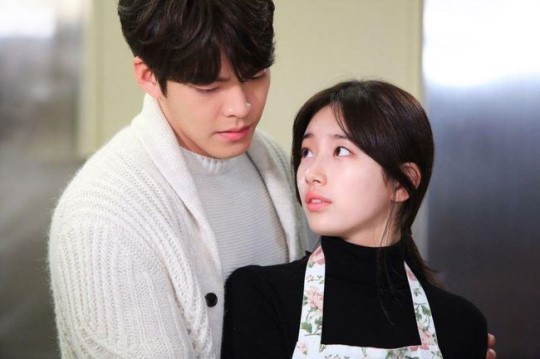
In July 2016, South Korea agreed to deploy the U.S. THAAD missile defense system. Within weeks, Beijing informally rolled out 한한령 (限韩令, the "Limit Order"), and every Korean content export pipeline went cold. Direct K-drama imports on iQIYI, Youku, and Tencent Video stopped. The cancellation of a Kim Woo Bin and Suzy Bae Beijing fan meeting in mid-2016 became the visible symbol. Korean actors got quietly pulled from Chinese productions still in post. But the remake pipeline never fully froze. Chinese studios could still license K-drama IP through Hong Kong, Singapore, and Taiwan intermediaries, and the SAPPRFT filter treated a Chinese-produced, Chinese-cast adaptation as fundamentally Chinese content even when the underlying script was Korean. That is why Ordinary Glory (平凡的荣耀), the Chinese remake of tvN's Misaeng (미생, Incomplete Life), still made it to iQIYI in 2020 despite the formal ban still being in effect. Rain's early 2015 move to headline a Chinese TV drama opposite Tang Yan, reported by The Hollywood Reporter, was arguably the last major direct-star crossover before the freeze, and every route after that ran through the remake workaround.

What Studio Dragon and SLL Do Now: Netflix, Selective Licensing, and the Gray Market Reality
The 2026 remake economy looks nothing like the 2015 version. Studio Dragon and SLL (formerly JTBC Studios) now negotiate remake deals from a very different opening position. First, Netflix's global first-run rights have replaced Chinese streaming as the biggest single line of drama revenue, so 중국 진출 (China entry) is no longer the make-or-break question it was in 2014. Second, Korean IP holders know their originals stream in China through gray channels regardless of the formal ban, so they can afford to be selective about which properties they license out. Third, Chinese remake proposals that used to include first refusal on cast crossovers now come with cleaner IP-only terms, which is why 리메이크 licensing has become a smaller but higher-margin business. Doctor Stranger (2014 SBS) and My Love from the Star both had Chinese film adaptation deals in play pre-2016 that quietly got shelved after 한한령, and Studio Dragon spent 2019 through 2023 renegotiating similar older-catalog contracts with better exit clauses. What Chinese audiences still love about Korean IP has not changed: the specific rhythm of the male lead's emotional turn, the second-lead's dignified loss, the way a K-drama uses a single music cue to signal that everything is about to change. That grammar keeps porting into Chinese remakes because it is genuinely load-bearing.
Explore More of Korea with Daebak
Want to bring a little piece of Korea into your life? The Daebak Box is packed with the best Korean snacks, ramen, and cultural goodies delivered monthly to your door.


