


Table of Contents
If you have ever fallen down a late-night YouTube hole watching a pair of anonymous hands pipe pastel cream onto a strawberry cake with nothing but the sound of a whisk against a bowl for company, you have already met Cooking Tree (쿠킹트리). The Korean dessert channel sits near the top of a very specific creator category that Korean YouTube built, exported, and now dominates globally: silent, aesthetic, ASMR home baking. After a decade watching Korean content businesses productise everything from idol training to mukbang, I would argue this is one of the most quietly profitable formats to come out of Seoul, and Cooking Tree is the reference build.
What Cooking Tree Actually Is (and Why the Format Is So Deliberate)
Cooking Tree is a Seoul-based YouTube channel with roughly 7 million subscribers, built almost entirely on one editorial rule: no voiceover, no on-camera face, no captions, no music. What you get instead is a locked overhead shot, two hands, and the crackle of caramel or the drag of an offset spatula through Chantilly. Each video runs one recipe from mise-en-place to plated slice, cut tight enough that a 12-minute chocolate strawberry cake feels like a spa treatment.
This is not a casual creative choice. In Korean creator circles the format is called 무성 요리 (mu-seong yori, "wordless cooking"), and it emerged as a deliberate answer to a bandwidth problem, YouTube's algorithm rewards long watch time and the fastest way to hold a global audience is to strip the language layer out entirely. Cooking Tree perfected the template so cleanly that copycat channels in Japan, Vietnam, and the US now shoot to the same grammar: overhead camera, matte white marble, natural window light, one recipe, real-time sound.
Why Silent Korean ASMR Cooking Travels Better Than K-pop
Here is the export insight that Korean labels figured out around 2018, and that the food-creator scene inherited: content without dialogue is content without a subtitle bill. K-pop MVs still need lyric translations, K-dramas need dubbing rights sold market by market, and mukbang needs at least captioning for jokes to land. A Cooking Tree video needs nothing. The whisk sounds the same in Sao Paulo as it does in Seoul, and the visual grammar (soft pinks, matcha green, ripe strawberry red on cream) reads as "aspirational patisserie" in every culture that has an Instagram feed.
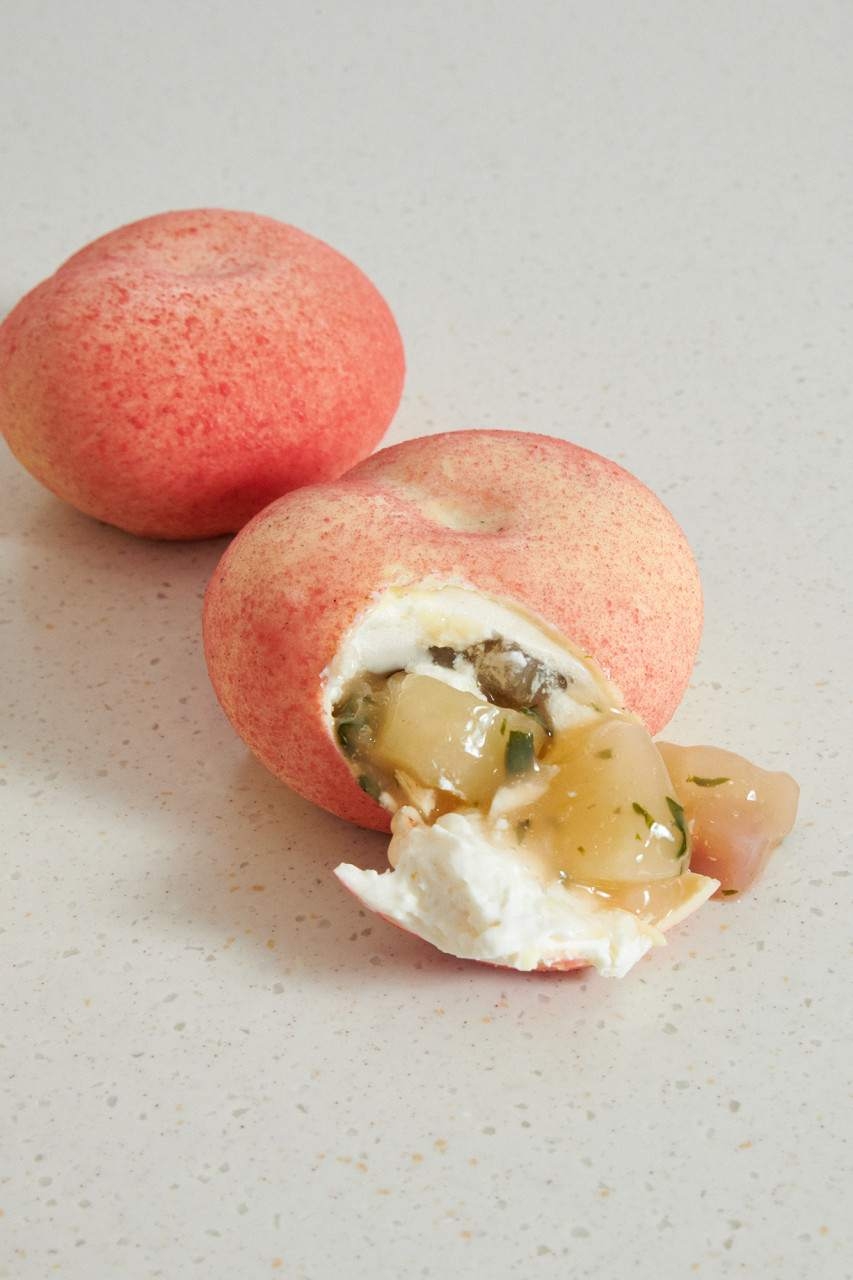
That is why the appeal point is not really the recipe. The recipe is a delivery vehicle for a sensory experience, the same one Korean bakeries are now weaponising in physical form with "agjak" (악작), the fruit-shaped mousse cakes wrapped in a thin chocolate shell that snaps audibly when you bite it. Younger Korean consumers care as much about the crack and the unboxing clip as the flavor. Cooking Tree was doing the on-screen version of that half a decade before the bakeries caught up.

The MCN Machine That Makes This Category Possible
People assume Cooking Tree is a solo baker filming from her kitchen. Structurally, it is more like a small production house sitting inside a Korean MCN (multi-channel network) infrastructure that Western creators mostly do not have access to. CJ ENM's DIA TV, launched in 2013, was the first mover, at peak it had roughly 1,400 partner creators pushing about 2 billion monthly views, with more than half of those views generated outside Korea. Sandbox Network and Treasure Hunter followed, and cooking creators were among the earliest categories those MCNs actively recruited because the format traveled cheaply.
What an MCN gives a channel like Cooking Tree is the boring but decisive stuff: YouTube CMS-level rights management, brand-deal templating, cross-border tax and payment routing, and a legal team that can license a Vogue Korea shoot or a Paris Baguette PPL without the creator having to think about it. That is the Korean creator advantage. The infrastructure was built by ex-TV producers who understood content IP economics, not by ad-tech people.
The Signature Dessert Vocabulary: Chapssaltteok, Matcha, Berry Season
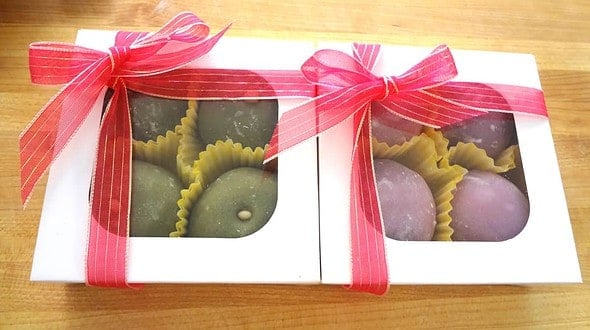
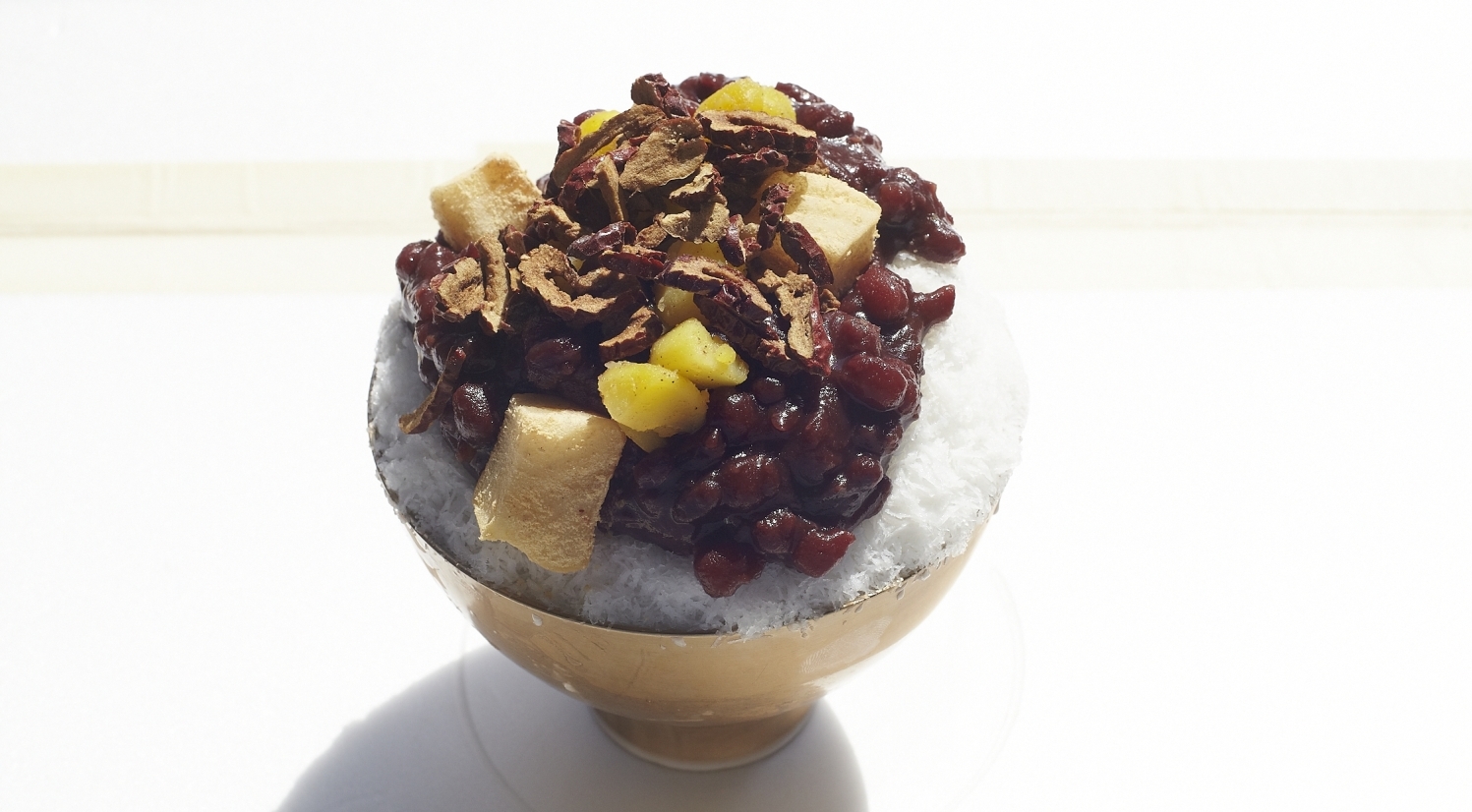
If you scroll Cooking Tree's back catalog, you will see the same core repertoire cycled with the calendar: strawberry chapssaltteok (딸기 찹쌀떡) in Valentine's-through-spring window, matcha (녹차) everything in early summer, patbingsu-adjacent shaved-ice cakes in July and August, chestnut and sweet potato in autumn. This is not accidental Instagram thirst-trap, it is a Korean pastry logic. Korean home dessert culture historically indexes to ddeok (rice cake) and pat (red bean) as the sweet base, then absorbs Japanese-French patisserie technique on top. Chapssaltteok itself is literally the Korean take on daifuku, and Cooking Tree renders it in the exact aesthetic that made 쫄깃 (jjolgit, that specific chewy-bounce mouthfeel) into a global food adjective.
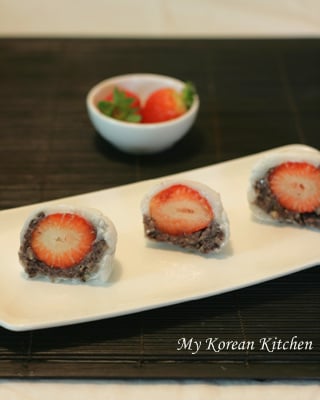
The strawberry chapssaltteok in particular is the Cooking Tree calling card. A whole strawberry gets swaddled in danpat (sweet red bean) and then in a translucent rice-flour shell, cross-sectioned on camera so viewers see the pink-red-white geometry in one clean cut. That reveal shot, whole strawberry framed inside a cloud of red bean, is what the algorithm rewards. Home bakers I know in Seoul use it as a beginner's benchmark: if your chapssaltteok cross-section looks like Cooking Tree's, you are done.
How the Channel Actually Makes Money (It Is Not Just Ad Rev)
Ask anyone at HYBE or CJ ENM and they will tell you the same thing: pure YouTube ad revenue is the floor of a creator business, not the ceiling. Cooking Tree follows the standard Korean multi-stream playbook. Ad revenue on 7 million subs and 20-million-view hits pays the electricity. The real margin comes from three other layers.
First, a Korean-language baking book. Cooking Tree published one and it moved through the standard Kyobo Book Centre and Aladin distribution machine that pushes any 100k+ Korean creator toward hardcover. Second, paid online cooking classes on Class101 (the local Skillshare equivalent) and Weverse-style membership tiers, priced around ₩150,000 (about $115) per course, which is the price band Korean e-learning has settled on for creator-taught content. Third, brand partnerships with Korean baking tool and ingredient makers (whisks, silicone molds, edible flowers) that only exist because the MCN has a sales team. The three streams together typically outperform ad rev by a factor of two or three, and none of them require the creator to show her face.
The Broader Industry Read: Why Korean ASMR Cooking Is the Category Leader
Zoom out and Cooking Tree is a case study in what Korean content people call "포맷 수출" (format export), the deliberate design of content that assumes global distribution from day one. K-drama learned this after Winter Sonata sold to Japan in 2003. K-pop learned it after Girls' Generation and BTS. Silent Korean cooking ASMR is the third wave: born on YouTube, engineered to skip the localization tax, backed by an MCN system that understands rights and brand economics. That is why Emojoie in France and Sugar Yummy in Japan look and sound like clones of the Cooking Tree template. They are copying the format because the format was, from the start, built to be copied.
If you want to understand where Korean food entertainment goes next, the answer is not another mukbang star or another Netflix cooking competition. It is more of this: silent, sensory, aesthetically obsessive, and quietly monetized on three continents at once. Cooking Tree just happens to be one of the earliest and cleanest examples of the model.
Explore Korean Snacks with Daebak
Love Korean food? Get authentic Korean snacks and ramen delivered straight to your door with the SnackFever Box by Daebak.


