


Table of Contents
Nine times out of ten when a Korean fried chicken conversation starts abroad, someone brings up yangnyeom chicken (양념치킨) and the whole table nods along. Almost nobody who has not lived in Korea can tell you why dak-gangjeong (닭강정) is a different thing, even though it sits right next to yangnyeom-chicken in every Seoul food-court signboard and Sokcho market alley. After more than a decade watching K-food brands try to scale in the US, I think dak-gangjeong is the sleeper case study in the whole category. Not the crown-jewel product like BBQ or Kyochon-style yangnyeom, but a bite-sized, glazier, more portable format that quietly rode Sokcho's tourism boom, Instagram's cheese-pull era, and finally the post-Squid Game US restaurant push. This piece breaks down why 닭강정 is not just "small yangnyeom-chicken," why the East Coast port city of Sokcho gets called the origin, and why chains like 강정이 기가 막혀 built the entire brand template that Kyochon and BBQ Chicken later imported into New York.
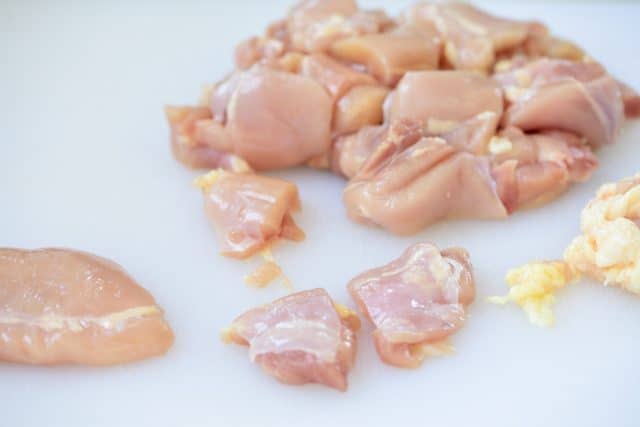
닭강정 vs 양념치킨: the size, sauce, and eating occasion are all different
Most English-language K-food coverage lumps everything sweet-and-spicy under "Korean fried chicken." Inside Korea, the split is clear. 양념치킨 is a whole-chicken (or half) portion. Bones in, pieces the size of a normal drumstick or wing, and a thinner sauce that stays saucy rather than crystallizing on the crust. It is the format you sit down and eat with a beer and pickled radish, usually delivered in a paper box from Kyochon, BBQ, or the neighborhood chicken hof. 닭강정 is the opposite math. The chicken is chopped to bite size (often boneless), fried harder for a stiffer crust, then coated in a glazier, syrup-heavier sauce that grips the crust like a shell. That is why 닭강정 stays crunchy on a train or in a market takeaway cup for hours, and 양념치킨 usually does not survive the delivery ride without going a bit soft.
The eating occasion also flips. Yangnyeom-chicken is a sit-down or delivery meal. 닭강정 is 길거리 음식 (street food) and 간식 (snack). At a Sokcho market you buy it in a paper cup and eat it walking. At a stadium you get it in a takeaway box. At a corner 강정이 기가 막혀 kiosk in Seoul, you grab a small cup for the subway ride home. This is a size and glaze difference that most Western food writers miss, and it is the difference that drives the whole business model. A snack-format product with a shelf life of 3 to 4 hours at room temperature can scale to airport shops, stadium concessions, and mall food courts in a way a delivery-first product like Kyochon-style yangnyeom cannot. That is the appeal point the industry actually plays.
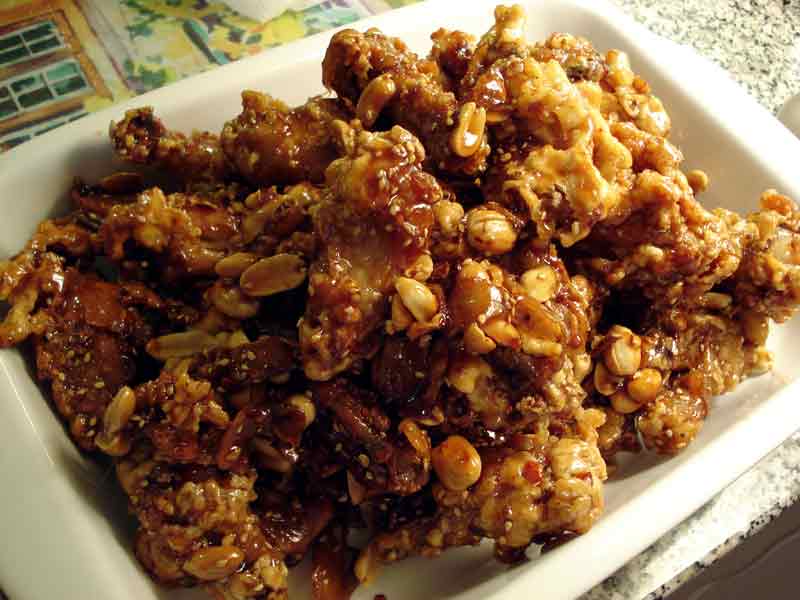
The Sokcho (속초) origin claim: why an East Coast port started this
Ask any 강원도 native and they will tell you dak-gangjeong belongs to Sokcho. The city sits three hours east of Seoul with 설악산 (Seoraksan) in the backdrop, and its Jungang Market (중앙시장) has an entire alley of chicken stalls that visitors line up for. The origin story goes back to the early 1970s when the port's fish market vendors, who mostly sold whole raw seafood to locals, started chopping fried chicken into bite-size pieces to sell to the summer beach tourists rolling in from Seoul. Manseok Dakgangjeong opened at Jungang Market in 1983, and Jungang Dakgangjeong traces back to 1970. Both still operate. The Korea Herald's 2019 dispatch from Sokcho called the alley "packed with stalls selling fried chicken for takeaway," and if you have walked it you know that is a polite understatement, since the queues on a summer weekend can run 30 to 40 minutes deep.
The origin math makes sense once you see the geography. Sokcho is a summer destination. Tourists want portable snacks they can eat on the beach or on the drive back to Seoul, not sit-down chicken and beer. Local vendors also had a fried-food infrastructure already built for market seafood 튀김 (tempura-style fry). Bite-size fried chicken with a glazier coating was a natural pivot. What sealed the Sokcho brand was the expressway build-out that dropped Seoul-to-Sokcho drive time down to a day-trip and let travelers stop by, buy dak-gangjeong for the road, and turn it into a 지역 특산물 (regional specialty). Every 강원도 tourism campaign since has leaned into the market chicken. That is why regional dak-gangjeong SKUs still outsell Seoul-branded ones in Coupang search rankings during summer months.
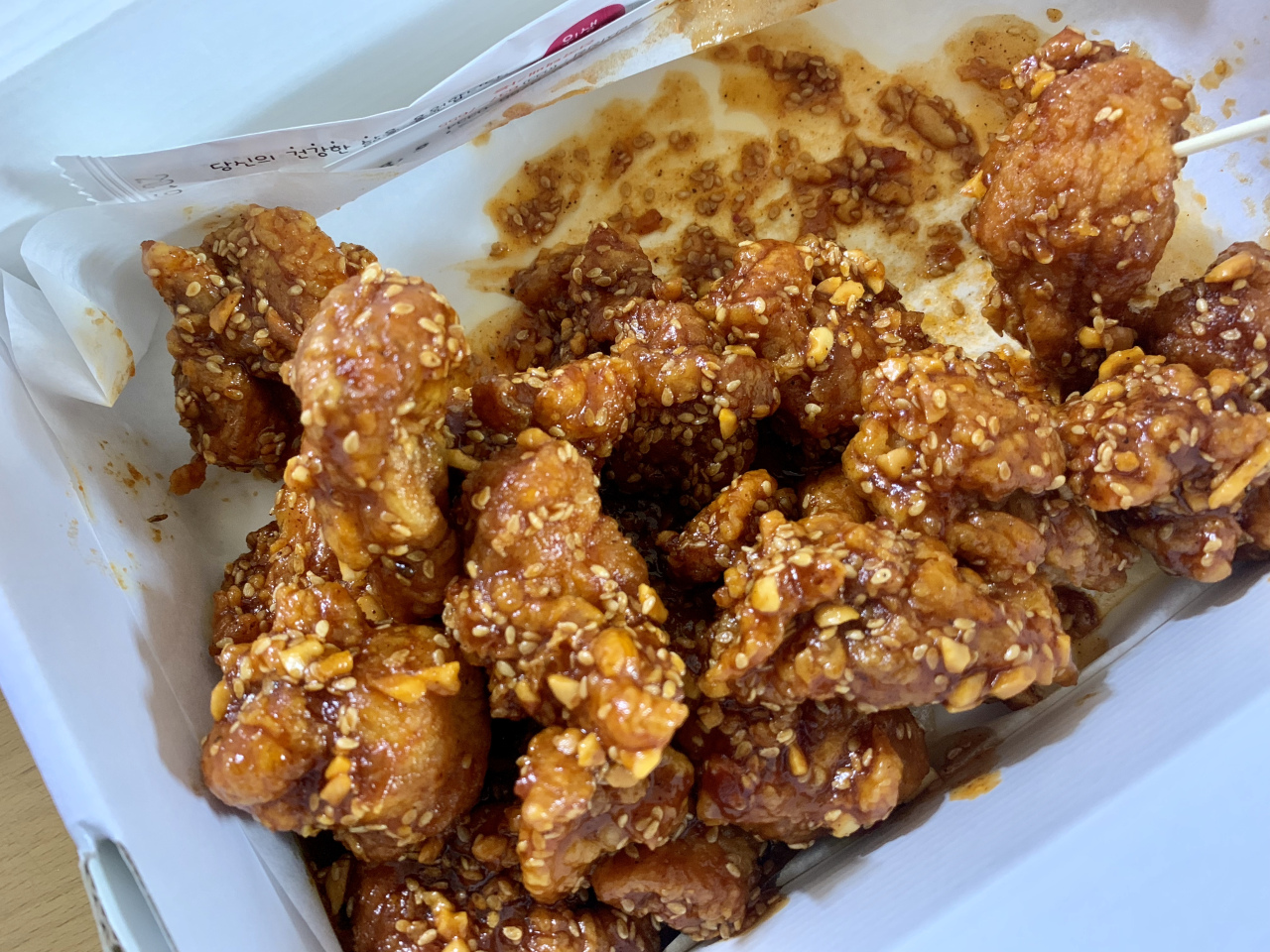
강정이 기가 막혀 and 명동성 닭강정: the chain playbook that scaled the format
Once Sokcho proved the format worked, the next question was how to scale it. Two Korean chains figured it out in the mid-2000s. 강정이 기가 막혀 (roughly "this gangjeong is unbelievable") launched in 2005 and pushed dak-gangjeong out of markets and into franchisee kiosks in Seoul subway stations, university strips, and mall food courts. 명동성 닭강정 took the tourism-friendly Myeongdong location and turned it into an Instagram-native brand. Both leaned hard on the fact that dak-gangjeong ships in a paper cup, not a box. Real estate cost per cup is lower. Kitchen footprint is smaller. And a small kiosk can push out 500 to 700 cups a day without needing dine-in space, which for a Seoul commercial rent is the whole game.
The chain-format economics look nothing like Kyochon's or BBQ's. A traditional fried-chicken franchise needs a 20-plus-seat store, a delivery ops setup, and staffing for evening peaks. A 강정 kiosk needs a 3-meter counter, one fryer, and a paper-cup supply chain. That is why through the 2010s dak-gangjeong kiosks multiplied in places yangnyeom-chicken franchises could never physically fit, especially university-strip alleys and subway underpasses. The chain expansion also normalized flavor variety. Original sweet-spicy, soy-garlic (간장), honey-butter, sour-vinegar, and cheese-powder versions all exist because the base format ships in a cup, which lets a store rotate seasonal flavors without changing the packaging or the counter workflow. This modularity is what makes the format so hard for Western snack brands to copy. The infrastructure was built around the paper cup, not the sauce.
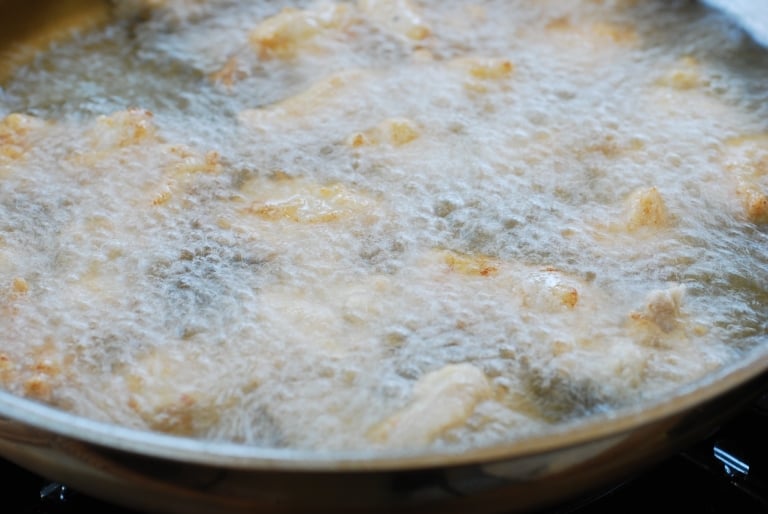
Why the 단짠 (sweet-salty) trio wins globally, and how TikTok compressed the timeline
Korean-speakers have a specific word for this flavor category, 단짠 (sweet-salty), and dak-gangjeong is the platform that expresses it best. Yangnyeom sauce is closer to a wet chili-based spice profile. Gangjeong sauce is closer to a candy glaze that leans on 물엿 (corn syrup), soy, sugar, and a touch of chili. The result hits a snack circuit that most Western snacks do not deliver: sweet up front, salty on the tail, and crunchy the whole way through. This is not a marketing pitch. It is a real texture-flavor combination the food-science literature keeps flagging as universally craveable. The reason honey-butter chips, Buldak ramyeon, and dak-gangjeong all break out globally is the same 단짠 mechanic, dialed at different intensities.
TikTok collapsed the discovery timeline for this. In 2021 a cheese-pull variant of dak-gangjeong (chicken tossed in gangjeong sauce, then blanketed with melted mozzarella so a cheese pull happens when you lift a piece) went viral on the K-food side of TikTok. It came out of Korean fried-chicken shops in LA Koreatown, hit K-food creator accounts, and by mid-2021 was showing up on menus from Sydney to São Paulo. The strategic detail most business coverage missed is that the cheese pull was not a Korean invention. Korean shops had already been doing "블랭킷 치킨" (cheese blanket chicken) for years. What TikTok did was compress the discovery cycle from three years (which is the usual Korean food trend spread outside Asia) to about six months. That was the moment dak-gangjeong stopped being read as "small chicken" in Western search and became a category name on its own.
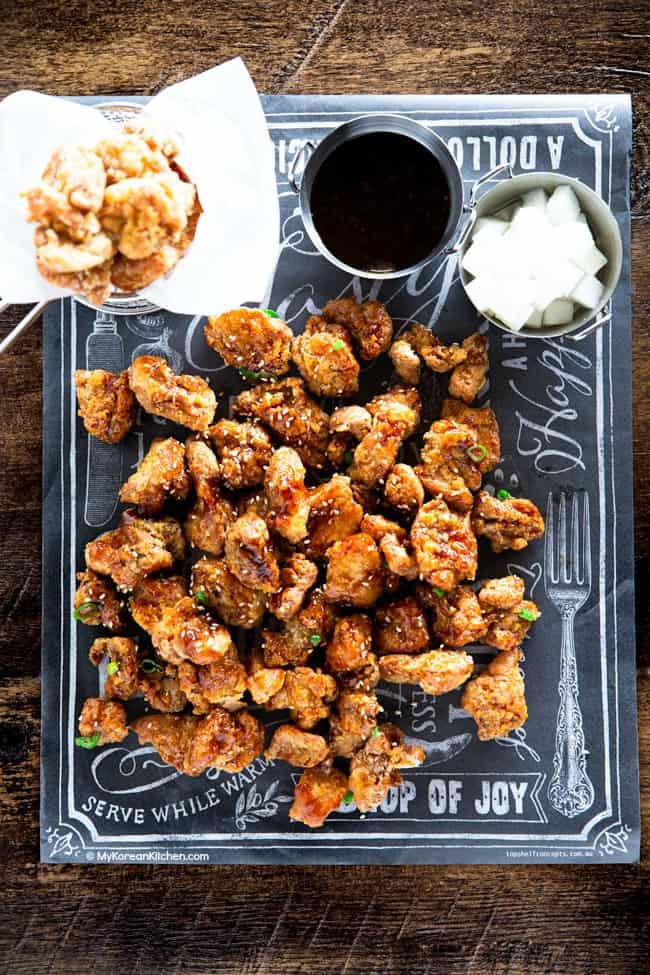
The post-Squid Game US restaurant push: how Kyochon and BBQ added 닭강정 to Western menus
Squid Game did not directly cause the dak-gangjeong surge in the US, but it did what BTS did for K-pop packaging. It made Korean brand marketers finally believe the Western consumer was searching for specifically Korean food products, not "Asian" placeholders. From 2022 on, Kyochon opened new US locations with dak-gangjeong SKUs on the menu, positioned as a snackable appetizer separate from their signature yangnyeom half chicken. BBQ Chicken followed with the same move. And smaller US operators, especially in LA, Dallas, and the tri-state area, started listing "gangjeong" as a distinct menu section rather than lumping it under Korean fried chicken. What they figured out is that dak-gangjeong solves the shareability problem that yangnyeom does not. It travels well on a DoorDash order, sits nicely on a group appetizer plate, and hits the sweet-salty snack lane that pairs with soju, beer, or K-drama couch nights.
The interesting business detail is where the format still has room to run. In Korea, 닭강정 is over-served in the market channel and lightly served in the CVS (convenience store) channel. GS25 and CU have both tested chilled-and-reheat gangjeong cups but neither has scaled the SKU nationwide. In the US, the opposite is true. Fast-casual K-food operators love it, but grocery retail is still empty. If a Korean CJ-owned brand like Bibigo, or a US frozen-food player, figures out the freezer-to-air-fryer dak-gangjeong SKU, that is likely the next category unlock. Not because the taste needs re-engineering, since the sauce recipe is already table-stable, but because the format ships. Bite-size, glazed, crunchy, freezer-friendly. That is a snack aisle product waiting for someone to run it. After a decade of watching Korean snack brands try to break into the American CPG channel, my read is that dak-gangjeong is the one where the flavor engineering is already right and the packaging is the only thing left to solve.
Snack the Korean way with Daebak
Get a taste of Korea every month with the SnackFever Box, packed with the newest Korean snacks and treats delivered from Seoul to your door.


