


Table of Contents
Ask a Korean fine-dining chef what "eating like royalty" actually means and you will not get a story about giant portions. You will hear about restraint, seasonality, and eight provinces sending their best ingredients up to a Joseon palace kitchen so a king could taste the country in one meal. I have been watching Korea's food business for over a decade, and gungjung yori (궁중요리, royal court cuisine) is the tier that quietly holds up everything the Michelin Guide now calls "modern hansik." This is where it comes from, who kept it alive, and why a bowl of soy-braised rice cakes started life as a royal dish.
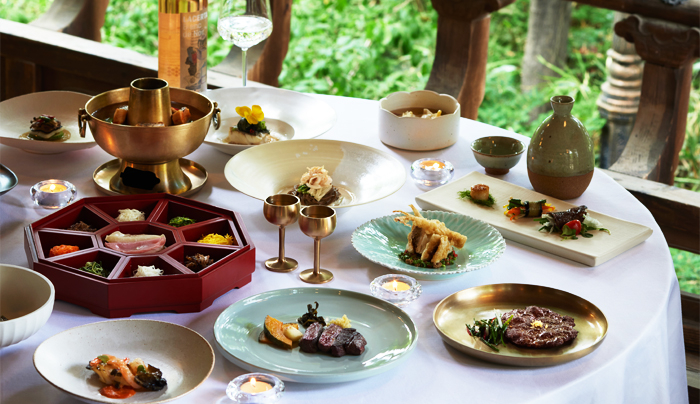
What 궁중요리 Actually Meant Inside the Palace
Gungjung yori was never a single menu. It was a rotating system of daily meals for the Joseon king and queen, and the paperwork behind it is one of the reasons we can still cook it today. Two texts anchor everything: Heo Gyun's Domundaejak (도문대작), written in 1611 and considered Korea's earliest surviving food book, and Siuijeonseo (시의전서), a late-Joseon manual that recorded royal and yangban recipes with unusual specificity for its era.
The daily rhythm inside the palace was strict. The king ate a full sura (수라, the royal meal) twice a day, at breakfast and dinner, with two lighter meals in between. Each sura landed on a formal spread of about twelve base dishes plus rice, soup, and stew, laid out on the sura sang (수라상). The etiquette word for the meal itself, jinji (진지), is still the respectful term Koreans use when serving elders. The regular household version, the banssang (반상), scaled the same logic down: a set number of banchan around one bowl of rice. Everything you experience as "traditional Korean" table structure is a descendant of that palace grammar.
The Two Recipe Books That Made Modern Revival Possible
Here is the part most foreign coverage skips. Royal court cuisine almost disappeared. When the Joseon dynasty fell in 1910, the palace kitchen dispersed, and by the 1970s only a handful of former sura sanggung (수라상궁, the court ladies who ran the royal kitchen) were still alive. Han Hui-sun was the last of them, and she was designated the first holder of the royal culinary art as Important Intangible Cultural Property No. 38. She trained Hwang Hye-sung, who did something the palace never did: she wrote the recipes down and standardized the measurements. Before Hwang, cooks measured by hand, feel, and oral memory. After her, the tradition became teachable.
That direct oral-to-written chain, palace lady to Hwang to Hwang's daughter Han Bok-ryo, is the reason Michelin inspectors in 2016 could evaluate a royal cuisine restaurant and actually know what they were tasting. Without those three generations of documentation, "eating like royalty" would be marketing copy. With it, you can order a course based on the historical records of Lady Hyegyeonggung's 60th birthday banquet in 1795 and eat what she ate.
The Three Heritage Keepers You Actually Book
Three restaurants carry the modern royal-cuisine flag in Seoul, and they are stylistically distinct enough that a serious diner books all three across a trip.
Jihwaja (지화자), across from Unhyeon Palace, is the purest. Han Bok-ryo, the third-generation intangible-heritage holder, runs it, and the kitchen refuses fusion. Courses like Daejanggeum Manchan reproduce the dishes shown in the drama Dae Jang Geum (Han Bok-ryo was the culinary advisor). Set courses run roughly 51,750 to 207,000 won.
Yong Su San (용수산), in Cheongdam and Taepyeongno, works from Kaesong royal cuisine, the northern branch of the tradition. The flavors are gentler, less garlicky, and the plating leans quieter, with hanbok-uniformed servers and a warren of private ondol rooms. It is where Korean business dinners for foreign VIPs end up when the host wants to say "old money" without saying it.
Korea House (한국의 집) in Pil-dong is the state-run flagship, operated by the Korea Heritage Agency. It reopened in March 2026 after a seven-month renovation, with former Michelin-starred chef Cho Hee-sook as culinary advisor and a research team of certified intangible-heritage practitioners. Full royal courses start around 155,000 won, and there is an entry-level Gaon Jeongsik course at 29,000 won that is the single best "try it once" value in the category.
The Jang Geum Effect: How One Drama Rewrote a $150 Menu
Nothing shaped the international demand curve for gungjung yori like Dae Jang Geum (대장금, "Jewel in the Palace"), the 2003 MBC drama about an orphan who becomes the first female royal physician after starting as a palace cook. It aired to a 45.8 percent average domestic rating (peak 57.1 percent), sold to 91 countries, and grossed about $103 million in export revenue. The Korea Tourism Organization built a theme park around it in Yongin in December 2004.
The knock-on for food was concrete. Japanese travel agencies began packaging "royal cuisine cooking tours" to Seoul within a year of the finale. Inbound tourism rose from 5.3 million in 2003 to 6.9 million in 2005, and Korean restaurants abroad started printing "as seen in Jewel in the Palace" on menus. The reason it worked, and why Crash Landing on You could not replicate it: Jang Geum was 54 episodes of watching food be prepared with intent. That is a slow burn no music video can match. Cultural export people at KOCCA still cite it as the single cleanest ROI case in Hallyu history.
Michelin's Bet: Why Royal Cuisine Went Three-Star in 2017
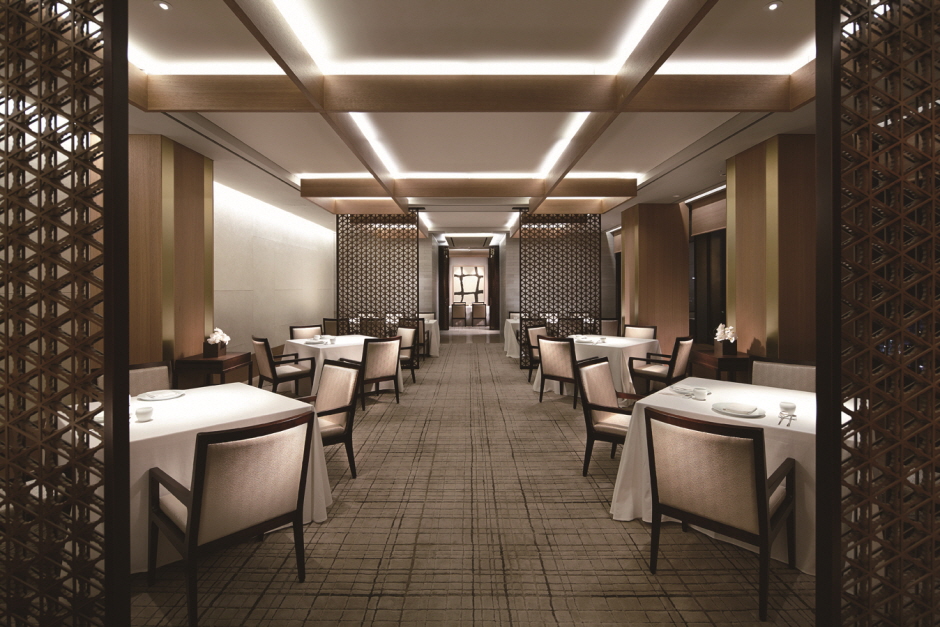
When the Michelin Guide launched Seoul in November 2016, the guide's Korean debut needed a story, and gungjung yori was it. La Yeon at The Shilla Seoul, opened in 2013 with a menu built explicitly on royal-court technique, jumped to three stars in the second edition (2017) and has held them since. Gaon, another royal-cuisine-lineage restaurant, hit three stars the same year. Being the first Korean restaurants at that tier mattered globally: it unlocked "Korean food" as a category international critics could evaluate without asterisks.
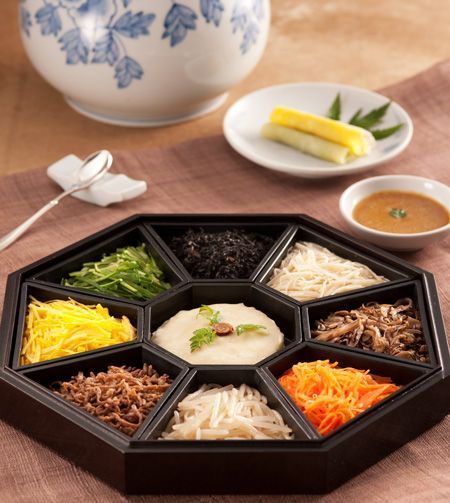
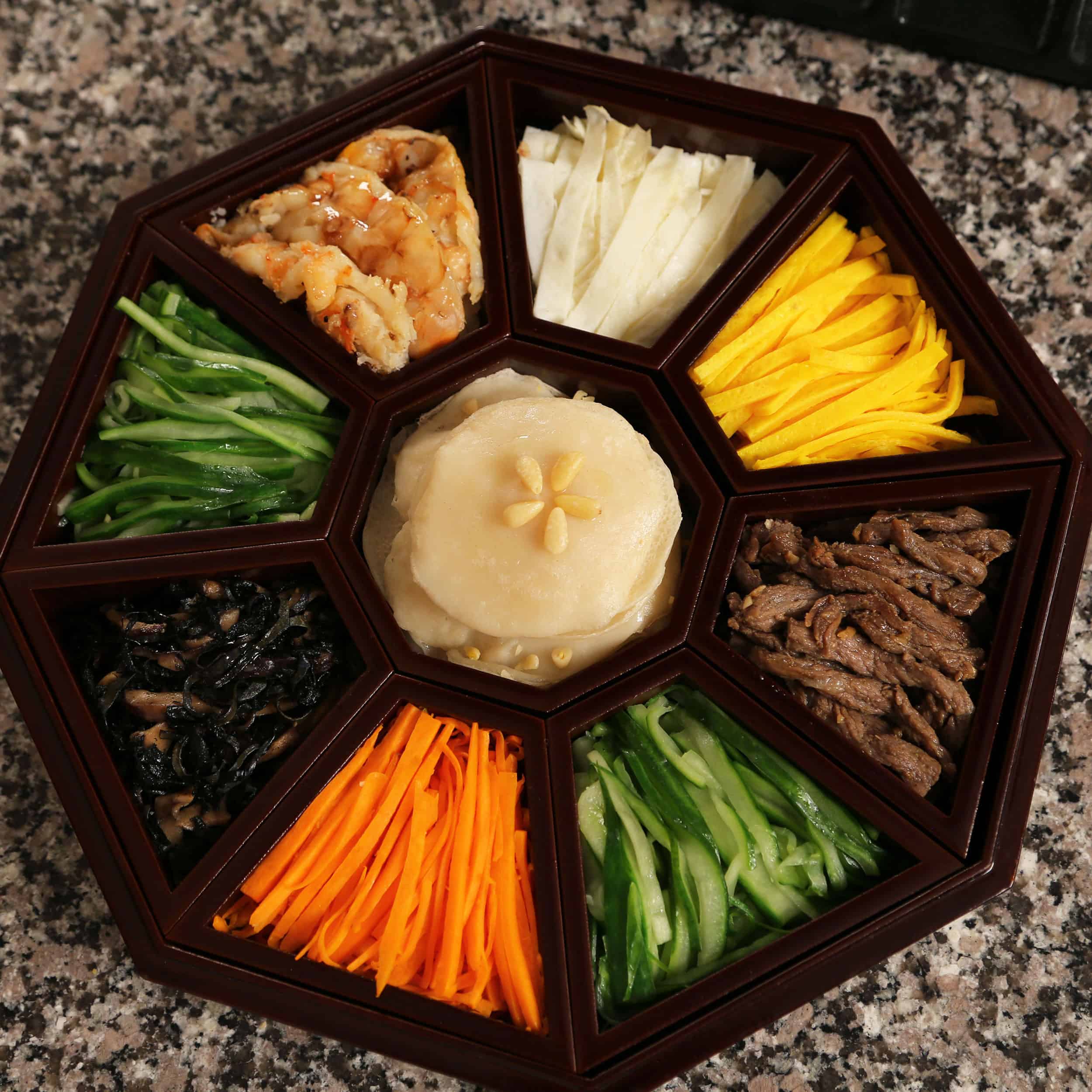
Why did the tradition translate into Michelin points so cleanly? Because it was already fine-dining code before Michelin arrived. The obangsaek (오방색) five-color principle, gujeolpan's nine geometric compartments, the required contrast of cooked-cold-raw components, the way pine nut (잣) garnish is used to signal luxury: this vocabulary maps almost 1-to-1 onto the tasting-menu grammar Michelin inspectors already read. Modern Korean chefs did not have to invent a language. They translated one.
Why $150 to $400 Per Person Actually Makes Sense
Here is the industry math nobody prints on the menu. A serious gungjung yori dinner runs $150 to $400 per person, and that pricing is not markup for atmosphere. It reflects three real costs. First: labor intensity. Gujeolpan alone takes hours of prep for one platter, nine separately cooked components cut to matching matchsticks. Second: certified-heritage labor is scarce. There are fewer than 20 fully trained gungjung yori practitioners in Korea, and their wage floor sits closer to a hotel-chef base plus a heritage premium. Third: ingredient sourcing. Real royal cuisine specifies things like Gijang pine nuts, Ganghwa specific-cultivar rice, and Jeju abalone at set sizes. You cannot substitute down.
That is why gungjung yori sits above hansik-based fine-dining like Mingles or Onjium (both Michelin-starred) in price band, even when Mingles' plating looks more contemporary. The heritage tier is a separate product. Michelin recognized it as such by 2017, and the Blue Ribbon Survey, Korea's local restaurant guide, has kept Korea House on its top-tier list two years running.
The Everyday Dishes That Were Once Royal
A last thing worth flagging, because it changes how you order at any Korean restaurant. Several dishes you eat casually today started inside the palace. Gungjung tteokbokki (궁중떡볶이), the soy-sauce and stir-fried version with beef and shiitake, is the original. The spicy red street version is a mid-20th-century reinvention. Bibimbap, when done properly with about thirty small components in a single bowl and beef-bone broth instead of water, is the palace variant called goldongban (골동반). Japchae was originally a stir-fry of vegetables and mushrooms with no noodles at all: the cellophane noodles are a 20th-century addition.
The pattern is consistent. What we now call "Korean street food" or "home cooking" is often a democratized version of a Joseon palace preparation, adjusted for cheaper ingredients and faster prep. That is not a knock. It is proof the tradition worked. A cuisine that can move from a 12-course royal spread down to a plastic-cup portion at Sindang-dong Tteokbokki Town and still taste like itself is a cuisine with real structural bones.
Explore Korean Snacks with Daebak
Love Korean food? Get authentic Korean snacks and ramen delivered straight to your door with the SnackFever Box by Daebak.


