


Table of Contents
Anyone who has spent a decade watching Korea's street food economy will tell you the 길거리 음식 (gilgeori eumsik) scene runs on weather and nostalgia. When the first cold snap hits Seoul in November, you can smell 붕어빵 batter three subway exits away. When the humidity climbs in July, the 팥빙수 shops start staying open until 2 a.m. This is not a random rhythm. Korean street desserts are one of the most stubbornly seasonal micro-economies in Asia, and the ones that survived globalization did so because they anchor to a specific moment in the year, a specific memory, and (this is the part outsiders miss) a specific price psychology that Koreans have basically agreed on together.
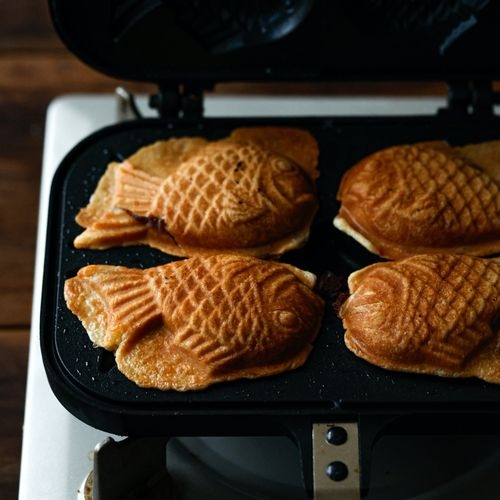
붕어빵 (Bungeoppang): The Winter Signature Nobody Can Fake
붕어빵 literally translates to "crucian carp bread," which is confusing to first-timers because there is exactly zero fish inside. The name refers to the shape only, and specifically to a specific carp species (붕어) that used to be sold cheap in Korean markets. The connection is class history. Bungeoppang was invented in the 1930s as a working-class winter snack, borrowed loosely from Japanese taiyaki but reformulated to be significantly cheaper: thinner batter, more air, and 팥 (pat, sweetened red bean paste) as the standard filling because 팥 was the affordable pantry staple every Korean household kept on hand for winter.
The vendor economics of 붕어빵 are worth understanding because they explain why this snack refuses to die. A single 붕어빵 costs about 500 to 1,000 won at street stalls in Seoul as of 2024, and a well-located winter vendor near a busy subway exit can move 1,000 units on a peak day. Do that math: that is roughly ₩500,000 to ₩1,000,000 in daily revenue, off a cart that costs less than a used compact car to set up. This is why 붕어빵 vendors historically returned to the same street corner every November for decades. It is also why Karrot Market (당근마켓) launched a dedicated "붕어빵 지도" (bungeoppang map) in 2020, letting neighbors crowdsource vendor locations because the traditional stalls do not have Naver Maps listings. The Korea Herald reported that map searches for 붕어빵 quadrupled other winter snack keywords, prompting Karrot to rebrand the whole tool around this one item.
The appeal point that keeps 붕어빵 in the national conversation is not the taste. It is the ritual of eating one warm outside on a freezing Seoul day, wrapped in that beige paper sleeve, and burning your tongue on the molten 팥 center because you cannot wait. Every Korean has a childhood memory of this exact scene. That is what modern 붕어빵 cafés in Seongsu and Yeonnam are selling when they upcharge to 3,000 won a piece with 슈크림 (cream), 초코 (chocolate), and 피자 (pizza) fillings: not a better product, but a permission slip to relive the moment.
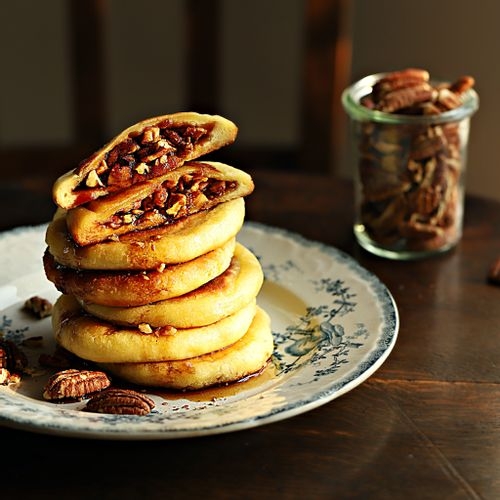
호떡 (Hotteok): The Winter Sweet That Started as a Chinese Import
호떡 is the other pillar of Korean winter street sweets, and its origin story is a small lesson in how Korean food culture actually works. It arrived in the mid-19th century via Chinese merchants passing through Incheon and Seoul port cities, and within one generation Korean vendors had localized it beyond recognition. The Chinese original was a savory stuffed bread. The Korean version dropped the meat, packed the inside with 흑설탕 (heuk-seoltang, dark brown sugar), 계피 (cinnamon), and crushed 땅콩 (peanuts) or 해바라기씨 (sunflower seeds), and pressed it flat on a heavily oiled griddle. What you get is a chewy exterior with a molten, syrupy interior that behaves more like a filled donut than a Chinese scallion pancake.
The industry insight on 호떡 is that it is the one Korean street dessert with a proven regional-variation moat. Busan has 씨앗호떡 (ssiat hotteok), the seed-stuffed version invented at Nampo-dong that puts 견과류 (mixed nuts) and sunflower seeds inside the classic brown sugar filling, then cuts the top open so the seeds spill out. That single innovation from a Busan vendor around 2010 turned 씨앗호떡 into a tourist pilgrimage food, and now every Korean city with a night market has its own regional 호떡 spin. Jeonju does a green tea version. Seoul's Namdaemun Market runs the 야채호떡 (vegetable hotteok) that skips sugar entirely for a savory take with 잡채 style noodles inside.
What makes 호떡 a durable category, versus, say, 뽑기 (dalgona), is that it never needed Squid Game to blow up globally. Korean-Americans have been making 호떡 at home for two generations, Maangchi's recipe video has millions of views, and the premix packages from Beksul now sit in H-Mart aisles year-round. It works as a home food. The street version is still the standard-bearer because of the caramelized-crust-from-a-hot-griddle effect nobody can perfectly reproduce in a home kitchen, but the concept travels intact.

계란빵 (Gyeranppang): The All-Season Breakfast Cart That Won Subway Exits
계란빵 is different from the rest of this list because it is not seasonal. You can find 계란빵 vendors year-round at the same subway exits, feeding the office worker demographic that skipped breakfast and needs 2,000 won of protein and carbs before hitting the elevator at 9 a.m. That is the whole product-market fit. A whole egg cracked on top of slightly sweet 반죽 (batter), baked in a rectangular metal mold, served in a paper sleeve you can eat one-handed while checking KakaoTalk. This is not restaurant food. It is portable breakfast engineering.
The reason 계란빵 became a subway-exit staple has everything to do with Korean office culture and nothing to do with tradition. The snack was invented in the 1980s at a stall near Inha University, but it exploded in Seoul around 2005 when the 9 a.m. commute density in Gangnam and Yeouido hit critical mass. Vendors realized office workers would pay a premium for something warm they could eat walking to work, and 계란빵 had exactly the right form factor: no utensils, no crumbs, one hand free for the phone.
The modern iteration is where the money is. Post-2020, Instagram-driven 계란빵 cafés in Yeonnam and Mangwon started charging 4,500 won for a version with mozzarella cheese, bacon, and 스리라차 (sriracha) drizzled on top, and Gen Z is buying. What separates the successful upgrade shops from the failed ones is that they respected the original ratio: whole egg on top, sweet-slightly-savory bread underneath, no messing with the fundamental structure. The Korean market punishes 계란빵 shops that try to hide the egg. If you cannot see the yolk, you did it wrong.
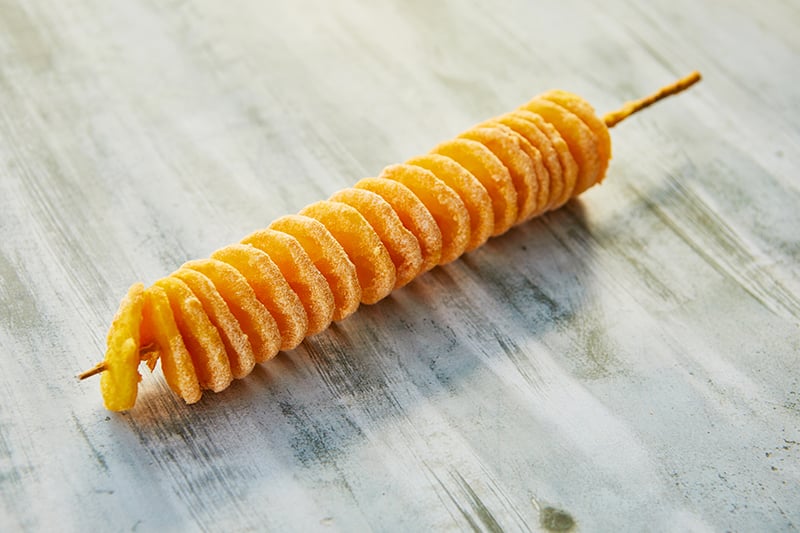
회오리감자 (Hoeori Gamja): The 2000s Myeongdong Invention That Went Viral
회오리감자 is the newcomer on this list, and it deserves attention because it is one of the very few Korean street desserts that was invented in the modern K-tourism era, not inherited from the Joseon dynasty or the Japanese colonial period. It first appeared in Myeongdong around 2005 to 2007, credited to Jeong Eun-suk of Agricultural Hoeori Inc., who developed the spiral-cut machine that turned a whole potato into one continuous ribbon on a skewer. The 회오리 (whirlwind) name refers to the shape. The English translation "tornado potato" stuck internationally because it plays cleaner in headlines.
What makes 회오리감자 industry-important is that it is arguably the first Korean street food invented specifically for the smartphone photo era. The visual is the point. A potato spiral standing 30cm tall on a wooden skewer, dusted in bright cheese powder or 양파 (onion) powder, held up against the neon backdrop of Myeongdong at night, is engineered for the exact moment when a Chinese or Japanese tourist wants to prove they were in Seoul. K-drama tourism completed the loop: the moment a 회오리감자 skewer appeared in a Netflix K-drama street scene, Southeast Asian tourists started asking about it by name. Vendors report that Myeongdong-based Hallyu tourists (Chinese, Thai, Filipino) drive the bulk of daily sales.
The appeal here is not the taste, honestly. It is the exact same fried potato you would get anywhere. The appeal is the shape, the skewer format, and the fact that eating one is a photo op you can post to your fanbase back home. That is a very different kind of product than 붕어빵, and it explains why 회오리감자 vendors cluster only in high-tourist zones (Myeongdong, Namdaemun, Insadong, Hongdae) instead of following residential neighborhood patterns like 붕어빵 does.
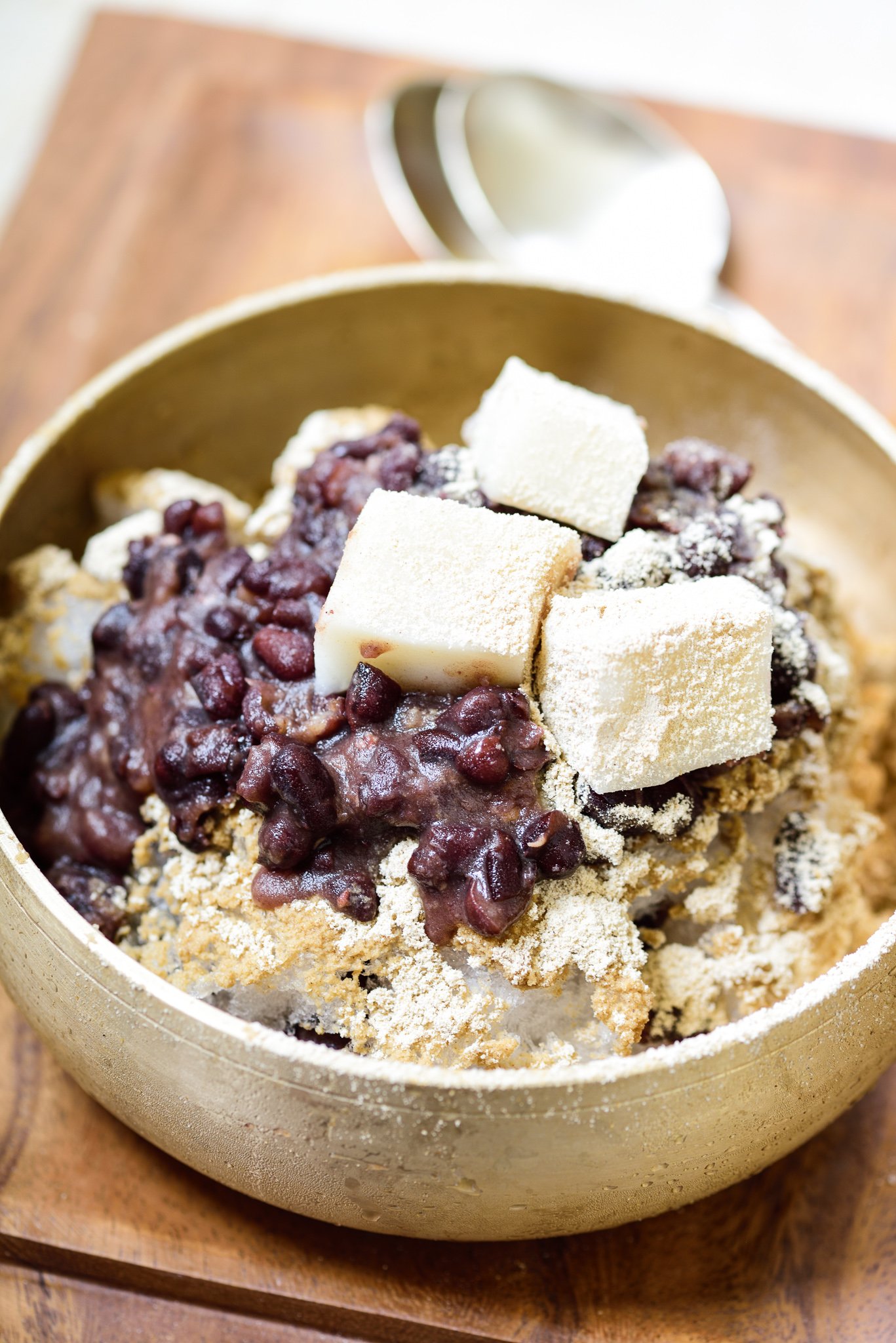
팥빙수 and 뽕따: The Summer Half of the Korean Sweet Calendar
When Seoul crosses 30°C in late June, the entire street dessert economy flips. 붕어빵 carts vanish. 호떡 vendors close for four months. In their place: 팥빙수 shops, ice pop stands, and convenience store freezers stocked with 뽕따 (bbongdda), the retro pull-apart popsicle that became a Gen Z nostalgia object around 2020. The Korean summer sweet calendar runs from June to early September, and it operates on the same seasonal-scarcity logic as the winter one. Vendors who close for summer charge premium prices in winter because they only have four months to make the year's rent.
팥빙수 has already had its global moment. Sulbing (설빙), the franchise that popularized snowflake-style 눈꽃빙수 (nunkkot bingsu, powdered milk ice), opened international locations in Manila, Bangkok, and Los Angeles by 2015, and their 인절미 팥빙수 menu became the reference version internationally. What makes 팥빙수 uniquely Korean, versus Japanese kakigori or Taiwanese baobing, is the layering of 팥 with 떡 (rice cake) chunks and the drizzle of 연유 (condensed milk) that hits differently than the syrup traditions of the other Asian shaved ice cultures. That texture contrast, cold-ice-meets-chewy-tteok-meets-creamy-sweet, is what earned 팥빙수 the loyalty of a Korean-Americans-abroad customer base.
뽕따 is the sleeper story here. It is a Binggrae pull-apart popsicle that has been on convenience store shelves since 1982, and it flatlined for decades as a nostalgic 90s snack. Then TikTok discovered it around 2020 and the sales tripled almost overnight. The mechanic that made 뽕따 viral was the same one that carried 뽑기 (dalgona) after Squid Game: it has a small interactive ritual (you pull the two halves apart to eat) that reads well on video. A similar pull-apart or pop-format mechanic could realistically break another Korean street dessert globally. Whichever brand builds the next 뽕따-style TikTok-native product, packaged for convenience-store distribution with a small physical ritual built in, wins the next global crossover.
Why Weather and Seasonality Are the Real Business Model
The macro read on Korean street desserts, after a decade watching this space, is that seasonality is not a limitation. It is the pricing power. A 붕어빵 vendor who works only November to March can charge tourist-tier prices in December because supply is genuinely constrained. Everyone in the neighborhood knows the vendor will be gone by April. A 팥빙수 shop that stays open only in summer can price a bowl at 12,000 won and get away with it because customers accept that they have three months to indulge. Try selling 붕어빵 in July or 팥빙수 in January and both feel wrong, not just to the consumer but to the vendor economics.
This is why post-Squid Game 뽑기 (dalgona) traveled globally in a way that most Korean desserts cannot. 뽑기 has no season. It works as a novelty. But the four items on this list (붕어빵, 호떡, 계란빵, 회오리감자, 팥빙수) are anchored to Korea's climate calendar in a way that makes them harder to export as ambient product categories. What travels instead is the ritual: Korean-Americans making 호떡 at home in December, Sulbing opening 팥빙수 franchises in tropical Southeast Asia, K-drama fans hunting for 붕어빵 on their first Seoul trip. The desserts themselves stay tied to the streets. The memory of eating them is what globalizes.
Explore Korean Snacks with Daebak
Love Korean food? Get authentic Korean snacks and ramen delivered straight to your door with the SnackFever Box by Daebak.


