


Table of Contents
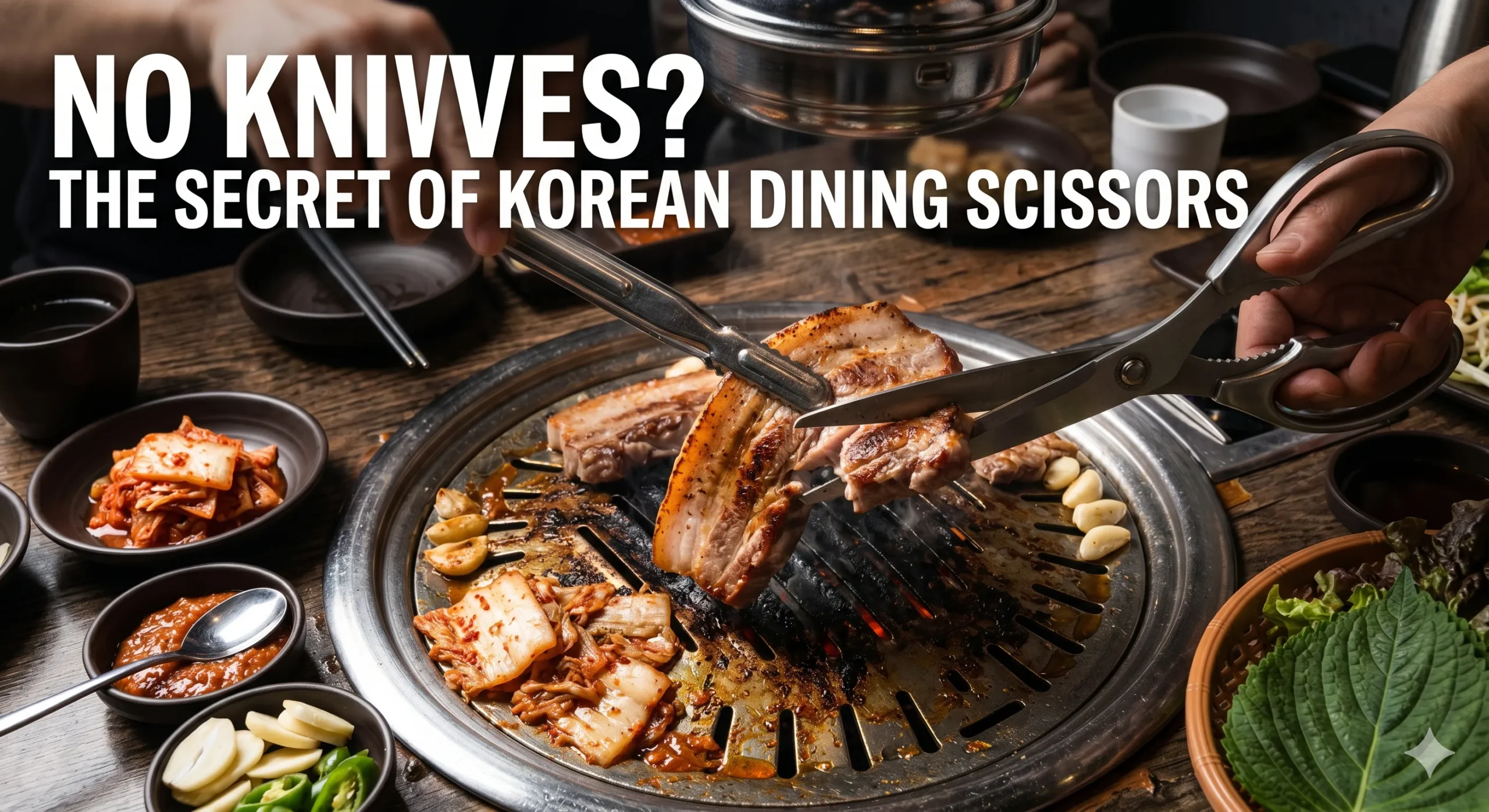
Walk into almost any Korean restaurant and you will see something most Western diners never expect: a pair of sturdy stainless-steel scissors resting next to the chopsticks. Koreans call them gawi (가위), and they are used for slicing sizzling pork belly on the grill, snipping cold buckwheat noodles into manageable bites, portioning kimchi straight from the jar, and cutting savory pancakes into wedges. In Korean dining culture, scissors are not a quirky workaround; they are a genuine eating utensil.
Why Koreans Use Scissors at the Table
The short answer is practicality. A traditional Korean place setting includes only a spoon and a pair of flat metal chopsticks. There is no dining knife, and historically, presenting a sharp blade to a guest was considered unrefined. Korean meals are also served in deep bowls and on shared platters rather than on flat individual plates, which makes a sawing knife motion almost impossible. Scissors solve that geometry problem because they cut food suspended in the air or directly over a hot grill, with no cutting board required.
The habit is more recent than people assume. According to Korea Times columnist Yang Dong-hee, scissors started appearing on dining tables in the 1970s, first at naengmyeon (cold noodle) restaurants where customers struggled to break the chewy buckwheat strands with their teeth. Within a generation, the practice spread to barbecue houses, soup specialists and home kitchens across the country.
The KBBQ Scissor Ritual
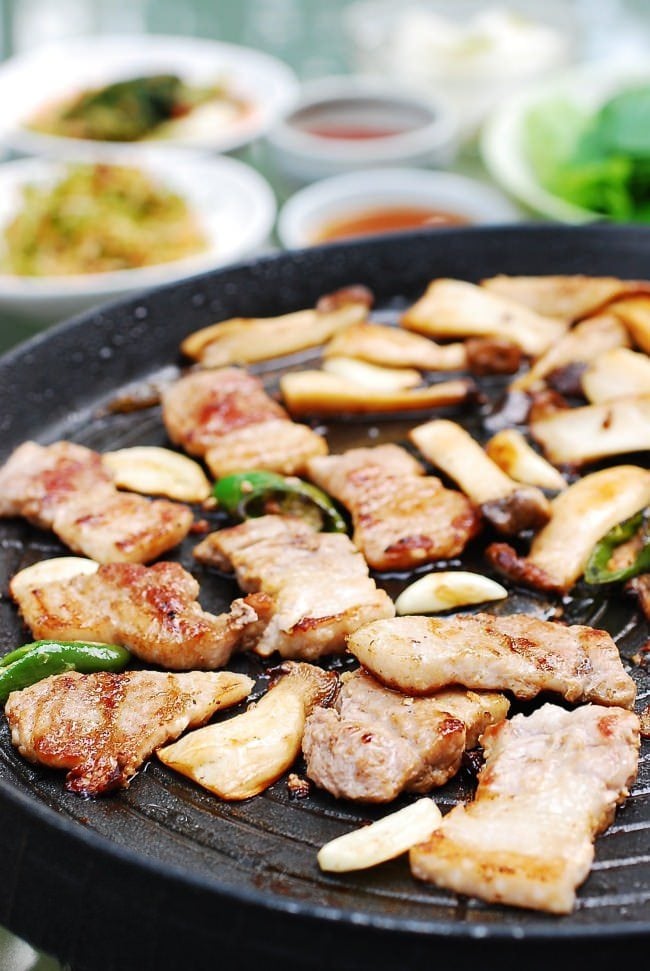
Korean barbecue is where the scissors really shine. Thick slabs of samgyeopsal (pork belly) or marinated galbi are placed on the tabletop grill whole, so they retain their juices. Once a proper sear forms, the grill-master at the table picks up tongs in one hand and scissors in the other, then snips the meat into bite-sized rectangles right on the grill. The pieces finish cooking evenly and fit perfectly inside a lettuce wrap.
This single-person, single-tool technique is what makes the grill feel communal. One diner can portion meat for everyone at the table without juggling cutting boards, knives or extra plates, which is exactly how a shared Korean meal is supposed to flow.
Cutting Noodles, Kimchi and Pancakes
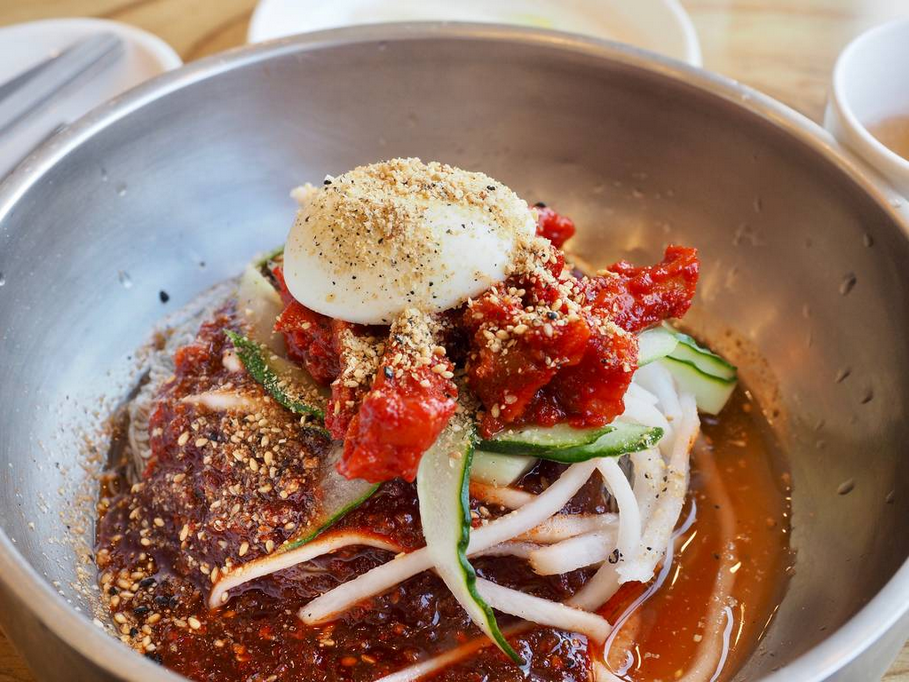
Beyond the grill, scissors are the unofficial default tool for several signature dishes. Hamhung-style naengmyeon uses noodles made with potato or sweet potato starch that are notoriously elastic, almost rubbery. Trying to bite through them sends cold broth flying, so a quick cross-snip with scissors after a few slurps is the standard fix. Even at high-end Pyongyang-style restaurants, servers leave scissors on the table for diners who need them.
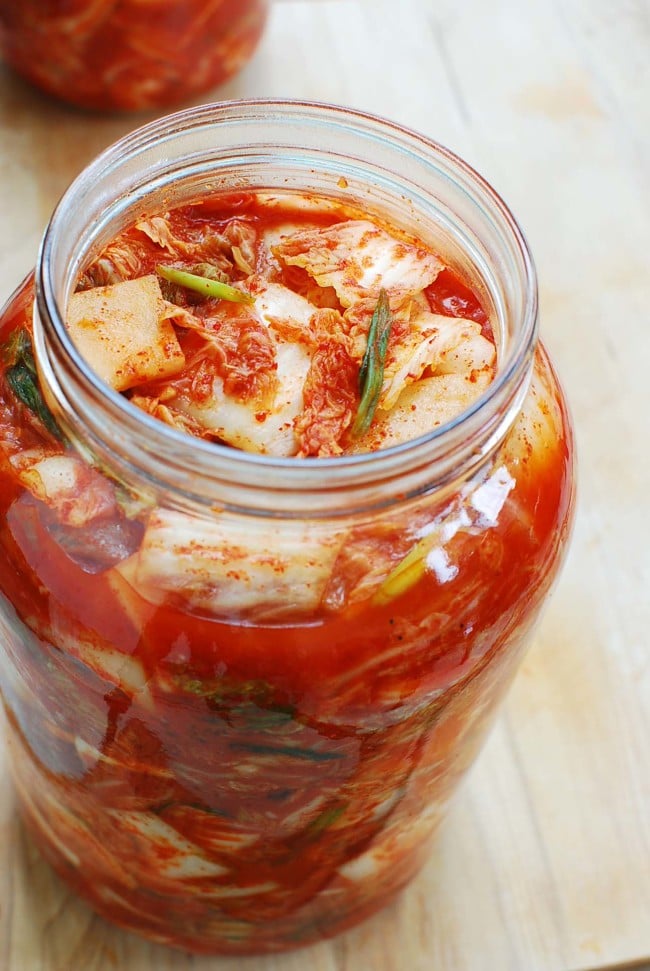
Kimchi is another classic scissor target. Many traditional restaurants serve whole-leaf kimchi straight from the jar to prove it has not been recycled from a previous table. Diners use scissors to snip the crunchy white stems and leafy green tops into bite-sized pieces, leaving the cutting board completely out of the picture. The same logic applies to long rice cakes in tteokbokki, big bundles of japchae noodles, and even pizza-style wedges of pajeon. Korean food blogger Sue at My Korean Kitchen notes that her own kitchen always includes one or two pairs of scissors next to the tongs, specifically for cutting freshly grilled meat and finished pancakes into shareable pieces.
Famous Korean Kitchen Scissor Brands
The scissors you see at Korean BBQ chains are not random utility shears. They are purpose-built tools with heat-treated stainless-steel blades, rounded tips, and oversized handles for leverage on tough cuts. A few brands have become household names in Korea and abroad:
- GGOMI: Probably the most recognizable name in Korean BBQ scissors. Their heavy-duty 9.5-inch and 10-inch shears come with a 3T (3 millimeter thick) micro-serrated blade and a safety lock. They are common at gimbap shops and barbecue chains and a frequent reference point in international reviews.
- Lock and Lock: The Korean lifestyle giant best known for storage containers also makes a 420J2 stainless-steel BBQ scissor designed for both right- and left-handed users, with a soft-grip handle.
- Sejong Cook: A Korean kitchenware brand whose SJ130 model is a long-handled, ABS-grip scissor sold for cutting kalbi and grilled meat. Its 3.0T blade is built for the weight of marinated short ribs.
- Obok: Often listed alongside Turtle scissors as a precision Korean shear known for sharpness and durability, popular with home cooks who want a butcher-grade tool.
- Kitchen Art and Queen Sense: Bigger Korean cookware brands that sell scissors as part of their broader BBQ grill and pan lines, commonly stocked at home goods stores like Daiso, Emart and Homeplus.
How to Buy and Use Korean Kitchen Scissors
Outside Korea, you can find authentic Korean BBQ scissors at Korean grocery chains like H Mart, online via Amazon, Coupang and Gmarket, or at specialty stores such as Kimchimari Shop and K Big Store. Look for a 9 to 10 inch blade length, a thick (3T) stainless-steel cutting edge, and a clear food-safe rating. Detachable models are easier to clean, especially after greasy galbi nights.
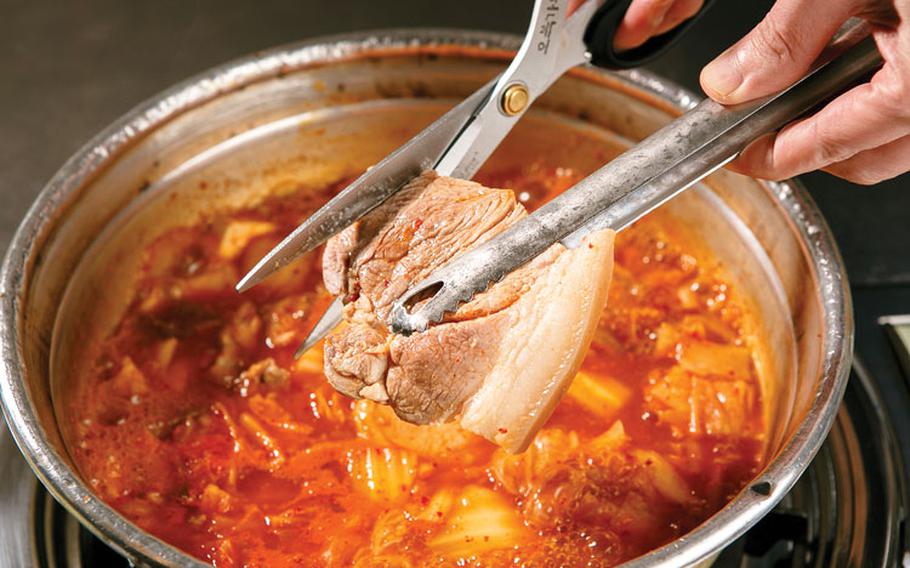
Once you have a pair, the technique is simple. Hold tongs in your non-dominant hand to lift and tension the food, then snip with scissors in your dominant hand, slightly angling the blades so they do not scrape the grill. Wash them with regular dish soap and dry immediately to protect the heat-treated edge. For BBQ scissors that go through marinades, a quick wipe with vinegar after washing helps prevent residue buildup.
The Cultural Side of Gawi
Scissors fit Korea's pali pali (hurry hurry) culture, where efficiency is built into nearly every meal. They are also a small symbol of how communal Korean dining is: instead of waiting for a chef to slice each portion, the people sitting at the table take turns cutting for each other. The Korean word for scissors, gawi, even gives its name to the country's version of rock-paper-scissors, gawi bawi bo, which is how almost every Korean schoolchild settles a dispute about who gets the last piece of grilled pork.
It is worth noting that not every dish gets the scissors treatment. Soft rice, gentle fish, and delicate stews are still chopstick territory. Scissors come out only when the food is too long, too dense, or too elastic for chopsticks alone, which is the same instinct that drives a pizza cutter in the West.
Tips for Using Korean Scissors at Home
If you want to bring the gawi habit into your own kitchen, start with these basics. Keep a dedicated pair just for food; do not borrow from the craft drawer. Use them only on cooked food at the table, and pair them with long metal tongs so your hands stay clean. For KBBQ at home, cut into rectangles roughly the size of a large stamp, perfect for ssam (lettuce wraps). For pizza-style pajeon and kimchi pancake, let the pancake cool for thirty seconds before snipping into wedges so the edges stay crisp. When you finish, rinse and dry immediately, then store the scissors blade-down in a utensil holder so the edge is not blunted against the drawer floor.
Explore More of Korea with Daebak
Want to bring a little piece of Korea into your life? The Daebak Box is packed with the best Korean snacks, ramen, and cultural goodies delivered monthly to your door.


