


Table of Contents
Dore Dore did not invent the rainbow cake, but it did something more useful for Korean cafe culture: it launched the first Instagram-native cafe breakout. When the Sinsa-dong flagship opened its Garosu-gil branch in late 2013 and started slicing six-color 무지개 케이크 (mujigae cake) for anyone with a smartphone, it accidentally set the rules for an entire decade of K-dessert cafe strategy. The layered pastel cross-section, the whipped-cream frame, and the way the color pops against a white plate together made this the first cafe menu item in Korea specifically engineered for a 1080 by 1080 feed. Understanding why that happened at Dore Dore, and not at any of the older bakery chains, is the first move in reading the K-cafe boom.
Why the rainbow cake actually worked in 2013 to 2015
Ten-plus years in the K-content and K-lifestyle space teaches you one thing: the food items that go global from Seoul are not always the ones with the best flavor. They are the ones with the best crop. Dore Dore's 무지개 케이크 is a case study. Sliced straight from the stack, the rainbow bands sit almost perfectly parallel, six flat pastel layers with equal whipped-cream gutters between them. Rotate the plate 45 degrees, hold the phone directly above, and the cross-section reads clearly at thumbnail size. That is a design decision, not an accident. Older Korean bakery chains like Tous Les Jours and Paris Baguette were producing beautiful cakes long before Dore Dore existed, but their signature items were round celebration cakes designed for a family table, not for an aerial camera on a cafe seat in Sinsa.
Then there is the Korean 인생샷 (insaeng-shot, the once-in-a-lifetime social photo) economy. In 2013 and 2014, Instagram was still relatively new in Korea and the aspirational content creator class had not yet split off into TikTok. Every Seoul university student in her 20s was training herself to shoot cafe content, and Dore Dore's rainbow cake was one of the first Korean-made items that let an ordinary phone camera deliver a "professional-looking" result with zero editing. When a food item lets a non-professional feel like a food stylist, it goes viral. Add the coffee-cake pairing culture (Koreans do not order dessert alone in a cafe, they pair it with a hand-brewed drip or a latte), and the roughly 9,000 won price tag on the Precious Rainbow Cake becomes a small aspirational purchase that people were genuinely happy to snap and share.
The K-cafe boom era: Garosu-gil, Sinsa, and the 인생샷 economy
Location did as much work as the cake itself. Garosu-gil (가로수길, "tree-lined street") was, by the time Dore Dore anchored its Sinsa flagship there, already the epicenter of Seoul's designer boutiques, Apple-adjacent architecture, and gallery-boutique hybrids. Visit Seoul's own tourism copy calls Garosu-gil one of the city's hottest neighborhoods, an old artist district that turned into a shopping and cafe street across the mid-2000s and early 2010s. That is exactly the demographic overlap a photogenic cafe needs: young Seoul women with disposable income, a phone in one hand, and a shopping bag in the other. Foreign tourists (especially from Southeast Asia and Japan) followed within a year, because Dore Dore's cake photograph traveled faster than any Korea Tourism Organization campaign could.
Insider mechanic worth calling out: rent on Garosu-gil between 2013 and 2015 was still high but not yet insane, so a single-concept cafe with one hero product could actually make the math work. A 9,000 won signature rainbow cake plus a 5,000 won latte, played across four floors of table turns during weekend photo-shoot hours, was a real business plan. That window closed fast. By 2017, Garosu-gil rents had roughly doubled, and single-hero-cake concepts started needing tour groups just to break even. Dore Dore rode the good years hard, opening more than 20 branches at its peak before the cost math started biting.
When Cafe Cong, Cafe Bora, and the copycats went for the rainbow crown
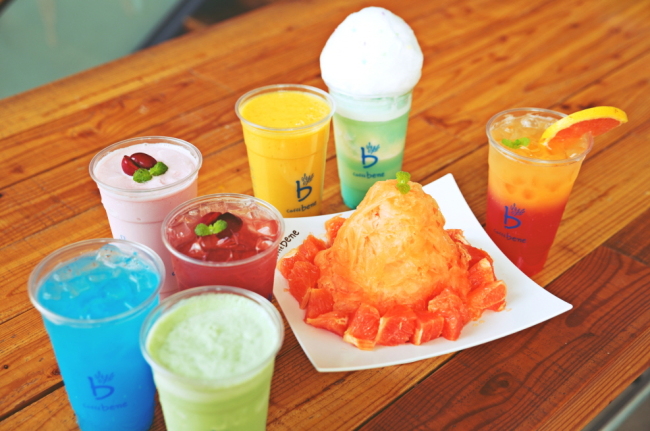
Every viral K-dessert has a copycat wave, and Dore Dore's was aggressive between 2015 and 2017. Cafe Bora leaned into a purple-only, ube-forward layered cake concept. Cafe Cong pushed rainbow variants with sour cream frosting. Regional chains from Busan to Jeju copied the six-color format wholesale. Even Korea's Big Three coffee franchises got in on it: Caffe Bene rolled out its own Rainbow Cake in 2015 alongside a seven-color fruit ade lineup, explicitly positioned for what The Korea Herald at the time called "young customers who seek a one-of-a-kind product even when choosing a drink or dessert." That is code for: the Instagram vertical is now the marketing brief.

Here is what the copycats missed, and this is the appeal point most casual observers overlook. Dore Dore held the crown because it stacked three defensible moats at once: original credit (Sinsa locals remember which cafe launched the trend), a rooted brand identity (the French-sourced "Dore Dorè" name and the four-floor pastel-industrial interior), and a wider photogenic dessert menu (matcha green tea cakes, seasonal specials, the Precious Rainbow flagship). Cafe Bora and Cafe Cong had the item, but not the story. In Korean cafe culture, the story is the moat. That is why 20-something Seoulites will still travel to Sinsa specifically to shoot the Dore Dore original, even when a copycat sits two subway stops closer to their home.
Peak, contraction, and the 5-year novelty cafe lifecycle
Here is the harder industry number. Dore Dore, at its 2016 to 2018 peak, ran more than 20 branches across Korea, including a stint at Incheon Airport and a location at COEX in Gangnam. It even took a slot at Common Ground near Konkuk University, Korea's first container shopping mall, and expanded out to a daisy-garden outdoor branch in Ganghwado. By 2023, that footprint had contracted to roughly five active locations. That is not a story of failure. It is the standard 5-year novelty cafe lifecycle: 12 to 24 months of viral honeymoon, 24 to 36 months of tourist-driven overexpansion, and then a contraction phase where only the flagship and a few strategic branches survive.
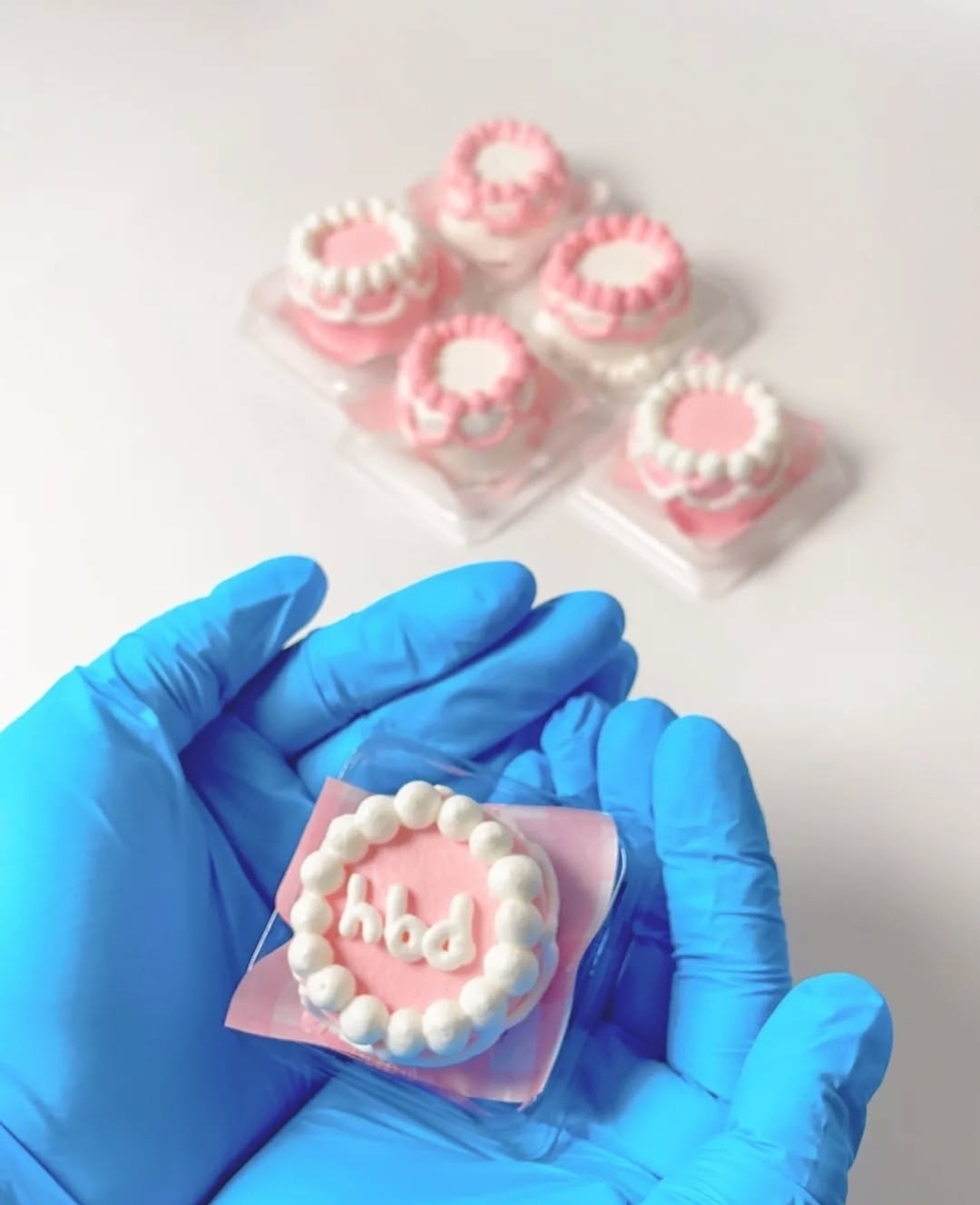
What kills a novelty K-cafe brand is not the copycats. It is the next visual trend eating the same demographic. Once tiny cakes, bento cakes, cream-character cakes (Nudake's Jennie-branded designs are the clearest example), and then the Dubai chocolate wave hit Korean Instagram in 2023 and 2024, the six-color rainbow silhouette started reading slightly dated. That is not a Dore Dore-specific problem. It is the cost of being early. The K-dessert brands that survive contraction (Dore Dore, Sulbing, O'sulloc) tend to be the ones that pivot into a lifestyle and neighborhood-anchor role, rather than trying to keep out-Instagramming the newer entrants.
What Dore Dore proved to the K-dessert industry
Talk to any K-dessert operator who has been running a shop since 2015, and Dore Dore comes up as the case study. Not because of the cake, but because of what it proved: a Korean dessert cafe could scale nationally on the back of a single replicable signature item, without a celebrity endorsement, K-drama tie-in, or K-pop cameo. That is a huge shift. Before 2013, the Korean cafe playbook basically required a K-drama shooting scene (see: dal.komm and Descendants of the Sun) or a chaebol backer. Dore Dore reset the assumption. If your cake photographs well on a vertical feed and your Sinsa storefront cooperates on golden hour, you can build a national brand from scratch.

The downstream effect is everywhere. Nudake, C27, Cafe Layered, Rain Report Rainbow in Ikseon-dong: all of these newer photogenic K-cafes are running some variant of the Dore Dore playbook (one hero signature item, a highly photogenic interior, a repeatable cross-section aesthetic). Even the current butter rice cake and Dubai chewy cookie waves borrow the same short-form video language that started when Seoul students were angling their cameras over Dore Dore's rainbow slice on Garosu-gil. In K-content industry meetings, you still hear "Dore Dore moment" used as shorthand for the exact instant a visual dessert item flips from cafe menu into viral asset.
Taste the K-dessert cafe wave for yourself
Want to actually taste the sweet, chewy, aesthetically over-thought snacks that Korean cafe culture birthed? The SnackFever Box hand-picks Korean sweets, chocolates, and dessert-style snacks every month so you can experience the same 정 (jeong, deep warm affection) and 인생샷 energy without booking a Sinsa flight.


