


Table of Contents
People keep asking me if mandu (만두) is basically the Korean version of Chinese jiaozi or Japanese gyoza. It is not. I have spent over a decade inside the K-food space, watching this exact question kill more than a few food-writer angles, and here is the short answer: they share a lineage, but the fold, the filling ratio, and the way Koreans actually eat mandu are a different sport entirely.
Yes, mandu came in from China through the Silk Road, and the roots are documented back through Goryeo trade records. But after 700-plus years of naturalization inside Korean kitchens, mandu drifted. Filling got bulkier with tofu and 당면 (glass noodles) to stretch expensive meat. Wrappers got thinner. And critically, the way Koreans deploy mandu at the table (frozen bag ripped open at 11pm, dropped straight into anchovy broth, eaten before the ramyeon on the stove is ready) is completely its own culture.
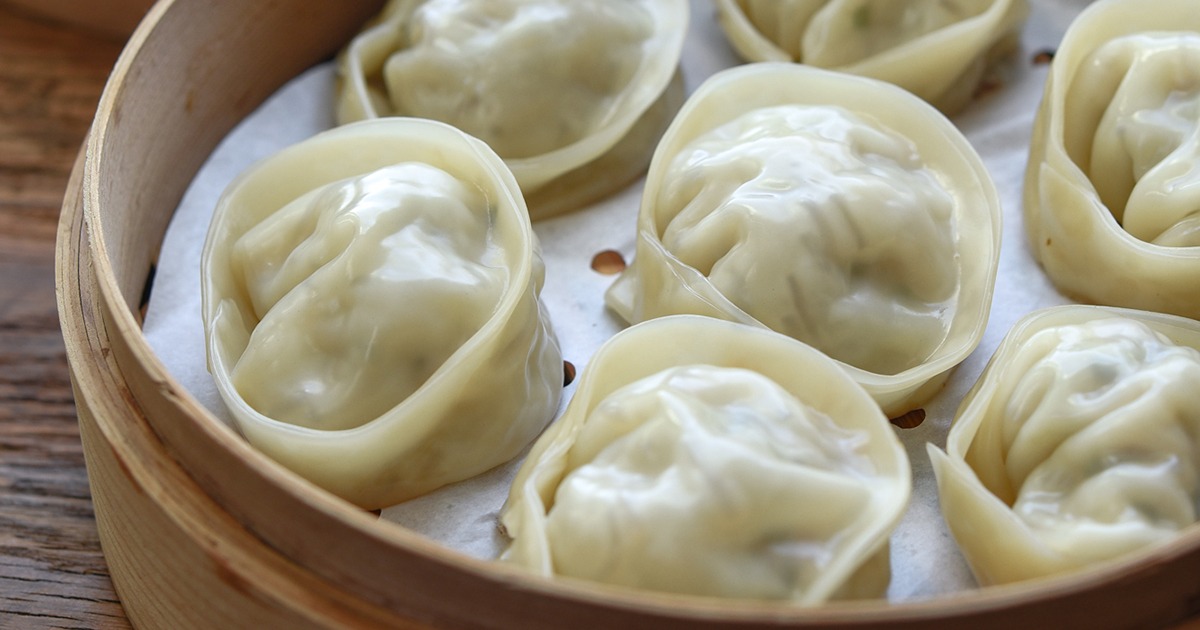
Why 김치만두 Is the Filling That Took Over Korea
Look, 고기만두 (meat), 새우만두 (shrimp), 갈비만두, 물만두 (small water dumplings). They all exist. All fine. But 김치만두 is the filling that took over Korean freezer culture and never gave the ground back, and there is a specific technical reason.
Fully fermented kimchi (the kind that has gone slightly funky and lost most of its crunch) has already broken down at the cellular level. When you finely chop it, squeeze the liquid out, and mix it with pork fat and crumbled tofu, the flavors do this weird sonic thing where the sourness cuts through the fat and the tofu absorbs the spice. You bite in and it hits sour first, then umami, then heat, in that order. Bibigo's 김치왕교자 was engineered around this exact taste profile, which is why it dominates freezer aisles from Costco to Trader Joe's.
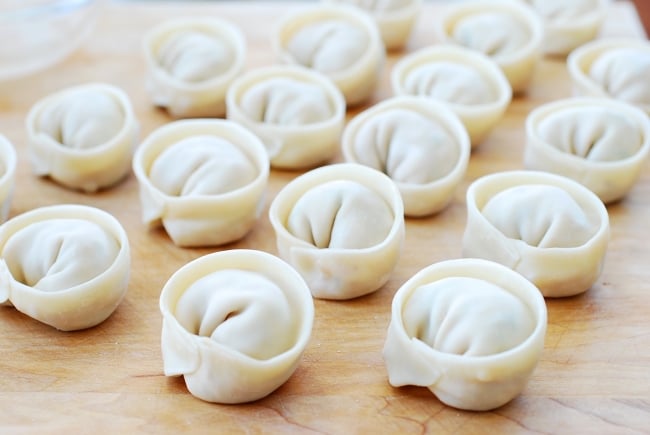
Gunmandu vs Jjinmandu vs Mulmandu: Texture Loyalty Is Real
Ask a Korean over 40 how they eat mandu and you will get a strong opinion. This is not preference. This is regional and generational identity.
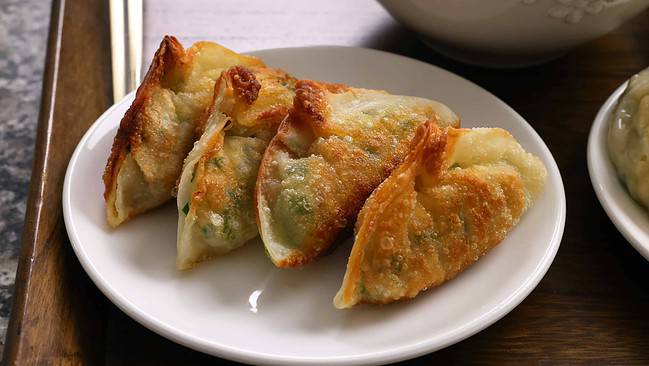
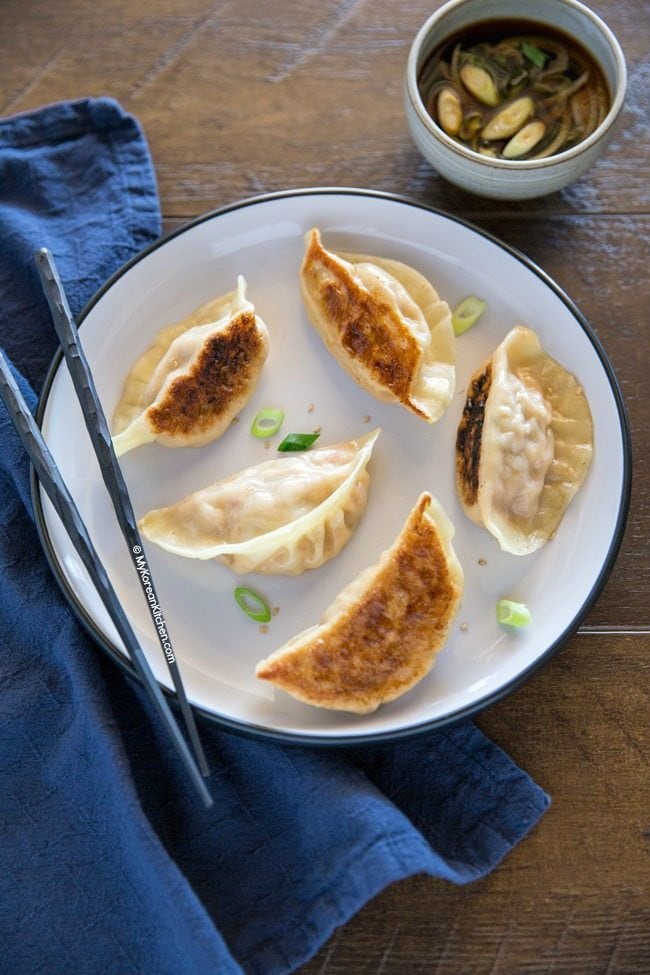
군만두 (gunmandu, pan-fried). Golden crackle on the bottom, soft top, filling still juicy. This is the street-food form, the 포장마차 form, the one that pairs with 소주 at 2am. The Korean-Chinese restaurant version (fully deep-fried and brown all over) is a different animal that Koreans lovingly call 튀김만두.
찐만두 (jjinmandu, steamed). Softer wrapper, cleaner taste, the filling stays pure. This is the form 개성 (Kaesong) mandu takes, historically massive and meat-heavy, wrapped like little parcels. If you have eaten at a proper Kaesong-style mandu house in 북촌, you know these things are the size of a baby's fist.
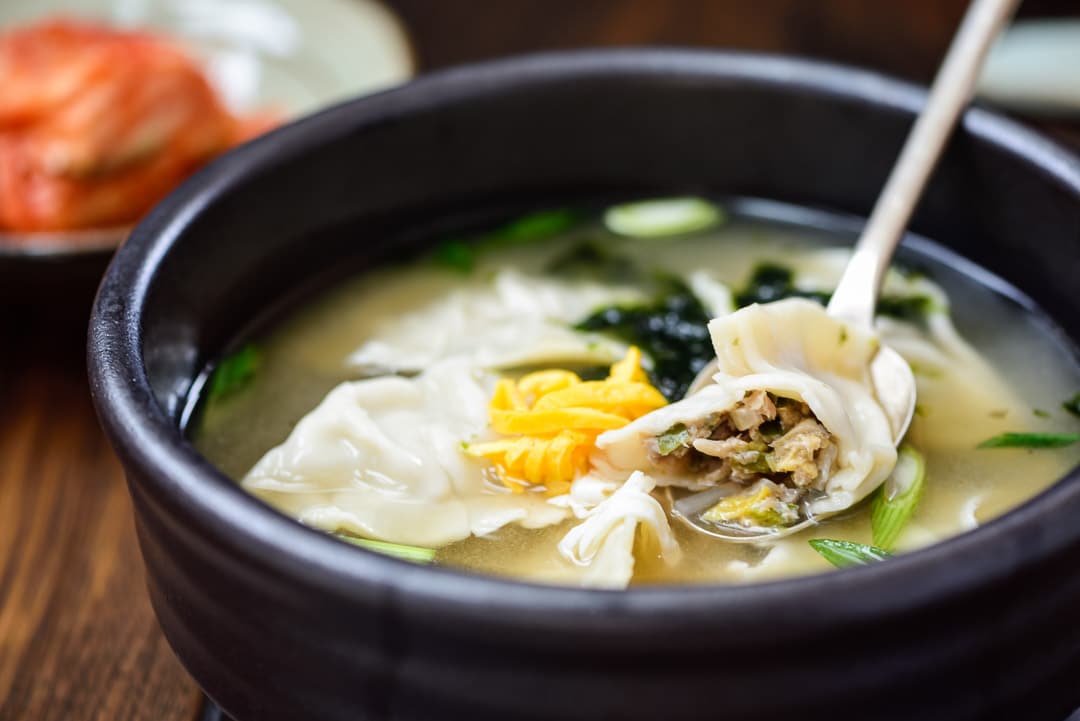
물만두 (mulmandu, boiled) and 만두국 (manduguk, in soup). This is the version I grew up with. Grandmother's 평양만두 style: mild, clean anchovy-kelp broth, dumplings that basically float themselves into your bowl. Not spicy, not showy, just quietly excellent. And on 설날, this is what you eat before anything else touches the table.
The Bibigo Trillion-Won Bet (and the Boutique Counter-Move)
Here is the industry piece nobody covers well. Korean retail frozen mandu is roughly a 1-trillion-won market. CJ CheilJedang's Bibigo owns the top line, and when they launched Bibigo Kimchi Wangmandu in 2013 (after years of R&D reverse-engineering the aged-kimchi flavor curve), it single-handedly changed how Korean households cooked weeknight dinners. Bibigo frozen mandu crossed the 1-trillion-won mark in global sales in 2020. In August 2024 they landed in New Zealand's New World and Pak'nSave chains. Bibigo is not just the biggest Korean-brand mandu in US Costco freezers. It is quietly the biggest Korean-brand dumpling globally, ahead of most jiaozi brands.
But here is what the CJ press releases do not tell you. Since around 2020, a wave of 성수동 and 북촌 boutique mandu shops has emerged, hand-folding 개성만두 and 평양만두 in tiny five-seat spots. Places like 자하손만두 in 북촌 or the newer 낙천만두. The pitch is texture and provenance. Bibigo gives you convenience and consistency, but the wrapper is machine-thin and slightly rubbery when reheated. Hand-folded artisan mandu has visible dough thickness variation, unpredictable pleat patterns, and (this is the key part) filling-to-wrapper ratios that swing generously toward filling. That imperfection is now a luxury signal.
The Ritual Nobody Films: Making Mandu at 설날
Every Korean family has some version of this. Grandmother rolls out the wrappers or dumps the store-bought discs onto the low table. Aunts and cousins gather in a circle. Everyone folds. Grandmothers judge folds silently. There is a Korean saying: "예쁘게 만두를 빚으면 예쁜 딸을 낳는다" (if you fold pretty mandu, you will have a pretty daughter). The saying is silly, but the ritual is the actual product. This 명절 mandu-making circle is where Korean identity gets transmitted, where kids learn that food is labor, where grandmothers pass down which kimchi jar to raid.
You cannot buy this at Costco. This is why homemade mandu still commands cultural weight in Korea, even as Bibigo sells trillions of won worth. The appeal is not efficiency. The appeal is that the process itself is the meal.
How to Actually Eat Mandu Like a Korean
Three rules, offered without apology:
One. If you are eating frozen, pan-fry them with a splash of water and a lid for the 군만두 effect. Do not boil frozen Bibigo dumplings unless they are going straight into soup, because the wrapper will get gummy.
Two. Dipping sauce is soy sauce plus rice vinegar plus a pinch of 고춧가루. Skip the sugar. Koreans do not sweeten this sauce, and adding sugar tips it into Chinese-restaurant territory.
Three. 만두국 broth is anchovy-kelp, not chicken. If you are using boxed chicken stock because that is what you have, fine, but understand it will taste distinctly not-Korean.
Want to Taste Where Mandu Culture Actually Lives?
Frozen mandu sits right next to Korean snacks in the same freezer aisle for a reason. Both are convenience-first, both anchor the 야식 (late-night snack) hour, both are cultural signals disguised as everyday food. If you want to feel out the wider world of Korean snack culture that mandu belongs to, our SnackFever Box ships a hand-curated set of Korean snacks straight from Seoul every month. It is the fastest way to understand why Korean freezer and snack culture has quietly conquered global grocery aisles.


