


Table of Contents
Ten years ago I sat in a Salvadoran diner in Koreatown LA, watching a Salvadoran auntie slide a plate of pupusas toward me with a bright pink mound of shredded cabbage on the side. I stared at it for a second and laughed out loud. That is 김치, I told the friend across the table. Well, a cousin of it. The dish was curtido, and the parallel is not just poetic. It is one of the cleanest examples of how the world quietly agreed, centuries apart and continents apart, that fermented cabbage was worth building a national dish around.
What Curtido Actually Is
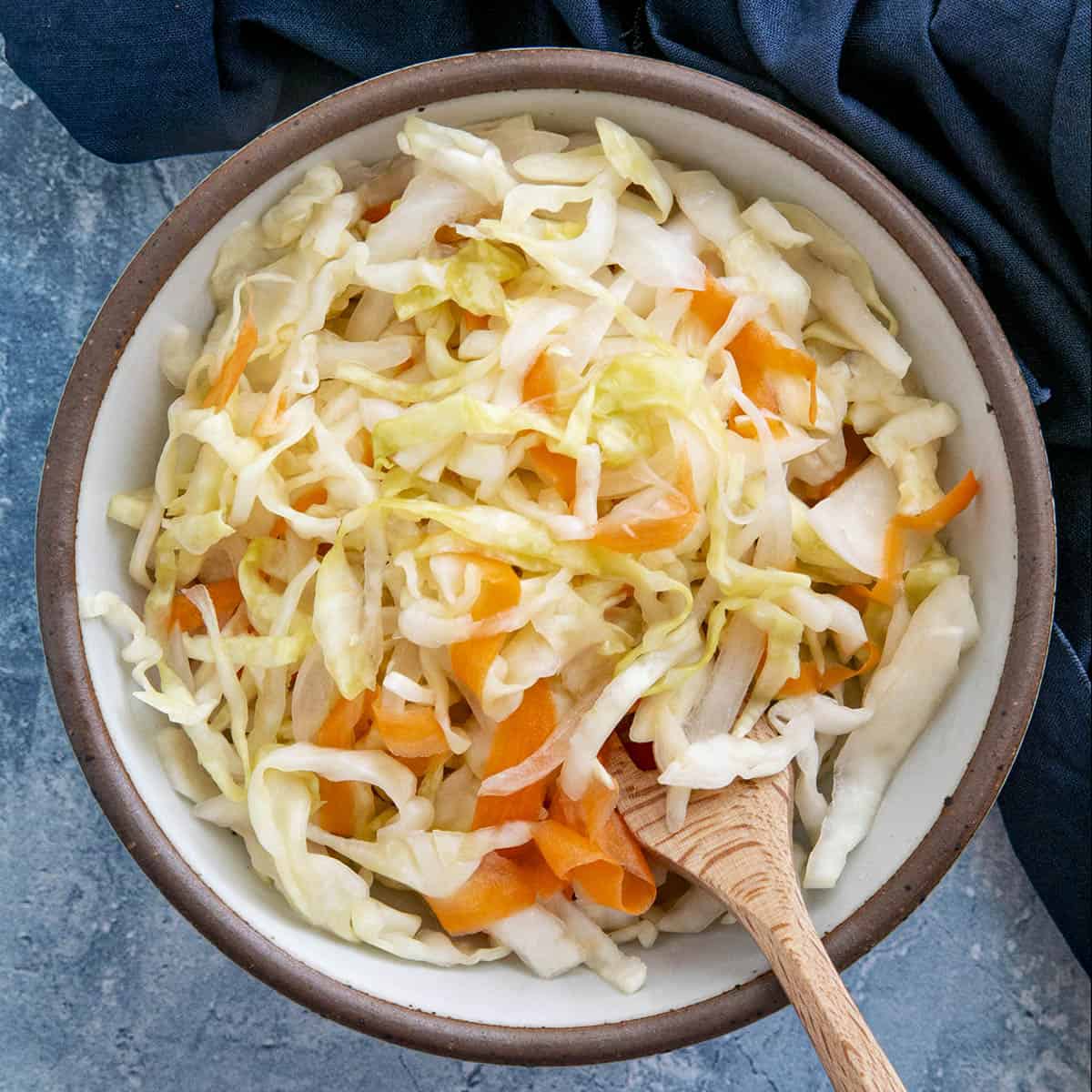
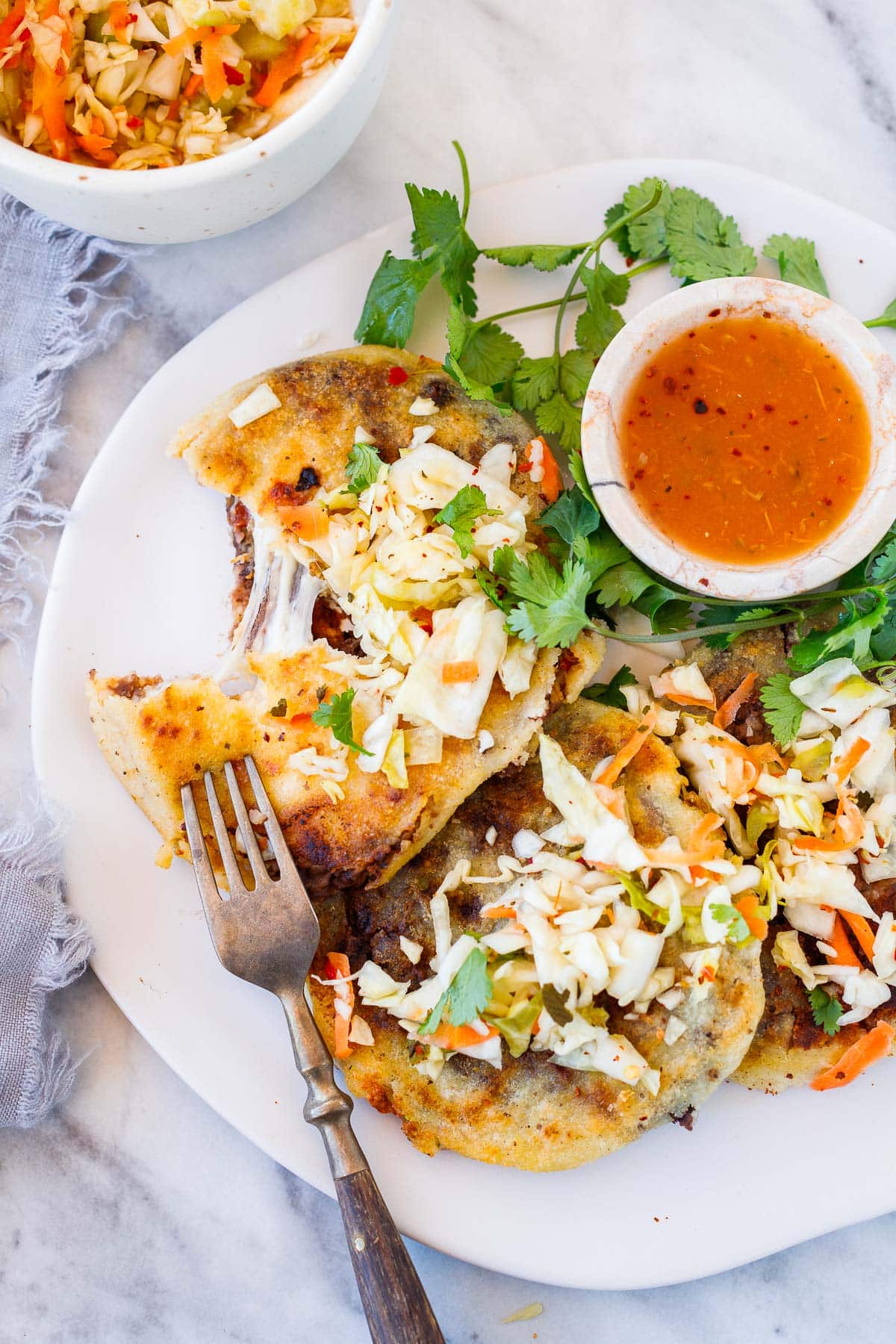
Curtido is Salvadoran shredded cabbage, carrot, and onion, dressed in vinegar with oregano and sometimes a whisper of jalapeño. It sits on top of every pupusa (the stuffed masa cake that is El Salvador's flag on a plate) and it does one job better than almost any other condiment on earth: it cuts through richness. Melted cheese, chicharrón filling, pupusa dough that just came off the comal, curtido resets your palate every bite.
Here is where the naming gets interesting. In Central America curtido literally means "cured," borrowed from the Spanish tanning trade. In Salvadoran homes, the traditional version was lightly lacto-fermented in a jar for a few days using only salt. Restaurants and diaspora cooks shifted to a vinegar quick-pickle version so they could serve it two hours after prep. Both count. Both are curtido. The dish, like 김치, evolved with what the kitchen could afford in time.
Why Salvadorans Call It Their Kimchi
The nickname "Salvadoran kimchi" or "Spanish kimchi" is not marketing. It is how Salvadoran cooks in the US started explaining curtido to their non-Central-American neighbors once K-food went mainstream. The overlap is real: fermented 배추 (cabbage), an acidic-spicy bite, an inseparable relationship with a national carb (pupusa for one, rice for the other), and grandma making it in enormous batches because a jar never lasts a week.
What is genuinely different is the timeline. Traditional 김치 relies on lactobacillus doing its work over weeks to months, especially the winter 김장 (gimjang) batches that Korean families still ferment communally in November. Curtido is either quick-pickled in vinegar (ready in 2 to 4 hours) or lightly lacto-fermented over 24 to 72 hours. Kimchi is a slow project. Curtido is closer to a Tuesday-night decision. Neither one is more "real," but the depth of flavor lands differently, and if you have only ever eaten quick curtido, you have not had the same experience as fermented curtido from a home cook who let it sit for four days.
Pupusa And Kimchi, Same Instinct
Pupusas are cheese, beans, or chicharrón sealed inside a masa cake and pan-seared until the outside gets that shatter-crisp shell. Sound familiar to anyone who has eaten a really good 김치전 or a 만두 fresh off the pan? The instinct is the same: soft fermented tang on top of a starchy, fatty carb, engineered so no single bite gets boring. Salvadorans figured out cabbage and pork on masa. Koreans figured out cabbage and pork on rice. Different corn, same trick.
Curtido vs. Kimchi: The Actual Flavor Difference
People assume curtido is just "kimchi without the spice." That undersells both dishes. Curtido leans oregano-forward, and that dried Mexican oregano is the single ingredient that stops it from tasting like a German-style pickle. The vinegar is usually apple cider, which brings a soft fruity acidity, not the deep funk of aged 김치 brine. There is no fish sauce, no 새우젓 (salted shrimp), no 고춧가루 (gochugaru). Heat, when it shows up, comes from a sliced jalapeño or crushed red pepper, and it stays polite.
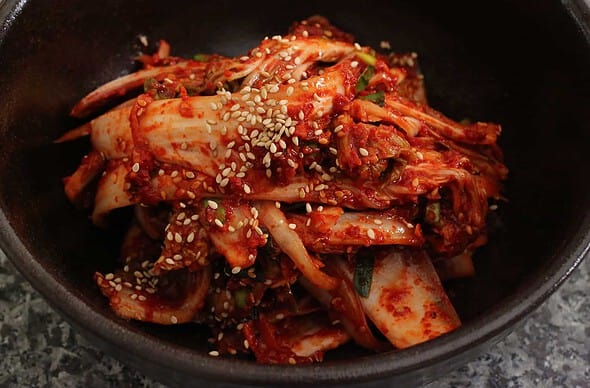
김치, at its most classic, is a completely different palate structure. Fish sauce plus saeujeot gives you umami depth that curtido does not attempt. Gochugaru brings a slow, warm heat and that distinctive red color. The garlic and ginger load is much heavier. Aged 김치 develops carbonation and a sourness that a Salvadoran cook would consider "spoiled." A Korean cook would consider it "ready for 김치찌개." Both are correct. They are answering different questions.
The Business Reason This Comparison Matters
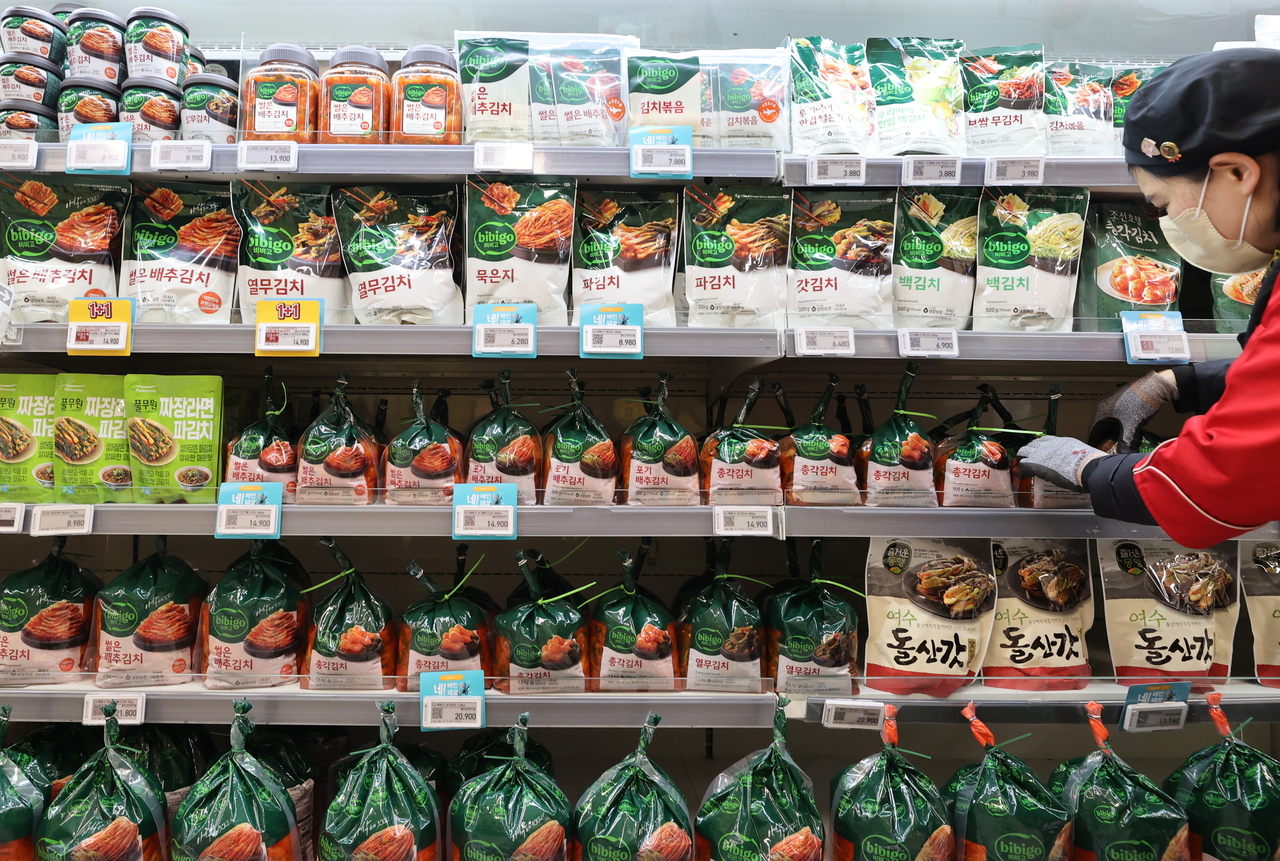
I have been in the K-content and K-food industry long enough to remember when kimchi export pitches to US buyers had to open with a 30-second explainer on what the product actually was. That is over. In 2024, Korean kimchi exports hit a record $163.6 million globally, and the US alone crossed roughly $78 million in outbound shipments, up more than 60 percent year over year, according to Ministry of Agriculture, Food and Rural Affairs data reported by the Korea Herald. Kimchi is now the second-largest overseas market for Korean 김치 after Japan, and the growth curve is not slowing.
Here is why curtido matters to that story. When a Central American consumer, or a diaspora Salvadoran-American, sees kimchi in a Whole Foods refrigerator, they do not need a lecture. They already understand fermented cabbage. Curtido, sauerkraut, tsukemono, and 김치 form a global family that lets one dish's popularity build market permission for the others. The smart K-food brands (CJ Bibigo, Chongga, Jongga Vision) are not competing with curtido. They are riding the fermented-cabbage familiarity curve that curtido already built in Central American households.
Try Both, In That Order
If you have never made curtido, start with a two-hour vinegar version and eat it inside a pupusa. If you have never made 김치, start with a mak-kimchi (chopped cabbage) batch rather than the whole-leaf 통배추김치, which is a full weekend project. Both fit in the same fridge shelf. Both go on almost anything (tacos, ramen, grilled meat, fried rice, a plain scrambled egg on Tuesday). What you will notice within a week is that your palate starts craving 신맛 (acidity) with fatty food the way Salvadoran and Korean cooks always did. That craving is not learned. It was already there. Curtido and 김치 just gave it a name.
Explore Korean Snacks with Daebak
Love Korean food? Get authentic Korean snacks and ramen delivered straight to your door with the SnackFever Box by Daebak.


