


Table of Contents
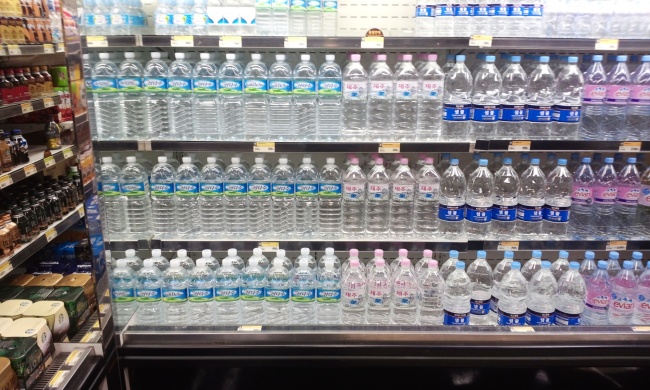
Have you ever noticed that in your favorite K-drama, the characters never seem to fill a glass from the kitchen tap? Or that K-pop idols backstage are always cracking open a fresh plastic bottle? It is not a coincidence. In Korea, bottled water is not a backup plan or a road-trip purchase. It is the default. Convenience-store fridges carry thirty different brands, supermarkets stack cases of 2-liter bottles to the ceiling, and a single brand from Jeju Island sells more than 675,000 tons of water every year.
So why do Koreans swear by bottled water when the government insists the tap is perfectly safe? The answer is a tangled mix of geography, plumbing history, marketing, and good old-fashioned taste preference.
The 90 Percent Rule: A Nation That Filters Everything
Industry surveys consistently show that around 90 percent of Korean households either drink bottled water or use a home purification system rather than going straight from the faucet. Walk into any Korean apartment and you will almost certainly find one of two things on the counter: a sleek under-sink filter from Coway or Cuckoo, or a tower of 2-liter bottles waiting to be loaded into the fridge.
This is striking because Korea is not a country with bad water on paper. South Korea ranks among the top countries globally for safe drinking water, and Seoul's tap water, branded Arisu, passes the World Health Organization's drinking-water quality standards. The Seoul Waterworks Authority even runs annual tap-water festivals at places like Gwanghwamun Square to convince residents to give Arisu a try. It mostly does not work.
Why Tap Water Lost the Popularity Contest
Several reasons combined to turn Koreans off the tap. First, older apartment buildings still use aging pipes that introduce a faint metallic taste, even when the water leaving the treatment plant is pristine. Second, a generation of Koreans grew up associating the smell of chlorine, used to disinfect water at the municipal level, with industrial chemicals rather than safety. Third, the rapid economic growth of the 1980s and 1990s normalized bottled brands as a marker of cleanliness and modern living, the same way many Americans came to view filtered water as the upgrade.
And finally, there is the cultural angle. K-dramas, variety shows, and YouTube mukbangs almost universally feature actors and idols drinking from labeled bottles. When the most aspirational figures on television treat bottled water as the obvious choice, the message lands.

Samdasoo: The Undisputed King from Jeju
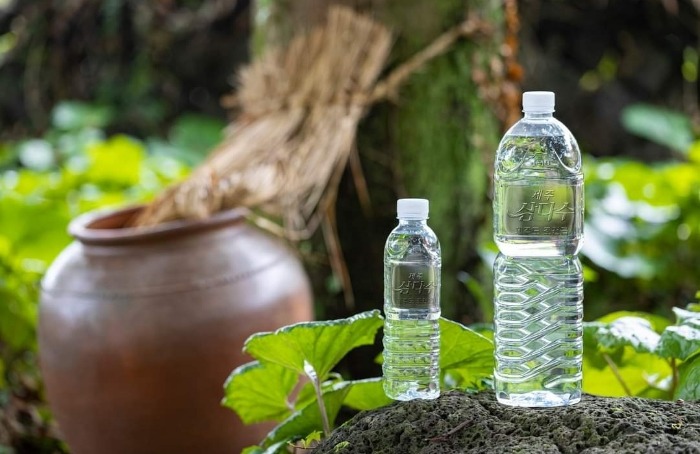
If Korean bottled water had a flagship, it would be Jeju Samdasoo (제주 삼다수). Bottled by the state-run Jeju Special Self-Governing Province Development Corporation since 1998, Samdasoo is drawn from a volcanic aquifer roughly 420 meters below Hallasan, the highest mountain in South Korea and a UNESCO World Natural Heritage site. According to the company, the rainwater that feeds the spring is filtered through more than 110 layers of basalt over roughly 20 years before it is ever bottled.
The result has been almost two decades of total market dominance. Samdasoo held a 45.8 percent share of the Korean bottled-water market in 2015 and has remained No. 1 every year since, even as challengers chipped away at the lead. The Jeju brand is so identified with quality that it now anchors Korea's push into overseas premium-water markets, with exports to 17 countries and a new deal to launch a brand store on China's JD.com.
The Challengers: Baeksansoo, Icis, and the Private Labels
Samdasoo is not alone on the shelf. Walk into a GS25 or CU and you will see at least a dozen other brands, each with its own origin story.
Nongshim's Baeksansoo (백산수), launched in 2012, draws water from Naeducheon spring in the Baekdusan region. Its packaging deliberately echoes Samdasoo's green-and-blue palette, and its market share has climbed steadily to around 8.5 percent. Lotte Chilsung's Icis (아이시스) is the second-largest player by share, hovering between 13 and 14 percent, and was the first major Korean brand to roll out label-free PET bottles in 2020 as part of a broader sustainability pivot.
Then there are the private-label brands. E-Mart Traders sells My Water, Coupang offers Tamsasoo, and CU and GS25 each have their own house mineral waters drawn from Jirisan and other domestic springs. Combined, these store brands have grabbed roughly 20 percent of the market, mostly by undercutting Samdasoo's price by half. A 2-liter bottle of Bongpyeong Spring Water can go for as little as 470 won, while a bottle of Evian or Volvic sits closer to 1,800 won.
Arisu and the Government's Uphill Battle
The Seoul Metropolitan Government has not given up on tap water. Arisu, the official brand for Seoul's heavily filtered municipal supply, runs quality tests against WHO standards and has been promoted through riverside pop-up campaigns, free Arisu bottles handed out at marathons, and partnerships with restaurants. The Office of Waterworks regularly publishes transparent water-quality data, hoping to convince residents that the tap is as clean as anything in a bottle.
Some of it works. Younger eco-conscious Koreans, frustrated by plastic waste from billions of disposable bottles, have started carrying reusable tumblers and drinking Arisu at home. But for now, the bottled-water industry is still on track to top 2 trillion won in annual sales, and the cultural assumption that real water comes from a sealed bottle is not going anywhere fast.
Tasting the Difference (Or Not)
Many Koreans insist they can taste the difference between Samdasoo, Baeksansoo, and a store-brand option. But in a famous Korean YouTube blind taste test, a panel of locals struggled to distinguish between bottled water and tap water poured into identical cups. The takeaway is that the preference is at least partly psychological, shaped by decades of marketing, smell associations, and the simple comfort of a sealed cap.
That does not make the preference wrong. Bottled water in Korea is more than hydration. It is a small daily ritual, a brand statement on the desk during a meeting, and a piece of regional pride. Jeju residents will tell you Samdasoo is the only water worth drinking. Seoul commuters swear by their home filter. Hikers stash 500-milliliter bottles in their backpacks before tackling a mountain trail.

Should You Drink the Tap in Korea?
If you visit Korea, the honest answer is: yes, you can. Seoul's Arisu is genuinely safe, and tap water in major cities meets international standards. But do not be surprised if your Korean friends, your Airbnb host, or the staff at your hotel raise an eyebrow when you fill a glass straight from the kitchen sink. Pour bottled water for guests, keep a few 2-liter bottles in the fridge, and treat your first sip of cold Samdasoo as a small cultural initiation.
You will fit right in.
Explore Korean Snacks with Daebak
Love Korean food and lifestyle? Get authentic Korean snacks and ramen delivered straight to your door with the SnackFever Box by Daebak.


