


Table of Contents
South Korea is one of the most densely urbanised countries in the world, yet large parts of the peninsula are quietly emptying out. Abandoned psychiatric hospitals, shuttered coal towns, flooded river valleys, and rural counties without children have all earned the label "ghost town." Behind the headlines is a single demographic story: a fertility rate of 0.72, decades of migration to Seoul, and a national debate over which places the country can still afford to keep.
What Is a Korean Ghost Town
In Korean media, the term "yuryeong dosi" (ghost city) covers several different things. It can mean a single derelict building such as a hospital or factory, an entire mining town that lost its industry, a village submerged by a dam, or a rural county whose population has fallen below the threshold the government considers viable. The Ministry of the Interior and Safety formally designated 89 small cities and counties as "depopulation areas" in 2021, a list that is updated as conditions change. Some of those places still function as towns; others are visibly disappearing house by house.
Konjiam Psychiatric Hospital
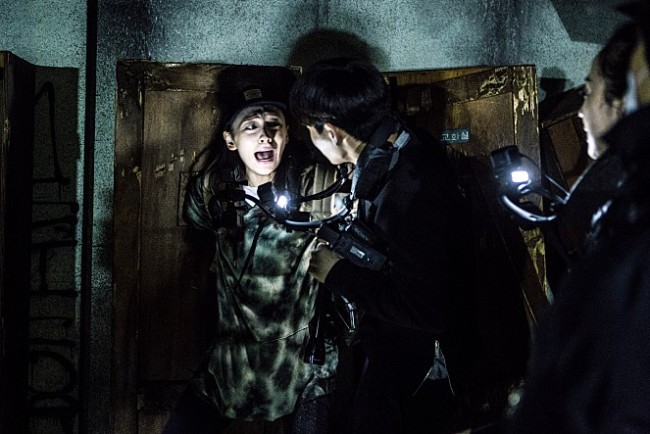
The country's most famous ghost site is the former Gonjiam Psychiatric Hospital in Gwangju City, Gyeonggi Province. The building closed in 1996, reportedly due to financial trouble and a new sewage requirement under the Water Source Protection Act, not the lurid rumours that later circulated online. CNN Travel still named it one of "the seven freakiest places on the planet" in 2012, and the 2018 found-footage film "Gonjiam: Haunted Asylum" drew 2.68 million viewers. The actual hospital was demolished in May 2018, ending its run as a pilgrimage site for trespassers and ghost hunters.

Abandoned Mining Towns of Gangwon
Gangwon Province in eastern Korea contains some of the country's most visible post-industrial ghost towns. Sabuk and Gohan in Jeongseon County, along with neighbouring Taebaek, boomed during the coal-driven 1960s and 1970s. Taebaek alone had roughly 120,000 residents at its peak. After mine closures accelerated in the 1990s, the population collapsed: by February 2025 Taebaek was down to about 37,000, the lowest of any city in South Korea. The Jangseong Coal Mine, the country's largest, closed in September 2024 after 88 years, and the state-run Dogye mine followed in June 2025. Sabuk now relies on Kangwon Land Casino to keep its main streets open.

Submerged Villages of Soyang and Chungju Dams
Not every Korean ghost town stands above ground. The Soyang Dam, completed in October 1973 on the Soyang River in Chuncheon, created Korea's largest artificial lake and submerged dozens of villages in Gangwon Province. Official figures cite about 4,600 households across 38 settlements relocated, and roughly 2,700 hectares of rice fields lost. Some hamlets that did not flood became "islands on land" once their roads went under water, accessible only by ferry to places such as Cheongpyeongsa Temple. A similar story unfolded at the Chungju Dam, completed in 1985, which inundated parts of Danyang and other towns in North Chungcheong Province.

The Rural Disappearance Crisis
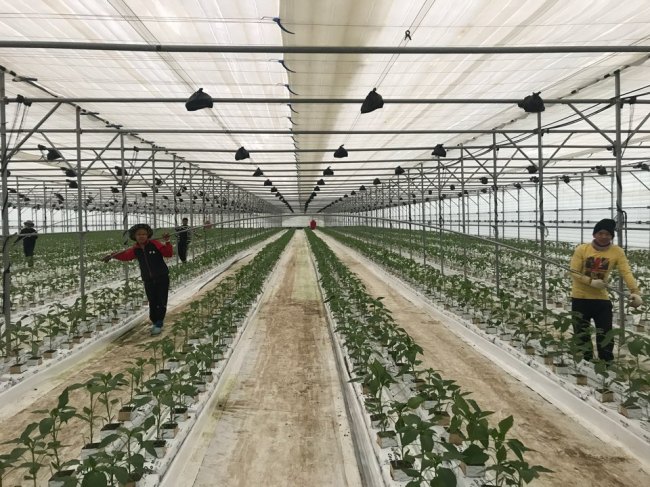
The country's deepest ghost-town problem is demographic. Korea's total fertility rate fell to 0.72 in 2023, the lowest of any OECD member, before edging up to 0.75 in 2024 and 0.80 in 2025. Statistics Korea recorded just 229,970 births in 2023. Counties such as Hapcheon and Goseong in South Gyeongsang Province, Inje in Gangwon, and large parts of North Chungcheong and Jeolla have seen working-age populations halve within a generation. In the village of Gimhwa-eup in Cheorwon County, residents told reporters that wedding halls were going months between bookings and that newborn babies had become almost unheard of, a pattern repeated across 89 designated depopulation zones.
Industrial Ghost Sites
Beyond mining and farming, several industrial complexes have followed the same trajectory. Parts of the Jeungpyeong and Yeongwol industrial zones have lost tenants as smaller manufacturers have consolidated near Seoul or moved overseas. In Seoul itself, the temporarily depopulated Bogwang-dong and Hannam-dong neighbourhoods south of Itaewon emptied out in 2024 ahead of the Hannam New Town redevelopment, producing a more compressed version of the same dynamic: streetlights still on, residents gone. Yongma Land, an amusement park in Jungnang District that operated from 1980 to 2011, has become a low-key urban exploration destination, charging photographers a small fee to visit its rusted carousel and bumper cars.
Ghost Towns as Tourist Destinations
Some local governments are trying to turn decline into a draw. In April 2026, the Ministry of Agriculture, Food and Rural Affairs convened a "Rural Empty House Regeneration Forum" in Mungyeong, North Gyeongsang Province, where the former mining town of Gaeun-eup, once home to 20,000 people, now houses about 3,000. Mungyeong is building modular homes and offering free rent for up to a year to new farmers, while old breweries and blacksmith shops are being converted into cafes and cultural spaces. Cheongsong County and Jeongseon have built tourism around mining heritage, and Jeju Island's Hankyeong district is reworking 15 abandoned houses into co-working spaces for digital nomads.
The Future of Korea's Depopulating Regions
The government's response combines money and reorganisation. The maximum subsidy for demolishing hazardous abandoned houses was more than doubled in 2026 to 16 million won per house, and a national Vacant House Bank now matches derelict rural properties with urbanites who want to relocate. Planners are also discussing administrative mergers to keep services running where populations have fallen below the threshold for stand-alone counties. Whether these measures can stabilise the 89 designated depopulation areas, or whether more towns will simply join the list, will be one of the defining questions for Korea over the coming decade.

Explore More of Korea with Daebak
Want to bring a little piece of Korea into your life? The Daebak Box is packed with the best Korean snacks, ramen, and cultural goodies delivered monthly to your door.


