

Table of Contents
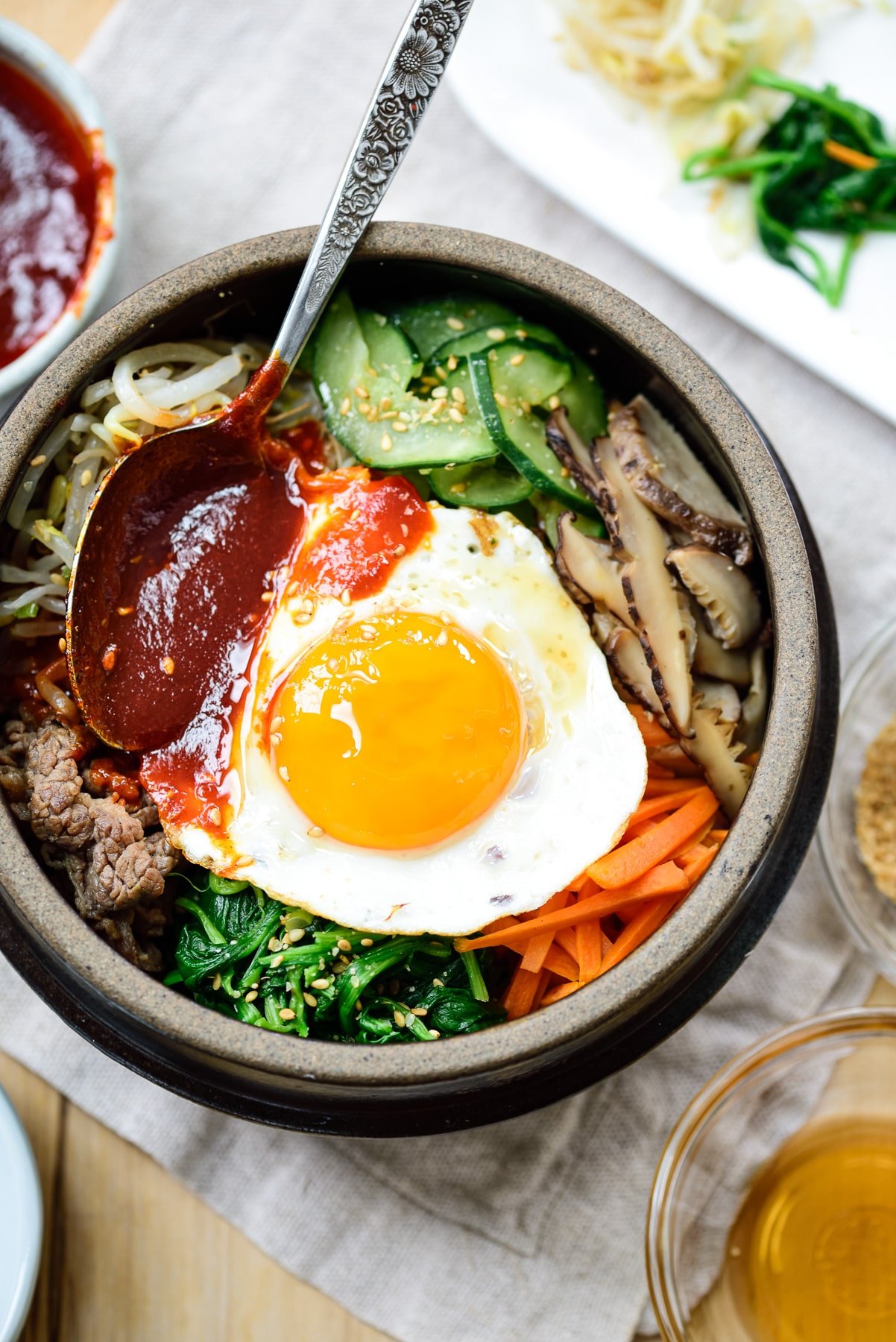
Every October the streets around Jeonju's hanok village turn into an open-air kitchen. Bibimbap is the Korean dish everyone thinks they know, but Jeonju is where the dish carries a different weight. It arrives in a heavy brass bowl, crowned with raw beef and a golden egg yolk, and 800,000-plus people show up over three days to eat, mix, and photograph it. The Jeonju Bibimbap Festival (전주 비빔밥 축제) is why UNESCO named this provincial city a Creative City of Gastronomy back in 2012. It is culinary heritage you can taste in under 15 minutes.
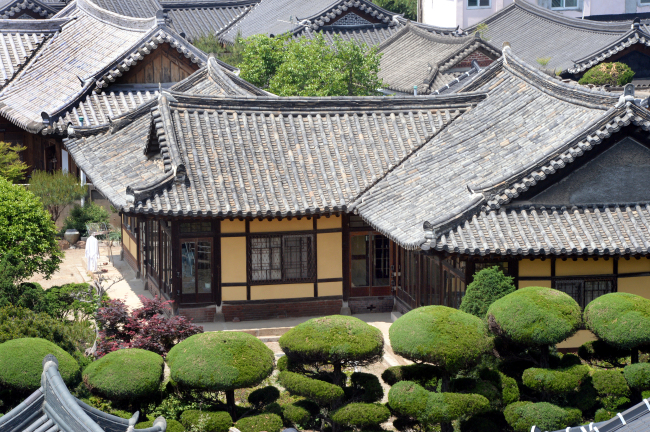
Why Jeonju Became Bibimbap's Capital
Ask ten Korean chefs where the country's food really comes from and at least seven will say Jeolla-do, the southwestern province that has been feeding kings and rebels for well over a thousand years. Jeonju is that province's spiritual and administrative center. In 900 AD it served as the capital of Hubaekje, one of the Later Three Kingdoms. During the Joseon Dynasty (조선왕조), Jeonju was the ancestral home of the ruling Yi family, which meant royal court cuisine flowed back and forth between the palace kitchens in Hanyang (modern Seoul) and this southern city.
That royal pipeline matters. Bibimbap is documented in Jeolla-region recipe books going back more than 500 years, longer than nearly any comparable Korean dish. The Joseon culinary text Siuijeonseo, compiled in the late 1800s, records a "bubuim-bap" that matches the Jeonju style almost line for line. When cooks in Seoul or Busan claim their own bibimbap tradition, they are usually reaching for a shorter timeline. Jeonju is the receipt.
What Makes Jeonju Bibimbap Different
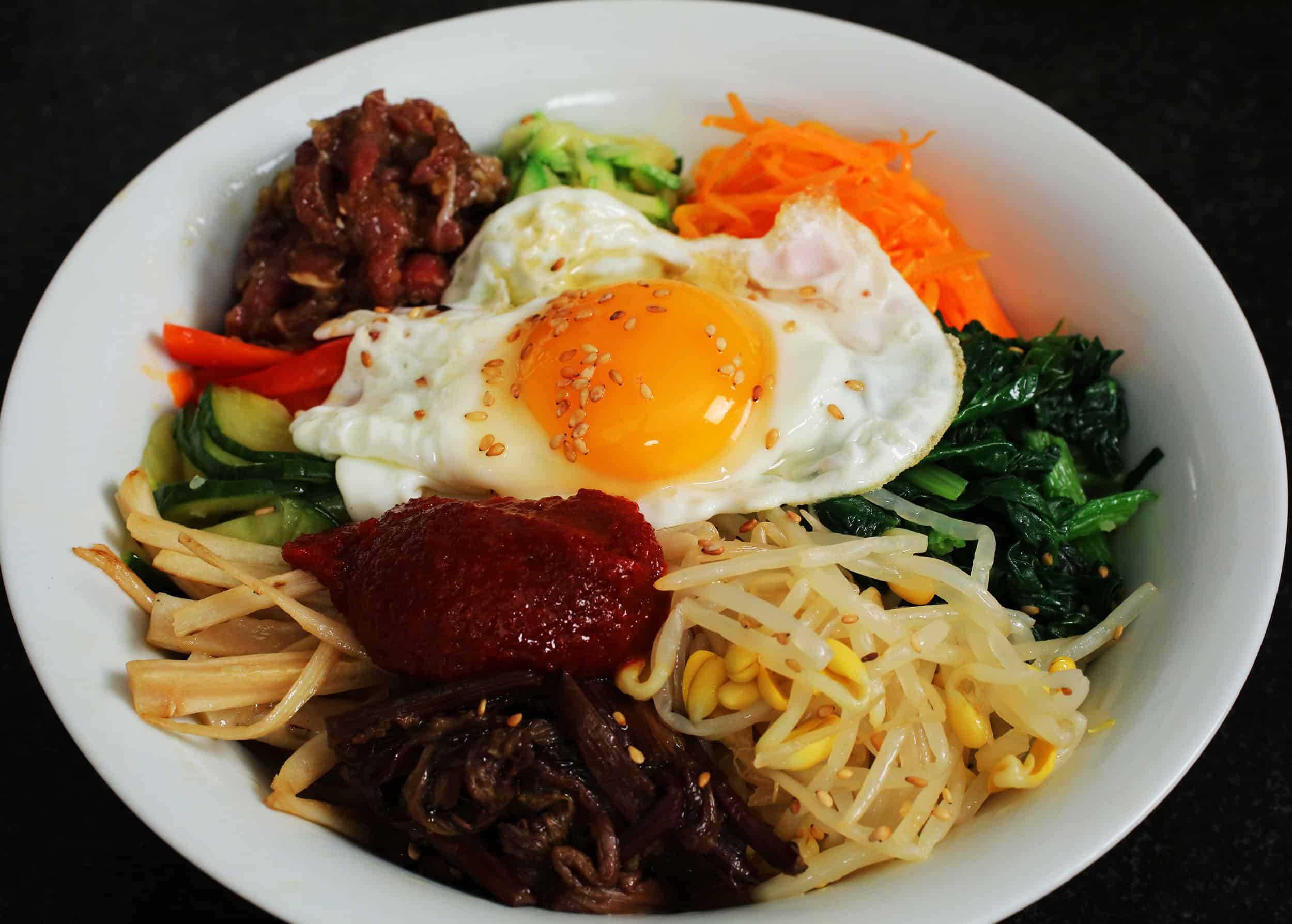
The details are where the Jeonju version parts ways with what you get in the average Korean-American takeout shop. Start with the rice. It is not boiled in water. Jeonju cooks simmer the grain in sagol-guksu (beef bone broth), which loads every grain with umami before anything else lands on top. Then come the bean sprouts, specifically the short, snappy kongnamul grown in Imsil county just up the road, prized for a crunch that survives the mixing motion.
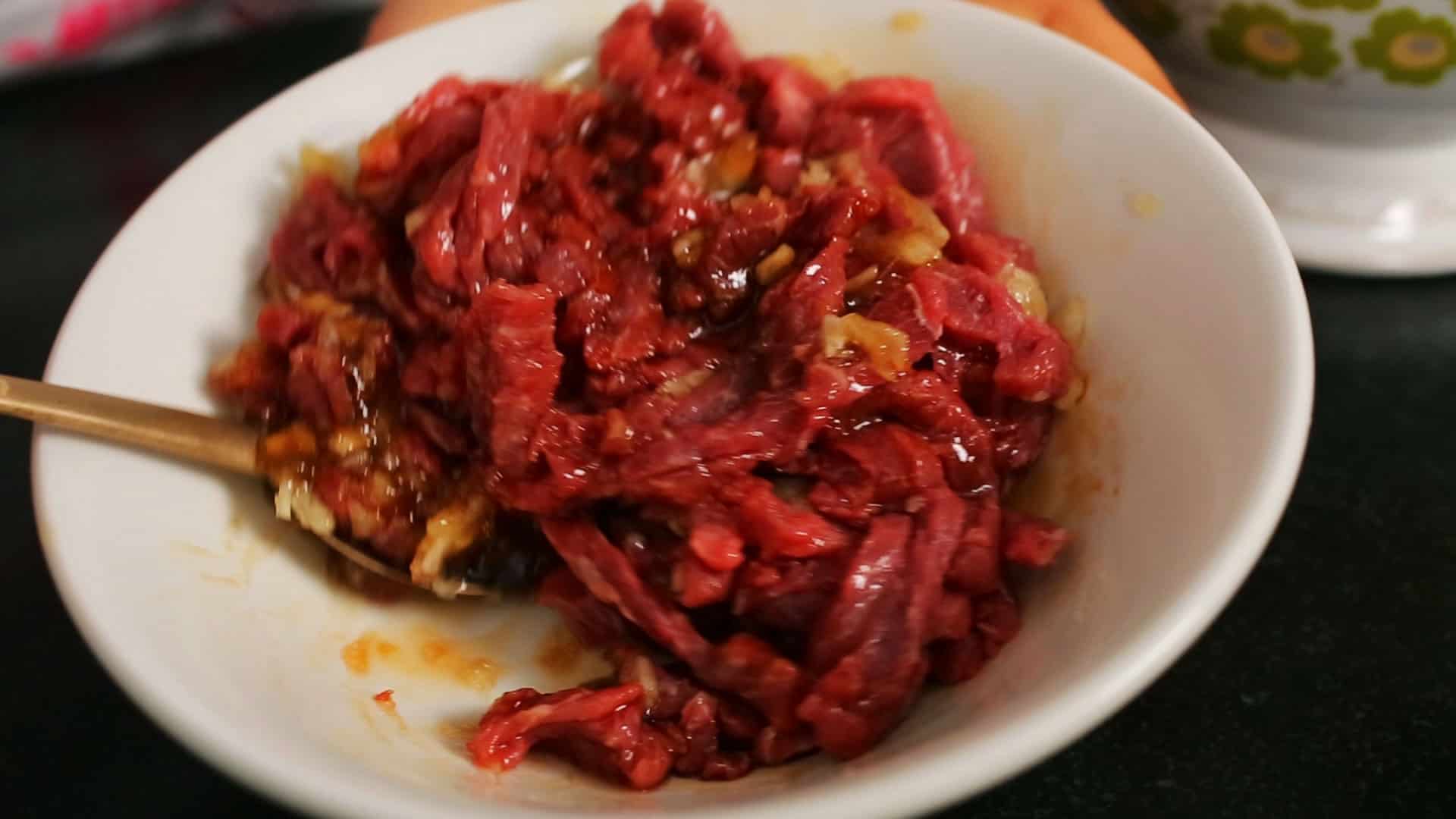
The finishing touches read like a checklist of things Seoul restaurants often skip. Hwangpomuk (황포묵), a mung bean jelly stained yellow with gardenia seeds. Fresh 육회 (yukhoe), raw beef tartare seasoned in sesame oil and garlic. A single raw egg yolk perched on top instead of the fried egg you see everywhere else. And crucially, the whole assembly comes in a 놋그릇 (notgeureut), a brass bowl that keeps everything at temperature and, according to Jeonju grandmothers, changes color slightly if it detects poison. That last bit is folklore, but the bowls are real and heavy and beautiful.
The Festival's Eight-Tier Bibimbap Classification
The festival organizers do something clever. Rather than pretend bibimbap is one dish, they built an eight-tier tasting map that walks visitors through the regional cousins on a single festival ticket.
The top of the pyramid is 육회비빔밥 (yukhoe bibimbap), the raw-beef Jeonju flagship. Right beside it sits 놋그릇비빔밥, the brass-bowl service that most royal court chefs consider the "correct" presentation. Then come the outsiders. Andong (안동) bibimbap arrives on jesa ritual grounds as heotjesabap, a bland-by-design ancestor food. Jinju (진주) delivers chilbohwaban, a "seven-treasure" version prized for its restaurant-plated color palette. Tongyeong's coastal variant swaps in oyster and sea grape. Haeju bibimbap from the North Korean tradition leans on chicken broth. Pyongyang's version is often listed on the map as the sober cousin, restrained on chili. And Geosahwaban rounds it out with mushroom and mountain vegetables from the temple kitchens.
Walking the tasting route is basically a crash course in Korean regional cuisine, compressed into two afternoons.
Inside the Festival: What Visitors Actually Do
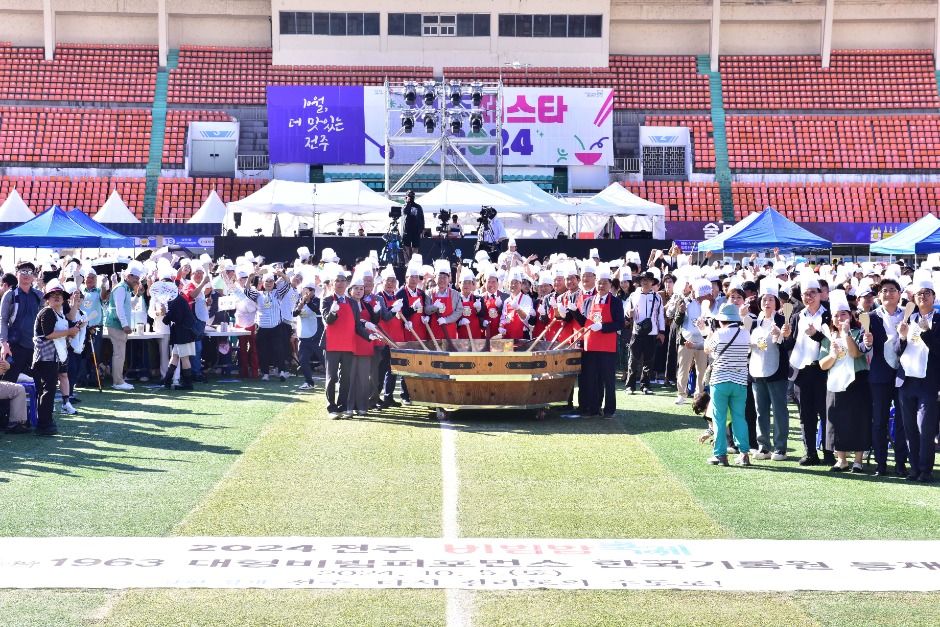
The festival, running since 2007 and now anchored at Jeonju World Cup Stadium and the hanok village, is engineered for participation, not spectatorship. The centerpiece is the giant 1,000-serving bibimbap mix, where a rotating crew of chefs and volunteers hand-tosses a mountain of rice, namul, and gochujang in a bowl the size of a paddling pool. Everyone gets a scoop for a token fee, and the line moves fast.
Around that, there is a national bibimbap cooking competition where amateur cooks throw down against culinary students, a hanok village parade that includes Jeonju's declared "top ten delicacies" on floats, and a multicultural food zone where invited chefs from Southeast Asia, France, and elsewhere present their own mixed-rice traditions alongside the Korean canon. The Taste Street (맛의 거리) segment runs adjacent restaurants at festival pricing so first-time visitors can compare a heritage bibimbap against a modernized fusion take without leaving the block.
The UNESCO Angle and Why It Matters for Korean Food Tourism
Two credentials matter here. In 2010 Jeonju was admitted to Cittaslow International, the Italian-founded network of "slow cities" that certifies places committed to local food, traditional craftsmanship, and small-scale living. In 2012 UNESCO added Jeonju to its Creative Cities Network as a City of Gastronomy, making it the first Korean city to hold that specific designation. Together the two stamps put Jeonju in the same category as Parma, Chengdu, and Zahlé.
The economic tail is real. Korea Tourism Organization figures put festival attendance in a normal year at more than 800,000 visitors and estimate the local economic impact at around ₩60 billion, roughly $45 million, over the festival window. That is a big number for a city of 650,000, and it explains why the Jeonbuk provincial government treats the festival as strategic infrastructure rather than a cultural nice-to-have.
The Slow Food International tie-in matters for a different reason. Bibimbap is a natural Slow Food product because every component is prepared separately, seasoned with care, and served in a way that resists industrialization. In an era when Korean fast food is exploding globally, Jeonju's positioning is that the slow, ceremonial version is the one worth exporting.
Planning Your Visit
The 2025 edition runs October 24 to 26 at Jeonju World Cup Stadium, with satellite programming inside the hanok village. Historically the dates fall in the last two weekends of October, so if you are booking travel a year out, aim for that window. From Seoul, KTX high-speed rail gets you to Jeonju in about 90 minutes; from Incheon Airport, plan on roughly three hours door-to-door with a train transfer.
Once there, the hanok village itself is the base camp. Stay in a family-run hanok guesthouse if you can, book a brass-bowl bibimbap lunch at one of the certified heritage restaurants (Gogung, Hankookjib, and Sungmidang are the classical trio), and leave an afternoon for the Nambu Market night snack alley. The festival is free to attend and most tastings run between ₩3,000 and ₩10,000, which makes it one of the more accessible cultural festivals on the Korean calendar.
If you cannot make it to Jeonju this October, the best next thing is to build your own Korean food week at home. Our SnackFever Box lands monthly with a rotating lineup of authentic Korean snacks, sauces, and instant meals sourced directly from Korea, including the gochujang, sesame oil, and gim you would use to build a bibimbap of your own. Consider it a small offering to the same colorful, communal spirit that fills Jeonju's streets every October.


