


Table of Contents
The most reliable signal that a Korean fashion 브랜드 (brandeu, brand) is about to have a global moment isn't a Vogue feature or a Highsnobiety cosign. It's a K-pop stylist quietly slipping the label into a comeback teaser. I have spent about a decade around Hallyu and 아이돌 패션 (idol paesyeon, idol fashion) marketing, and this pattern has held so consistently that Korean brand founders now plan their production calendars around album release cycles. When a piece lands on IU, Jennie, RM, or Jungkook during a promotion week, the brand's Naver Smart Store traffic can 10x inside 48 hours, and international resale on sites like SSENSE and END Clothing follows within the same week. The mechanic is Korea's version of the Kardashian PR effect, except the celebrities are on a promo cycle roughly every four months, and the stylist relationship is closer to an unofficial in-house design collaboration than a paid endorsement. Below are six 브랜드 (brands) that keep showing up on stage, in music video wardrobes, and in the airport photos that Naver Cafe and X (Twitter) 스타일링 (styling) accounts document frame-by-frame: Ader Error, thisisneverthat, Andersson Bell, ROMANTIC CROWN, Gentle Monster, and 무신사 (Musinsa) with its private label Musinsa Standard.

The Stylist Economy Behind What Idols Wear
Before we get into the labels, the industry mechanic worth understanding: a K-pop stage outfit almost never comes from a member picking their own clothes. Every major agency (HYBE, SM, YG, JYP, ADOR, Starship) runs a stylist team, and each promotion cycle has one lead stylist who curates a mood board, contacts brand PR, and pulls samples. Boutique Korean brands have a strong reason to say yes because the same jacket photographed on Karina or V generates months of long-tail search traffic, whereas paying for a Vogue Korea photo shoot is expensive and one-shot. So the deal is usually zero cash, samples on loan, and credit in the styling account posts that dedicated fans run on X. Those styling accounts, K-pop_outfits, styleofjennie, and hundreds more, are essentially an unpaid distribution layer that Korean fashion couldn't buy if it tried. The Naver Smart Store analytics on the brand side let founders track the exact spike per promotion, and Musinsa's dashboard makes this visible in real time to any brand selling on the platform.
What makes the Korean version different from Western celebrity fashion is scale plus cadence. A K-pop group has five to twelve members, each doing airport runs, VLIVEs, fan meets, music show appearances, and MVs during a two-month promo cycle. That is roughly 30 to 60 outfit opportunities per group per comeback. Multiply that by the six or seven groups in active promotion at any given time, and Korean brands get a promotional volume Western influencer marketing can't match. This is the real reason 브랜드 sponsors line up for stage styling: it's not glamor, it's a distribution channel with better economics than paid ads.
Ader Error: The Anonymous Collective That Wrote the Playbook
Ader Error, founded in 2014 by a Seoul-based collective that publicly refuses to name individual designers, is the reference case for how a Korean indie brand crosses into global streetwear on the back of idol styling. The name is a portmanteau: "A for Aesthetics, D for Drawing, ER" as a verb ending, plus "Error" as the intentional imperfection philosophy. The visual signature, ambiguous colorblocking, oversized silhouettes, and that specific washed pastel palette (they call it "aderade blue"), is instantly recognizable in a MV screen grab. That legibility is exactly what makes it work for stage styling. A stylist knows a director of photography will pick out the color in a 1080p thumbnail.
The idols who wear it are the ones you'd expect and a few you wouldn't. IU pulls Ader Error consistently for her acoustic-tour promo shoots. BTS's RM (레오) is arguably the brand's most influential unpaid ambassador, appearing in Ader Error pieces across his solo Indigo era campaign visuals. BOL4's Jiyoung, EXID's Hani, and BTS's Jin have all been documented wearing the label in Soompi's Korean fashion coverage. What's notable is that Ader Error's founders have said in interviews they don't pay for idol placements at all. The pieces just travel through stylist networks organically because they photograph well and the price point (mid-range luxury, not entry streetwear) matches what agencies want their idols in. Post-2020 the brand hit an inflection point: stock at Dover Street Market London, Selfridges, and a permanent SSENSE presence. That is the transition from "K-pop favorite" to "internationally credible fashion brand" that most Korean labels never make.
thisisneverthat: The Seoul Streetwear Anchor
If Ader Error is the art-school kid, thisisneverthat is the skate-shop kid. Founded in 2010 by Jonkyu Choi, Nadan Cho, and Inwook Park, it built its early identity on 스트릿 (seuteurit, street) reworks of American subculture: college sports jerseys, workwear jackets, printed button-ups, and that specific brand of nostalgic Americana that lands weirdly well in Korea. W Magazine called it "South Korea's answer to Supreme" after the label's 2018 Seoul Fashion Week debut, and Highsnobiety has covered nearly every seasonal drop since. The list of collaborators reads like a streetwear cheat sheet: New Balance, Converse, HOKA, Suicoke, Gramicci.
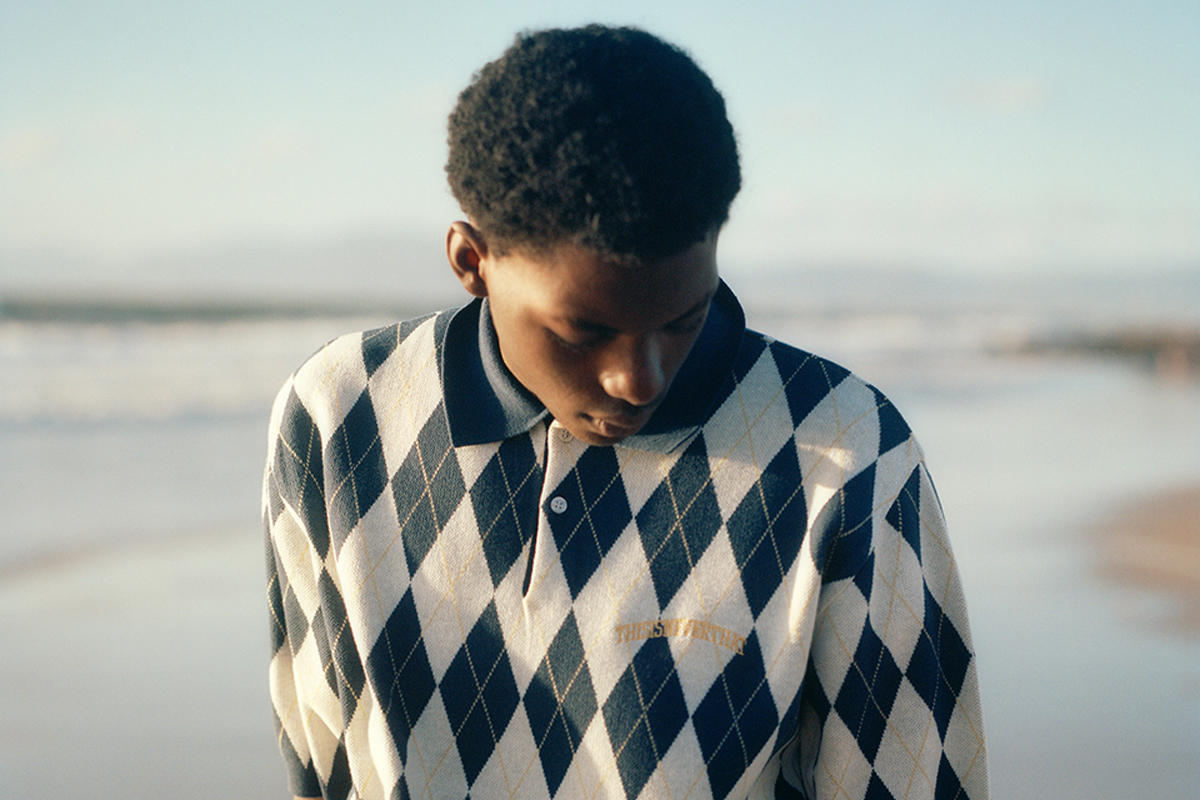
On the K-pop side, thisisneverthat's fans include Suga (BTS), Chanyeol (EXO), Giriboy, and MC Meta, and the brand has been credited on official BTS behind-the-scenes styling notes as far back as the 2016 "Save Me" era, when RM was spotted in a t-thisisneverthat tee. Musinsa currently ranks the brand consistently inside the platform's top five domestic 스트릿 labels by weekly gross merchandise value. The appeal to K-pop stylists is that thisisneverthat's silhouettes read as effortlessly casual, which is exactly the "off-duty but curated" look that works for VLIVE broadcasts and airport photos. That's a different job than the Ader Error stage-shot look, and the two brands rarely compete for the same styling slot. Post-2022 the label opened at Selfridges and expanded into Tokyo, following the same "K-fashion goes global via Highsnobiety cosign then flagship placement" arc.
Andersson Bell: Korean-Nordic Minimalism Wins Europe
Andersson Bell is the case study in why "Korean designed with Nordic sensibility" works as a global brand thesis. Founded in 2014 by Doh Tae-kim in Seoul with Swedish creative direction input (hence the Scandinavian name), the brand pairs minimalist tailoring with unexpected knit textures and quiet-luxury color palettes. It reads as European when isolated, but the fit and proportion are Korean, which is why it lands so cleanly on idol frames. BTS's Jungkook wearing Andersson Bell chunky sneakers at the 2019 Billboard Music Awards became the inflection moment: JoongAng Ilbo reported that the brand hit near-perfect sellout on Net-a-Porter's UK site right after, and Andersson Bell became the first Korean brand to run a pop-up at Liberty London.
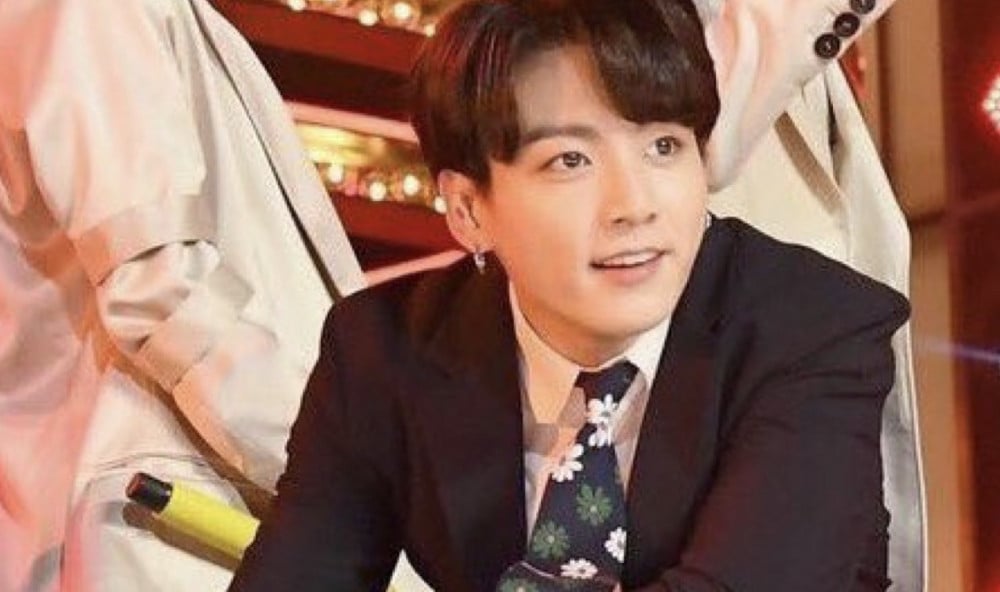
Beyond Jungkook, aespa's Winter has been photographed in Andersson Bell's green denim chain-link top and cut-out straight-leg jeans during "Spicy" promo styling, and NCT members appear in the brand's outerwear across Weverse and Bubble content drops. What sets Andersson Bell apart at an industry level is the runway show economics: their Seoul Fashion Week Spring/Summer 2026 opener staged along the Deoksu Palace stone walls drew huge international press attention and effectively rebranded the label from "K-pop favorite" to "Korea's answer to Jil Sander." That reads to buyers as a category upgrade, and it opens wholesale doors that pure streetwear brands can't get through. Meanwhile the K-pop styling pipeline keeps supplying the marketing pull that European brands would pay millions for.
ROMANTIC CROWN: The BTS V Cosign and the Vintage Streetwear Wave
ROMANTIC CROWN, launched in 2014, sits in a lane that's harder to define than pure streetwear: preppy vintage with subtle hip-hop residue, hoodies and graphic tees that look like they've been thrifted from a European campus, but with quietly current cuts. The brand ambassador is SEVENTEEN's Woozi, made official in October 2022 after allkpop covered his repeated off-duty and promo wear of the label. But the K-pop endorser list started earlier and stayed dense: BTS's V wore ROMANTIC CROWN pieces throughout the 2018 "Love Yourself" era, GOT7's Youngjae was documented in the brand's tees during comeback prep, and VIVIZ's Umji and SEVENTEEN's Jeonghan round out the current rotation.
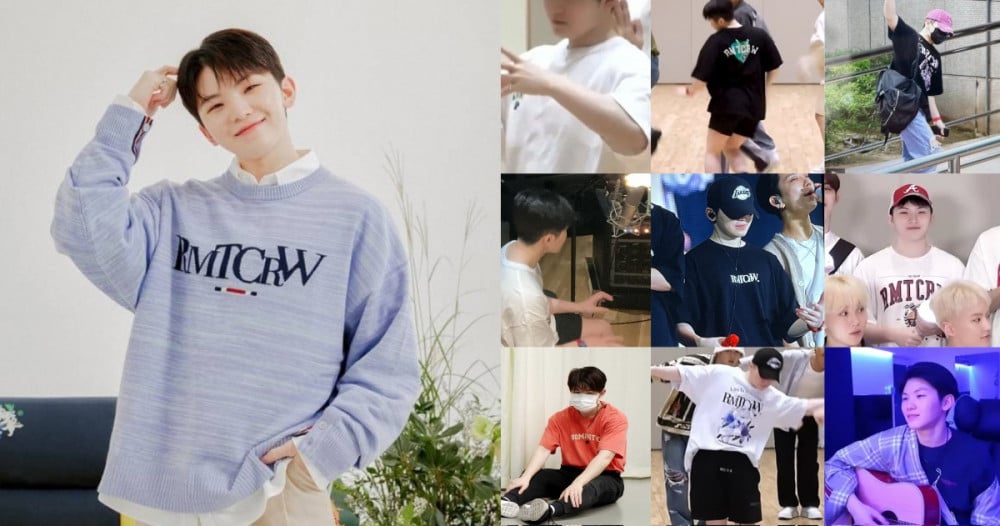
The industry mechanic worth flagging with ROMANTIC CROWN is the "organic idol wear becomes paid ambassador" progression, which is quietly one of the highest-conversion brand deals in Korean fashion. When a stylist independently keeps pulling a label for an idol across multiple comebacks, it signals to the brand PR team that the idol's fanbase has already learned to associate that member with the label. Converting that into an official ambassadorship (with real budget) captures brand equity that already exists in fan memory. Woozi's Carat fanbase had been buying ROMANTIC CROWN for two years before the deal closed. The conversion rate on ambassador announcement day is basically pre-loaded. Every mid-tier Korean brand studies this playbook.
Gentle Monster: The Eyewear Brand That Owns Every K-pop Music Video
Gentle Monster deserves its own category because eyewear plays a different role in K-pop styling than clothing. Sunglasses read on camera at any angle, they don't need to fit a specific silhouette, and a single distinct frame can be reused across an entire promo cycle. Founded in 2011 in Seoul, Gentle Monster now runs experiential flagship stores (Sinsa, Milan, New York, Shanghai) that look more like art installations than retail, and the industry inside baseball is that those flagships are essentially marketing budgets disguised as stores. The math works because every K-pop cameo featuring a Gentle Monster frame drives frame-specific search traffic that converts directly to product page.
The tentpole partnership is Jennie (BLACKPINK), whose collaborative Jentle Home, Jentle Garden, and the 2024 Jentle Salon capsule collections are the most successful K-pop x eyewear deal on record. Each collection sells through within days at global launch, and Jennie's involvement is closer to co-designer than face-of-brand. Beyond Jennie, ITZY's Yeji wore Gentle Monster in the "None of My Business" MV, TXT's Yeonjun has an entire documented rotation of Gentle Monster frames both on stage and off-duty, and IVE's Wonyoung is a current campaign face. What's specifically Korean about this brand's appeal is the willingness to design outright weird frames (translucent green, oversized sculptural silhouettes) that would be considered too risky for a Western luxury eyewear house. Korean stylists and idols are willing to try them because the K-pop performance format rewards visual boldness, and that risk tolerance has become Gentle Monster's global competitive edge.
Musinsa and Musinsa Standard: The Platform That Runs the Whole Ecosystem
무신사 (Musinsa) isn't a fashion brand in the traditional sense. It's the platform underneath 80 percent of what's discussed above. Founded in 2001 as an online sneaker forum by Cho Man-ho, it has become Korea's largest online fashion marketplace, hosting more than 8,000 brands including thisisneverthat, Andersson Bell, and ROMANTIC CROWN. The reason it matters at an industry level is that Musinsa's editorial team, dashboard analytics, and promotion slots effectively decide which small Korean brand gets discovered by a K-pop stylist. When Musinsa's data shows a label spiking, the stylist community notices, samples flow, and the promotion cycle multiplies the spike into a global moment.
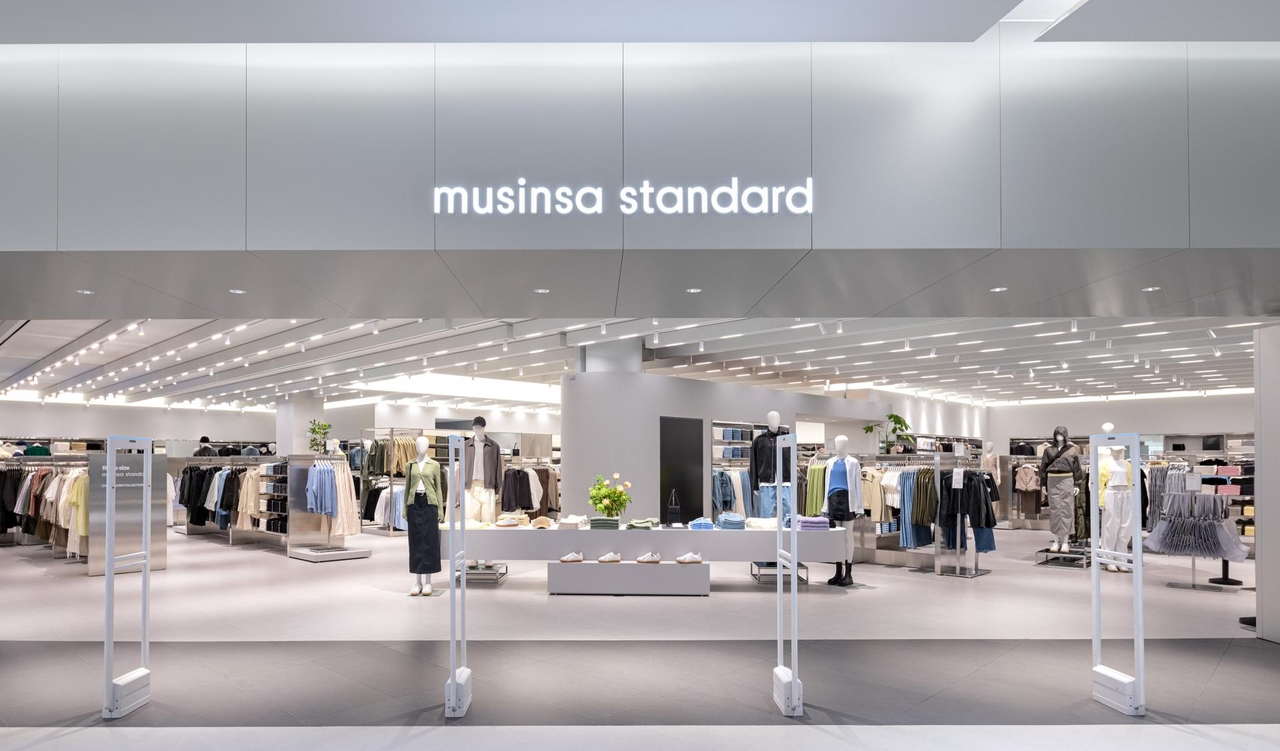
The other side of Musinsa is Musinsa Standard, the private-label SPA brand launched in 2017. It began as basics-only online and expanded to 23 physical stores in Korea by 2025, with 무신사 스탠다드 (Musinsa Standard) topping Korean Gen Z's preferred SPA brand list at 48.1 percent, ahead of Uniqlo (42 percent) and Zara (36 percent). Estimated 2023 sales already surpassed 200 billion won (roughly 145 million USD), and the label famously designed Team Korea's 2024 Paris Olympics opening ceremony uniforms. That Olympic contract was the moment Musinsa Standard stopped being "Korea's answer to Uniqlo" and started being a national fashion brand in the way that Uniqlo represents Japan. Foreign customer sales at Musinsa's Seoul stores hit 20 billion won in 2024, a sixfold jump from the prior year, driven mostly by K-pop and K-drama tourists who came knowing the brand from Weverse content and idol styling. That is the platform effect closing the loop: Musinsa the marketplace curates the brands the idols wear, and Musinsa Standard the SPA brand captures the tourist demand that the idol styling created in the first place. It's vertically integrated K-fashion, and there's no direct Western equivalent.
What This Says About K-Fashion's Global Position in 2026
The through-line across all six brands is that K-pop styling isn't just a marketing channel for Korean fashion, it's the market entry vehicle. Ader Error at Dover Street Market, thisisneverthat at Selfridges, Andersson Bell at Liberty London, ROMANTIC CROWN riding the SEVENTEEN Carat fanbase into Southeast Asia, Gentle Monster's Jentle Salon pop-ups in 13 cities globally, and Musinsa's Shanghai select shop opening in 2025. Every one of those milestones was preceded by 18 to 36 months of quiet idol styling exposure that built brand awareness in the target market without paid ads. Western fashion writers tend to describe this as "K-fashion is having a moment," which underrates what's actually happening. K-fashion isn't having a moment. It built a distribution system with fewer competitors than any other regional fashion export in the past 20 years, and the K-pop industry is that system's export terminal.
For fans, the practical takeaway is that these six 브랜드 are the ones worth watching if you want to see what K-pop stage 스타일링 turns into consumer fashion 12 months later. Ader Error and Andersson Bell are the ones most likely to reach European luxury multi-brand retailers next. thisisneverthat and ROMANTIC CROWN will keep dominating the K-pop streetwear and off-duty airport looks. Gentle Monster will keep running the eyewear category unchallenged. And Musinsa is where all of this shopping actually happens if you want to buy the exact pieces your bias was wearing during the last comeback.
Explore More of Korea with Daebak
Want to bring a little piece of Korea into your life? The Daebak Box is packed with the best Korean snacks, ramen, and cultural goodies delivered monthly to your door.


