


Table of Contents
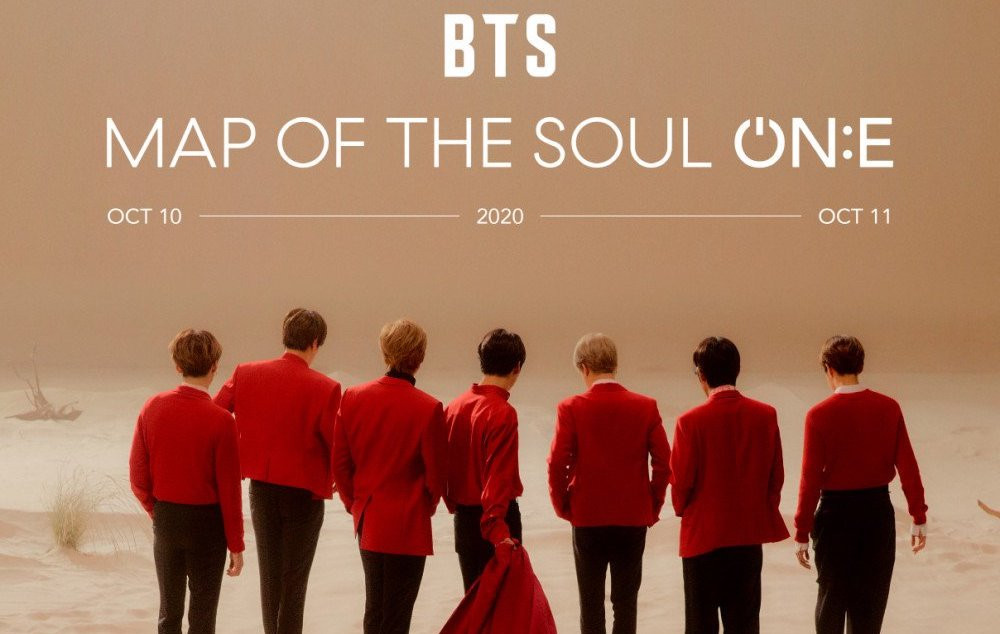
Here is the take from someone who was tracking Big Hit's every move in October 2020: MAP OF THE SOUL ON:E was not a substitute concert, it was the moment the K-pop industry realized live music had a new distribution channel. 993,000 paid viewers from 191 countries and regions across two nights (October 10 and 11, 2020), roughly $50 million in ticket revenue at the mid-range, and the world's biggest paid online concert on record. 방탄소년단 did not settle for a stripped-down livestream. They built a 4-stage production with 8x the budget of Bang Bang Con: The Live from four months earlier, wired it through 위버스 (Weverse), and made every 아미 in a Manila bedroom or a Sao Paulo living room feel like they were in the Olympic Gymnastics Arena that weekend.

Why ON:E mattered more than the numbers suggest
Context first, because this gets flattened in retrospect. October 2020 was the ugly middle of the pandemic. BTS's Map of the Soul World Tour, one of the biggest global tours ever booked, had been cancelled in February. Every K-pop agency was watching Big Hit for a signal on whether live music was a dead category for the year. Bang Bang Con: The Live in June had drawn 756,000 viewers from 107 countries and pulled somewhere around ₩22 billion in ticket sales, but that show was still a scaled-back concept, filmed in a hotel space with a handful of stages. ON:E was the moment Big Hit decided to go big instead of going careful.
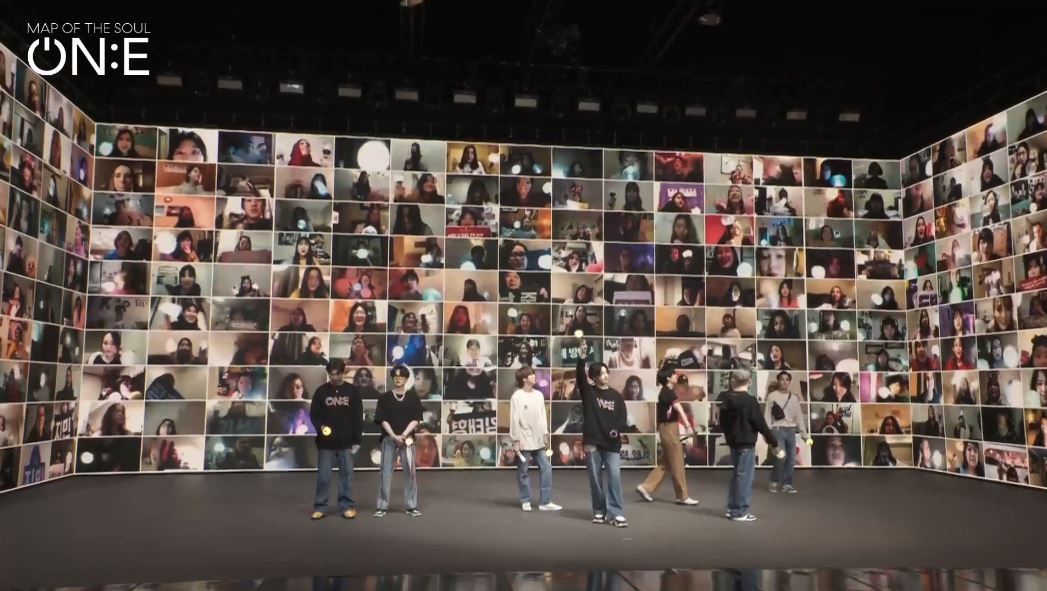
Four physical stages built at the Olympic Gymnastics Arena, AR and XR visual layers pumped into every single number, 6 multi-view camera angles the viewer could switch between in real time on 위버스, and an ARMY on Air system that beamed hundreds of fan faces onto stadium-scale LED walls surrounding the members. Production cost was reported at 8x Bang Bang Con. The appeal point Western media missed at the time: ARMY did not want a cheaper version of a concert. They wanted a version of a concert that could not physically exist in the offline world, and Big Hit gave them exactly that. Persona's XR sequence had a 20-foot RM avatar walking around next to the real RM. Moon put Jin under a swirl of hovering planets. Black Swan turned the stage sides into deep-sea projections. This is not concert film production, this is film production repurposed as a concert.
Weverse graduated from fan app to concert platform
The technical story nobody outside HYBE tells properly: ON:E was Weverse's audition to become the industry-standard K-pop streaming platform, and it passed. Before this concert, Weverse was primarily a Big Hit-owned fandom messaging app, a Discord-ish thing where members posted photos and fans typed replies. After ON:E, Weverse was a legitimate concert-delivery platform with real-time multi-view rendering, chat overlays, HD and 4K ticket tiers (₩59,500 and ₩71,500 respectively), and the ability to hold 500,000 concurrent streams without collapsing. That capability is what let HYBE aggressively pitch Weverse to acts outside the Big Hit label family in 2021 and 2022. GFriend, SEVENTEEN, ENHYPEN, TXT, NU'EST all migrated their fandom infrastructure to Weverse in the months after ON:E because the platform proved it could actually run a stadium-scale event.
Here is the deeper insight: Weverse Concerts (the streaming product) directly became the template that every rival platform then chased. SM's Beyond LIVE (which had already launched with SuperM in April 2020) accelerated development after ON:E. YG built the Sky Arena virtual stage for BLACKPINK's The Show in January 2021 explicitly to compete with ON:E's XR visuals. JYP's TWICE Beyond LIVE runs in December 2020 borrowed the multi-view multi-camera structure. SM eventually spun aespa's My World Tour 2023 concert stream on the same architecture. Every K-pop online concert since October 2020 owes some part of its production spec to what ON:E stress-tested first.
The ARMY unity mechanic, decoded
The fandom side of this story is where it gets specifically Korean. Bang Bang Con had already trained 아미 on the ritual of syncing their ARMY Bombs (Bluetooth-controlled lightsticks) to a home livestream. ON:E scaled that ritual globally in a way nobody had done before. On October 10 and 11, ARMY Bombs across 191 countries were synchronized via the app to the same color changes as the arena stage. A fan in Buenos Aires and a fan in Jakarta were literally holding the same red-blue-purple sequence in their hand at the same second, and Big Hit built the ARMY on Air feature so those fans' webcam feeds appeared on the LED walls behind BTS in real time. Jimin cried on the second night looking at those walls. That was not a scripted moment. That was the emotional payoff of the entire distribution model working.
What Western industry analysts still underweight is how much of ARMY's cohesion during the pandemic ran on Korean fandom mechanics that predated COVID by a decade. Fancafe streaming teams, playlist coordination via Twitter hashtags, coordinated album mass-buys, viewing parties on TikTok and Discord during the concert livestream itself. ON:E gave those existing structures a shared live event to organize around. The Weverse chat during the show was firing off thousands of comments per second in Korean, English, Spanish, Portuguese, Thai, and Bahasa. TikTok watchparties spun up parallel to the official stream. ARMY Discord servers ran their own commentary channels. This was not passive viewership. This was a coordinated global 팬덤 performing shared attention on the same live artifact for five hours across two nights.

The revenue math that changed HYBE's business model
Ticket tiers ran from ₩49,500 (multi-view) to ₩71,500 (4K premium). Multiply the mid-range by 993,000 buyers across two days and the concert weekend generated somewhere between ₩49 billion and ₩71 billion in gross ticket revenue, roughly $43 million to $62 million USD. Add the ON:E-branded merch operation (photocards, slogans, seasonal packages) and the figure runs materially higher. Bang Bang Con had already proven a virtual concert could clear $20 million. ON:E proved it could clear $50 million on a single weekend with the right production budget backing it.
Why this matters for the industry story: Big Hit went public on the KOSPI on October 15, 2020, four days after ON:E closed. The concert was implicit proof to investors that the company had a durable, scalable revenue channel outside physical touring. HYBE (renamed from Big Hit in March 2021) then leaned into the Weverse platform strategy that ON:E validated. By 2022 Weverse was hosting concerts, communities, and merchandise for acts across YG, SM-adjacent, and JYP-adjacent artists. ON:E is the reason that consolidation happened. Without a proof-of-concept concert clearing 993,000 paid streams, HYBE could not have pitched rival labels to migrate their fandoms onto Weverse infrastructure.

What ON:E set in motion, and why it still matters in 2026
Every major K-pop online concert since October 2020 has run on infrastructure lessons from ON:E. BLACKPINK's The Show on YG's Sky Arena in January 2021 borrowed the multi-stage plus XR playbook. TWICE's Beyond LIVE runs on JYP's Beyond LIVE platform were structurally similar. aespa's My World Tour digital streaming in 2023 pulled directly from the same architecture. Weverse Concerts as a business line now hosts events for artists across the HYBE label network and beyond. The paid online concert is no longer a pandemic workaround, it is a permanent revenue channel that runs alongside physical touring.
For 방탄 specifically, ON:E did something else that only becomes visible in hindsight. It kept the global 팬덤 coherent during the exact window when the group could not tour. Between October 2020 and 2022's Yet To Come in Busan free concert, the members had almost no full-group live activity. ON:E was the shared live event that ARMY organized around, that people rewatched during lockdowns, that got clipped on TikTok and YouTube. Without that shared artifact, the fandom would have fragmented faster during the 2023-2025 military enlistment gap. The 2026 comeback world tour (79 shows across 34 regions from April 2026 through March 2027) is landing on an ARMY that stayed connected in part because ON:E gave them something to be connected around when everything else was cancelled.
My honest read from the industry side: ON:E is one of the three or four business events that defined K-pop's 2020s trajectory, alongside Dynamite's Billboard No. 1 in August 2020, HYBE's IPO in October 2020, and the SM Entertainment acquisition contest in 2023. The concert itself was extraordinary. What made it structural was Big Hit proving that live music revenue could be captured through a proprietary platform rather than a live venue. Every K-pop label now builds toward some version of that model.
Want to plug into the K-pop culture that ARMY organized around during ON:E and everything after? The Daebak Box ships hand-picked Korean snacks, lifestyle goods, and K-pop items every month, curated for fans who want the real stuff Koreans actually buy, not export-only leftovers.


