


Table of Contents
Long before global K-pop tours and Netflix dramas filled American living rooms, Korea's snack aisle was already doing the cultural heavy lifting. By 2018, Korean grocery shelves had crystallized around a handful of beloved boxes and bags, the kind of treats that turn up in convenience-store baskets, school cafeterias, late-night drinking spreads, and the side pockets of every road trip. Pepero Day in November, Choco Pies on school field trips, shrimp crackers shared over a beer at the bar: these were not just snacks, they were rituals.
This is a look back at the eight best-selling Korean snacks of 2018, the year these classics cemented their place at the top of the chart. From a 1970s pioneer that fed an entire generation to a 2014 chip phenomenon that turned scarcity into status, here is the retrospective rundown.
Choco Pie, since 1974
If any single snack defined Korean confectionery in 2018, it was the Choco Pie. Orion introduced the pillowy marshmallow-and-cake sandwich, dipped in chocolate, in 1974, and by the late 2010s the brand had sold billions of pieces across Asia, Russia, and beyond. Lotte launched a rival version in 1979, and the friendly feud between the two giants kept supermarket shelves loaded with originals, banana, green tea, and seasonal flavors. Beyond Korea, the snack became a soft-power phenomenon: traders smuggled them into North Korea through the Kaesong Industrial Complex, and in 2018 a single Choco Pie reportedly sold for as much as 10 dollars on the North Korean black market. For South Koreans, it was simply the snack that powered field trips, study sessions, and birthday cakes when the real thing was out of reach.

Pepero, since 1983
Pepero is the chocolate-dipped biscuit stick that Lotte Confectionery launched in 1983 to answer Japan's Pocky. By 2018 it had its own national holiday: November 11, written 11/11, looks like four Pepero sticks lined up side by side. The marketing campaign began in 1996, and by 2018 nearly half of Pepero's annual sales were concentrated in the run-up to Pepero Day, when friends, couples, and coworkers exchanged decorated boxes by the millions. Original chocolate stayed the bestseller, but almond, white cookie, and chocolate-filled versions kept the shelves crowded. According to Lotte Confectionery, Pepero sales jumped roughly sevenfold after Pepero Day launched, and the snack has remained a top-five Korean confectionery seller for decades.
Saewookkang shrimp crackers, since 1971
Nongshim's Saewookkang, a curl-shaped shrimp cracker, is the elder statesman of Korean snacks. Launched in 1971 as Nongshim's debut snack product, it was the first Korean cracker to use real shrimp in the dough rather than artificial seasoning, and that umami crunch turned it into an instant household name. By 2018, Saewookkang remained one of Korea's best-selling savory snacks and a fixture at hofs, the casual pubs where Koreans pair beer with anju side dishes. The slogan "Once you start, you can't stop" had survived nearly five decades of competition, and the line had expanded into spicy and seafood-blend variants that kept the original relevant for new generations.

Honey Butter Chip, since 2014
No 2018 retrospective would be complete without Honey Butter Chip. Haitai-Calbee launched the sweet-and-salty potato chip in August 2014, and a social media wave the following winter turned it into the most coveted snack in the country. Bags vanished from convenience stores within hours of restocking, resellers listed them online for three times the sticker price, and K-pop idols including Girls' Generation's Sooyoung, Super Junior's Siwon, and T-ara's Hyomin posted gilded-bag selfies that only pushed the craze higher. By 2018 the supply had finally caught up with demand, and the honey-butter flavor had spread to popcorn, almonds, ramyeon, and even fried chicken, cementing it as the snack that defined Korea's mid-decade flavor obsession.
Kkokkalcorn, since 1983
Kkokkalcorn, Lotte's cone-shaped corn snack, debuted the same year as Pepero and has been a top-ten Korean snack ever since. The name fuses the Korean word for a pointed hat, kkokkal, with corn, and the snack's signature party trick is that you slip each cone onto a fingertip and eat them one by one. By 2018, Lotte had sold over a trillion won worth of Kkokkalcorn cumulatively, and the lineup had expanded to grilled corn, sweet spicy, and butter flavors. For Korean kids, it was the snack of family movie nights and grandparent visits; for adults, it was nostalgic enough to keep buying.
Homerun Ball, since 1981
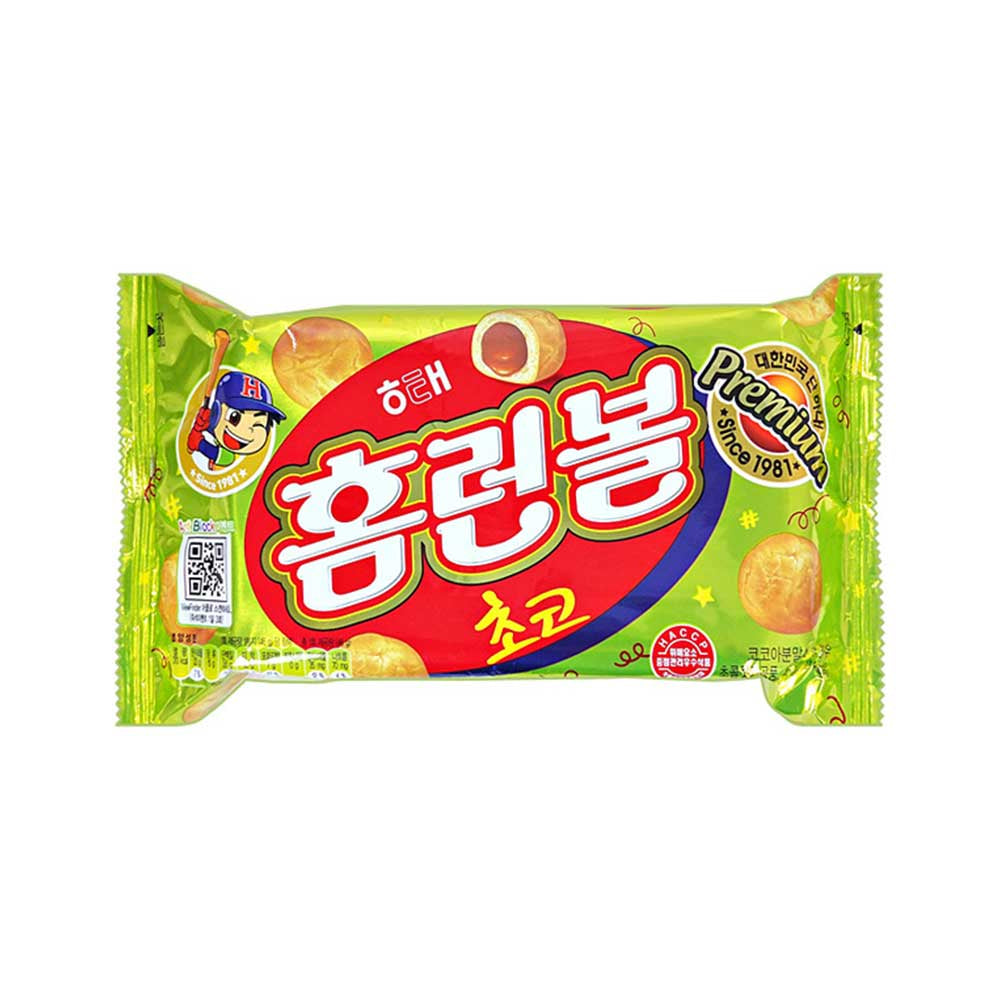
Haitai Confectionery launched Homerun Ball in 1981 with a profiterole-inspired idea: a feather-light puff pastry shell hiding a smooth chocolate cream filling, shaped like a tiny baseball. The branding leaned all the way into it, with a cartoon batter on the box and ball-shaped pastries inside. By 2018, Homerun Ball had become a staple snack at KBO baseball games and a routine convenience-store grab, expanding into banana, strawberry, cheese, and caramel filling variants. The original chocolate version still led sales, and the snack is one of the few Korean treats that flips the usual chocolate-coated-pretzel format inside out by hiding the cream within.
MatDongSan, since 1975
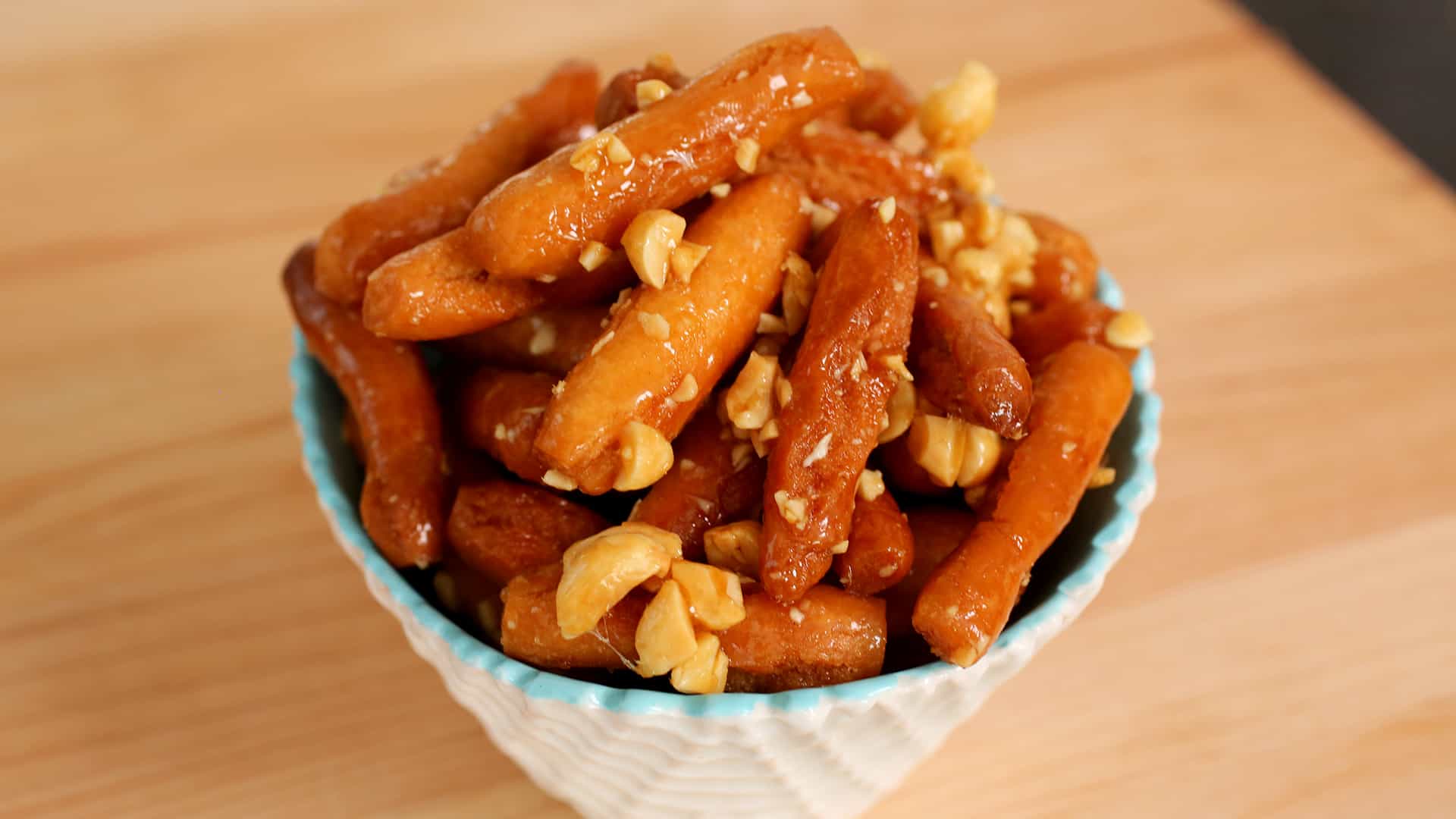
Haitai's MatDongSan is the crunchy peanut snack that has lived in Korean grandmothers' pantries since 1975. Each piece is a fried cookie cluster coated in syrup and topped with chopped peanuts, balancing sweet, nutty, and nostalgic in one bite. The brand famously markets MatDongSan as produced via a "Music Fermentation Method" in which the dough is exposed to music during preparation, an only-in-Korea marketing flourish that has helped the snack hold its niche for nearly half a century. In 2018, MatDongSan remained one of the country's most familiar peanut snacks and a favorite pairing with makgeolli, Korean rice wine.
Pockachip, since 1988
Pockachip, often spelled Pocachip, is Orion's answer to the everyday potato chip. Launched in 1988 in original and onion flavors, it became Korea's most popular domestically made potato chip and remains one of Orion's flagship snack lines. By 2018, Pockachip was a consistent top-five seller in Korean snack rankings, holding its own against imports thanks to a thicker, crunchier cut and a milder, less greasy seasoning. In the years since, it has only climbed: in 2025 Pockachip overtook Choco Pie to become Korea's second-best-selling snack overall, an outcome that would have surprised few of the loyal buyers who were already reaching for it in 2018.
Xylitol Gum, since 2000
Lotte's Xylitol gum arrived in 2000 and within a few years became the default chewing gum in Korea, sold in little green plastic bottles tucked into every gym bag and glove compartment. Sweetened with xylitol, a sugar alcohol that does not feed cavity-causing bacteria, the gum was marketed as a dental-care product as much as a snack, and dentists' endorsements helped it dominate the category. By 2018, the gum was a top-ten Korean confectionery seller, and Lotte had introduced spearmint, lime, fresh mint, and citrus variants alongside the original mint.
Why these snacks still rule the chart
What ties Choco Pie to Honey Butter Chip is consistency. Korean snack giants Lotte, Orion, Nongshim, and Haitai built portfolios in the 1970s and 1980s and have spent the decades since refreshing flavors, packaging, and marketing rather than replacing classics. By 2018 the result was a snack aisle where nearly every bestseller had been on the shelf for at least a quarter century, and the few newcomers, like Honey Butter Chip, had to fight through viral fame just to earn a spot among them. Sales data from later years confirm the staying power: in 2025, Saewookkang, Pockachip, Choco Pie, Pepero, Kkokkalcorn, and Home Run Ball were still inside Korea's top ten snack sales, in some cases occupying the exact ranks they had held seven years earlier.
Explore Korean Snacks with Daebak
Love Korean food? Get authentic Korean snacks and ramen delivered straight to your door with the SnackFever Box by Daebak.


