


Table of Contents
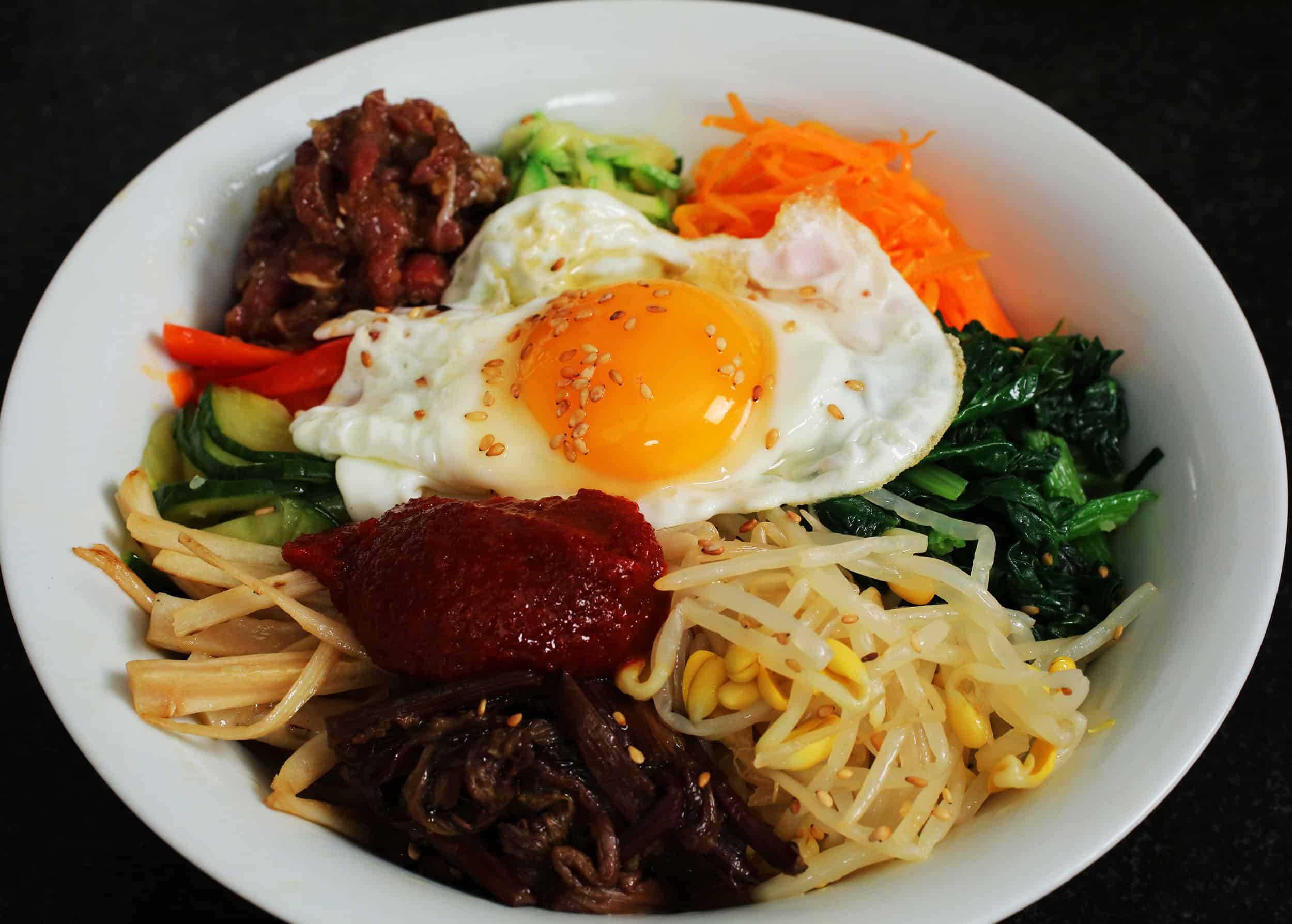
Ever heard of bibimbap? If not, you are in for a real treat, well, a real meal. One of Korea's most beloved family dishes, bibimbap (비빔밥) literally means "mixed rice," and it is exactly what it sounds like: a generous bowl of warm rice topped with seasoned vegetables, a savory protein, and a glossy spoonful of gochujang, all stirred together right before the first bite.
From its humble beginnings as a clever way to use up leftover banchan to the elaborate Jeonju-style version once served to royalty, bibimbap is comfort food, cultural icon, and one-bowl meal rolled into one. Here is everything you need to know about Korea's ultimate comfort food.
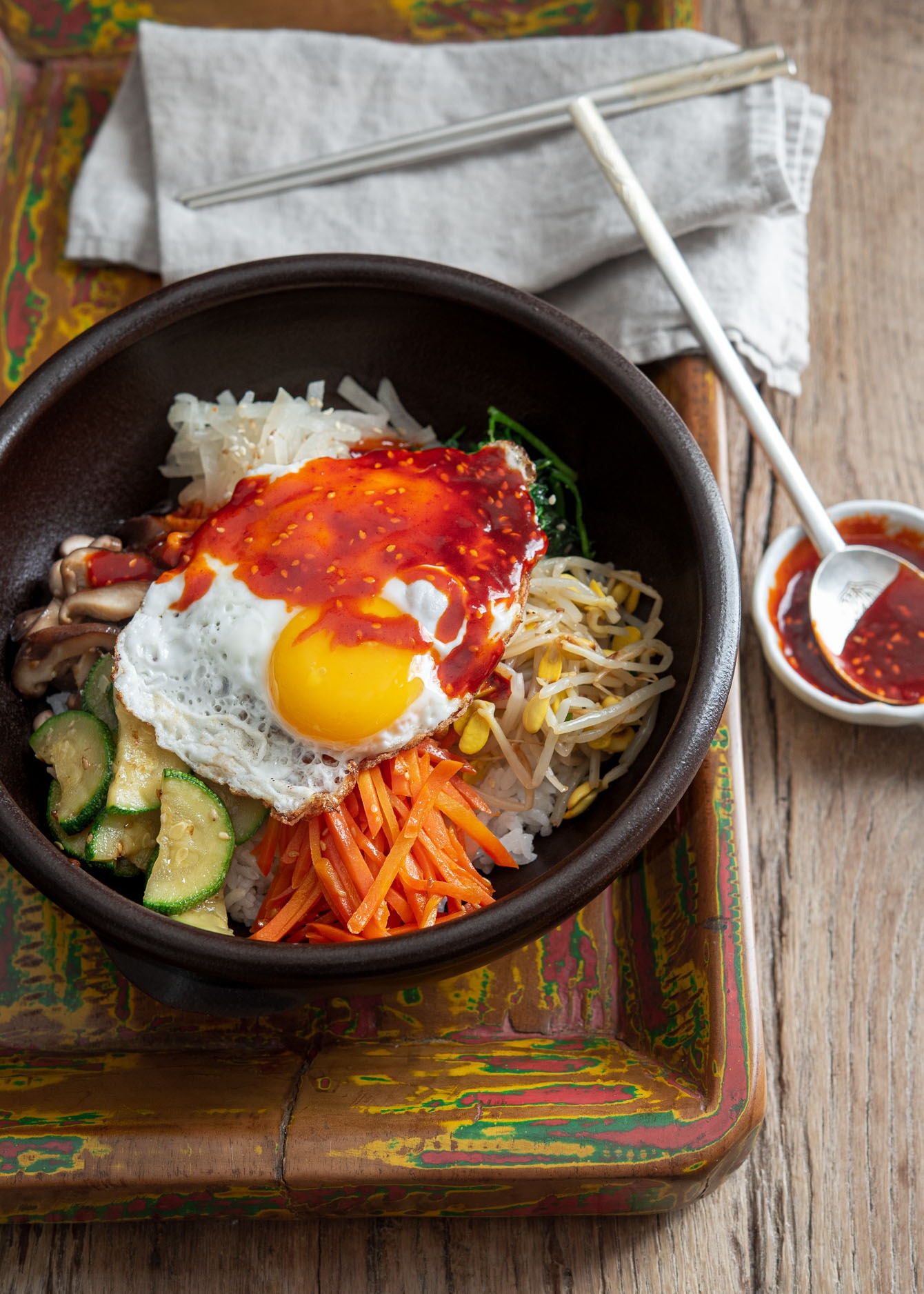
What Is Bibimbap?
The word bibimbap comes from two Korean parts: bibim (비빔), meaning "mixed," and bap (밥), meaning "cooked rice." Put them together and you have a dish whose name is also its instruction manual. A typical bowl layers warm short-grain rice with a colorful arrangement of sauteed and seasoned vegetables called namul (나물), a portion of seasoned beef or another protein, and almost always a raw or fried egg on top. A spoonful of gochujang, Korea's iconic fermented red chili paste, ties everything together, and the eater stirs it all up at the table just before digging in.
According to Maangchi, the legendary Korean cookbook author, the namul are not a random scatter of side dishes. Each component is "chosen because they balance, harmonize, and offset each other," with soybean sprouts, spinach, carrot, and sesame oil considered the unskippable foundation. The result is a bowl that hits sweet, savory, spicy, and nutty notes in a single spoonful.
The Origins of Bibimbap
Bibimbap is one of those dishes that has many origin stories, and historians do not fully agree on which one came first. One theory traces it to ancestral rituals, where families would mix the offerings of rice, vegetables, and meat from the ceremonial table into a single bowl to share among the living. Another traces it to farmers who needed a fast, hearty meal during the busy planting and harvest seasons, when there was no time to lay out a separate spread of rice and side dishes.
A third popular story points to the Lunar New Year. In the Korean tradition of finishing the old year's food before the new year began, families would mix the last of their leftover banchan with rice on New Year's Eve. Whatever the exact origin, bibimbap clearly grew out of a thrifty, communal way of eating, which is part of why it still feels so homey today.
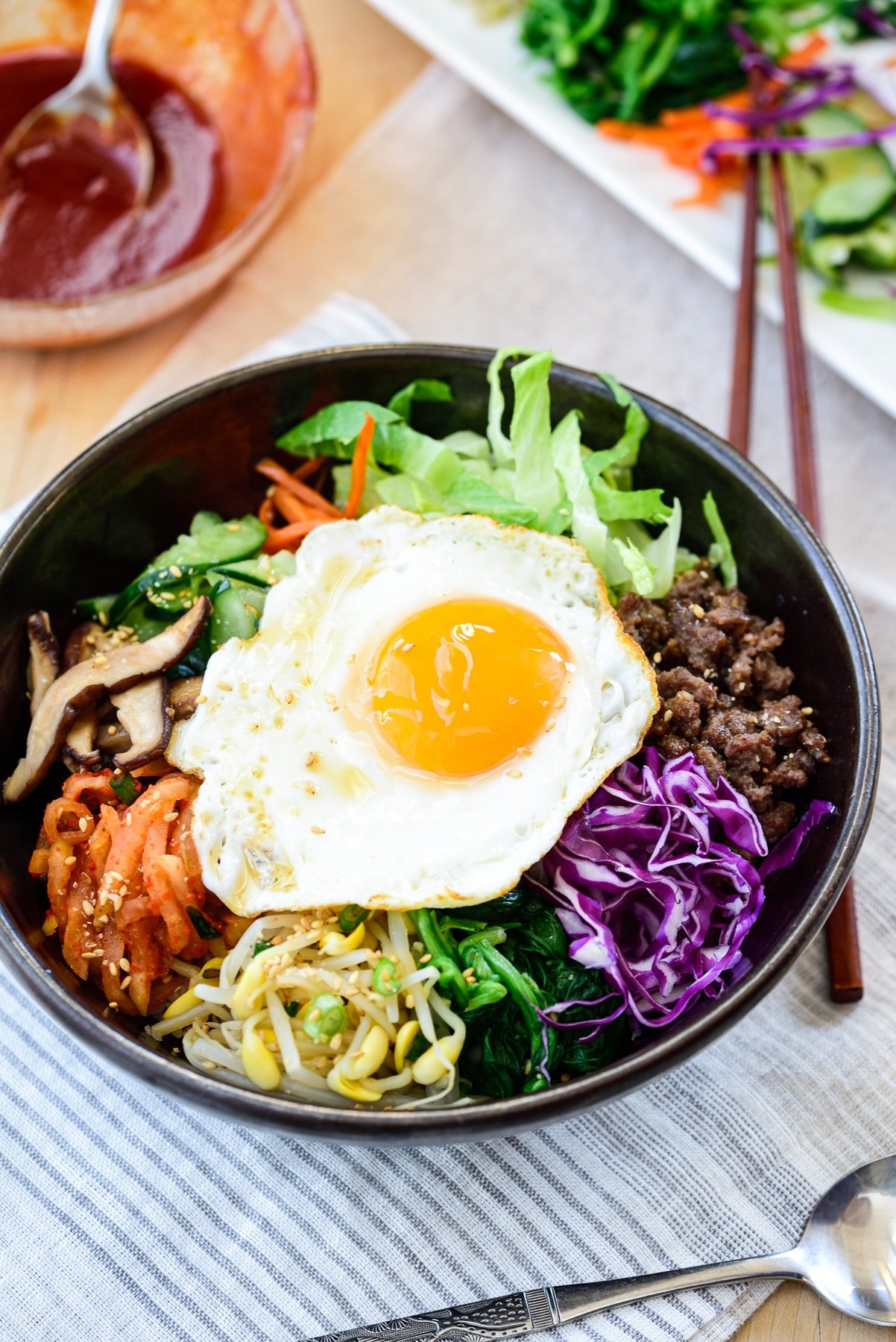
Jeonju Bibimbap: The Royal Standard
If there is one regional bibimbap to know, it is Jeonju bibimbap. The city of Jeonju in North Jeolla Province is widely recognized as the spiritual home of the dish, and its version is famous for both quality and abundance. A traditional Jeonju bibimbap can include as many as 30 different toppings, from finely julienned vegetables and seasoned mountain greens to seasoned raw beef (yukhoe) and a glossy raw egg yolk crowning the rice.
Jeonju bibimbap is often described as royal court cuisine, and the city's restaurants take it seriously, presenting it on a brass bowl with a careful, flower-like arrangement before the eater stirs it all together. The result is a more refined, slower kind of bibimbap, one that turns a humble bowl of mixed rice into a small culinary event.
Dolsot Bibimbap: The Sizzling Stone Bowl
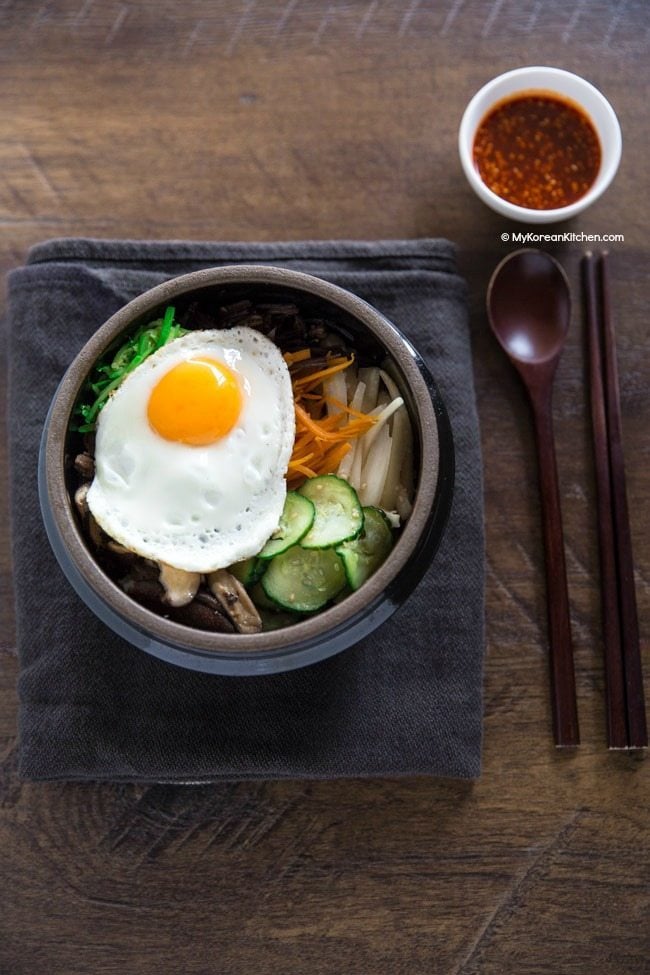
Dolsot (돌솥) means "stone pot," and dolsot bibimbap is bibimbap served in a screaming-hot stone or earthenware bowl. The bowl arrives at the table still sizzling, and the magic happens at the bottom, where a thin layer of rice toasts against the hot stone into a crackling, golden-brown crust known as nurungji (누룽지). The crunchy rice is the whole reason many people order this version.
As My Korean Kitchen explains, the dolsot also keeps the entire bowl piping hot, which means a raw egg cracked on top will cook gently as you mix everything together. The combination of crispy rice, soft namul, runny yolk, and spicy gochujang is what makes dolsot bibimbap a winter favorite and a perennial crowd-pleaser. Many Korean home cooks now recreate the effect with a hot cast-iron skillet instead of a traditional stone bowl, no specialty cookware required.
Hoedeopbap: The Raw Fish Cousin
One bibimbap variation that surprises first-timers is hoedeopbap (회덮밥), a coastal cousin that swaps cooked beef for fresh, raw fish. Sashimi-grade tuna, salmon, or flounder is sliced and arranged over rice with lettuce, cucumber, sesame leaves, and other crisp vegetables. Instead of the standard gochujang sauce, hoedeopbap is usually mixed with a tangier chogochujang, or vinegared chili paste, which gives the dish a brighter, more refreshing finish.
Hoedeopbap is especially popular in port cities like Busan and along the east coast, where access to ultra-fresh fish makes it an easy weekday meal. It is often eaten in summer because the cold raw fish, crunchy vegetables, and bright sauce all feel light and cooling.
How to Build Your Own Bibimbap at Home
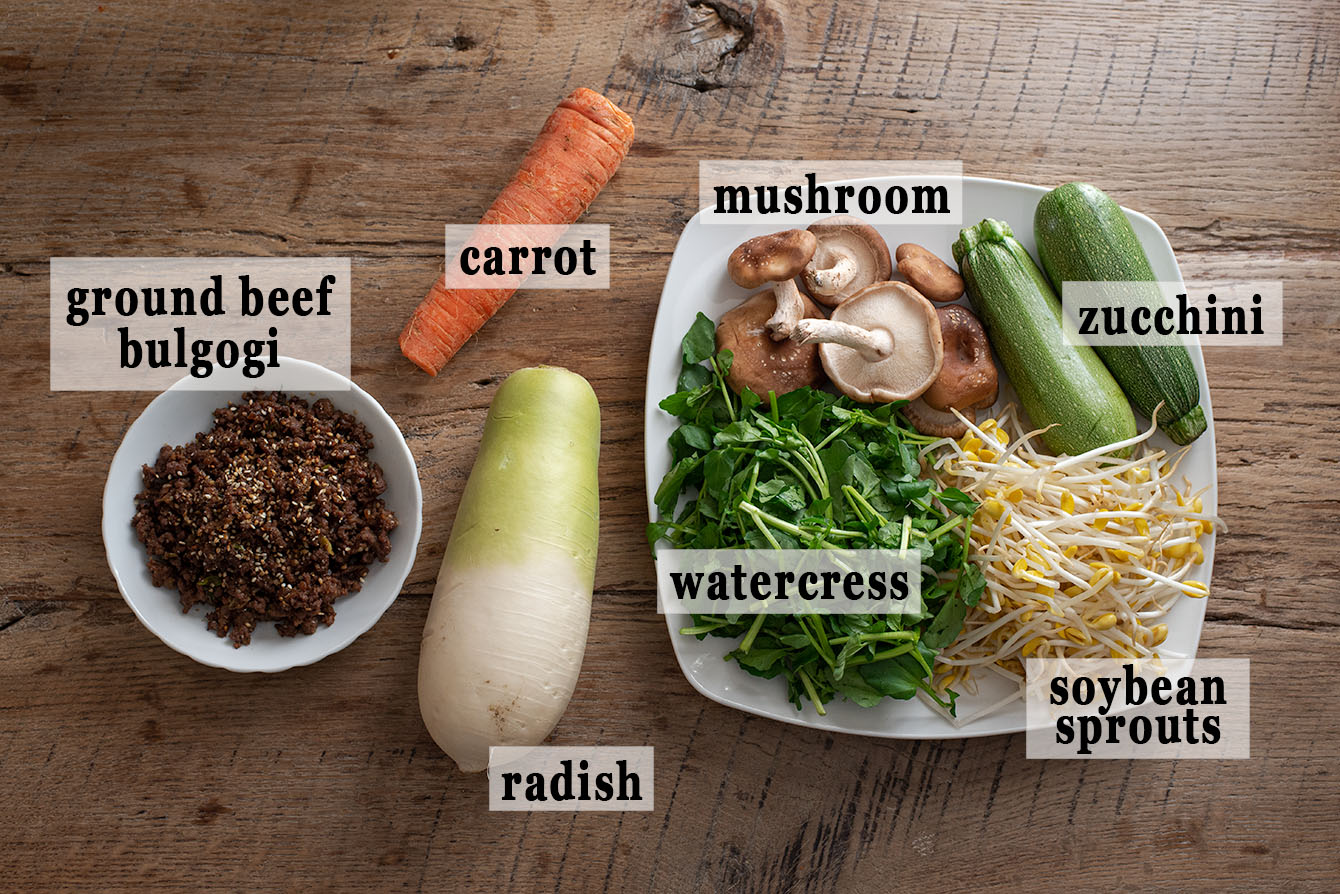
The beauty of bibimbap is that it is endlessly adaptable, which is exactly why it became such a popular family dish in the first place. Start with a base of warm short-grain rice. Then layer on a mix of cooked or pickled vegetables, aiming for variety in color and texture. Beyond Kimchee suggests building your bowl with at least a few of these favorites: spinach or watercress, blanched soybean sprouts, sauteed zucchini, carrots, shiitake mushrooms, and either radish or cucumber on the lighter, crisper side.
Add a protein next, whether that is classic bulgogi, a quick ground beef bulgogi, sauteed tofu, or simply a fried egg. Finish with a spoonful of bibimbap sauce, usually a mix of gochujang, sesame oil, a touch of sugar or honey, garlic, vinegar, and toasted sesame seeds. Mix everything thoroughly with a spoon, breaking up any rice clumps so the sauce coats every grain, and eat right away while the egg is still hot.
Why Bibimbap Endures
Bibimbap is mainly a family food, meaning it shines brightest when you can mix it at the table right before serving and share the experience. That said, it scales down beautifully for one and works just as well as a meal-prep lunch. It is a smart way to use up day-old rice and leftover banchan, it travels well from humble home kitchens to royal Jeonju spreads, and it answers nearly every Korean comfort-food craving in a single bowl.
If you have never had bibimbap, your homework is simple: scoop some rice, raid the fridge for vegetables, fry an egg, and reach for the gochujang. Koreans have been doing it for centuries, and it seems to be working out pretty well for them.
Explore Korean Snacks with Daebak
Love Korean food? Get authentic Korean snacks and ramen delivered straight to your door with the SnackFever Box by Daebak.


