


Table of Contents
London is not Seoul's most obvious diaspora city, but if you have spent any real time in the K-content industry over the last decade, it is the one you keep circling back to. Roughly 20,000 to 25,000 ethnic Koreans live in the wider London metropolitan area (community estimates run higher when you include long-term residents and South-North combined populations), and around two-thirds of the UK's entire Korean population is clustered inside or near the M25 orbital. The centre of gravity is a leafy little SW London suburb called New Malden, which nobody outside the community talks about but which is quietly the largest Korean neighborhood in Europe. I have been watching the UK's K-culture pipeline evolve since the pre-Gangnam Style era, and what happened in London between 2019 and 2025 is genuinely one of the more instructive Hallyu case studies for anyone trying to understand how Korean soft power lands in a Western market that does not share Korea's language, food traditions, or media reflexes. Here is the on-the-ground read.
.jpg)
New Malden: The Koreatown Britain Doesn't Advertise
Start here, because everything else follows from it. New Malden sits in the Royal Borough of Kingston upon Thames, twenty minutes by rail from Waterloo, and looks on first arrival like any other pleasant London commuter suburb. Then you walk down the High Street and count Korean signage on roughly every third shop-front. The community traces back to the late 1970s and early 1980s when the Korean Ambassador's residence and the LG and Samsung UK offices happened to cluster in the same postal area. Corporate expat families settled, kids went to local schools, more families followed for the school network, and the whole thing snowballed into a proper Koreatown by the mid-1990s. Layered on top of that first-wave community is a much less-discussed second wave: London holds the largest population of North Korean defectors anywhere outside the Korean peninsula, roughly 600 to 1,000 people, most of whom re-settled in New Malden through UK asylum programs from the mid-2000s onward. That mix of chaebol expat kids and North Korean defectors sharing the same karaoke rooms is the specific texture that makes New Malden feel different from Koreatown LA or Koreatown NYC. It is smaller, tighter, and quietly more socioeconomically complex.
The read for anyone visiting: New Malden's High Street currently carries roughly 30 Korean-owned restaurants (Cah-Chi, Woo Jung, Su Ra, Jee Cee's Nara, Sorabol, Yami), a full-size H Mart-adjacent Korean grocery, at least four Korean churches within walking distance, Korean hairdressers, a Korean-language accountant, and one of the most reliably good Korean bakeries in Europe. What that grocery-cluster does for UK-based Koreans is more important than the restaurant scene. Kimchi ingredient runs, dried myeolchi, gochugaru priced by the kilo instead of the tiny H Mart jar. These are the supply-chain details that decide whether Korean-immigrant home cooking is actually possible in a foreign city, and New Malden is the one place in the UK where the answer is a clean yes. When King Charles III made his November 2023 visit to Cake & Bing Soo on the High Street ahead of President Yoon Suk Yeol's state visit, it was reportedly the first time any senior UK royal had physically walked New Malden. The community read that as long-overdue recognition rather than novelty. That is a subtle but real signal.

Wembley 2019: The Night British Promoters Rewrote Their Asian-Act Playbook
Ask anyone in the London live-music industry what the single most important K-pop night in UK history was and the answer is unanimous: BTS at Wembley Stadium, 1 June 2019. The seven-member group opened the European leg of the Love Yourself: Speak Yourself tour to roughly 90,000 fans in a venue that Michael Jackson, Queen, and Freddie Mercury had made mythical, and they sold out both nights, cementing them as the first Korean act to headline Wembley. What almost no explainer piece captures is what that booking meant on the buyer side. UK stadium promoters had spent two decades treating Asian pop as a niche category with a maximum ceiling of roughly 20,000 tickets across a mid-size arena run. BTS at Wembley shattered that ceiling in a single weekend and physically rewrote the P&L assumptions that Live Nation UK and AEG were using for Korean acts going forward. Every K-pop London booking that came afterward, from TWICE at O2 to ATEEZ at O2, SEVENTEEN at O2, TXT at O2, and Stray Kids stadium runs, traces back to what promoters saw at Wembley that weekend. Not a fluke, not a novelty, but a repeatable stadium fandom that would show up in the rain, sing every Korean lyric back at full volume, and empty the merch stalls before doors even opened.
The moment that ARMY on-site UK members still talk about is Jin quoting Freddie Mercury's Live Aid "Ay-Oh" call-and-response from the same stage, thirty-four years after the 1985 original. That is not a moment a South Korean act would have needed to plan for a Seoul or Tokyo show; it was pitched specifically at British music memory. HYBE (then Big Hit) had done its homework on the venue's mythology, and the ARMY UK crowd (who had bought Bohemian Rhapsody DVDs, watched the Rami Malek film, and grown up on Queen radio play) delivered the exact singalong the moment was engineered for. That kind of geographic-cultural specificity in a K-pop stage moment is why UK critics stopped writing "BTS-as-phenomenon" pieces after Wembley and started writing straight review copy the same way they would for a British act. Once the coverage tone shifts from anthropology to music criticism, you have arrived.
BLACKPINK, KCON, and the London Concert Calendar
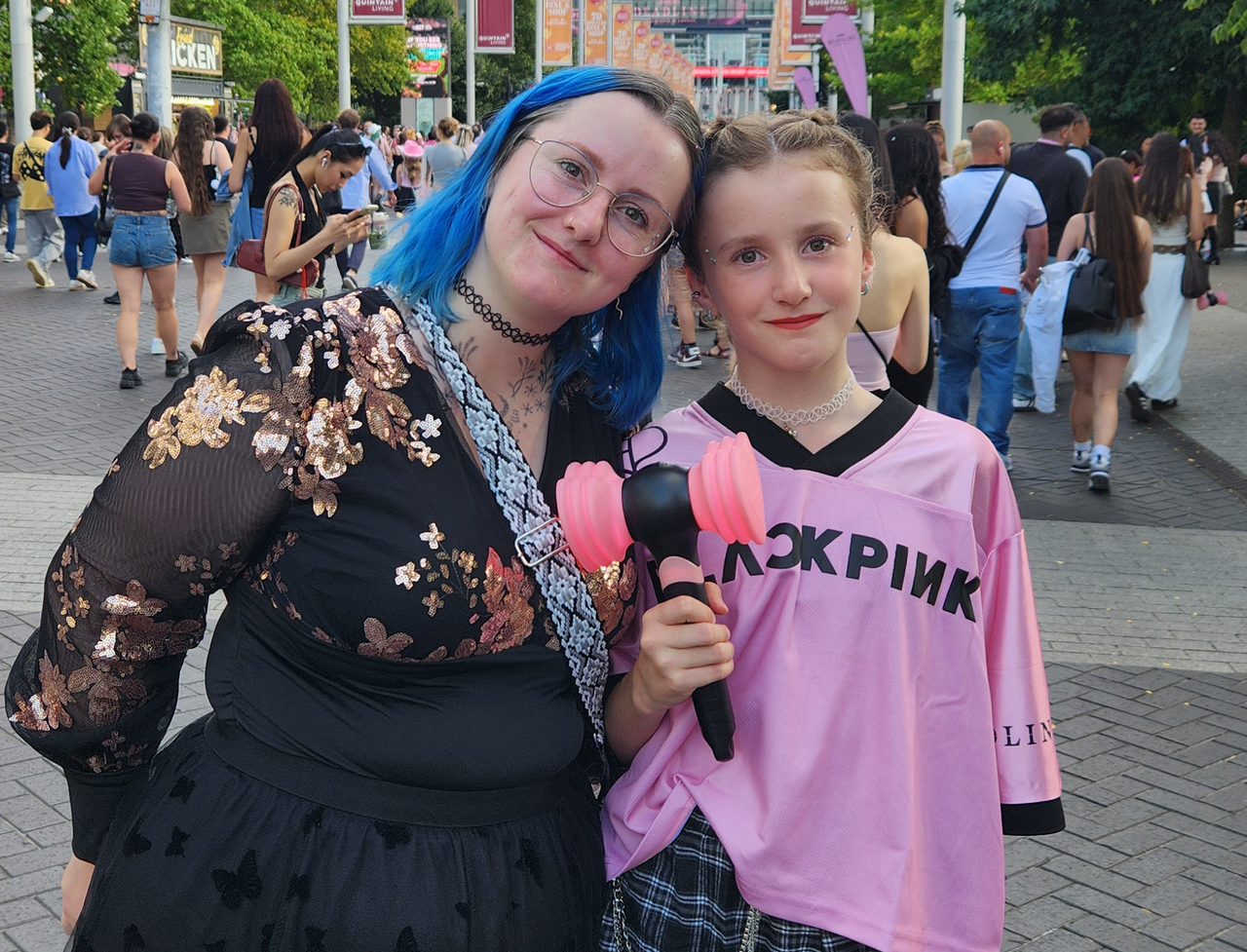
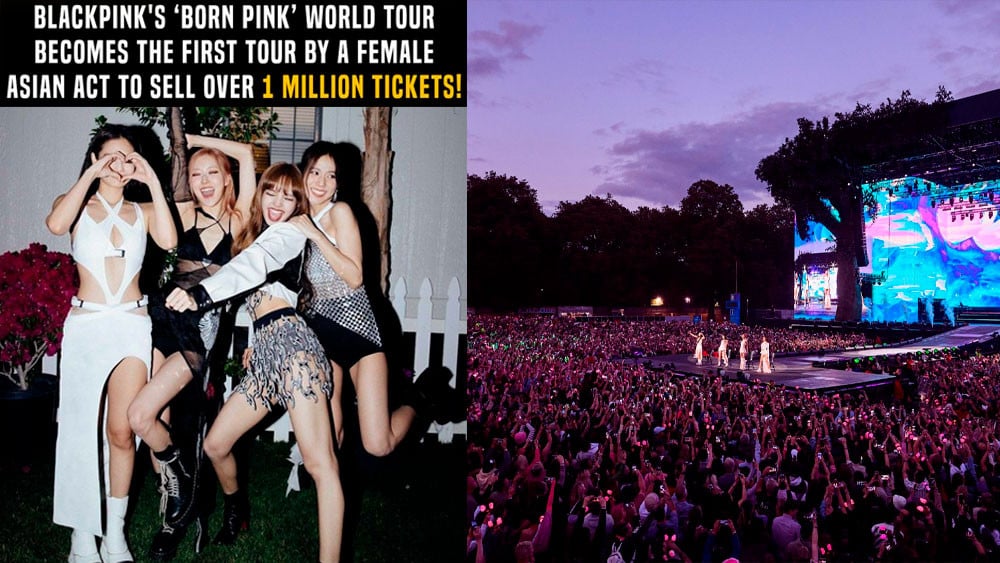
The post-Wembley half-decade turned London into K-pop's most reliable European stop. BLACKPINK's Born Pink 2023 world tour packed London's Hyde Park BST festival slot with roughly 65,000 fans for a single headline set, then came back to Wembley Stadium proper for the Deadline tour in August 2025 for two additional 90,000-capacity nights, making them the second K-pop act ever to headline Wembley. That is the specific stat that reframes the UK market. Two K-pop acts have Wembley on their CV in the West's most prestigious pop venue, and both are Korean. No other Asian-country pop scene has cleared that bar. KCON UK, the Korean government-backed CJ ENM franchise K-pop convention, has run at London ExCeL and other venues since 2020 (with pandemic gaps) and typically brings 20,000-plus attendees across a weekend with idol showcases, fan meetings, and merch halls. That is not a small event by London convention standards; it slots into the same annual scale as major UK anime and gaming conventions and delivers demonstrably higher ARPU per attendee.
What is worth pulling apart for the industry reader: UK K-pop concert-goer spend is heavier than the equivalent US crowd on physical album and merch attach, and lighter on VIP-tier upsell. The reason is demographic. UK ARMY, BLINK, and MOA skew younger and school-age (UK is a smaller country and Korean-adjacent fandom is more geographically concentrated), and school-age fans buy albums and light-sticks rather than $500 soundcheck packages. That means the UK market is a stable, high-repeat purchase base rather than a whale-driven one. HYBE, SM, YG, and JYP have all quietly restructured their UK marketing budgets around that reality since roughly 2022. When you see a K-pop act do a UK-first physical album drop or a UK-exclusive photocard variant, that is why. UK is the album-attach test market for Europe.
Squid Game and the K-Drama UK Netflix Ceiling
The other half of London's Hallyu story is streaming. Squid Game hit UK Netflix as the number-one show in September 2021 and stayed at number one for a stretch that broke Netflix UK's internal engagement records for a non-English-language title. Every K-drama that landed on Netflix UK afterward benefited from that ceiling being broken. All Of Us Are Dead, Physical: 100 (which is Korean unscripted and still cracked UK top 10), My Name, Hellbound, Squid Game 2, and Squid Game 3 all charted top-10 on Netflix UK inside their opening week. What is more interesting from an industry-analyst POV is that Squid Game specifically triggered a bunch of downstream British creative-industry moves. The Squid Game: The Challenge reality-show spin-off (which produced UK Netflix's largest single-day viewing figures for a reality title) was actually shot in the UK, at Cardington Studios and other British production facilities, employing hundreds of UK crew. That is Korean IP flowing back into UK production capacity, which is the specific loop most Hallyu-export analysts underrate.

What UK viewers specifically respond to in K-drama, and the reason it plays differently in London than it does in the US or SEA, is the class-and-institution machinery of the writing. Squid Game reads legibly to a British audience because the debt-and-precarity spine of the show lands in a country that has just come through austerity, cost-of-living hits, and an active national conversation about wealth inequality. K-drama villains are almost always institutional (chaebol, prosecutor, hospital administrator, corrupt cop), and British TV has a long tradition of the same institutional-villain framing from Line of Duty to State of Play. So when a British viewer stumbles into K-drama for the first time via Squid Game, the story-mechanic instincts port almost cleanly. That specific cultural-transferability is why K-drama's UK ceiling is meaningfully higher than its French, German, or Italian ceiling. K-content industry folks who track European rollout numbers see this in the churn data.
KCCUK: The Government Outpost on Northumberland Avenue
Anchor institution worth naming: the Korean Cultural Centre UK on Northumberland Avenue, just off Trafalgar Square, opened January 2008 and operates as the London arm of Korea's Ministry of Culture, Sports and Tourism. Free to enter, free to attend most events, permanent library plus rotating gallery plus regular K-pop nights plus film screenings plus author talks. Anyone with an academic or industry curiosity about Korea can walk in off the street and get a real research library plus a public program. The single most important annual thing KCCUK runs is the London Korean Film Festival every November, which is now in its 20th year and screens roughly 50 Korean films across the two-week run at venues including Regent Street Cinema, Picturehouse Central, and the ICA. LKFF is where I first watched a lot of Kim Jee-woon and Bong Joon-ho pre-Parasite; it is genuinely one of the two or three best-curated Korean film festivals in the West and its brand does specific soft-power work for KCCUK's parent ministry.
Related but separate: the Victoria and Albert Museum ran the landmark Hallyu! The Korean Wave exhibition in 2022 to 2023, drawing over 200,000 paid visitors across its run and touring afterward to San Francisco, Boston, Stockholm, and Munich. That exhibition was the first major Western-museum institutional recognition of Hallyu as a legitimate cultural-history subject rather than a passing trend, and the V&A choosing London as the launch city (rather than New York or LA) tells you something about where the curatorial confidence in Hallyu is currently strongest. The specific reason to visit KCCUK on any given weekend rather than treating London as just a concert-tour stop: it is where you get access to the working craft of K-content (film subtitling workshops, K-drama script readings, hangul beginner classes) rather than just the surface consumption. Actual K-content industry people who move to London for postings quietly do KCCUK programming instead of chasing the next stadium show, because that is where the working professionals actually cross paths.
Practical Read for a London Visit
If you have 48 hours in London and want to sample the Hallyu footprint properly, the compact itinerary that actually works is: KCCUK on Northumberland Avenue for a free morning gallery hit (roughly one hour), then Trafalgar Square lunch, then District Line to New Malden for a Cah-Chi galbi dinner and a walk through the Korean grocers, then back into central London for whatever K-pop show or KCON UK slot you booked. Skip the tourist-guide "Korean events near me" round-ups; they are usually behind by six months. The reliable current sources are the KCCUK official events page and the New Malden Instagram accounts of the actual restaurants (Cah-Chi and Woo Jung both post reservation windows in real time). London's K-culture footprint reads as diffuse until you actually map it, and then it snaps into a very specific shape: one government outpost near Trafalgar Square, one working Koreatown in SW London, and a stadium-tour calendar that Wembley has now put in the same tier as any other major-market global pop city. That is genuinely a big deal, and it happened faster than anyone in the 2010s Hallyu-forecasting business bet on.
Bring a Little Seoul Home from London
Whether you just came back from a Wembley night, a New Malden galbi dinner, or a KCCUK film screening and want to keep the K-culture rush going at home, the Daebak Box is packed with the K-pop, K-drama, and Korean snack culture pieces we cover in this series. Consider it your monthly London-to-Seoul bridge in a box.


