


Table of Contents
Chaque mois de mai, le même clip refait surface sur le TikTok K-pop coréen. Il s'agit d'une fancam de PSY, trois rappels profonds, t-shirt blanc trempé, en train de faire vibrer dix mille étudiants entassés sur une pelouse de campus tandis que le personnel du conseil étudiant agite des panneaux "plus de place debout". C'est le 대학 축제 (daehak chukje), le festival universitaire coréen, et après une décennie à observer comment HYBE, SM, JYP et YG organisent leur calendrier de printemps, je peux vous dire ceci : aucune autre scène K-pop n'est aussi peu chère et ne rapporte autant.

Qu'est-ce que le 대학 축제 en réalité ?
Le nom propre est daedongje (대동제), littéralement "festival de l'unité", et les universités coréennes les organisent depuis que Sungkyunkwan a accueilli des célébrations saisonnières il y a six cents ans sous la dynastie Joseon. Le 축제 moderne dure trois jours en mai, parfois avec une version plus petite en automne, et le format s'est figé en quelque chose de prévisible de la meilleure façon. Le conseil étudiant prend le contrôle du quad principal, les cours sont suspendus ou discrètement ignorés, et chaque allée piétonne se remplit de tentes gérées par les clubs, les départements et les équipes sportives. La seule scène qui compte, cependant, est la pelouse principale où les têtes d'affiche de la K-pop se produisent après le coucher du soleil. C'est ce qui distingue le 대학 축제 d'un événement scolaire normal et en fait le week-end le plus bruyant du calendrier étudiant coréen.
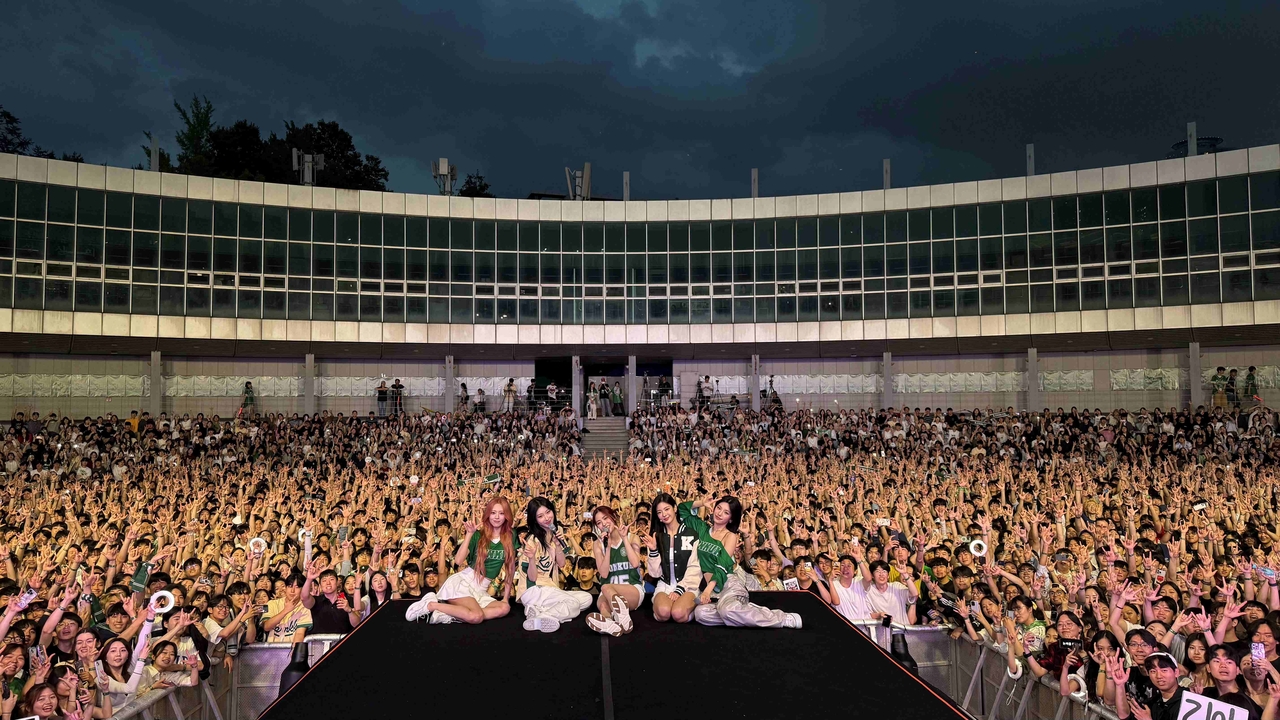
Pourquoi les têtes d'affiche K-pop acceptent de baisser leurs cachets
Voici un chiffre dont aucun blog de fans ne parle honnêtement. Un groupe d'idols de premier plan commande 100 millions de wons ou plus par événement national. Pour un festival universitaire, la plupart des groupes acceptent de 50 à 80 millions, et même cela est gonflé par la production et les déplacements. Seul Psy est au plafond, où quelques écoles de Séoul ont payé environ 200 millions pour un set de trois chansons. Alors pourquoi aespa, RIIZE, Itzy et NewJeans continuent-ils de dire oui à prix réduit ? Deux raisons industrielles qui ne figurent jamais dans les légendes des fancams. Premièrement, le 대학 축제 est ce qui se rapproche le plus d'une audition publique pour la K-pop devant la démographie exacte qui décide du succès du 컴백 (comeback) : les Coréens d'une vingtaine d'années qui achètent des albums, agitent des lightsticks et streament en boucle. Dix mille caméras de téléphone pointées sur une scène, c'est une portée organique qu'un budget marketing de HYBE ne peut pas acheter. Deuxièmement, les pelouses des campus fonctionnent comme une répétition de tournée à faible enjeu. Les groupes qui préparent une tournée mondiale estivale traitent les festivals de mai comme des échauffements à la Coachella : ils testent la nouvelle setlist devant un public amical, repèrent les lacunes de la chorégraphie, et reviennent trois semaines plus tard avec un spectacle bien rôdé en arène. L'ancienne PDG d'ADOR, Min Hee-jin, a ouvertement comparé l'énergie des universités à celle de Lollapalooza. C'est aussi pourquoi NewJeans a reversé l'intégralité des recettes de leurs sept festivals universitaires l'année dernière à la Korea Student Aid Foundation. La visibilité avait déjà payé d'elle-même.
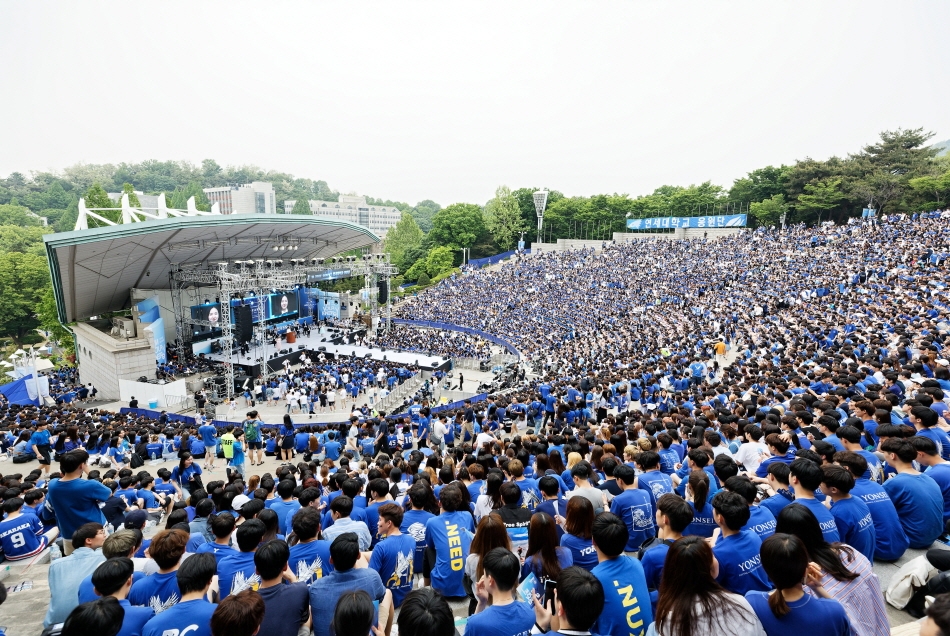
주점, tteokbokki et l'économie diurne
Ignorons un instant les caméras des têtes d'affiche, car la scène diurne est le véritable cœur du festival. Chaque club et département gère un 주점, un stand de boissons éphémère servant des shots de soju à 3 000 wons, du makgeolli en gobelet en plastique, du tteokbokki, des brochettes de dakkochi, des hot-dogs au fromage, des pommes de terre tornades, et tout ce que les membres se sont sentis capables de cuisiner. C'est là que les jeunes de 20 ans s'entraînent à être des adultes coréens : servir des boissons à deux mains à leur 선배 (aîné), perdre aux jeux de boisson de kkalkkal, apprendre qu'une assiette de pajeon à minuit arrange presque tout. L'économie du 주점 est délibérément moins chère que n'importe quel bar de Hongdae, c'est pourquoi les anciens reviennent chaque mois de mai. Autour des tentes de boissons, on trouve aussi des marchés aux puces où les aînés vendent de vieilles vestes de classe, des pop-ups K-beauty d'Amorepacific et d'Olive Young essayant de fidéliser la génération Z, et toute la culture gwajam exposée. Si vous vous êtes déjà demandé pourquoi un Coréen d'une vingtaine d'années dans le salon d'aéroport porte une veste de bombardier en satin brodée du logo d'un département de chimie, cela a commencé au 축제.

Yonsei contre Corée contre tout le monde
Le classement officieux dans la bouche des étudiants est le suivant : l'Akaraka de l'Université Yonsei et l'Ipselenti de l'Université de Corée sont au sommet, à égalité et rivalisant comme leur match sportif annuel. Les deux facturent des billets, les deux gardent secrète la programmation K-pop jusqu'à quelques jours avant, et les deux attirent constamment ceux qui sont les plus populaires ce printemps. Le RACHIOS de l'Université Hanyang a gagné le respect en 2026 pour avoir programmé Psy, aespa et Davichi sur trois jours. Le Green Zone de l'Université Konkuk se déroule sur la pelouse du lac Ilgam et accueille des artistes du calibre de Zico et Jannabi. Le HIesta MEMENTO de l'Université Hongik s'appuie sur l'identité artistique de Hongdae avec une programmation hip-hop plus lourde (Dynamic Duo, GRAY, Loco). En dehors de Séoul, le P:URIO de l'Université nationale de Pusan est le plus grand festival au sud de la capitale et sert également de fête de quartier à Busan, tandis que l'Université nationale de Kyungpook ancre Daegu avec des budgets de festival supérieurs à 350 millions de wons. Sungkyunkwan, Ewha, Chung-Ang et Kyung Hee organisent toutes des festivals crédibles, mais l'écart de niveau avec Yonsei-Korea est réel, et chaque étudiant sur le campus le sait.

Réalité post-COVID et comment réellement y accéder
La pandémie a frappé le 대학 축제 plus durement que prévu, et la reprise a été inégale. Les petites universités régionales qui avaient l'habitude de réserver des groupes d'idols de niveau intermédiaire ont réduit leurs budgets de festival jusqu'à 30 % des niveaux d'avant 2020 ; certaines ont complètement supprimé leur scène K-pop et ne proposent désormais que des spectacles de clubs et des groupes étudiants. Pendant ce temps, les meilleures écoles de Séoul ont fait le contraire, investissant des budgets plus importants pour des noms plus célèbres comme signal de recrutement pour les futurs étudiants. Il en résulte que Yonsei-Korea est devenue encore plus dominante, et le problème de la revente qui ne touchait auparavant que leurs événements réservés aux anciens a également gagné les festivals gratuits. En 2026, les publications Bungaejangter revendaient ouvertement des bracelets Akaraka pour 400 000 wons contre un prix étudiant officiel de 17 000 wons. Yonsei a tenté de contrer avec des billets uniquement mobiles liés aux comptes KakaoTalk des anciens, mais les revendeurs ont tout de même trouvé des stratagèmes. Si vous voulez essayer d'y assister en tant que visiteur étranger, suivez le compte Instagram de chaque conseil étudiant universitaire (recherchez KULIMAX 2026, RACHIOS, HIesta MEMENTO). Des zones gratuites sont ouvertes à tous, les soirées payantes demandent une carte d'étudiant coréenne ou une vérification d'ancien, et les concerts des têtes d'affiche se remplissent trois heures avant le spectacle. Apportez de l'argent liquide pour les stands de 주점, portez quelque chose sur lequel vous pouvez renverser du soju, et vous comprendrez pourquoi les Coréens d'une vingtaine d'années se souviennent encore de leurs années universitaires en fonction du meilleur festival de mai.
Explorez davantage la Corée avec Daebak
Envie d'apporter un petit bout de Corée dans votre vie ? La Daebak Box est remplie des meilleurs snacks coréens, ramens et produits culturels livrés chaque mois à votre porte.


