


Table of Contents
L'île de Jeju (제주도) est présentée aux nouveaux visiteurs comme « le Hawaï de la Corée », une comparaison qui n'est pas fausse mais qui masque ce qui rend cet endroit vraiment différent. Après une décennie de travail avec des voyagistes coréens, des groupes hôteliers et des dénicheurs de lieux de tournage pour le contenu coréen, j'ai vu Jeju évoluer, passant d'une destination de lune de miel par défaut à un centre de télétravail, une toile de fond pour les K-dramas et l'une des îles les plus photographiées d'Asie du Nord-Est. La liaison aérienne Gimpo-Jeju transporte désormais environ 13 millions de passagers par an, ce qui en fait le couloir aérien intérieur le plus fréquenté au monde. Les recettes annuelles du tourisme de Jeju s'élèvent à environ 8 000 milliards de wons, et environ 85 % des visiteurs viennent de Corée. Ce poids national est important car il façonne tout : les prix des menus, la foule saisonnière, la scène des cafés très dynamique, et même les intrigues des K-dramas qui s'y déroulent.
Si vous prévoyez un voyage, la liste courte ci-dessous est la même que j'enverrais à un ami. Elle évite le remplissage du « top 10 ».

Quand partir : les quatre saisons jouent différemment ici
La météo de Jeju n'est pas une version allégée de celle de Séoul. C'est une île subtropicale exposée aux typhons et possédant ses propres microclimats autour de Hallasan, donc le timing est plus important que la plupart des guides ne l'admettent.
Avril est la saison de la floraison du colza (유채), lorsque les champs jaunes autour de Seongsan et Gapado transforment la côte en une scène qui domine Instagram coréen pendant deux semaines d'affilée. Mai est la période de pointe pour les lunes de miel. Les couples coréens réservent toujours des resorts à Jeju pendant cette période, et les tarifs des hôtels de Jungmun doublent environ. L'inconvénient : c'est aussi la saison des sorties scolaires, donc certaines attractions sont envahies par des adolescents en uniforme.
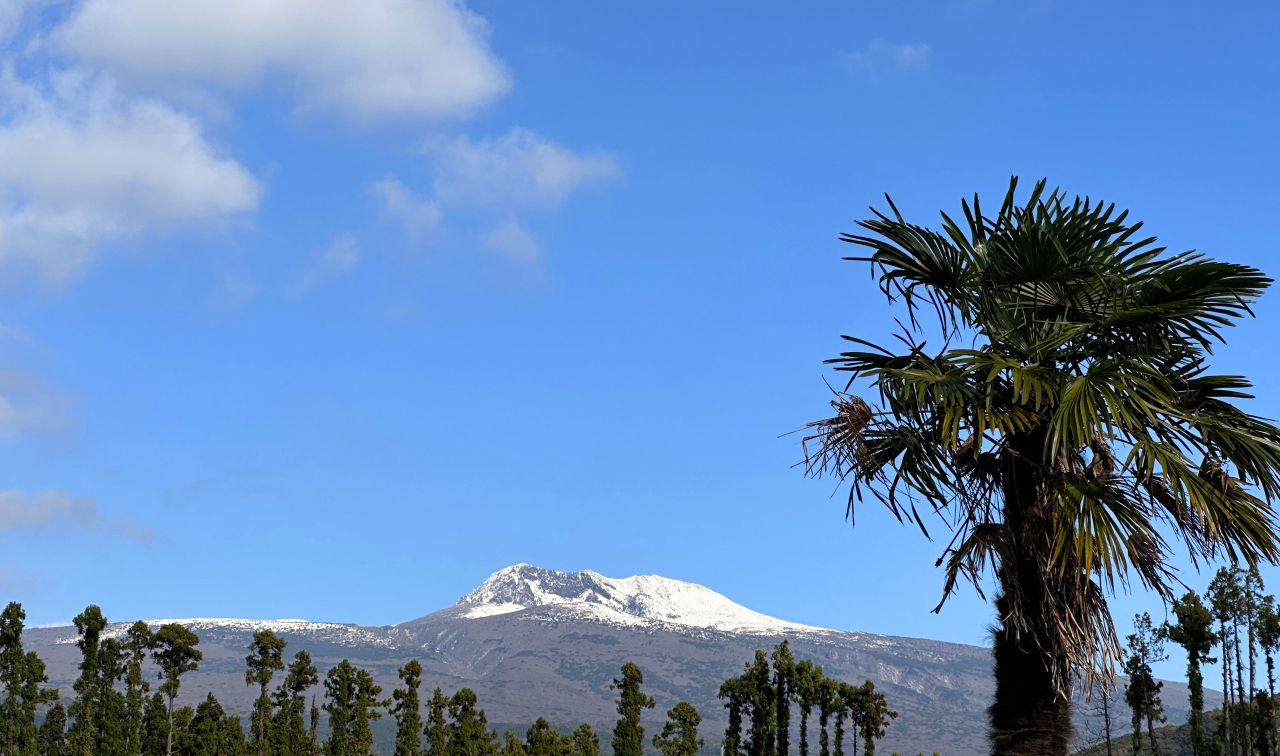
Septembre, une fois que la saison des typhons est terminée, est mon choix personnel. La chaleur baisse, l'eau reste suffisamment chaude pour les plages d'Udo, et la foule nationale diminue car les enfants coréens sont de retour à l'école. Décembre est la saison calme, surtout si vous voulez voir Hallasan (한라산) enneigé. Les sentiers de Yeongsil et Eorimok deviennent l'une des randonnées hivernales les plus sous-estimées de Corée, et les voitures de location sont bon marché car tout le monde suppose que l'île est fermée.
S'y rendre et se déplacer
Le vol Gimpo-Jeju dure environ 60 minutes. L'aller-retour avec Jeju Air, Jin Air ou T'way coûte généralement entre 50 000 et 100 000 wons si vous réservez plus de trois semaines à l'avance. Des vols depuis Incheon existent mais sont plus chers et moins fréquents ; à moins que vous ne soyez en correspondance internationale, utilisez Gimpo.
Louez une voiture. C'est le seul point non négociable à Jeju. Le réseau de bus touristiques existe mais ne couvre qu'une fraction de ce qui vaut la peine d'être vu, et les Uber y sont quasiment inexistants. Comptez 50 000 wons par jour pour une compacte, plus pour les petits SUV que la plupart des Coréens louent. Un permis de conduire international est requis pour les visiteurs étrangers, et la police de la circulation de Jeju applique strictement les radars sur les routes côtières.
Où séjourner : quatre zones, quatre types de voyages différents
Jeju n'est pas une île où l'on choisit « un seul hôtel ». Le quartier détermine les vacances.
Jungmun (중문) : La zone des complexes hôteliers sur la côte sud. Hyatt, Shilla, Lotte, Parnas. Idéal pour les familles, les jeunes mariés et tous ceux qui veulent une piscine, une promenade sur la plage et dîner sans conduire.
Seogwipo (서귀포) : La ville portuaire du sud. Plus de restaurants locaux, des hôtels moins chers, un accès facile à la cascade de Cheonjiyeon (천지연폭포) et au réseau de sentiers Olle. Bonne base pour les randonneurs.
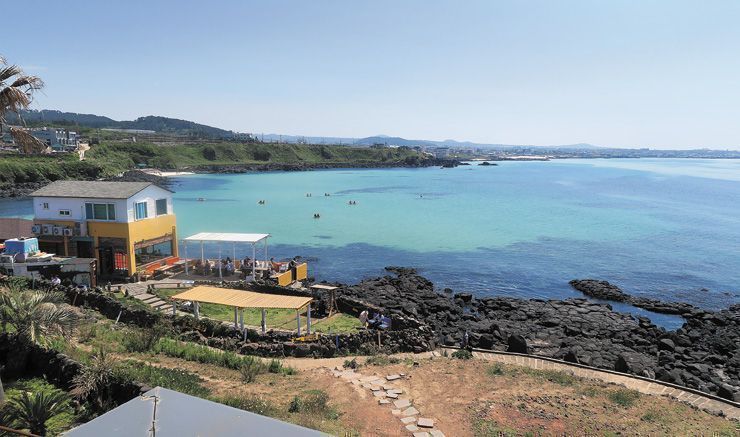
Aewol (애월) : La zone Instagram sur la côte nord-ouest. Des cafés avec vue sur l'océan empilés côte à côte, une esthétique axée sur le design qui a débuté vers 2015 lorsque G-Dragon a ouvert le Cafe Monsant, et qui définit maintenant véritablement une partie de la culture des cafés coréens. Si votre voyage est axé sur la photo, restez ici.
Seongsan (성산) : La côte est. Réveillez-vous, sortez, grimpez le pic du lever de soleil avant l'arrivée des autres. C'est tout l'argument, et ça marche.
À ne pas manquer : les cinq qui méritent réellement leur réputation
Seongsan Ilchulbong (성산일출봉) : Un cône de tuf vieux de 5 000 ans, classé à l'UNESCO, idéalement visité au lever du soleil. L'ascension dure de 20 à 40 minutes et est assez facile pour les enfants. Ce qui fait son charme n'est pas seulement sa géologie, mais la manière dont le bord du cratère encadre le lever du soleil sur la mer de l'Est. Les habitants s'y rendent encore le jour de l'An.
Grotte de Manjanggul (만장굴) : L'un des plus longs tunnels de lave de la planète. La section ouverte au public fait environ un kilomètre et la température à l'intérieur reste autour de 11 °C toute l'année, c'est pourquoi les visiteurs estivaux l'adorent et ceux d'hiver regrettent leur choix de chaussures.
Cascade de Cheonjiyeon (천지연폭포) : Ce n'est pas la plus haute cascade de Corée, mais la promenade à travers la forêt subtropicale est l'essentiel. Illuminée la nuit, ce que la plupart des touristes manquent.
Parc de Hallim (한림공원) : Un choix souvent négligé. Neuf jardins thématiques et les grottes de lave de Hyeopjae et Ssangyonggul sur place, vous permettant de condenser beaucoup de Jeju en un après-midi.
Colline de Camellia (카멜리아힐) : Pic de janvier à mars. Six mille camélias, 500 variétés. Si vous êtes à Jeju en hiver et que vous manquez cela, vous avez manqué la saison.
À goûter absolument : les quatre plats véritablement locaux
La moitié des listes de "plats de Jeju à essayer absolument" ne sont que des plats coréens standards servis sur l'île. Ces quatre-ci sont véritablement de Jeju.
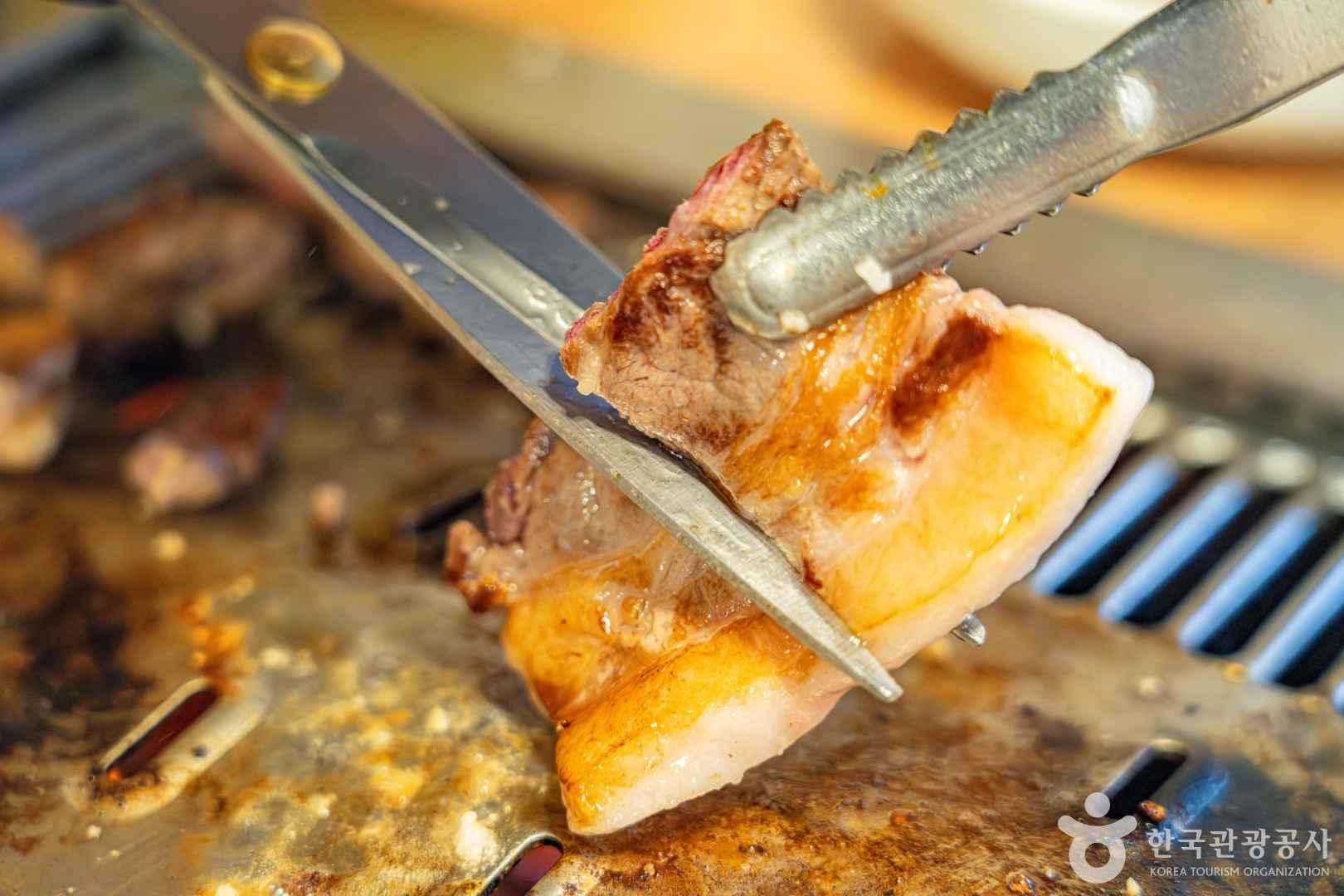
Heukdwaeji (흑돼지) : Porc noir de Jeju. Le gouvernement l'a classé espèce du patrimoine national en 2015. La graisse fond différemment du porc du continent, avec une texture masticable, presque comme un steak, et moins d'humidité dans la couche de graisse. Commandez l'ogyopsal (ventre à cinq couches) dans un restaurant au charbon de bois, trempez-le dans du meljeot (sauce aux anchois fermentés) au lieu du sel, et comprenez pourquoi les Coréens s'émeuvent pour ce porc spécifique.
Galchi-jorim (갈치조림) : Esturgeon braisé mijoté avec du radis, du gochugaru et de la sauce soja dans une poêle peu profonde. L'esturgeon de Jeju est plus épais et plus doux que celui du continent. Les restaurants de Seogwipo sont spécialisés dans la version poisson entier.
Okdomgui (옥돔구이) : Poisson tuile grillé, une délicatesse de Jeju qui était autrefois envoyée en tribut à la cour de Joseon. Chair sèche et délicate ; mangez-la avec du riz, pas avec beaucoup de banchan.
Seonggae Miyeokguk (성게미역국) : Soupe d'algues aux oursins. Vendue sur les plages de l'île d'Udo pour une raison : les oursins proviennent des plongeuses haenyeo (해녀) qui travaillent encore dans ces eaux. Commandez-la le jour de votre visite à Udo et vous comprendrez pourquoi.
Après 2020 : le travail et le boom des cafés d'Aewol
Deux changements ont transformé Jeju depuis la pandémie. Premièrement, le « workation » (워케이션) est passé d'une tendance de magazine à une véritable politique gouvernementale. Le bureau provincial de Jeju a lancé un programme de bons en 2023 qui offre aux travailleurs à distance 30 000 wons de crédits quotidiens pour des espaces de coworking, plus 100 000 wons en bons de loisirs, et environ 10 000 personnes l'ont utilisé la première année. Si vous pouvez travailler aux heures de bureau coréennes depuis un ordinateur portable, Jeju rivalise désormais avec Bali en termes de coûts et le surpasse en infrastructures.
Deuxièmement, la zone des cafés d'Aewol a explosé. Ce qui a commencé avec Monsant en 2015 est devenu un tronçon de cafés avec vue sur l'océan en compétition sur l'architecture et l'esthétique Instagram. La raison de son succès commercial : les voyageurs nationaux coréens dépensent pour les expériences de café comme les voyageurs occidentaux dépensent pour les musées. Un latte à 12 000 wons avec vue se vend toute la journée.
K-Drama à Jeju : pourquoi les producteurs reviennent sans cesse
Le paysage de Jeju apporte aux dramas romantiques coréens quelque chose que Séoul ne peut pas offrir. Le littoral volcanique, les murs de pierre noire (돌담), les scènes d'isolement, tout cela est un raccourci émotionnel. Lorsqu'un personnage se retire à Jeju dans un K-drama, le public comprend déjà le rythme de l'histoire.
Welcome to Samdal-ri (웰컴투 삼달리), le drama de JTBC de 2023-24 avec Ji Chang-wook et Shin Hye-sun, a utilisé Jeju non pas comme toile de fond mais comme ancre narrative. Toute l'émission raconte l'histoire d'une photographe de Séoul épuisée qui retourne dans sa ville natale de Jeju, et le tournage sur la côte nord-est autour de Samdal-ri (un vrai village) a déclenché une petite hausse du tourisme qui se poursuit encore. My Roommate is a Gumiho (2021) et l'éternel Warm and Cozy (2015) se sont appuyés sur le même instinct : Jeju comme échappatoire.

Hors des sentiers battus : ce que les habitants font réellement
Forêt de Bijarim (비자림) : Une forêt de muscadiers vieille de 500 ans avec de doux sentiers de terre rouge. Frais en été, pratiquement vide en semaine.
Île d'Udo (우도) : À 15 minutes en ferry de Seongsan. Louez un scooter électrique, faites le tour de la côte en trois heures, mangez une glace aux cacahuètes, prenez le dernier ferry pour rentrer. La meilleure excursion d'une journée que Jeju propose.
Gapado (가파도) : Une petite île au large de la côte sud-ouest, célèbre pour ses champs d'orge en avril et ses maisons en pierre basses. Si vous voulez le Jeju que Instagram n'a pas encore entièrement colonisé, c'est ici.
Randonnées au lever du soleil sur les Oreum (오름) : Jeju compte 368 cônes volcaniques parasitaires disséminés sur l'île. Yongnuni Oreum et Baengnok Oreum sont les randonnées classiques au lever du soleil et prennent de 20 à 30 minutes. Les habitants les traitent comme des joggings matinaux. Les visiteurs étrangers ne les trouvent presque jamais.
Le véritable atout
Jeju récompense un voyage plus lent. Trois jours semblent trop précipités. Cinq à sept jours, c'est l'idéal. Ne cherchez pas à inclure tous les sites de l'UNESCO dans un itinéraire ; l'attrait de l'île réside dans les arrêts café, les détours par la plage, l'ascension accidentelle d'un oreum après le déjeuner. Les voyageurs coréens l'ont compris il y a des années, c'est pourquoi 85 % des visiteurs de Jeju sont coréens et la plupart en sont à leur cinquième ou sixième voyage.
Ramenez la Corée chez vous. La Daebak Box est notre abonnement mensuel de snacks coréens, produits de beauté K-beauty, articles de style de vie et produits de culture pop sélectionnés par notre équipe en Corée et expédiés dans le monde entier. C'est ce qui se rapproche le plus d'une virée dans un café de Jeju sans le billet d'avion.


