


Table of Contents
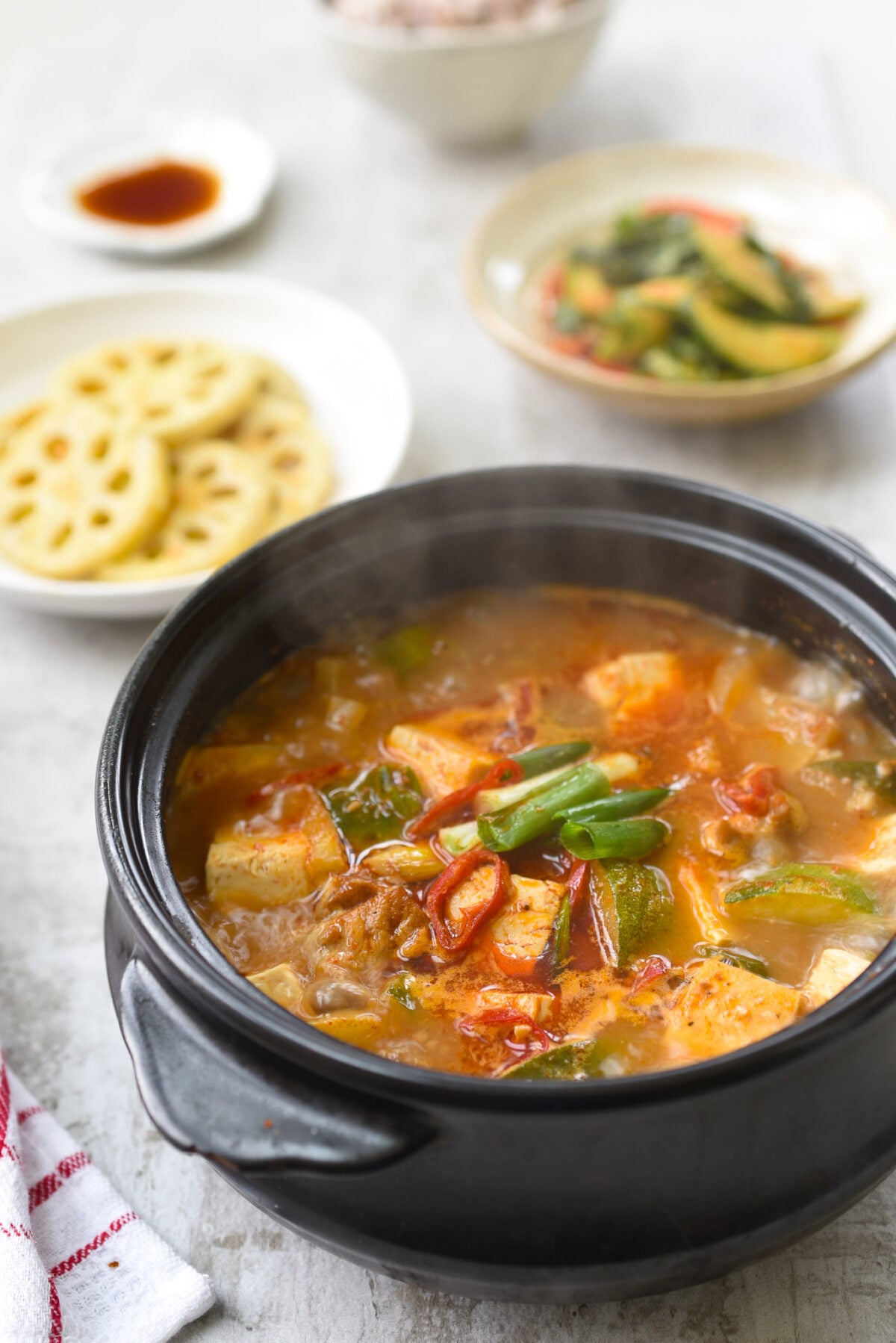
Doenjang jjigae (된장첌개) is often called the ultimate Korean comfort food. A deeply savory stew built on fermented soybean paste, tofu, vegetables, and often mushrooms or shellfish, it has been simmering on Korean stoves for centuries. In Korea, doenjang jjigae is as fundamental as the dinner table itself, the bubbling stone pot that signals home, warmth, and a proper meal.
What Is Doenjang?
Doenjang (된장) is Korea’s fermented soybean paste and one of the oldest, most essential ingredients in Korean cuisine. Made from meju, blocks of cooked soybeans fermented with wild molds and bacteria, doenjang has been a cornerstone of the Korean pantry for over a thousand years. The fermentation process transforms plain soybeans into something extraordinarily complex: deeply umami, earthy, slightly pungent, and rich with the kind of layered flavor that only time can create.
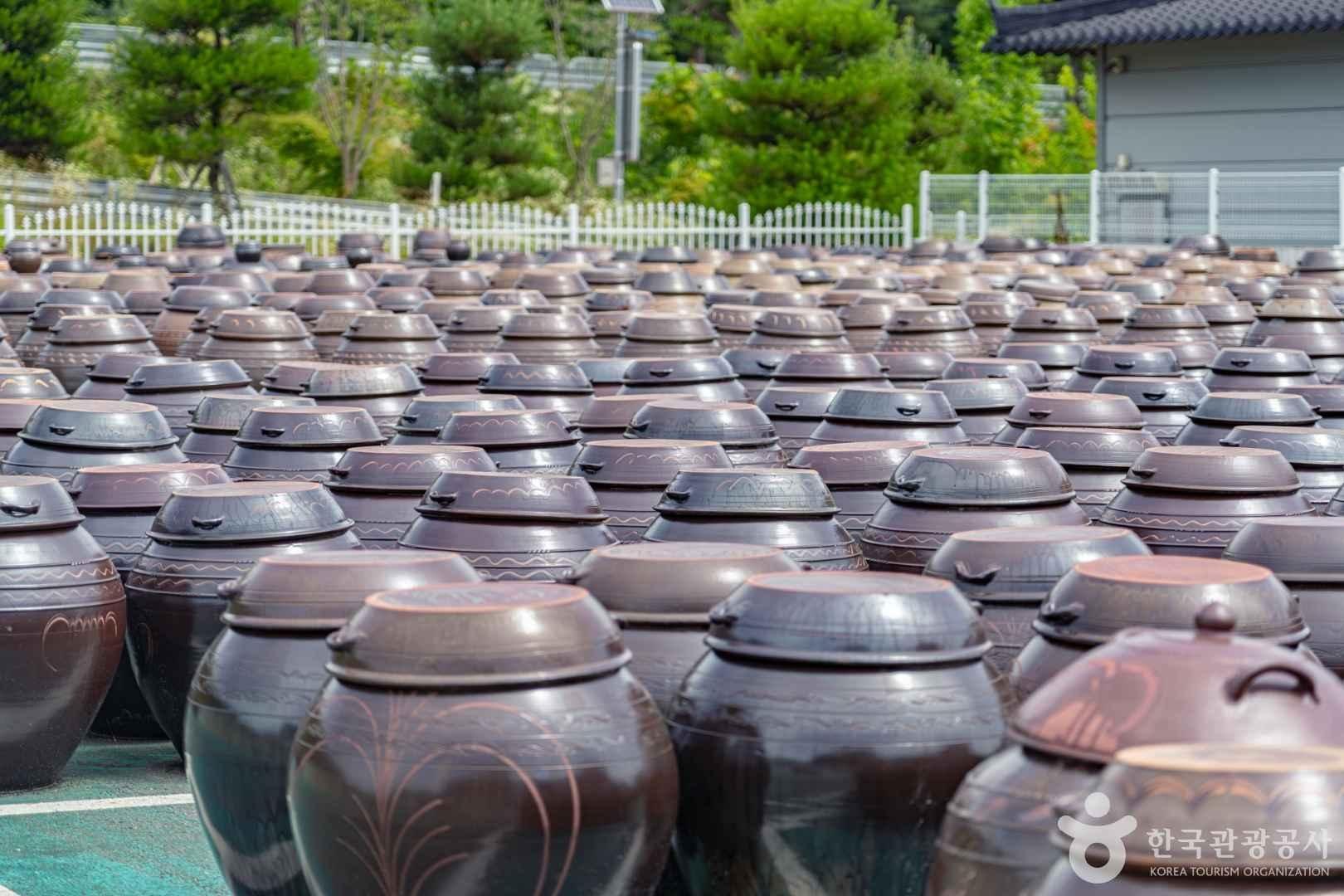
Traditional doenjang is made in large earthenware crocks called onggi, kept outdoors in a jangdokdae (장독대), a raised platform or yard dedicated to fermentation vessels. The porous clay of the onggi allows the paste to breathe and ferment slowly over months or even years. Many Korean families and artisan producers still maintain jangdokdae today, and the sight of rows of traditional crocks aging under the open sky remains one of the most evocative images of Korean food culture.
Building the Stew
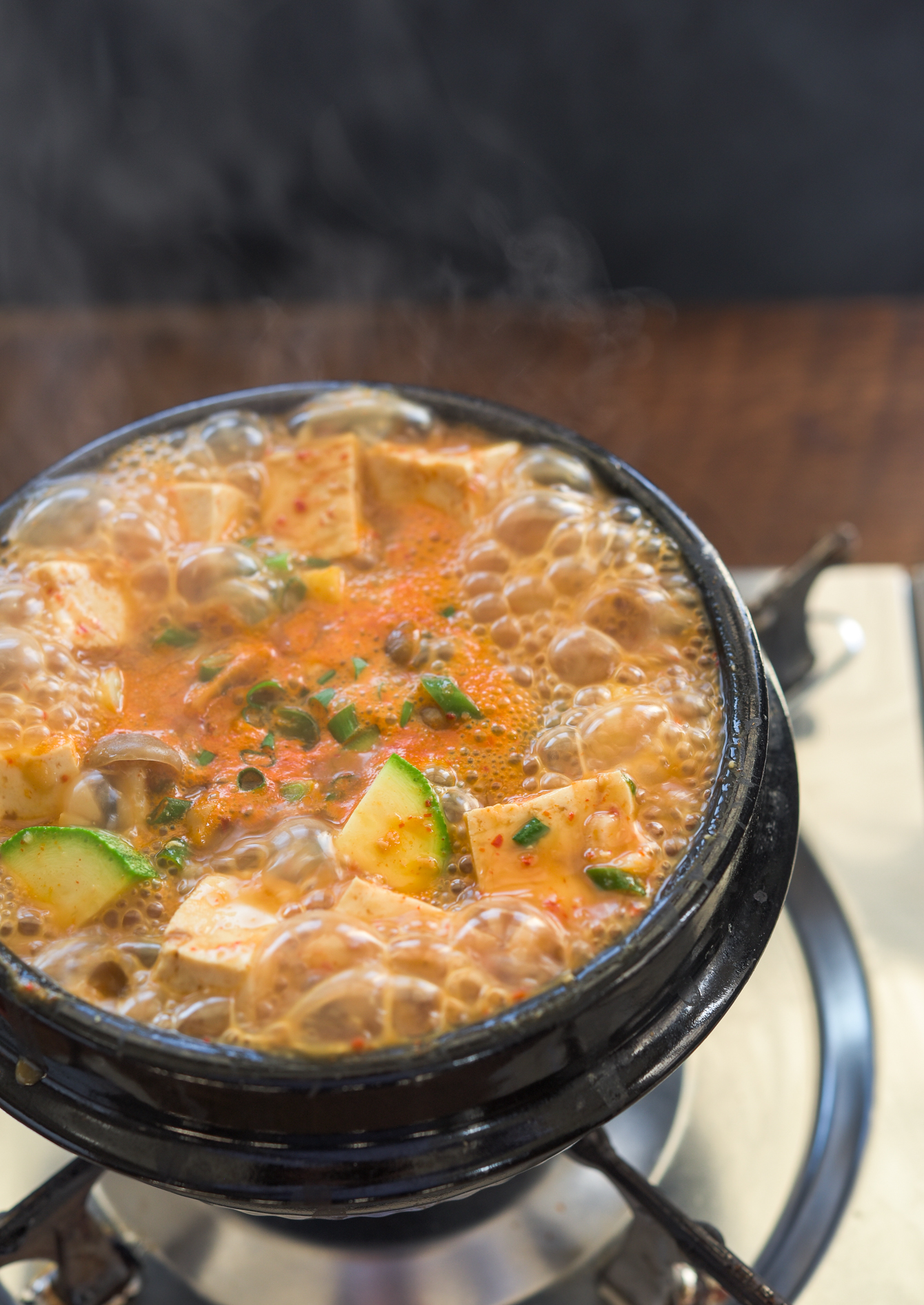
Doenjang jjigae is deceptively simple to make. The foundation is an anchovy or kelp stock (myeolchi yuksu), which provides the briny, mineral base that amplifies the doenjang’s depth. A generous spoonful of doenjang is stirred into the simmering stock, followed by cubed soft tofu, zucchini, mushrooms, onions, and often clams or shrimp. Everything simmers together until the vegetables are tender and the broth has developed a rich, unified flavor.
The ratio of doenjang to liquid is a matter of personal taste and regional tradition. Some cooks prefer a lighter, more broth-forward version; others go for a thick, intensely flavored stew. A small amount of gochugaru (chili pepper flakes) or gochujang is sometimes added for heat and color. The last-minute addition of garlic, raw or briefly sautéed, is nearly universal and gives the final stew its characteristic sharpness.
The Stone Pot Tradition
While doenjang jjigae can be made in any pot, the traditional vessel is the dolsot, a heavy stone pot that retains heat so effectively that the stew continues to bubble at the table long after it’s been removed from the heat. Eating doenjang jjigae from a sizzling dolsot, alongside a bowl of rice and an array of banchan (side dishes), is one of the defining experiences of a Korean home meal. The stone pot becomes part of the dish itself, keeping every bite at perfect temperature.
A Dish of Daily Life
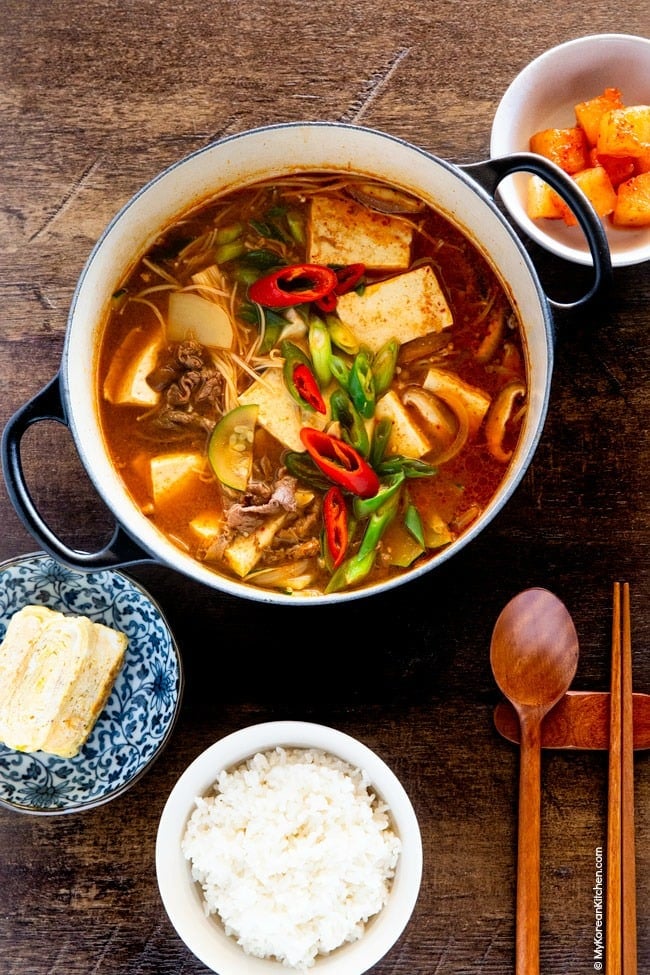
Unlike many celebrated Korean dishes that appear at feasts and special occasions, doenjang jjigae is a meal of ordinary days. In Korea, it appears on breakfast tables, in school cafeteria lunches, and as the anchor of a simple weeknight dinner. A bowl of rice, a pot of doenjang jjigae, and two or three banchan, this is the template of a proper Korean meal that has remained essentially unchanged for generations.
This everyday quality is part of what makes doenjang jjigae so beloved. There’s no ceremony required, no special occasion. It’s the dish that Koreans crave when they’re tired or sick or simply hungry, the culinary equivalent of a warm blanket. Food writers often describe it as "umami in a bowl," and while that’s accurate, it doesn’t quite capture the emotional dimension. Doenjang jjigae tastes like something that has been waiting for you.
Health Benefits and Modern Recognition
Beyond its extraordinary flavor, doenjang jjigae has attracted significant scientific attention for its health properties. Fermented doenjang is rich in beneficial bacteria, enzymes, and bioactive compounds produced during fermentation. Research has pointed to potential benefits including anti-inflammatory properties, support for gut health, and even anti-cancer effects in some studies, though it’s worth noting that nutrition science continues to evolve and single foods rarely act as panaceas. What’s beyond dispute is that doenjang, like other fermented foods, contributes to the kind of varied, probiotic-rich diet that nutritionists increasingly recommend. In Korea, where doenjang has been a daily staple for centuries, its role in a balanced, vegetable-forward diet is simply taken for granted.
Explore Korean Snacks with Daebak
Love Korean food? Get authentic Korean snacks and ramen delivered straight to your door with the SnackFever Box by Daebak.


