Hyunwoo Cho

Hyunwoo Cho

With over 10 years of experience in the Hallyu industry, Hyunwoo has dedicated his career to connecting Korean culture with the world. As the founder of Daebak, he works closely with Korean brands and stays ahead of the latest trends to deliver an authentic taste of Korea to fans globally.

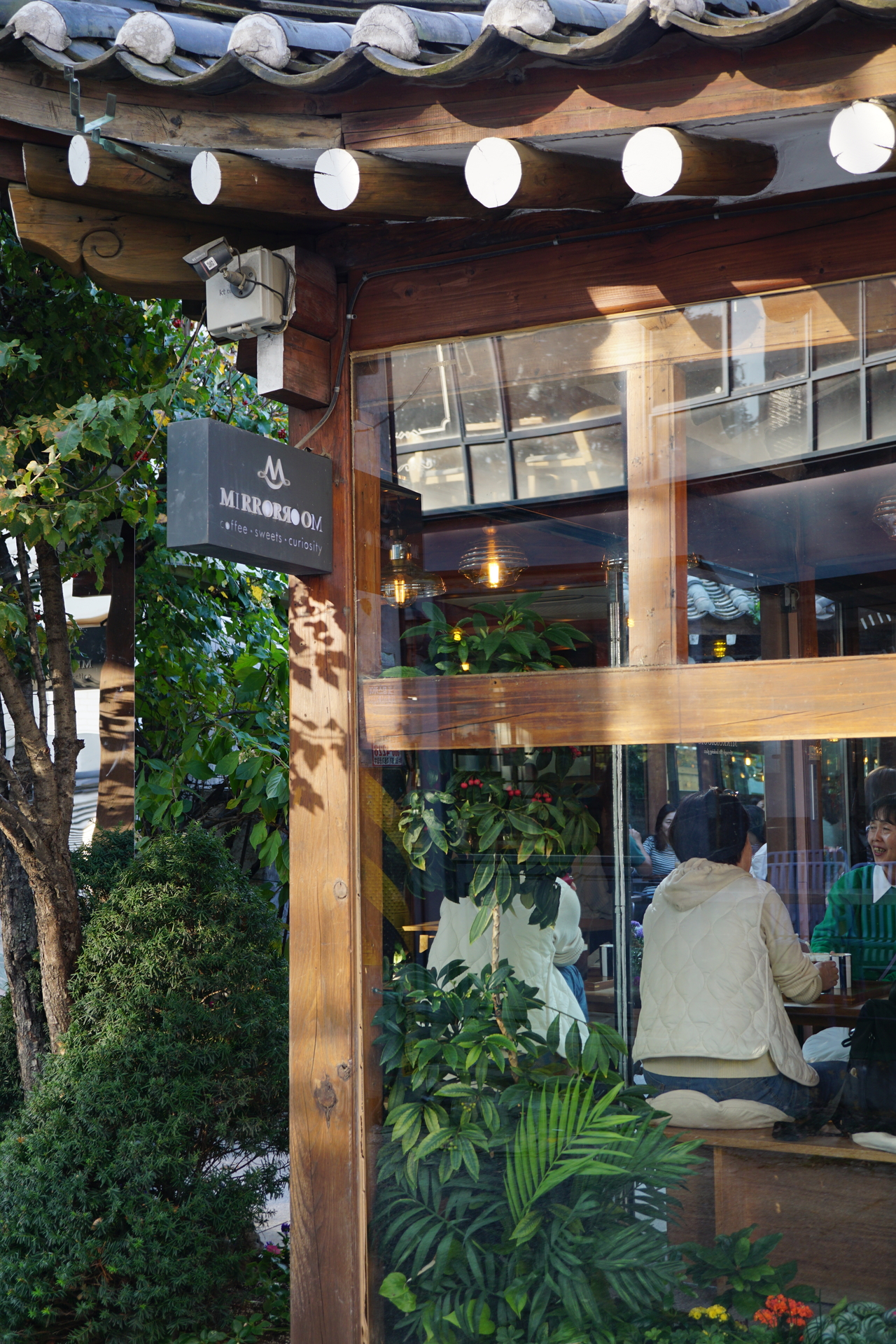
Mirror Room, a century-old hanok cafe in Bukchon Hanok Village, Seoul, with mirrored entrance and traditional Korean architecture

10 Korean Cafes with a View: Seoul, Bukchon, and Beyond

Hyunwoo Cho

Table of Contents

Korea's cafe culture is one of the most developed in the world, and the best cafes here are designed as destinations. From hanok roof tops in Bukchon to Han River terraces in Apgujeong and warehouse spaces in Seongsu, baristas, architects, and roasters have turned the simple coffee break into a full sensory outing. These ten Korean cafes are worth a detour for the view alone.

Mirror Room cafe entrance in Bukchon Hanok Village Seoul with mirrored exterior and century-old hanok wooden frame
Mirror Room occupies a century-old hanok in Bukchon once home to late-Joseon painter Jang Seung-eop, with mirrored panels at the entrance and a seasonal menu inside. | Source: The Korea Herald

1. Mirror Room, Bukchon Hanok Village, Seoul

Set across from the National Museum of Modern and Contemporary Art on Samcheong-ro 2-gil, Mirror Room blends a century-old hanok with a contemporary interior of mirrors and floral arrangements. The cafe has about 15 tables and serves a seasonal menu featuring garden-fresh apple tea, apple cocktails, and apple waffles. The wooden eaves, narrow stone-paved alley, and tile rooftops of Bukchon frame nearly every window.

2. Cafe Onion Anguk, Anguk-dong, Seoul

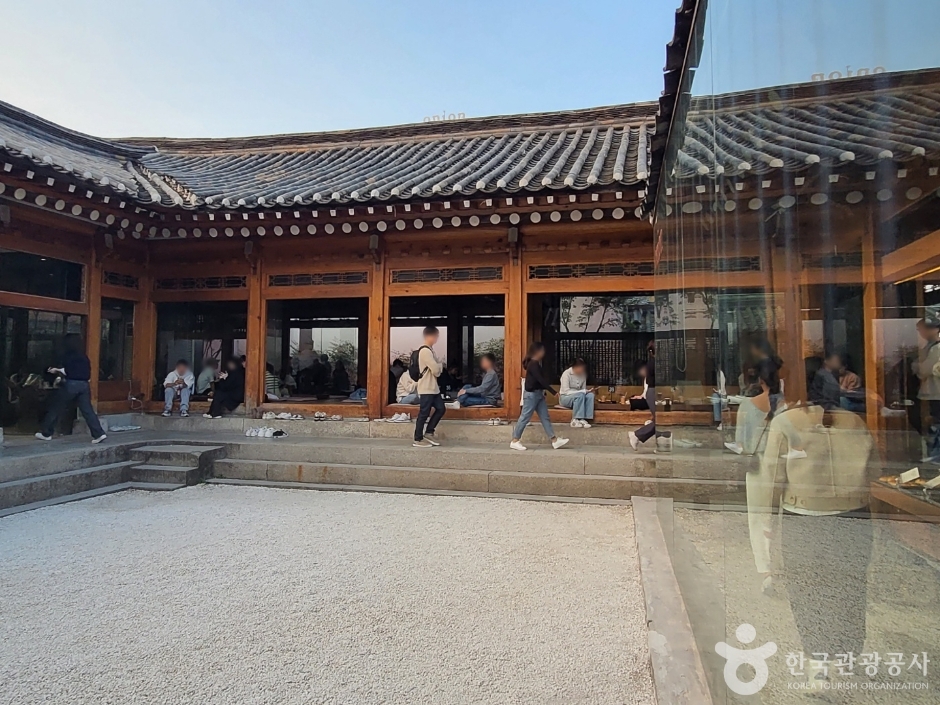
Cafe Onion's Anguk branch sits inside a hanok dating to the 1920s, located on Gyedong-gil a short walk from Gyeongbokgung Palace and Anguk Station. The restoration preserved the daecheongmaru (wooden veranda) and madang (inner courtyard), so customers can sit on the open floor or at outdoor tables surrounded by the tile roof and exposed wooden rafters. The signature vanilla bean latte and pandoro pair with views of Bukchon's traditional roofline.

Cafe Onion Anguk branch in Seoul showing the restored 1920s hanok courtyard with wooden veranda and tile roof
Cafe Onion Anguk preserves the daecheongmaru and madang of a 1920s hanok near Gyeongbokgung Palace, with the courtyard open to the sky. | Source: VisitKorea (Korea Tourism Organization)

3. Anthracite Coffee Hapjeong, Mapo District, Seoul

Anthracite Coffee Roasters opened its Hapjeong branch inside a former shoe factory near Sangsu Station and kept much of the industrial bones intact. Unpainted concrete walls, exposed beams, and a working roastery line the back, while a pastry chef bakes financiers, madeleines, and cakes on site. The view here is the room itself, a converted Mapo factory floor that helped set the template for Seoul's industrial cafe wave.

Anthracite Coffee Roasters Hapjeong branch in Seoul, a former shoe factory turned industrial cafe with bare walls and vintage furniture
Anthracite Coffee's Hapjeong branch in Mapo-gu occupies a former shoe factory, with bare walls, vintage furniture, and roasts named after authors. | Source: Visit Seoul

4. Cafe Onion Seongsu, Seongdong District, Seoul

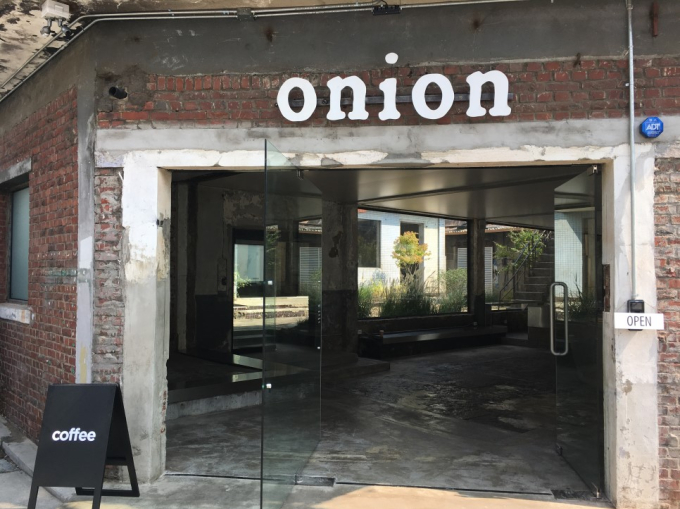
The original Onion opened in Seongsu in 2016 inside a former metal factory next to PPB Studios. Founder Yu Zu-hyung and design studio Fabrikr left the raw concrete and exposed steel in place, then layered in bakery counters, communal tables, and pillows. The cafe is widely credited with launching Seongsu's transformation from industrial district into the so-called Brooklyn of Seoul, and the views are pure converted-warehouse atmosphere.

5. Layered, Bukchon, Seoul

Layered's Bukchon branch occupies a tucked-away hanok corner near Anguk Station. The shop is known for scones and brown butter pastries, but the draw is the inner courtyard and small terrace that look up at the tile rooftops climbing the hill toward Bugaksan. The shop pairs cleanly modern minimalism with the hanok wooden frame.

Cafe Onion Seongsu branch in Seoul inside a former metal factory with exposed concrete walls and industrial design
Cafe Onion's first branch opened in Seongsu in 2016 inside a converted metal factory and helped launch the neighborhood's transformation into Seoul's industrial cafe district. | Source: KED Global

6. VIEW376, Apgujeong, Seoul

VIEW376 is a Han River cafe a short walk from Apgujeong Rodeo Station, with a third-floor rooftop and second-floor terrace looking directly out over the river. Brunch runs from 10 a.m. to 4 p.m. and the cafe stays open until 2 a.m., making it one of the few unobstructed river-view spots in Gangnam where you can watch the bridges light up at night. Pets are welcome on the patio.

7. Seoul Coffee, Ikseon-dong, Seoul

Ikseon-dong is Seoul's oldest hanok village, and Seoul Coffee's flagship sits on Supyo-ro 28-gil in the heart of the district. The interior recreates a 1980s Seoul living room with low wooden tables, while the windows open onto Ikseon-dong's narrow alleys and clustered tile roofs. The menu blends traditional Korean ingredients like rice cakes with espresso drinks.

Seonungak hanok cafe in Ui-dong Seoul with Bukhansan National Park mountain peaks visible behind the traditional Korean estate
Seonungak in Ui-dong is Seoul's largest private hanok cafe, set against the peaks of Bukhansan National Park and known as the Mr. Sunshine filming location. | Source: The Korea Times

8. Seonungak, Ui-dong, Seoul

Tucked into a valley in Gangbuk District, Seonungak is the largest private hanok cafe in Seoul. Originally built in 1967 as Hyundai founder Chung Ju-young's private social club, it reopened as a cafe and wedding venue in 2021. The terrace looks straight onto the rocky ridge of Bukhansan National Park, and the stone-walled path doubled as the U.S. Legation in the 2018 tvN drama Mr. Sunshine. The expansive lawn and traditional floor seating are the main draw.

9. Cafe Sanmotoonge, Paju, Gyeonggi Province

Sanmotoonge sits on a hill in Paju with sweeping views over the wooded countryside toward the Han River estuary and, on clear days, the North Korean border. The 2007 MBC drama Coffee Prince used it as a key location and its terrace and pastel interior have remained a pilgrimage stop since. The cafe is part of a small mountain hamlet of villa-style houses and is best reached by car, about an hour from central Seoul.

10. O'Sulloc Tea Museum, Andeok, Jeju Island

The O'Sulloc Tea Museum sits at the center of the brand's flagship green tea fields in southwestern Jeju, with rows of tea bushes stretching out toward Hallasan in the distance. The on-site cafe serves matcha lattes, green tea cakes, and rolled cakes alongside windows looking onto the fields themselves. It is one of the most visited destinations on Jeju and a fixture on most island itineraries.

Plan Your Korean Cafe Tour

If you are mapping a cafe tour, cluster Bukchon (Mirror Room, Onion Anguk, Layered, Seoul Coffee), Mapo (Anthracite Hapjeong, Onion Seongsu), and Gangnam (VIEW376) into separate days, and treat Sanmotoonge and Seonungak as half-day trips with their own mountain or river views attached. Jeju's O'Sulloc deserves a full Jeju travel itinerary of its own.

Explore More of Korea with Daebak

Want to bring a little piece of Korea into your life? The Daebak Box is packed with the best Korean snacks, ramen, and cultural goodies delivered monthly to your door.

ブログに戻る