


Table of Contents
Ten-plus years working around Korean food brands, K-drama food PPL, and hansik export teams, and the fastest way to start a fight in a room of Korean editors is still bibimbap. Not tteokbokki. Not kimchi. Bibimbap. Because the word covers three totally different dishes depending on which grandmother you learned from, and the version America knows best is not the one Koreans actually argue about at home.
Here are the hot takes that keep coming up, from Jeonju food festival panels to CJ Bibigo's LA brainstorm rooms. Take them seriously, because the marketing decisions being made right now decide how the next generation of eaters actually meets 비빔밥.
Hot Take 1: There is no single "bibimbap." There are three.
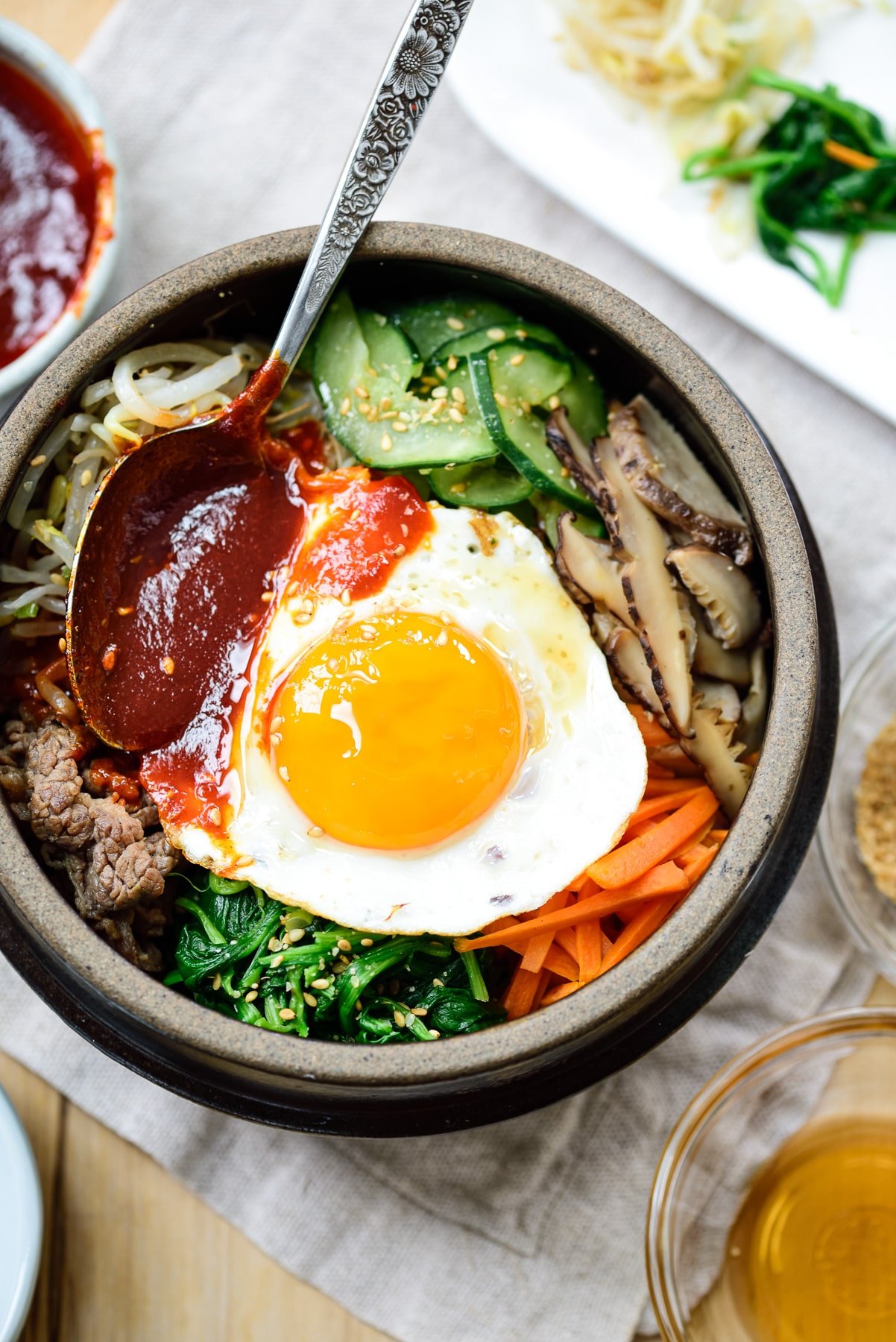
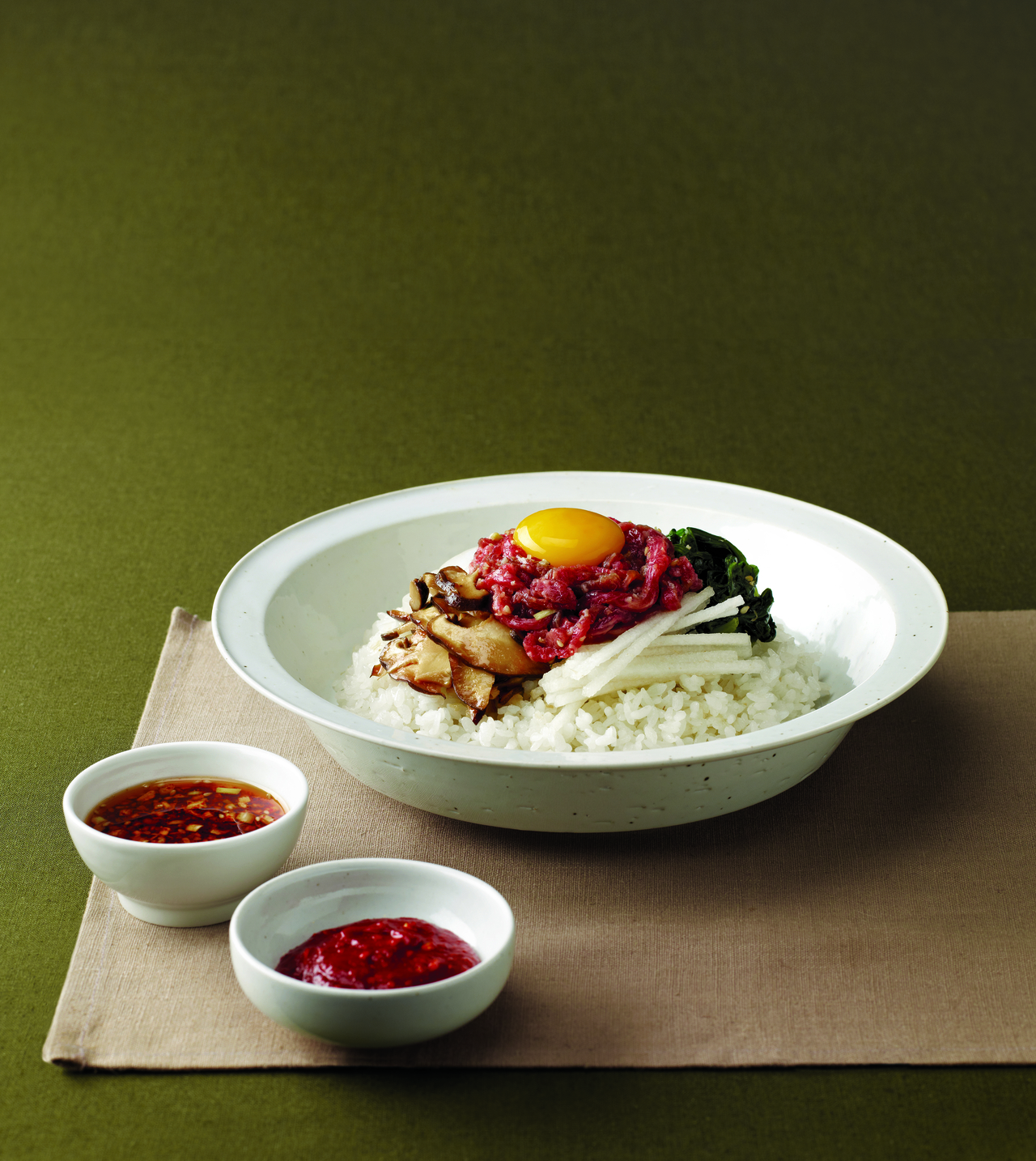
Ask a Jeonju native, a Jinju native, and a Seoul dolsot fan which one is the "real" one and you get three answers plus an eye roll. 전주 (Jeonju) bibimbap sits on a bed of rice cooked in beef stock, arrives at room temperature (not sizzling), and centers seasoned 육회 (yukhoe, raw beef tartare) on top of soybean sprouts, mung bean jelly, and a wet slick of sesame oil. UNESCO named Jeonju a Creative City for Gastronomy in 2012, and the Jeonju bibimbap is exactly why. It is not about heat. It is about the interplay of cold beef fat, warm rice, and the crunch of 콩나물 (kongnamul).
진주 (Jinju) bibimbap, from Gyeongsang-do, is the raw beef purist's take. Less rice, more yukhoe, a bright pear-and-garlic hit, and a clear beef broth (seonjiguk) on the side. Ask any hansik chef and they will tell you Jinju is the version they order when they want to actually taste beef.
Then Seoul's dolsot (돌솥) version, the sizzling stone bowl, is a mid-20th-century restaurant invention. It was designed for tourists and office workers who wanted their food loud, hot, and photogenic. It is delicious. It is also a stage prop. Insiders know this and eat it anyway.
Hot Take 2: The point of dolsot bibimbap is the 누룽지, not the mixing.
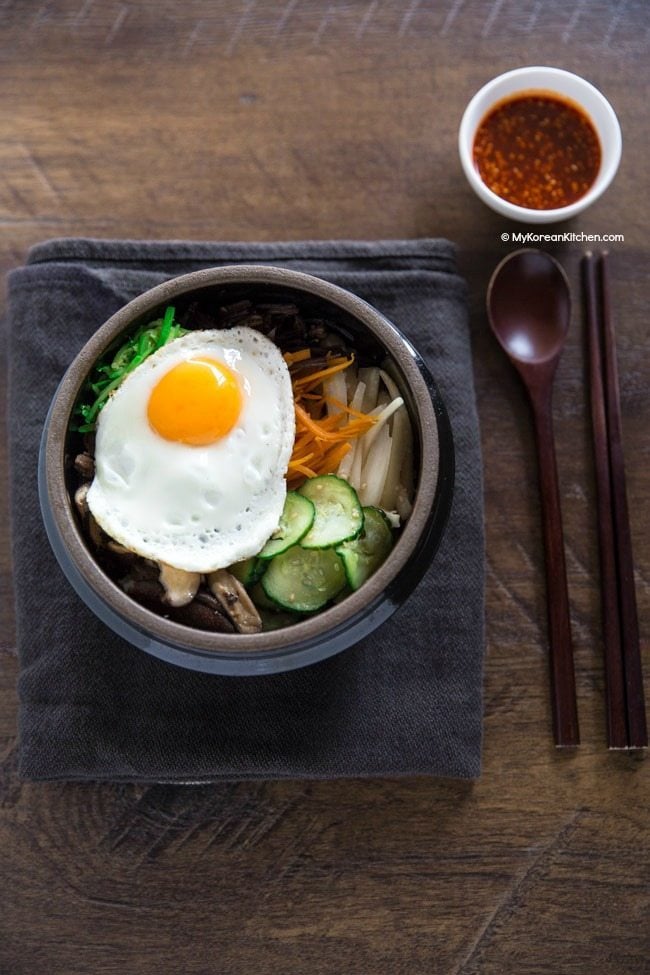
Non-Korean food writers describe dolsot bibimbap as "bibimbap in a hot bowl" and move on. Wrong emphasis. The bowl exists so that a two-millimeter layer of rice can crisp and caramelize against the granite, producing 누룽지 (nurungji): a scorched, nutty, borderline savory-cracker layer that fights the gochujang for the flavor of the meal. Ask a Korean diner why they pay 2,000 to 3,000 won extra for dolsot and the answer is almost never "presentation." It is nurungji.
This matters commercially. When retail brands try to recreate dolsot bibimbap in a microwaveable tray, they can copy every ingredient but they cannot fake nurungji. That is why frozen bibimbap SKUs from CJ Bibigo and Ottogi have plateaued in the premium tier. The one thing consumers actually pay for cannot be shipped in a plastic tub.
Hot Take 3: Bibimbap is not health food, and pretending otherwise is a Western marketing lie.
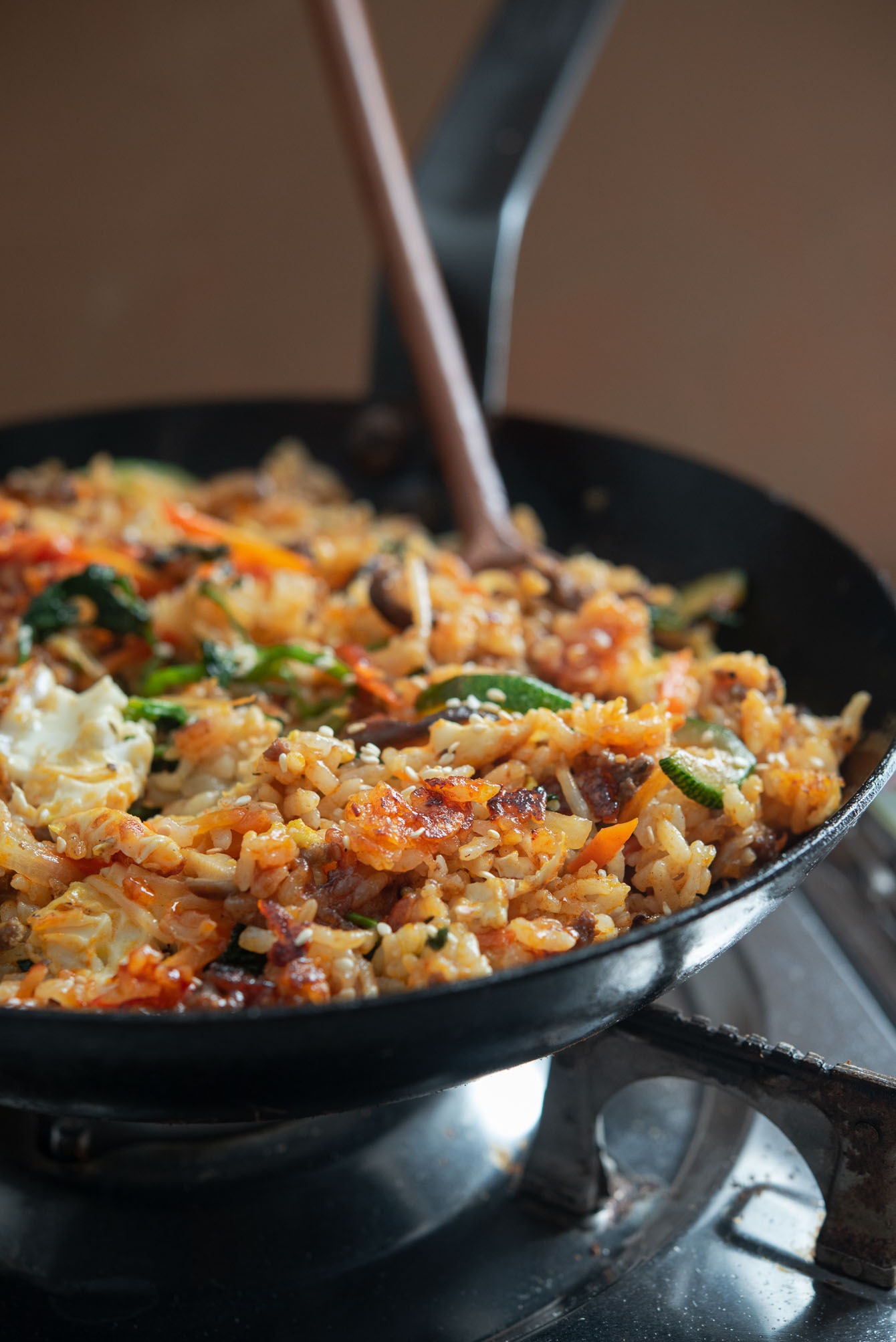
Once bibimbap crossed the Pacific after 2015, it got repositioned as a "Korean grain bowl," and every LA and NYC menu leaned into the vegetable count. Reality: a restaurant-portion bibimbap runs 900 to 1,100 calories with the full sesame oil and gochujang glossing. That is a proper meal, not a salad. The sesame oil at the bottom of the dolsot alone is roughly 120 calories a spoon.
Koreans do not eat bibimbap because it is "clean." They eat it because it is a rice-forward, fat-forward, sauce-forward comfort dish that happens to include vegetables. When Sweetgreen-adjacent bowl chains price it at 14 to 18 dollars and market it as a "wellness" option, they are erasing the actual appeal. The chewy 쫄깃 bite of short-grain rice fighting gochujang heat is the point, not fiber count.
Hot Take 4: The mixing debate is real, and Grandma is winning.
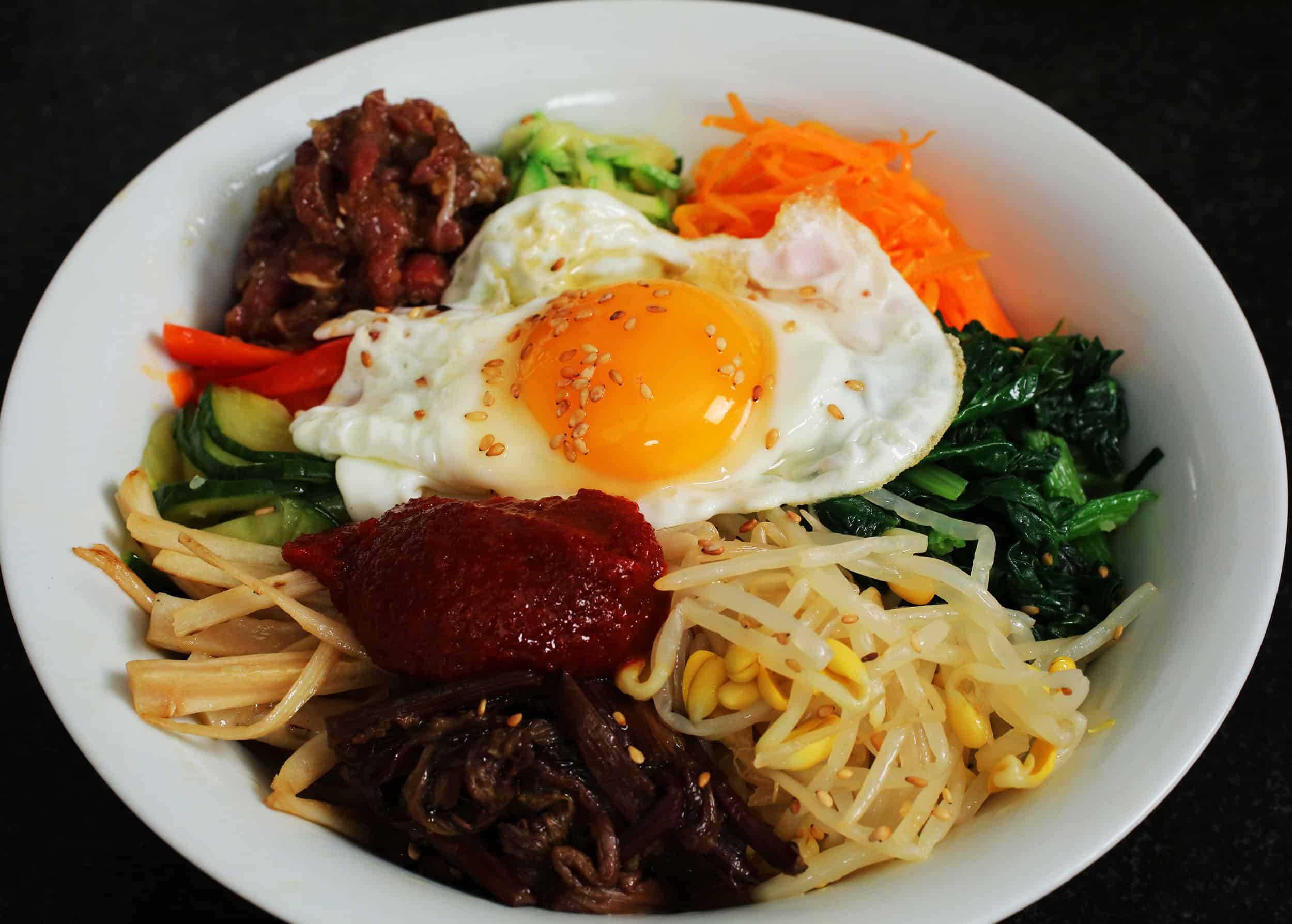
You will see food influencers gently swirling bibimbap with 젓가락 (jeotgarak, chopsticks), preserving the color layout, filming for slow-mo. Ask any Korean aunt and she will laugh. Bibimbap is mixed with a 숟가락 (sutgarak, spoon), aggressively, until every grain is coated in gochujang and sesame oil, until the color story is completely obliterated. The pretty arrangement exists so a diner can see the balance, then annihilate it. Anything less than full destruction and the flavor never fuses. If you have ever had a "mid" bibimbap, chances are it was undermixed.
The generational fight matters because K-drama food scenes often show the chopstick swirl for cinematic reasons, and a growing subset of younger diners actually eats it that way now. It is one of those small ways food traditions drift, and Jeonju's older restaurant owners will tell you off the record they think Instagram broke bibimbap etiquette.
Hot Take 5: The airline meal made bibimbap global before the poke bowl did.
Every hansik export timeline should start with 1997, the year Korean Air won the Mercury Award for its in-flight bibimbap. That was the moment tens of millions of non-Korean business travelers ate a proper Korean meal at 35,000 feet, packaged with a tube of gochujang and pictogram mixing instructions. Before Bibigo, before K-drama food porn, before Trader Joe's frozen aisle, the airline tray did the cultural work.
Post-2020, the poke bowl format opened the door for premium fast-casual bibimbap at 14 to 18 dollars a bowl in Manhattan and Los Angeles. But industry insiders know the 1990s Korean Air move is what built the brand recognition that made those menus possible. If you are wondering why bibimbap gets more menu space than japchae or naengmyeon at Western concepts, that is your answer.
So what is the real hot take?
Bibimbap is not a bowl, a formula, or a wellness product. It is three regional dishes fighting under one name, defined by regional agriculture (Jeonju's rice belt, Jinju's cattle culture, Seoul's restaurant industrialism) and refined by grandmothers who would tell you to mix it harder. Whenever a Western concept flattens that into "customizable Korean grain bowl," a bit of the actual dish gets lost.
The good news for eaters outside Korea is that the raw materials, gochujang, sesame oil, kongnamul, short-grain rice, are more available now than ever. Build one at home, mix it with a spoon like your Korean auntie would insist, and eat it hot enough that you feel it.
If you want to snack your way through more Korean flavor while you figure out where you stand on the great bibimbap debates, check out the SnackFever Box. Monthly Korean snacks straight to your door, so you can taste the country's flavor logic outside a restaurant bill.


