


Table of Contents
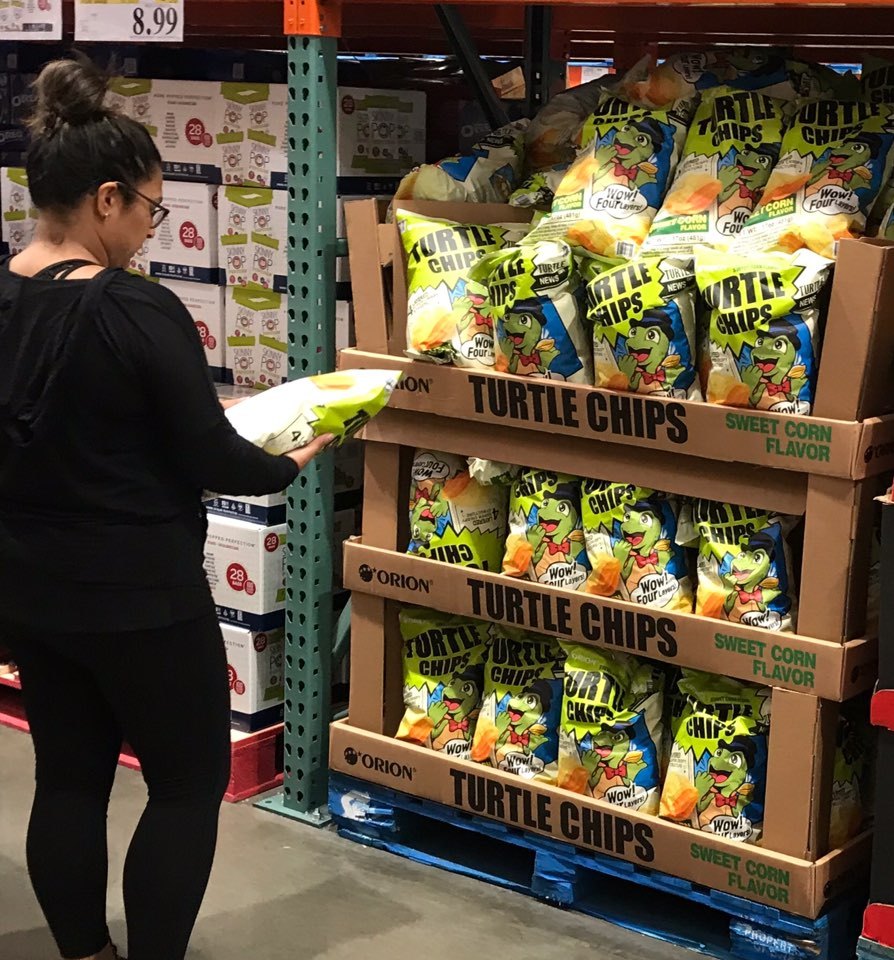
Here is my honest hot take after a decade watching Korea's snack aisle turn into a global export category: the reason "Korean nachos" now shows up on menus from Los Angeles to London is not that Koreans invented a better tortilla chip. It is that Orion launched 꼬북칩 (Kkobuk Chip, marketed globally as Turtle Chips) in March 2017, the four-layer crunch redefined what a Korean corn snack could be, and the country's decade-long cheese obsession (kicked off in earnest by 백종원 and his 골목식당 rescue-restaurant show) finally gave every chip a molten cheese partner. Put those two things together and you get the fusion the rest of the world calls Korean nachos. Everything on this page is downstream of that.

꼬북칩 is the Korean nacho, whether the West realizes it or not
Orion released 꼬북칩 in March 2017 with a technical trick almost nobody had tried at scale: four thin corn sheets fried together into a single curved chip, so every bite gives you the crunch-times-four texture that a flat tortilla simply cannot deliver. The Korean industry called it a category reset. Within eighteen months, Orion had grabbed roughly 40 percent of the domestic corn-snack share, and the launch flavor 콘스프맛 (corn soup) had become the SKU everyone else in the aisle was benchmarking against. This is the chip most global consumers are actually eating when they think they are eating "a Korean tortilla chip." They are not. They are eating a completely different structural product wearing the wrong American label.
The two flavors that Koreans argue about are the OG corn soup and the surprise 2018 hit 츄러스맛 (cinnamon churros). Corn soup is savory, buttery, faintly sweet, engineered to pair with beer at a PC방 (PC room) at 2 a.m. Cinnamon churros is dessert-adjacent, sold as an evening 야식 (late-night snack) chip. Insider read: the split is generational. Anyone over 30 in Seoul reflexively orders corn soup. Anyone under 25 will pick churros nine times out of ten and then argue about it. Both are correct. That is why Orion keeps both on shelves instead of picking one.
Why cheese suddenly took over every Korean snack in the 2010s
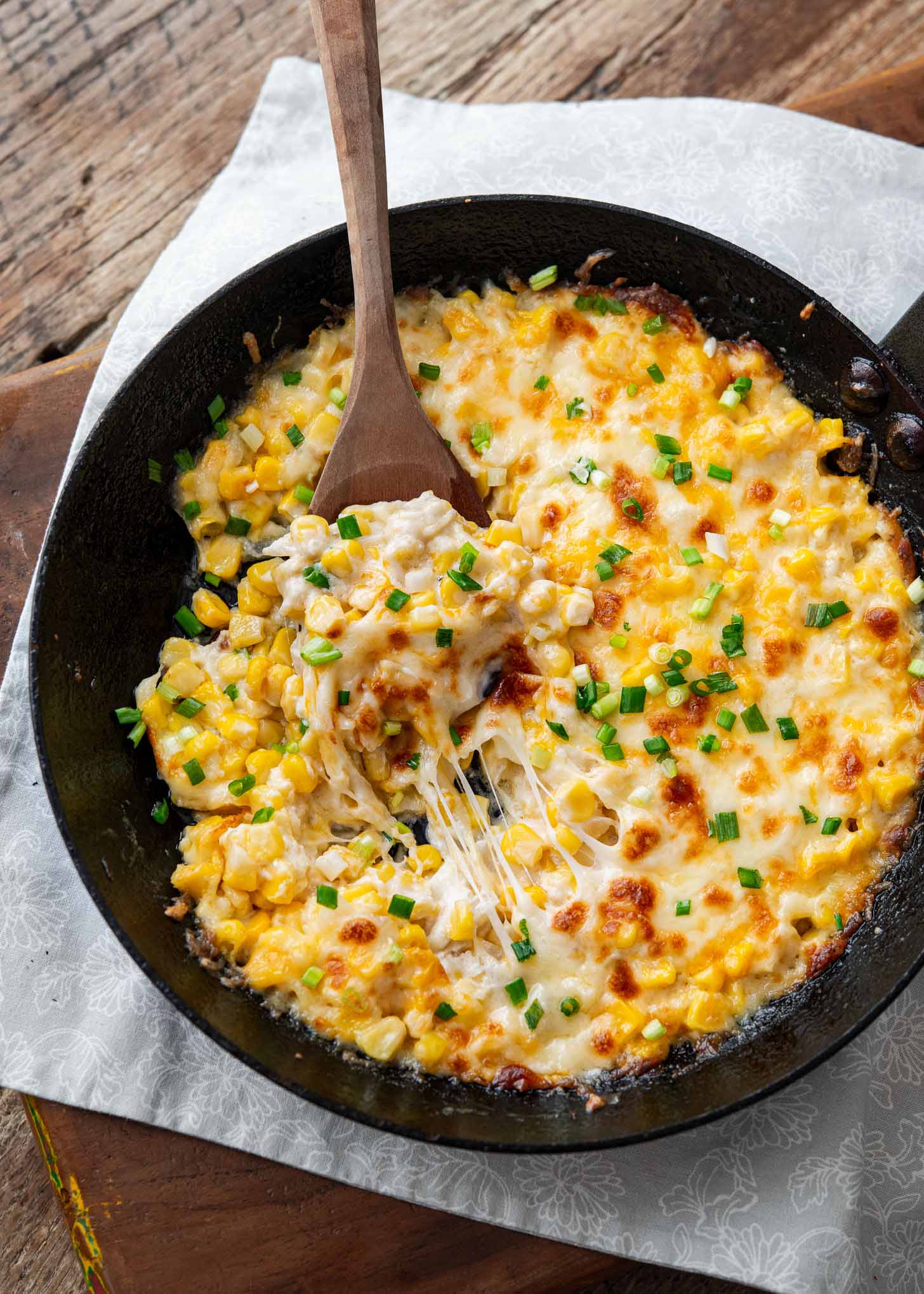
The Western telling of Korean food skips a step here, so let me correct it. Cheese is not traditional in Korea. My grandmother's kitchen had exactly one cheese product: American yellow slices, imported after the Korean War and treated as a semi-luxury item. What changed is a decade of very deliberate content-driven trend engineering, and the single biggest lever was 백종원 (Baek Jong-won). His SBS show 골목식당 (Backstreet Restaurant, 2018 to 2021) rescued failing neighborhood shops on national TV, and his signature intervention for stuck menus was almost comically consistent: add molten cheese. Cheese pork cutlet. Cheese fried rice. Cheese tteokbokki. Cheese buldak. Cheese corn.
The reason it worked is chemistry, not tradition worship. Korean savory snacks are already gochujang-heavy, ferment-forward, and salt-driven. Cheese does two things simultaneously in that context: it tempers heat (mozzarella's milk fat literally binds capsaicin) and adds the umami-plus-fat length that spicy food otherwise burns off in three seconds. Once every neighborhood shop was doing it and every convenience store followed with a cheese variant, the trend hardened into the default. Beyond Kimchee's write-up on the topic captures the shift in one line: cheese was "hip" in Korean food by 2017. That is not a coincidental year. It is the same window as the Turtle Chip launch.
Korean nachos, ranked by what actually holds up on the plate
Now the practical question. When someone builds a Korean-nacho plate, which combinations work and which are just Instagram bait? Here is my ranked read after eating a lot of them across Seoul, Koreatown LA, and the New York fusion circuit.
1. Bulgogi and kimchi over Turtle Chips. This is the S-tier. Sweet-caramelized 불고기 (bulgogi) beef supplies the sugar and fat, aged 김치 (kimchi) supplies acid and funk, and Turtle Chips' four-layer crunch actually survives the melt without going soggy the way a flat tortilla does after 90 seconds. Home cooks like Beyond Kimchee's Hyegyoung Ford spell out the bulgogi technique: thinly sliced ribeye or sirloin, pear-and-kiwi marinade, high heat, no crowding. Sear on a rip-hot pan, pile it on the chips, drop mozzarella and a Mexican blend on top, broil for 90 seconds. The kimchi goes on last, cold, for temperature contrast. That temperature swing is the appeal point nobody talks about.
2. Vegan kimchi and gochujang nachos. Undercovered but genuinely good. Sub the beef for oven-roasted sweet potato, keep the kimchi, use a cashew-cream drizzle spiked with gochujang instead of dairy sour cream. Guacamole is not optional here. It is the fat vehicle that mozzarella was doing in the meat version. This works because gochujang is a fermented paste, not a raw chili, so the sweetness carries the layered flavor through the acid of the tomato in the guac.
3. 나쵸치킨 (Nacho Chicken). The frozen-aisle novelty. Chicken nuggets pressed into tortilla-triangle shapes with cheddar and jalapeño folded in, launched by Kuke Foods and popularized on Cookat Korea's video channels. These are not "nachos" in any Mexican sense. They are a chicken-nugget product doing a nacho cosplay. But they hit the same convenience-store snack-with-beer bracket that Turtle Chips do, and the frozen category is a real signal about how deep the fusion has gone into Korean retail. If Nongshim or Ottogi launches a bagged Korean-nacho seasoning kit in the next two years, this is why.
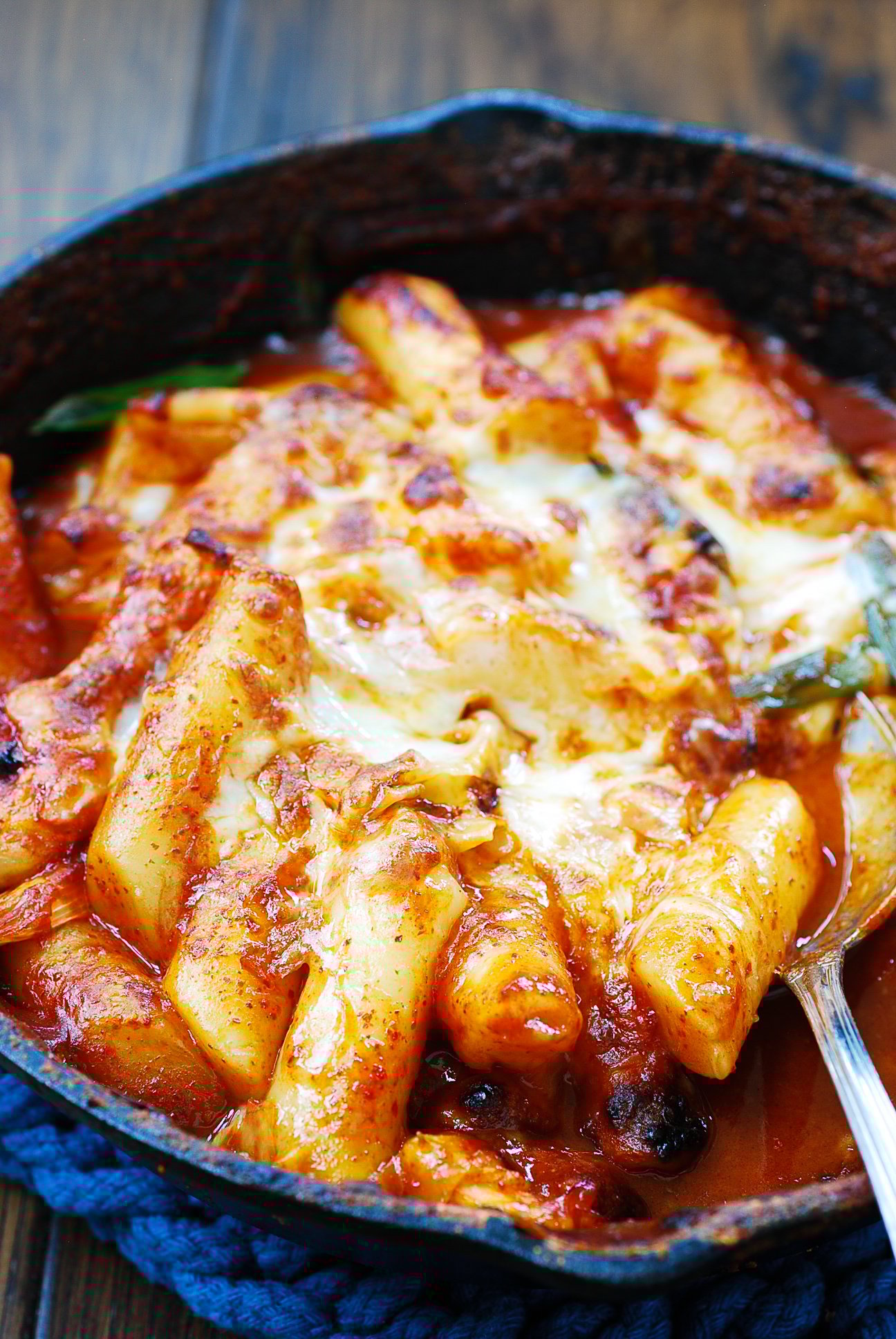
4. Cheese-tteokbokki nachos. The internet's favorite crossover, weakest structurally. The problem is water. Tteokbokki sauce is gochujang-heavy and wet, and any chip underneath it collapses in three minutes. If you must, use Turtle Chips (four layers absorb slower than one) and eat immediately. Korean Bapsang's seafood-cheese tteokbokki formula gives you the sauce template, but treat the chips as a scoop, not a base.
The sauce is the whole game. Do not skip this part.
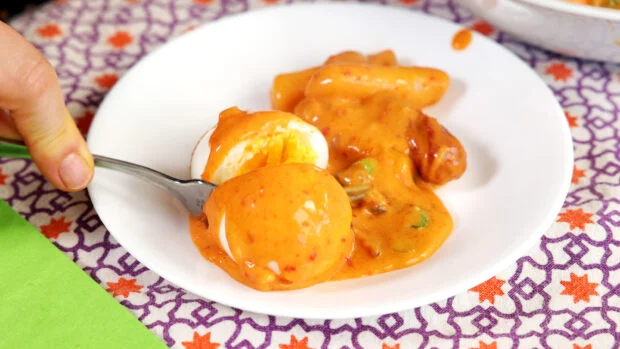
The single mistake I see when Western food bloggers attempt a Korean nacho plate is treating the sauce as an afterthought. A Korean plate lives or dies on the drizzle. My default build: two tablespoons gochujang, one tablespoon Kewpie mayo, half tablespoon rice vinegar, quarter teaspoon toasted sesame oil, a pinch of sugar. Whisk. This is roughly the same base Maangchi uses for her 로제 (rosé) tteokbokki sauce, minus the cream, and it doubles as a bibim-mayo you can put on almost anything. Drizzle over the finished nacho plate right before the cheese sets. That is the shortcut to making a pile of chips taste specifically Korean instead of "spicy nachos with kimchi on them."
Second, gochujang brand matters. Chung Jung One and Sunchang are the domestic standards. Do not buy anything labeled "Korean chili paste" from a Western brand. The fermentation profile is not the same and the sugar level is usually too high. If your nacho sauce tastes candy-sweet, that is why. A real Korean 고추장 has an earthy, almost boozy back-note from the malt sugar and fermented soybean base. That is the flavor you want carrying the plate.
Where this is heading (my three-year read)
Two things to watch. First, Orion's US Turtle Chips sales hit ₩12 billion in 2023, and the company has publicly said if the number crosses ₩40 billion they will build a US factory. That is a signal, not a marketing line. It means Kkobuk Chip is no longer a niche import. It is heading toward a shelf-anchor product at the scale where Frito-Lay starts calling it competition. Once there is a US-made 꼬북칩, the price will drop, distribution deepens, and "Korean nachos" stop being a novelty menu item and become a Super Bowl party staple in the same window as buffalo cauliflower did five years ago.
Second, watch the cheese-plus-gochujang combo migrate into shelf-stable products. There is already gochujang mayo, gochujang cream sauce, and buldak cheese sauce packets in every H Mart in the US. The next step is a bagged tortilla-substitute product that pairs 꼬북칩-style engineered crunch with a cheese-gochujang seasoning powder baked into the chip itself. When that hits, "Korean nachos" as a fusion category basically collapses into a single SKU, and the honest answer to "how do I make Korean nachos" becomes "open the bag."
Last take, then I will stop yelling: if you are building this at home, do not buy tortilla chips. Buy Turtle Chips corn soup flavor, layer with kimchi and bulgogi, melt real mozzarella (not the pre-shredded kind coated in anti-caking starch, which never gets stretchy), and finish with a gochujang-mayo drizzle. That is what Koreans mean by 나쵸 (nacho) when they say it. Everything else is a Western remix of a Korean remix of a Mexican original. Which is fine. But now you know the actual chain of custody.
Want Turtle Chips and every other Korean shelf-fresh snack shipped to your door every month? The SnackFever Box curates the exact Korean chips, cookies, ramyeon, and cheese-flavor snacks that Seoul convenience stores are actually selling this week, hand-picked so you get the stuff Koreans eat, not the export-only stock.


