Hyunwoo Cho

Hyunwoo Cho

With over 10 years of experience in the Hallyu industry, Hyunwoo has dedicated his career to connecting Korean culture with the world. As the founder of Daebak, he works closely with Korean brands and stays ahead of the latest trends to deliver an authentic taste of Korea to fans globally.

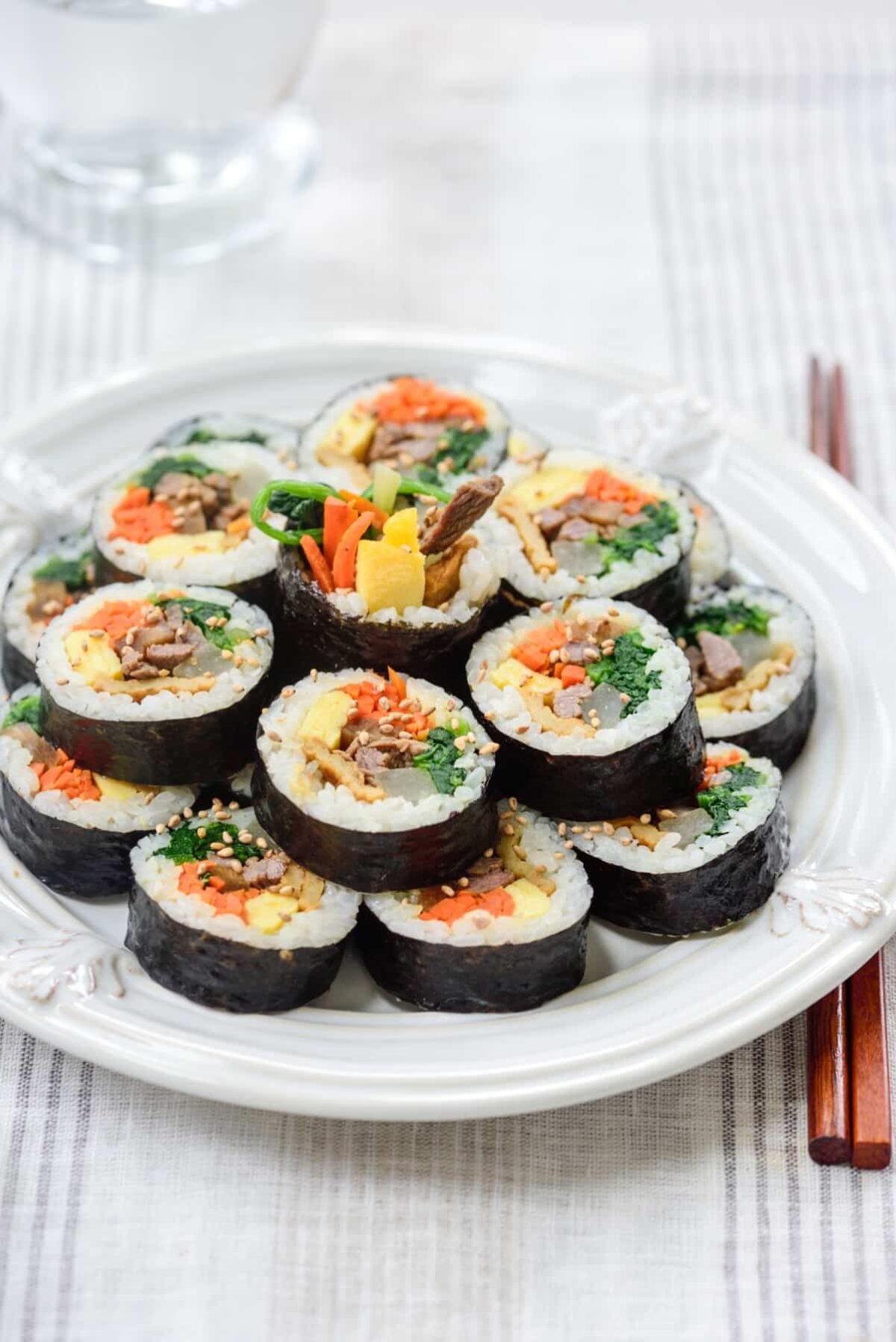
Classic Korean kimbap seaweed rice rolls sliced and arranged on a plate

Kimbap: Korea's Favorite On-the-Go Meal

Hyunwoo Cho

Table of Contents

Walk through any Korean train station, park, or school field trip and you will almost certainly spot someone eating kimbap. These compact, beautifully cross-sectioned rolls of seasoned rice and colorful fillings wrapped in dried seaweed are the ultimate Korean portable meal. Easy to eat, endlessly customizable, and packed with flavor, kimbap has been feeding Koreans on the move for generations and is now winning fans around the world.

Classic Korean kimbap seaweed rice rolls sliced and arranged on a plate
Classic kimbap sliced into bite-sized rounds. Source: Korean Bapsang

What Is Kimbap?

The name is straightforward: gim (김) means dried seaweed, and bap (밥) means rice. Kimbap is made by spreading sesame oil-seasoned short grain rice over a sheet of gim (roasted seaweed), layering fillings across the center, and rolling tightly into a cylinder using a bamboo mat or your hands. The roll is then brushed with sesame oil for a glossy finish and sliced into round pieces. The cross-section reveals a vivid mosaic of colors from the various fillings, making kimbap as beautiful as it is delicious. While it may look similar to Japanese sushi rolls, kimbap uses no vinegar in its rice and relies on cooked, savory fillings rather than raw fish.

The Classic Kimbap Fillings

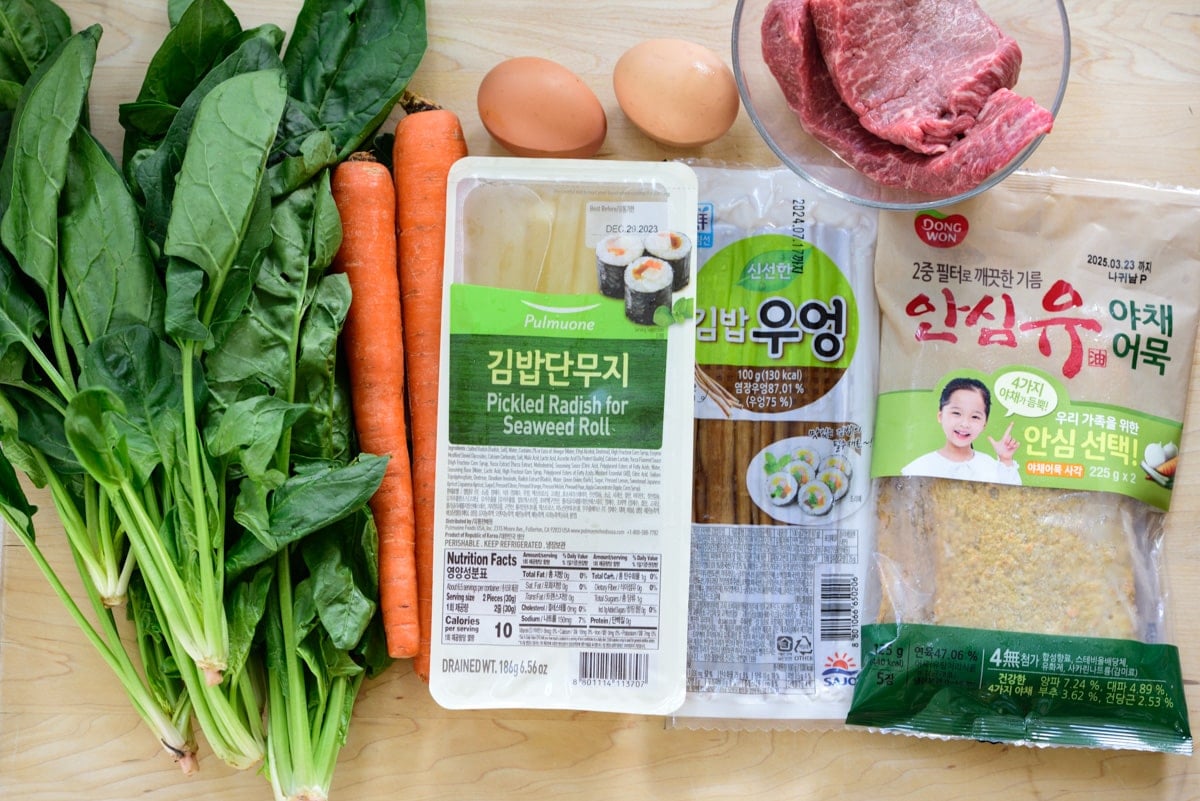
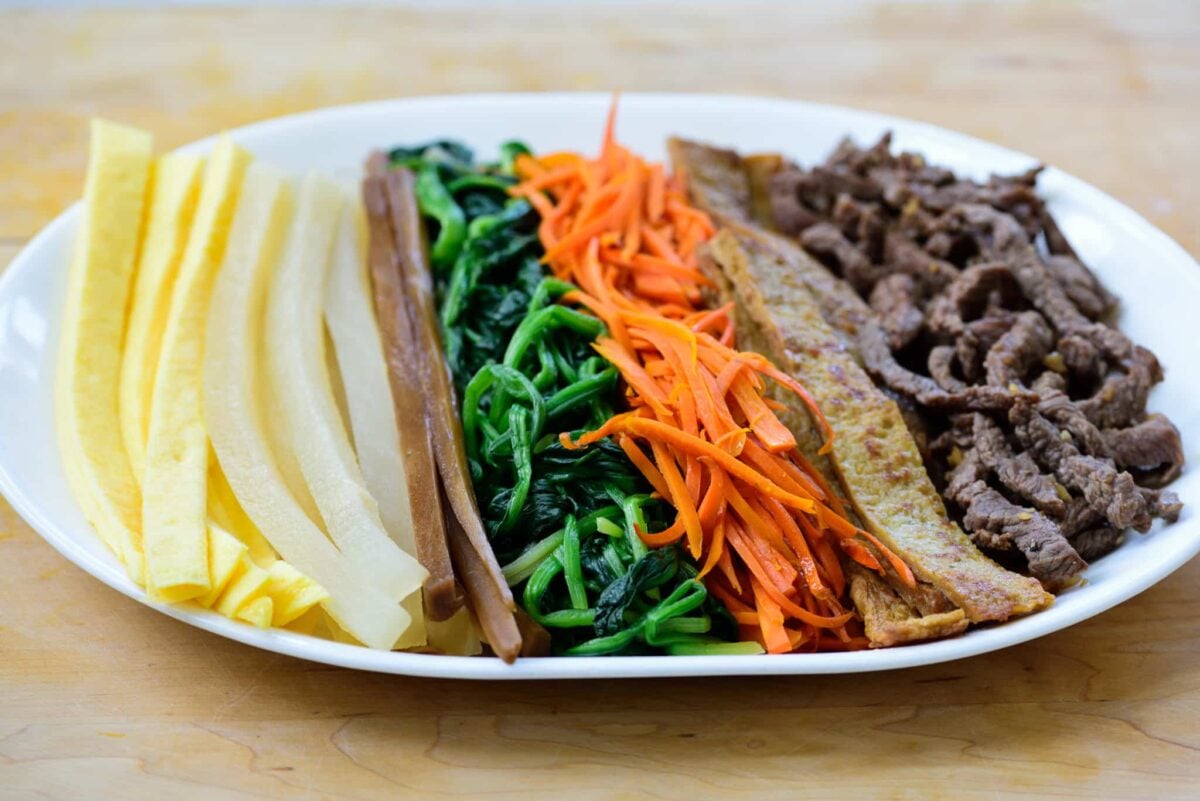
Traditional kimbap fillings are both humble and delicious. The classic version typically includes strips of seasoned beef or spam, fish cake (eomuk), egg omelette, blanched and seasoned spinach, julienned carrots, yellow pickled radish (danmuji), and braised burdock root (ueong). Each ingredient is individually seasoned and cooked before being rolled together, ensuring that every bite delivers a complex, layered flavor. The pickled radish provides a refreshing crunch and slight tang that balances the savory elements perfectly.

Assorted kimbap filling ingredients laid out including carrots, spinach, egg, and fish cake
The colorful lineup of classic kimbap fillings, each individually prepared. Source: Korean Bapsang

Popular Kimbap Variations

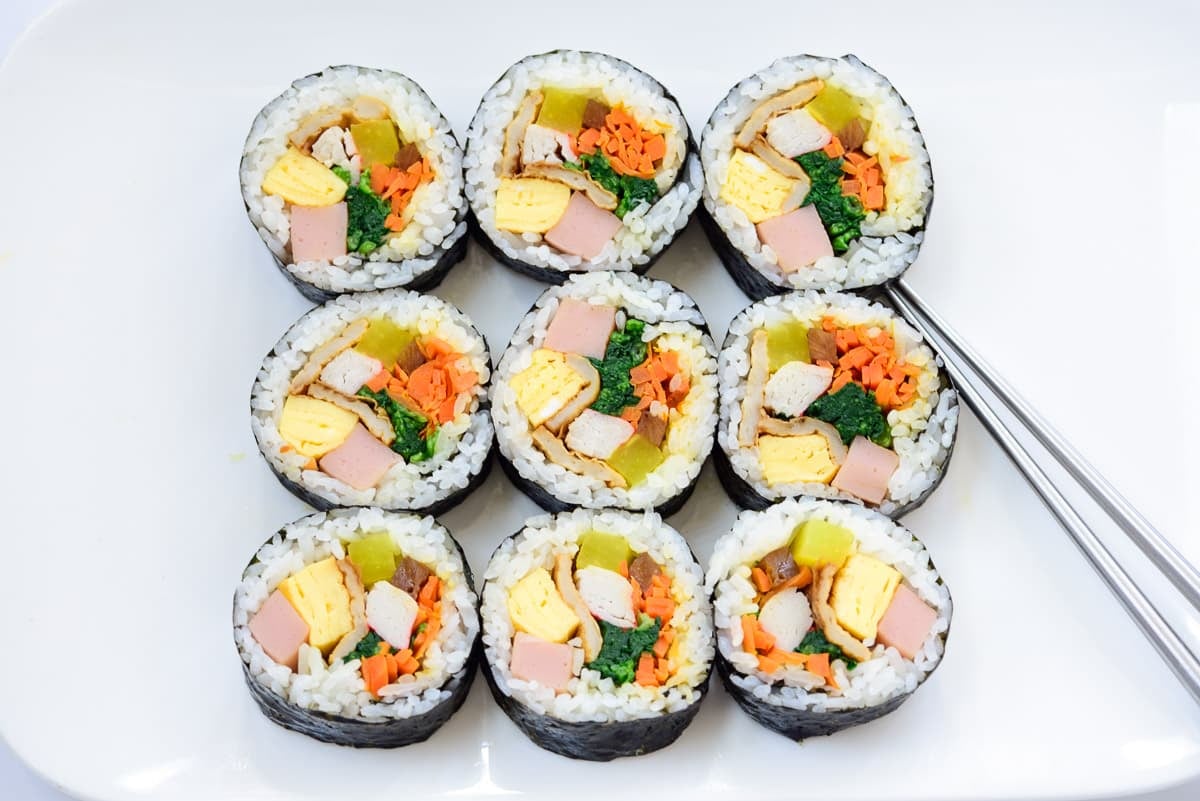
While the classic is hard to beat, kimbap has spawned countless creative variations. Chamchi kimbap (tuna kimbap) uses canned tuna mixed with mayo and is one of the most popular convenience store varieties. Mayak kimbap (addiction kimbap) is a mini version with just carrots, spinach, and pickled radish, served with a special dipping sauce so addictive it earned its name. Cheese kimbap features a strip of melted cheese for a creamy bite. After the Korean drama Extraordinary Attorney Woo became a global hit, the specific version eaten by the main character (Woo Young Woo kimbap, with ham, crab sticks, and no beef) also became a trend. Vegan kimbap using tofu or just vegetables is another popular modern adaptation.

Kimbap fillings being prepared and arranged before rolling
Preparing the fillings before rolling is the most time-intensive part of making kimbap. Source: Korean Bapsang

Kimbap vs. Sushi: What Is the Difference?

Kimbap and Japanese maki rolls look similar, but the similarities are mostly visual. Kimbap rice is seasoned with sesame oil and salt rather than rice vinegar and sugar, giving it a nutty, savory flavor. The fillings in kimbap are almost always cooked rather than raw, and the ingredients are distinctly Korean: braised burdock, fish cake, and pickled radish are not found in traditional sushi. The seaweed used is also slightly different. Both are delicious, but kimbap has its own identity rooted firmly in Korean culinary culture.

How to Make Kimbap at Home

Making kimbap at home takes preparation but is very achievable. Cook short grain rice slightly drier than usual and season it with sesame oil and salt while still warm. Prepare each filling separately: stir-fry the beef, fish cake, and carrots; blanch and season the spinach; fry the egg into a flat omelette and cut into strips. Lay a seaweed sheet on a bamboo rolling mat, spread a layer of rice leaving space at the top edge, arrange the fillings in a line across the center, and roll tightly away from you. Brush with sesame oil and slice with a sharp, lightly oiled knife. Kimbap is best eaten the day it is made, but leftover rolls can be pan-fried in egg batter for a delicious next-day treat.

Kimbap rolls being assembled with rice and fillings on seaweed sheet
Rolling kimbap tightly is key to keeping it together when sliced. Source: Korean Bapsang

Explore Korean Snacks with Daebak

Love Korean food? Get authentic Korean snacks and ramen delivered straight to your door with the SnackFever Box by Daebak.

ブログに戻る