


Table of Contents
In South Korea, couples rarely measure love only in years. They count days. A relationship in Seoul or Busan is often tracked from the first day a pair officially become a couple, with major celebrations scheduled at the 100-day, 200-day, and 1,000-day marks. Layered on top of that count are a Pepero Day in November, a White Day in March, and a chain of monthly 14th holidays that turn the calendar into one long love letter.
This guide explains the milestones, the gifts, the matching items, and the K-drama and K-pop couples that shaped how Korea celebrates romance today.
Why Koreans Count by Days, Not Years
Korean couples track relationships through a day-by-day calendar, an approach The Korea Herald describes as being "crazy for love milestones." KakaoTalk profiles often display the exact number of days a pair has been dating, and dedicated apps like Between or Couplete offer a shared calendar to chronicle each anniversary.
The cycle starts at 22 days for many young couples, then peaks at 100 days, and continues through 200, 300, 500, and 1,000 days. Each milestone is a chance to plan a dinner, exchange a gift, or take a short trip. By contrast, Western couples typically celebrate only yearly anniversaries, an asymmetry the Korea Herald interviewees noted again and again.
Baek-il: The 100-Day Anniversary
The first and most important milestone is baek-il (백일), the 100-day mark. The number 100 carries cultural weight in Korea, drawing on the same tradition that celebrates a baby's first 100 days of life. For couples, baek-il signals that the relationship has cleared the early uncertainty and is worth investing in.
Typical baek-il gifts include couple rings, a bouquet of flowers, a designer wallet, or a perfume set. Many pairs book a hotel dinner course or a staycation. Korean cake brands such as Paris Baguette and Tous les Jours produce dedicated 100-day cakes with handwritten messages, and bakeries near university districts like Hongdae and Sinchon take preorders weeks in advance.
The 22-Day Trend and "Two Two" Day
While 100 days remains the cultural anchor, younger Korean couples increasingly celebrate at 22 days, often tied to the date of the 22nd of each month. Some social media commentators call it the "Two Two" effect, with 2x2 equalling four and serving as a playful symmetry that fits the short-form content era. The trend reflects a wider shift toward shorter dating cycles and more frequent micro-celebrations as Gen Z couples document their relationships on Instagram and TikTok.
Pepero Day: November 11
Pepero Day, observed every November 11, is the most commercial of Korea's couple holidays. According to The Korea Times, the day was first recorded in 1996 when teenage girls in North Gyeongsang Province exchanged Pepero biscuit sticks because the date 11.11 resembles four sticks lined up. Lotte Wellfood, the maker of Pepero, formalized the tradition the following year and expanded it nationwide through marketing campaigns.
Today, convenience stores like CU, GS25, and 7-Eleven stack premium gift boxes for weeks beforehand. Pepero is exchanged not only between couples but also among friends, classmates, and coworkers, with Lotte Wellfood now exporting the holiday through Times Square billboards in New York and digital ads in Ho Chi Minh City.

Valentine's Day, White Day, and Black Day
Korea splits the Valentine's tradition into three sequential dates. On February 14, women give chocolates to men, a custom imported from Japan that quickly became standard in Korean schools and offices. On March 14, White Day reverses the exchange, with men giving candy, flowers, or higher-value gifts to women. Both holidays are heavily commercialized, with department stores reporting double-digit sales increases each year.
April 14 is Black Day, an unofficial holiday for singles who did not receive gifts on either previous occasion. Singles gather to eat jajangmyeon, the black bean noodle dish, in a self-aware celebration that has become its own social ritual.
The 14th of Every Month: Korea's Love Calendar
Beyond the famous three, Korea has assigned a romantic theme to the 14th of every month. Diary Day on January 14 sees couples exchange planners. May 14 is Rose Day, with bouquets traded across cafes and university campuses. June 14 is Kiss Day, July 14 is Silver Day for jewelry, and September 14 is Photo Day for couple photo studios. October 14 is Wine Day, November 14 is Movie Day, and December 14 is Hug Day. While few couples observe every single one, the calendar acts as a cultural backdrop that keeps romantic gestures top of mind year-round.
Couple Rings, Matching Outfits, and Couple Items
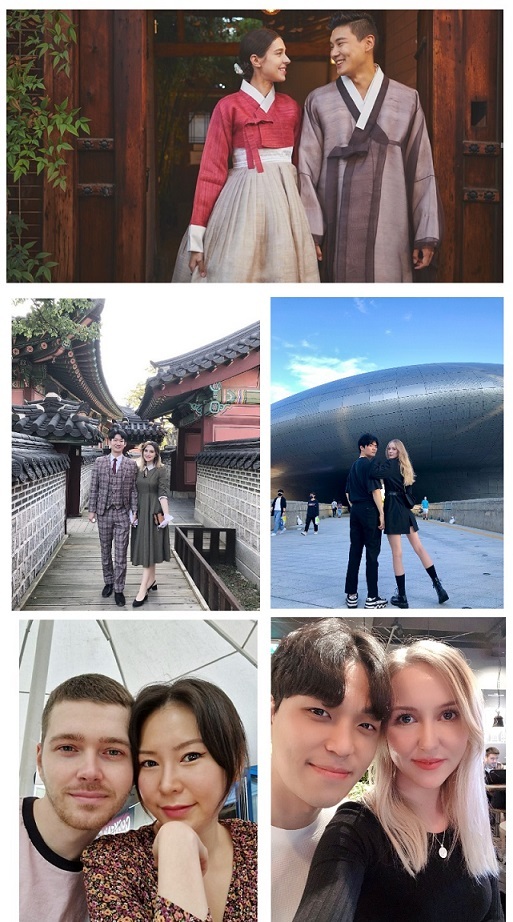
Visible couple items remain one of the most distinctive features of Korean dating. The Korea Herald reported that an Instagram search for the Korean hashtag "couplelook" returns more than 3.3 million posts of matching outfits, with workshops in Hongdae and Myeongdong producing custom couple rings on demand. Many pairs also coordinate phone cases, shoes, and necklaces, sometimes opting for subtle matching pieces and sometimes for fully identical fits.
Couple rings, distinct from wedding bands, are typically exchanged at the 100-day or one-year mark. Brands like Didier Dubot, J.Estina, and the indie workshops scattered around Bukchon dominate the market, while DIY ring-making classes have become a popular date in their own right.
K-Drama and K-Pop Couples Who Shaped the Aesthetic
Pop culture amplifies these traditions. The 2019 to 2020 tvN series Crash Landing on You turned Hyun Bin and Son Ye-jin into the country's most followed couple, and their off-screen marriage in March 2022 became a national event. Their on-screen anniversaries, gift exchanges, and matching gestures helped reshape modern expectations of Korean romance.
Other examples followed quickly. The fictional couple from Goblin (Gong Yoo and Kim Go-eun), the once-public idol pairing of HyunA and E'Dawn, and more recent Reality dating shows like Single's Inferno on Netflix have all influenced how Korean couples plan dates, photoshoots, and anniversary gifts.

Date Spots: From Namsan to Couple Hanbok
Anniversaries play out at recognizable Seoul locations. N Seoul Tower on Namsan is the most iconic, where couples attach engraved padlocks to the "Locks of Love" fences as a public symbol of their relationship. Bukchon Hanok Village, Cheonggyecheon Stream, and the Han River parks remain busy with hand-holding visitors each weekend, while couple cafes near Hongdae offer themed seating, paired desserts, and a photo booth corner.
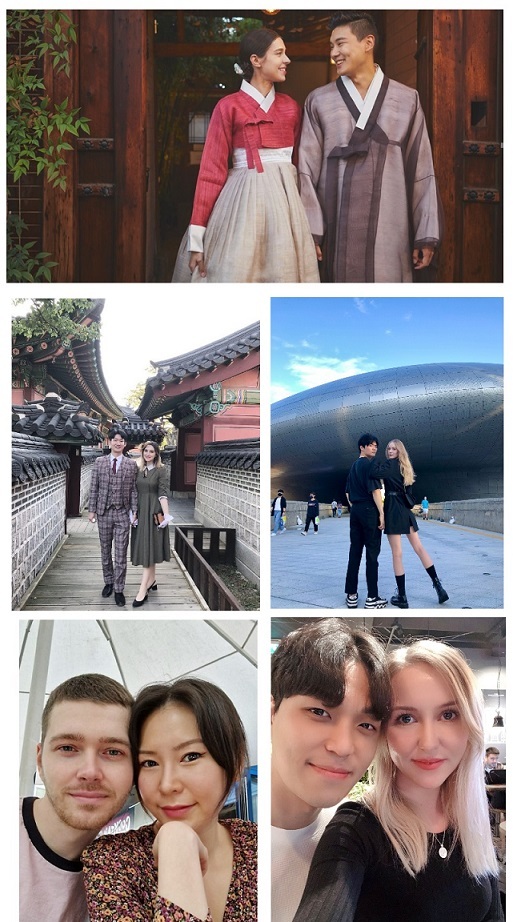
A signature Korean date experience is wearing couple hanbok at the four grand palaces, with Gyeongbokgung and Changdeokgung waiving the entry fee for hanbok-clad visitors. Rental shops in Insadong and Bukchon stock matching male and female sets, often in the same color palette so couples appear visually paired in photos.
2025 Gift Trends: Experiences Over Things
Recent Korean retail surveys show a clear pivot toward experience-based anniversary gifts. Pottery classes, plated dinner courses, perfume-blending workshops, and overnight stays at design hotels increasingly replace traditional couple rings and bags. Department stores like Shinsegae and Hyundai have responded with curated experience vouchers, while Naver Map and KakaoMap surface "date course" recommendations algorithmically tied to anniversary searches.
The Modern Shift: Non-Marriage but Still Dating
Even as Korea's marriage rate falls and the bihon (비혼) non-marriage and DINK (딘크) movements grow, the day-by-day dating culture remains strong. Statistics Korea data shows couples are dating longer before marrying, and many opt out of weddings altogether, but the rituals of baek-il, Pepero Day, and the 14th calendar still structure long-term partnerships. For Korea's younger generation, couple culture has been decoupled from the marriage timeline, leaving the milestones intact as celebrations in their own right.
Explore More of Korea with Daebak
Want to bring a little piece of Korea into your life? The Daebak Box is packed with the best Korean snacks, ramen, and cultural goodies delivered monthly to your door.


