


Table of Contents
Korean food has earned a global reputation for being unapologetically spicy. From the bubbling red broth of kimchi jjigae to the eye-watering heat of Samyang Buldak ramyeon, Korea's love affair with chili peppers shapes nearly every meal. Yet Korean spice is not heat for heat's sake. It is built on fermented depth, smoky sweetness, and a centuries-old culinary tradition that has now conquered the world.
Why Korean Food Is So Spicy: Gochugaru and Gochujang
Korean spice begins with two essential ingredients. Gochugaru, the sun-dried Korean red chili pepper flake, delivers a vibrant red color and a fruity, smoky heat that measures roughly 4,000 to 8,000 Scoville Heat Units. It is the backbone of kimchi, tteokbokki, and countless stews. Gochujang, the thick fermented red chili paste made from gochugaru, glutinous rice, fermented soybean powder, barley malt, and salt, adds a sweet, savory, umami-rich complexity unlike any other chili paste in the world.
Both ingredients trace back to the 1500s, when chili peppers traveled from the New World to Korea along ancient trade routes. UNESCO recognized Korea's traditional jang-making culture as Intangible Cultural Heritage of Humanity in 2024, cementing gochujang's place as one of the most culturally significant fermented foods on the planet.

The Major Korean Spicy Dishes You Need to Know
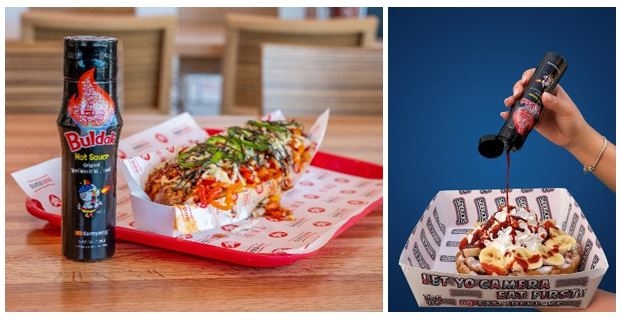
Buldak (fire chicken) is bite-sized chicken doused in a punishing sauce of gochugaru, gochujang, soy, garlic, and ginger. It became popular in the early 2000s in Seoul drinking neighborhoods and now anchors an entire Samyang ramyeon empire.
Tteokbokki is the chewy, sweet-and-spicy rice cake dish loved by Koreans of all ages. Soft garae-tteok simmer in a glossy gochujang-gochugaru broth with fish cakes and scallions.
Kimchi jjigae is Korea's ultimate comfort stew, made with aged sour kimchi, fatty pork, tofu, and gochugaru, simmered together until the broth turns deep red and tangy.
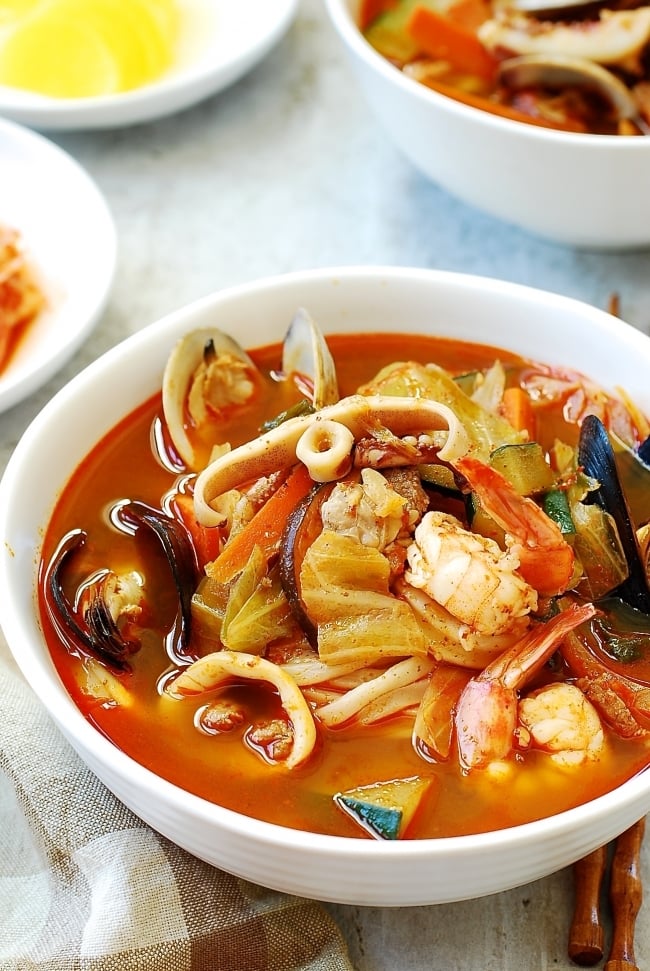
Jjamppong is a Korean-Chinese spicy seafood noodle soup loaded with squid, mussels, shrimp, clams, pork, and vegetables in a fiery red broth.
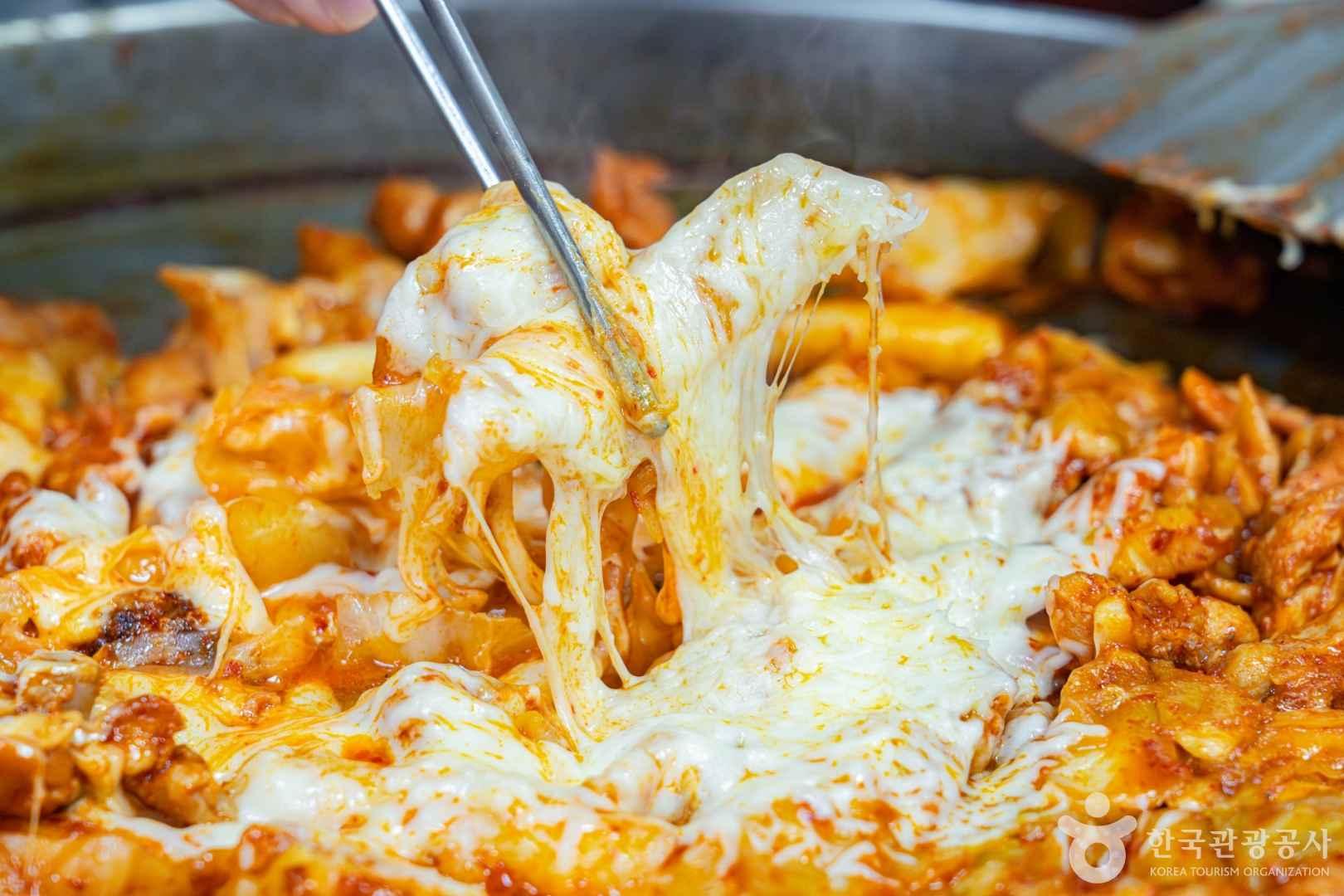
Dakgalbi is spicy stir-fried chicken from Chuncheon, marinated in a gochujang sauce and cooked on a hot iron plate with cabbage, sweet potato, and rice cakes.
Dakgalbi: Chuncheon's Iron-Plate Classic
Dakgalbi began in 1970 when a pork galbi restaurant in Chuncheon switched to marinated charcoal-grilled chicken during a pork shortage. As gas stoves replaced charcoal, the dish moved onto a hot iron plate, picked up cabbage, sweet potato, onion, and rice cakes, and became the cheolpan dakgalbi we know today. The ritual is simple: stir-fry the chicken until the gochujang sauce caramelizes, wrap a piece in lettuce with garlic, then finish the meal by frying rice with the leftover sauce. Chuncheon's Myeongdong Dakgalbi Street is the spiritual home of the dish, with restaurants like Woomi Dakgalbi serving it since 1970.
Korean Spice Tolerance and Food Culture
Spice is woven into the Korean psyche. Koreans grow up eating gochugaru-laced kimchi at every meal, so what feels punishing to a first-time visitor often reads as cozy comfort food to a local. There is even a popular saying that spicy food helps relieve stress, and Korean office workers genuinely seek out the spiciest options after a hard day. Spicy food is also deeply social, shared over soju at pojangmacha tents and after-work hoesik dinners.
Spicy ramyeon, surprisingly, was a presidential idea. In 1966 former President Park Chung-hee suggested adding red chili powder to Samyang's mild chicken-broth noodles, and the entire spicy ramyeon category was born.
The Korean Spice Ranking: From Mild to Nuclear
Not all Korean spice is created equal. Use this rough ladder to find your level:
- Mild (under 1,000 SHU): sundubu jjigae mild version, kimchi mandu, basic kimchi pajeon
- Medium (1,000 to 3,000 SHU): classic tteokbokki, kimchi jjigae, dakgalbi, jeyuk bokkeum
- Hot (3,000 to 6,000 SHU): original Samyang Buldak Bokkeummyeon, yukgaejang, jjamppong
- Extreme (6,000 to 10,000+ SHU): 2x Spicy Buldak, Haek Buldak Extra Spicy
- Nuclear (10,000+ SHU): 3x Spicy Buldak, mala buldak variants, cheongyang chili-loaded buldak chicken
Samyang Buldak Ramyeon and the Global Fire Noodle Challenge
Samyang launched Buldak Bokkeummyeon in 2012, expecting a small niche product for spice-lovers. Then in 2014, a British YouTube channel called Korean Englishman filmed foreigners crying through a bowl, the Fire Noodle Challenge went viral, and Buldak became a global obsession overnight. About 1 billion units now sell annually across 100 countries. In 2024 Samyang Foods' operating profit doubled to 344.2 billion won and the company surpassed Nongshim in profit for the first time. Buldak has since partnered with Coachella for two consecutive years, launched hot sauces and frozen meals, and become a favorite snack of K-pop idols including BLACKPINK and BTS members.
Where to Eat the Spiciest Korean Food in Seoul
Sindang-dong Tteokbokki Town in Jung-gu is the birthplace of jeukseok tteokbokki, the cook-at-your-table style. Maboklim Tteokbokki, founded by Grandma Ma Bok-rim in 1953, is the original. Yongi Nara in Mapo is famous for its punishing buldak. Honbap Dakbal alleys in Sinchon and Dongdaemun serve mouth-numbing spicy chicken feet. For jjamppong, head to Bukchang-dong Myeondong Gyoja or any Korean-Chinese restaurant in Yeonnam-dong.
How to Handle Korean Spice as a Beginner
Korean spice builds. The first bite often feels manageable, but the heat compounds with each spoonful. A few survival tips for beginners:
- Order a side of plain rice. Carbs absorb capsaicin far better than water.
- Drink banana milk, makgeolli, or yogurt. Dairy and fermented drinks soothe the burn; ice water makes it worse.
- Wrap spicy meats in lettuce or perilla leaves with a dab of ssamjang. The greens dilute heat.
- Start with kimchi jjigae or dakgalbi, both manageable for newcomers, before working up to buldak.
- When ordering Buldak ramyeon, ask for the 1x Original first. Skip 2x and 3x until you have built tolerance.
Korean spicy food is less about endurance and more about layering: smoky chili, sweet fermented depth, garlic, ginger, and the umami of soy or anchovy broth. Once you learn to taste through the heat, every dish opens up.
Explore Korean Snacks with Daebak
Love Korean food? Get authentic Korean snacks and ramen delivered straight to your door with the SnackFever Box by Daebak.


