


Table of Contents
There is something almost paradoxical about samgyetang: a steaming hot bowl of soup served on the most brutally hot days of the Korean summer. Yet for generations, Koreans have gathered around bowls of this rich, milky ginseng chicken soup precisely because of the heat, not despite it. Samgyetang is simultaneously a beloved comfort food, a traditional health tonic, and one of the most culturally meaningful dishes in Korean cuisine.
What Is Samgyetang?
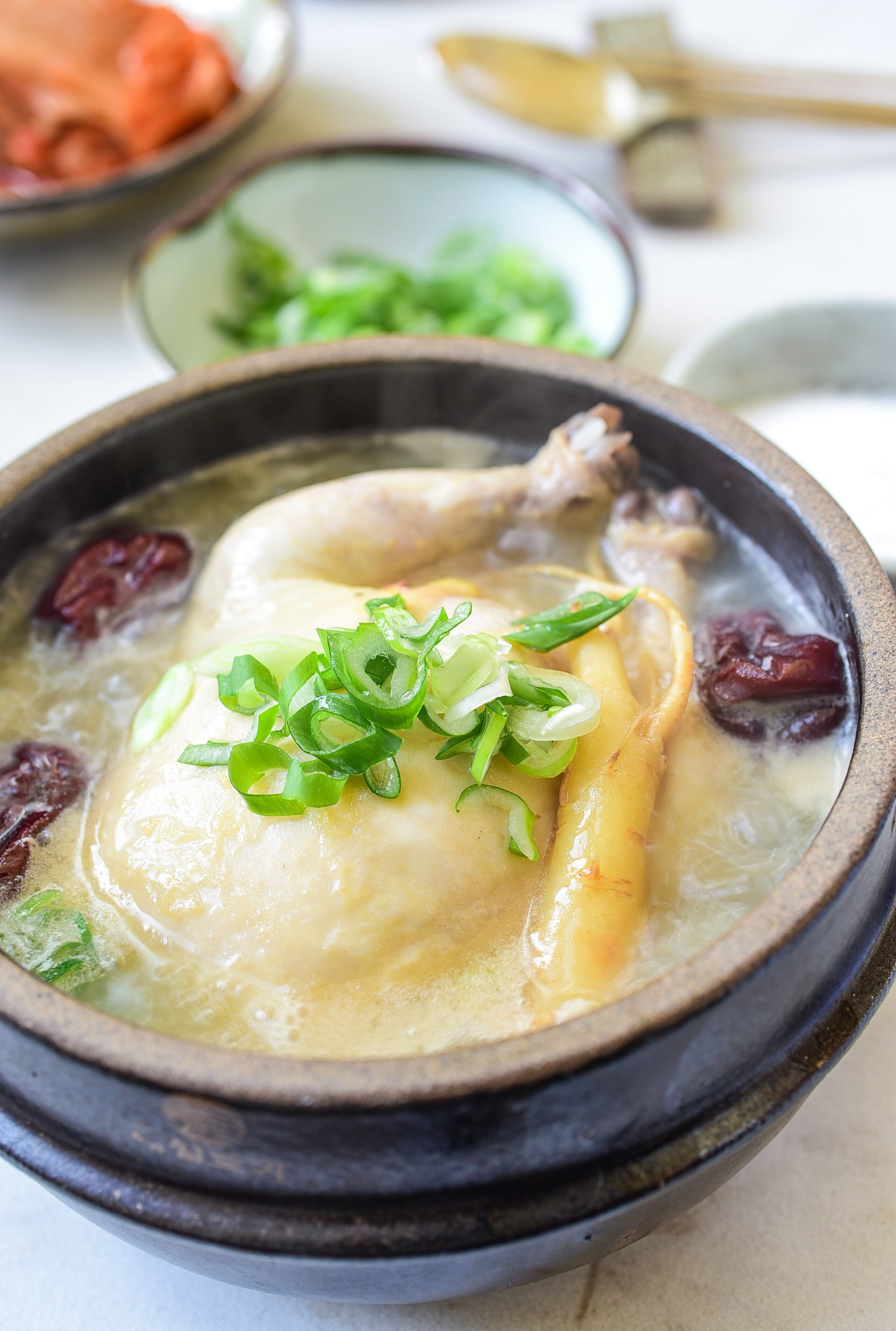
Samgyetang (삼계탕) is a Korean soup made with a whole young chicken (traditionally a small poussin or spring chicken) stuffed with soaked glutinous rice, a whole piece of ginseng root, several cloves of garlic, and dried jujubes (red dates). The stuffed chicken is placed in a pot, covered with water, and simmered for a long time until the meat is fall-off-the-bone tender and the broth has turned a rich, milky white. The dish is seasoned simply: each diner seasons their own bowl at the table with salt and white pepper to taste. The name reflects the ingredients: sam (삼) means ginseng, gye (계) means chicken, and tang (탕) means soup. Together they describe exactly what is in the bowl. The dish is both a meal and, by Korean tradition, a restorative health food.
The Boknal Tradition: Hot Soup on the Hottest Days
The most celebrated time to eat samgyetang is during the three boknal days (복날): chobok, jungbok, and malbok. These are specific days on the traditional lunar calendar that fall during the hottest weeks of the Korean summer, typically in July and August. On these days, samgyetang restaurants across Korea have lines stretching out the door, and families gather to eat together as a matter of tradition. The reasoning behind eating hot soup in the hottest weather comes from the ancient Korean medical philosophy of yi yeol chi yeol, or fighting heat with heat. According to this principle, the body loses vital energy (qi) through sweating in hot weather, and eating nourishing, warming food restores what is lost. Ginseng, in particular, is considered one of the most potent tonics in East Asian medicine.
The Key Ingredients and Their Purpose
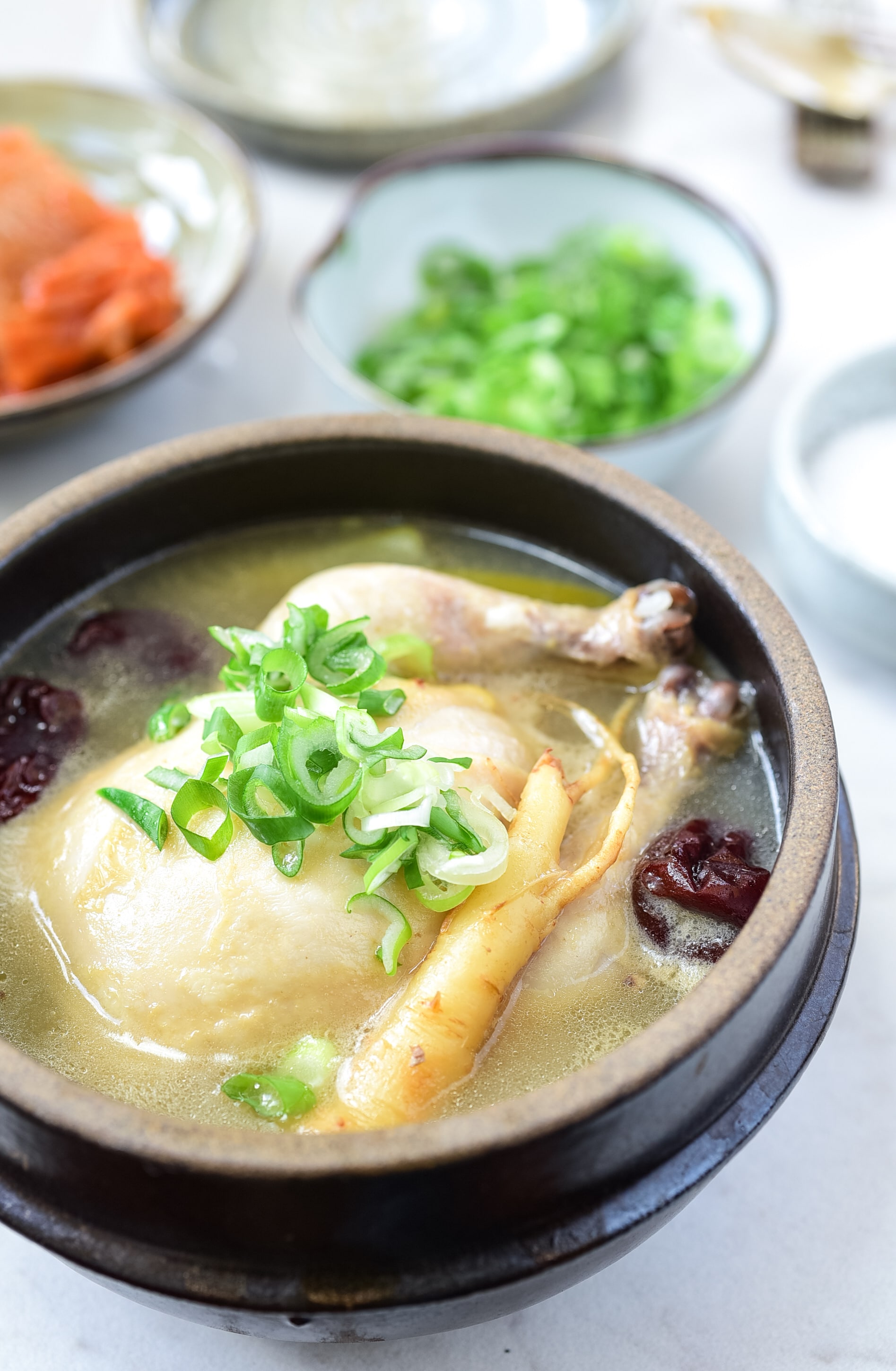
Every ingredient in samgyetang serves both a culinary and a medicinal function. The young chicken provides the protein base and creates a naturally collagen-rich broth as it cooks. The glutinous rice stuffed inside the cavity absorbs the chicken juices and ginseng flavor, swelling into a tender, porridge-like filling that is eaten alongside the meat. Ginseng root (insam, 인삼) is the most important and prestigious ingredient: it infuses the broth with a slightly bitter, earthy warmth and is believed to strengthen the body's vital energy. Garlic adds depth and antibacterial properties, while jujubes (daechu, 대추) contribute a gentle sweetness that balances the bitterness of the ginseng. Some recipes also include chestnuts, goji berries, or strips of astragalus root for additional tonic effect.
How to Make Samgyetang at Home
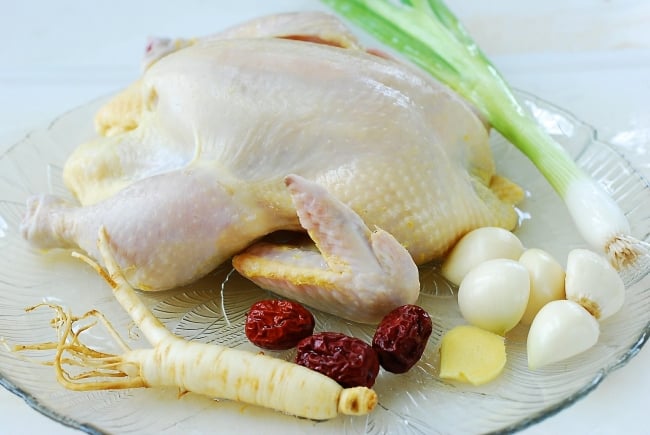
Making samgyetang at home takes time but is straightforward. Begin by rinsing a small whole chicken and patting it dry. Soak glutinous rice in cold water for about an hour, then drain. Stuff the cavity loosely with the soaked rice, a few garlic cloves, a piece of fresh or dried ginseng root, and two or three jujubes. Truss the legs together with kitchen twine to keep the stuffing inside. Place the chicken in a pot just large enough to hold it, add enough water to cover (about 6 to 8 cups), and bring to a boil. Skim any foam that rises, then reduce the heat to a gentle simmer. Cook for 1 to 1.5 hours, until the broth is milky white and the meat is completely tender. Serve the whole chicken in a deep bowl, pour the broth over it, and garnish with sliced green onion and sesame seeds.
Samgyetang Variations
While the classic version remains the most beloved, samgyetang has inspired a number of creative variations. Heukimja samgyetang adds black sesame seeds for a nuttier, more visually dramatic dish. Jeonbok samgyetang stuffs the chicken with fresh abalone alongside the rice, elevating it to a luxury-tier dish served at high-end Korean restaurants. Ogolgye samgyetang uses a silkie chicken, a breed with black skin and bones that is considered even more medicinally potent than a regular chicken. For those who prefer a shorter cooking time, pressure cooker samgyetang achieves similar results in about 30 minutes. Vegetarian versions replace the chicken entirely with mushrooms, tofu, and a rich vegetable broth while keeping the ginseng and jujube for their tonic properties.
Explore Korean Snacks with Daebak
Love Korean food? Get authentic Korean snacks and ramen delivered straight to your door with the SnackFever Box by Daebak.


