Hyunwoo Cho

Hyunwoo Cho

With over 10 years of experience in the Hallyu industry, Hyunwoo has dedicated his career to connecting Korean culture with the world. As the founder of Daebak, he works closely with Korean brands and stays ahead of the latest trends to deliver an authentic taste of Korea to fans globally.

Colorful bibimbap rice bowl with mixed vegetables, gochujang, and fried egg

Bibimbap: Your Ultimate Guide to Korea's Favorite Rice Bowl

Daebak

Table of Contents

Ask anyone to name the most beautiful dish in Korean cuisine, and bibimbap (비빔밥) will almost certainly make the list. A vibrant bowl of rice topped with seasoned vegetables, a fried egg, and spicy gochujang sauce, bibimbap is loved across Korea and around the world. Its name literally means "mixed rice" — and the mixing is half the fun.

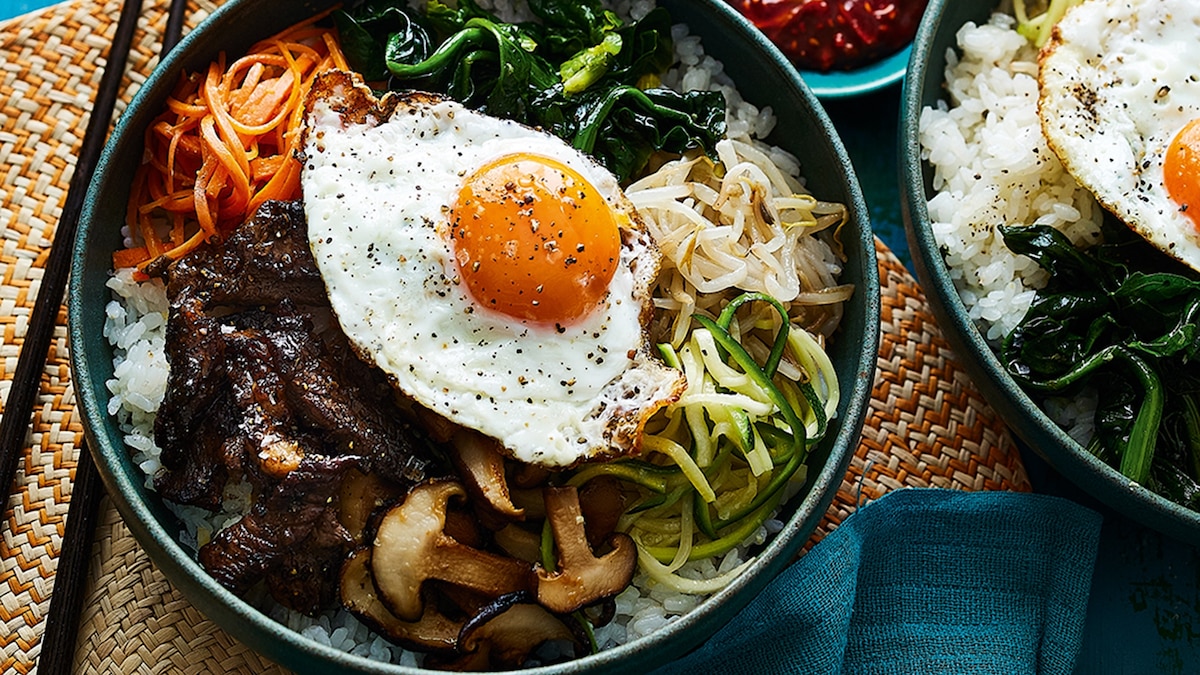
Colorful bibimbap bowl with vegetables and egg
A classic bibimbap bowl featuring colorful vegetables, a sunny-side-up egg, and gochujang sauce. Source: National Geographic

What Is Bibimbap?

Bibimbap (비빔밥) is a Korean rice dish served in a bowl topped with an assortment of namul (seasoned vegetables), gochujang (Korean chili paste), a raw or fried egg, and often sliced beef bulgogi. Before eating, everything is mixed together — creating a harmonious blend of textures and flavors in every bite. The dish is a masterclass in balance: mild rice soaks up spicy gochujang; crunchy vegetables contrast with the soft egg; earthy mushrooms complement bright spinach.

The History of Bibimbap

Bibimbap has been enjoyed in Korea for centuries. Some historians trace its origins to ancestral rites, where leftover food offerings were mixed together after ceremonies. Others point to a practical New Year's Eve tradition of mixing together all remaining side dishes before the new year. The dish also has royal roots: records from the Joseon Dynasty describe a mixed rice dish served to the king.

Regional Varieties

Jeonju Bibimbap (전주 비빔밥)

Arguably the most famous variety, Jeonju bibimbap uses kongnamul (bean sprout broth) to cook the rice and features rich toppings including yukhoe (raw seasoned beef). The city of Jeonju is considered the bibimbap capital of Korea and hosts an annual Bibimbap Festival.

Dolsot Bibimbap (돌솔 비빔밥)

Served in a sizzling stone bowl (dolsot), this version creates a crispy layer of rice at the bottom called nurungji. The bowl stays scorching hot, continuing to cook the ingredients as you eat. The contrast between crispy bottom rice and soft toppings is uniquely satisfying.

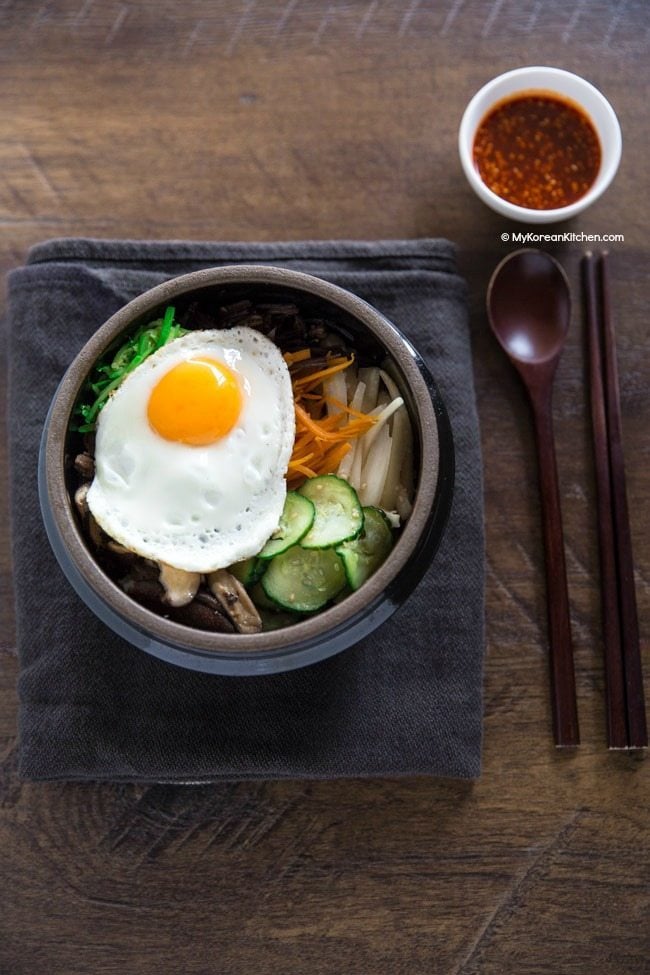
Dolsot bibimbap in a sizzling Korean stone bowl
Dolsot bibimbap — served in a sizzling hot stone bowl that crisps the rice at the bottom. Source: My Korean Kitchen

Essential Bibimbap Ingredients

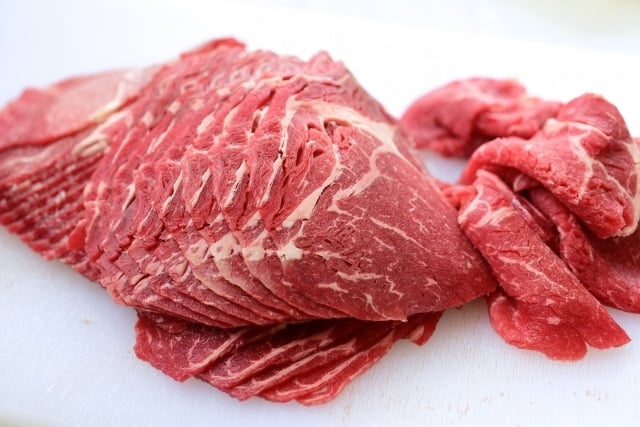
Bibimbap ingredients laid out before assembly
The components of bibimbap, laid out before mixing. Source: National Geographic

A classic bibimbap bowl typically includes steamed white rice, sigeumchi namul (spinach), kongnamul (bean sprouts), gosari namul (fernbrake), hobak namul (zucchini), seasoned shiitake mushrooms, julienned carrots, beef bulgogi or ground beef, a fried or raw egg, gochujang sauce, and a drizzle of sesame oil.

Bibimbap Sauce (Gochujang Sauce)

The sauce is the soul of bibimbap. A classic version combines gochujang (Korean red chili paste), sesame oil, sugar, minced garlic, water, and a splash of rice vinegar. Adjust the gochujang to your spice preference — some prefer a milder version with just a small spoonful, while others go heavy for maximum heat. The sauce should coat every grain of rice when mixed.

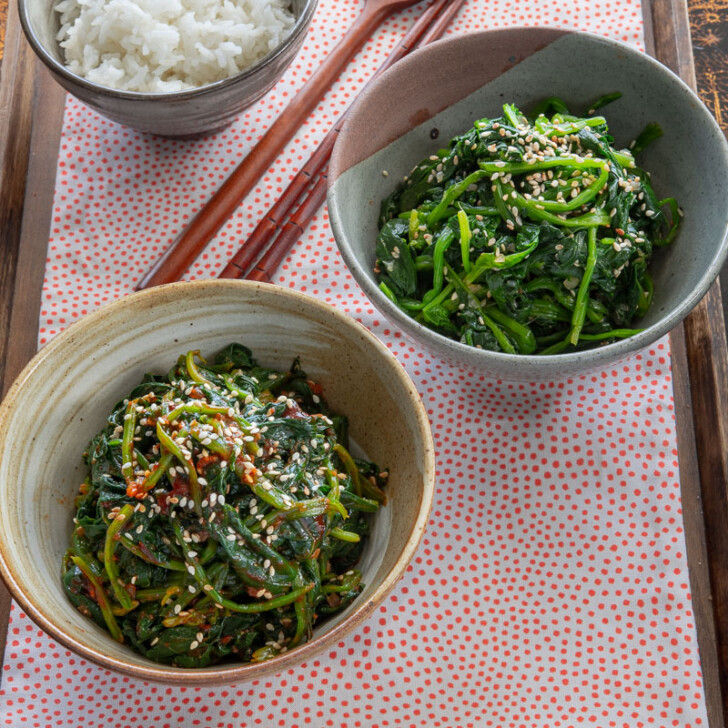
Korean spinach namul sigeumchi banchan side dish
Sigeumchi namul — seasoned spinach — one of the most essential bibimbap toppings. Source: Beyond Kimchee

How to Eat Bibimbap

  1. Add your desired amount of gochujang sauce to the bowl
  2. Drizzle sesame oil over the top
  3. Use your spoon to mix everything together vigorously until the rice is fully coated
  4. Enjoy with a side of doenjang soup and kimchi

If you're having dolsot bibimbap, let the bottom rice crisp up for a minute before mixing — the golden nurungji layer is a prized part of the experience.

Make Bibimbap at Home

Bibimbap is ideal for home cooks because it's endlessly customizable. Use whatever vegetables you have, swap the meat for tofu for a vegetarian version, or skip the egg for vegan bibimbap. The key is having good gochujang — the sauce ties everything together.

Korean bibimbap mixed rice bowl being prepared
Bibimbap comes together beautifully when all the components are mixed with gochujang sauce. Source: Korean Bapsang

Explore More of Korea with Daebak

Love Korean food culture? Bring it home with Daebak's lineup of curated Korean boxes:

  • Daebak Box – Monthly Korean snacks, ramen, and food items delivered to your door
  • SnackFever – Korea's most beloved snack subscription, now part of the Daebak family
  • Daebak K-Beauty Box – Premium Korean skincare and beauty products, handpicked from Seoul

Whether you're a K-food fanatic, a K-beauty enthusiast, or just starting your Korean culture journey — Daebak has something for you.

ブログに戻る