


Table of Contents
Here is the honest read from someone who has spent over a decade watching Korean pop culture package itself for global export: the single fastest-growing 발렌타인 데이 (Valentine's Day) viewing segment in the Netflix K-drama audience is not couples binge-watching romance. It is friend groups (mostly single, mostly women, mostly aged 18 to 34) organizing a 우정 (friendship) K-drama night as a deliberate counter-programming move against the pink-and-red couple industry. The Korean domestic playbook already flagged this years ago. 4월 14일 (April 14) is 블랙 데이 (Black Day), the informal holiday when single Koreans who missed both Valentine's Day and White Day gather to eat 자장면 (black bean noodles) in solidarity, and the drama-binge tradition attached to it is now a K-drama industry norm. What Netflix data (and any Korean broadcaster with a decent audience-analytics team) shows is that 우정-centered K-dramas travel better as group viewing than romance ones do. Shared trauma bonds a friend group far more than solo swooning. That is the appeal point behind this list, and it is why the five titles below have quietly become the 팬미팅-tier (fanmeeting-tier) rewatch standards for Valentine's Day friend viewing.

Why 우정 K-dramas beat Valentine's romance for group viewing
The industry mechanic is worth understanding before the picks. Romance K-dramas are engineered around the two-lead 케미 (chemistry) axis, which means the viewing experience is best solo or as a couple. Add three friends on a couch and the romantic-tension pacing collapses. Someone always giggles at the wrong moment. Someone else fast-forwards through the second-lead syndrome. The show fights the room. 우정 dramas do the opposite. They are ensemble-first, they trade on 정 (jeong, that specifically Korean word for the deep affection built through shared time rather than declaration), and their emotional beats hit hardest when a group in the living room recognizes their own dynamic on screen. A Reply 1988 rooftop scene lands differently when four friends are watching four friends. Netflix Korea's non-romantic top-20 K-drama chart has consistently sat at 50-plus percent friendship-centric titles across 2024 and 2025, and inside the industry that ratio is not read as an accident. It is read as the correct product for a market segment (single women, group viewing, seasonal peak) that the romance category cannot serve without friction.
Reply 1988 (응답하라 1988): the friendship canon, non-negotiable
If you only run one 우정 drama at your Valentine's night, this is the one. tvN's 2015 to 2016 Shin Won-ho and Lee Woo-jung production followed five childhood friends in 1988 쌍문동 (Ssangmun-dong), Seoul, across families that treated each other's kids as their own. The show is technically a coming-of-age piece with a romance mystery baked in (who does Deok-sun end up with, the will-they-won't-they that ran the entire final third), but the reason it exports so cleanly to a Valentine's friend night is that the romance is deliberately the background layer. The foreground is the 골목 (alley) friendship. Ssangmun-dong's five families sharing 반찬 (side dishes) over the fence, the parents' generational trauma from the 광주 (Gwangju) 1980 backdrop, the kids' shared homework and shared crushes and shared 라면 (ramyeon) in each other's kitchens: that is what people remember. HYBE has never optioned a K-drama the way Reply 1988 keeps getting re-optioned in fan discourse because the show is the closest thing K-content has to a mass-audience friendship epic. For a friend group on Feb. 14 with wine and 치맥 (chi-maek, chicken and beer), episodes 1, 6, and 18 are the emotional entry points. Do not attempt the full 20-episode run in one night. You will cry through the last three and no one will be functional in the morning.
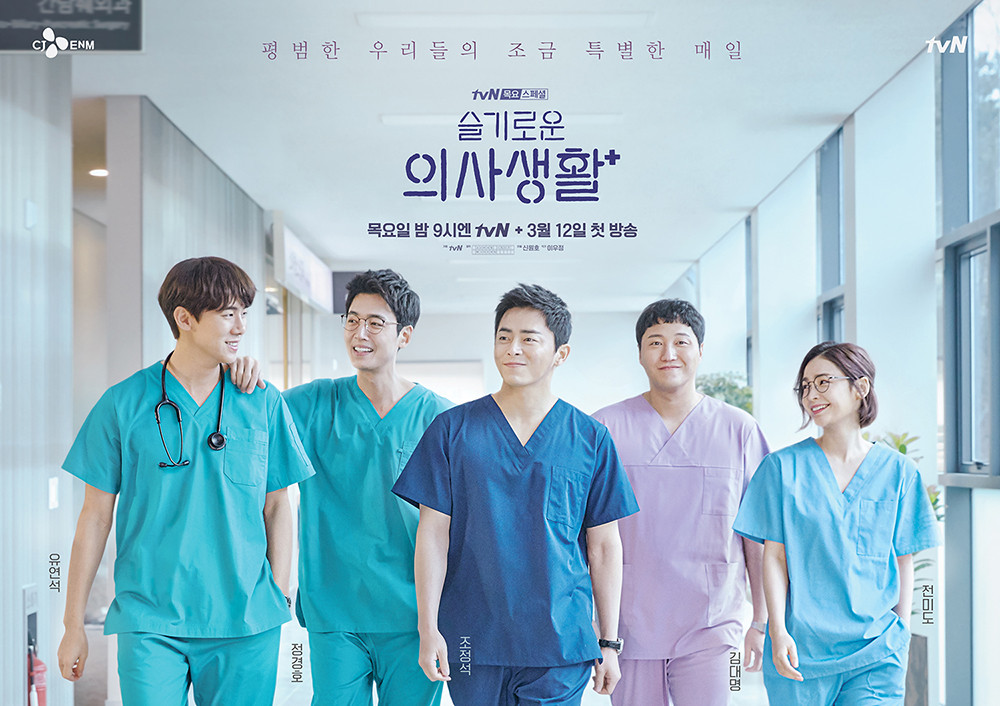
Hospital Playlist (슬기로운 의사생활): 20 years of 정, five doctors, zero forced romance
Shin Won-ho and Lee Woo-jung followed up Reply 1988 with 슬기로운 의사생활 (2020 to 2021, two seasons on tvN and Netflix), and this is the calmest, most re-watchable friendship drama in the current Korean catalog. Five Yulje Medical Center doctors have been best friends since medical school in 1999, and the show refuses the standard K-drama impulse to force couples out of the ensemble. Yes, some pairings develop across the two seasons, but the pacing is deliberately unhurried, and the emotional core stays fixed on the five-friend dynamic. The band practice scenes (they play covers of 90s and 2000s Korean ballads at a rented studio between shifts) work because five specific people over 20 years earned the right to be silly together. This is the appeal point that Western viewers sometimes miss: the show is essentially a 정 (jeong) simulation. The Yulje five do not have to say they love each other. They show up at each other's operating room doors with 김밥 (kimbap). They cover each other's on-call shifts without being asked. They eat 회식 (post-shift dinner) three times a week and never run out of things to say. For a friend night, Season 1 Episode 1 (introducing the five) and Season 2 Episode 6 (Ik-jun on emotional maintenance) are the standard opener and closer.
Twenty-Five Twenty-One (스물다섯 스물하나): the friendship that outlives the romance
Kwon Do-eun's 2022 tvN show is often filed under romance because Kim Tae-ri (Na Hee-do) and Nam Joo-hyuk (Baek Yi-jin) carry the top-line CP arc, and yes, that romance is beautifully done. But the reason this drama belongs on a friendship-night list is that the friendship core, specifically Na Hee-do and Ko Yu-rim (Bona) as fencing rivals turned confidantes, is what the last episode makes canonical. The 1998 to 2001 late-90s IMF crisis backdrop sets up a shared-hardship generational bond among the five leads (Hee-do, Yi-jin, Yu-rim, Ji Seung-wan played by Lee Joo-myung, Moon Ji-woong played by Choi Hyun-wook). The show quietly builds the argument that romantic love is one relationship type among many, and that the friendships you make between 17 and 22 will outlast most of the romances you have in the same window. The last two episodes are polarizing for CP fans but read differently when you are watching with your own high-school best friend. If you are hosting a Valentine's night and the group leans nostalgic, this is the pick. Episodes 1, 4, and 16 are the emotional anchors. The 인천 (Incheon) fencing arc episodes hit hardest with a group that has any shared-competition history from school days.

When Life Gives You Tangerines (폭싹 속았수다): community as family, mother-daughter as best friends
Netflix's 2025 hit from Lim Sang-choon and Kim Won-seok (the writer-director duo behind Fight My Way and Signal respectively) is the most recent addition to this canon, and it is arguably the most emotionally punishing. IU (Ae-sun) and Park Bo-gum (Gwan-sik) play a couple across four decades of 제주 (Jeju) island life, but the friendship layer that makes this a group-viewing show is the ensemble around them: the market women, the neighbors, the mother-daughter bond between Ae-sun and her mother Gwang-rye, and later between Ae-sun and her own daughter Geum-myeong (also played by IU in the second timeline). The 제주 사투리 (Jeju dialect) title 폭싹 속았수다 literally translates as "you have suffered greatly," a Jeju-specific greeting of gratitude and empathy that is functionally a 정-word for community care. The reason this show goes viral on a friend night rather than a date night is that its most-clipped scenes are almost all women-to-women and mothers-to-daughters, not romantic. Ae-sun and Gwang-rye's storyline in episodes 1 through 4 is arguably the most powerful mother-daughter friendship arc in recent K-drama history. Bring tissues. Bring more than you think you need. This is the show that turns a friend Valentine's night into a shared-cry event, which is exactly why Korean viewers keep recommending it as the anti-romantic Valentine's pick.

My Mister (나의 아저씨): cross-generational bond, absolutely not romance
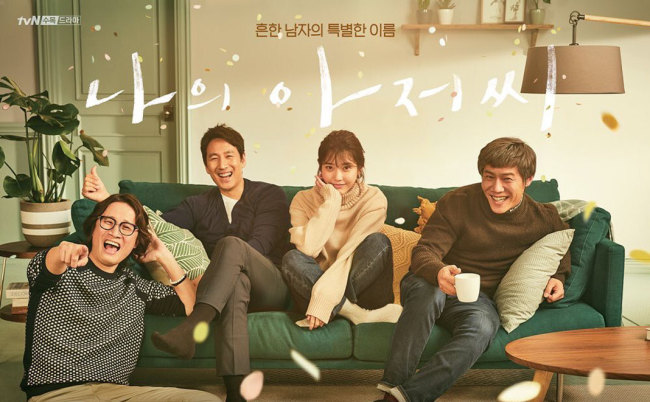
Kim Won-seok's 2018 tvN drama with Lee Sun-kyun and IU is the pick that international viewers most consistently misread going in. On paper, a 45-year-old middle manager and a 21-year-old contract worker developing a close relationship sounds like the setup for a controversial love arc. What actually happens across 16 episodes is one of the most restrained, most humanistic cross-generational friendship arcs Korean television has produced. Park Dong-hoon (Lee Sun-kyun) sees Lee Ji-an (IU) as a person to be quietly protected, not romanced. Ji-an sees Dong-hoon as the first adult who did not use her for anything. The show's core relationship is a 정-based platonic bond built on shared endurance of workplace and family cruelty, and the way it lands with viewers is closer to found-family than romance. This is a heavier pick than the four above, so it belongs at a friend night where the group is willing to sit with something serious. My Mister is also one of the few K-dramas that industry insiders regularly cite when arguing that Korean drama can hold its own against prestige Western television at Sopranos or Fleabag levels. The soundtrack (Sondia's "어른," meaning "adult") is the most-searched OST on Melon in the week after any Feb. 14 that this show gets rewatched. That is not marketing. That is a decade-long viewer pattern.
The 블랙 데이 factor: why Korea already invented the anti-Valentine's viewing tradition
Foreign audiences often assume Valentine's Day plays in Korea the way it plays in the US. It does not. Korea runs a three-part holiday sequence that is much more industry-orchestrated. Feb. 14, Valentine's Day, is when women give men chocolate. March 14, White Day, is when men give women candy. April 14, 블랙 데이 (Black Day), is when everyone who was single through both preceding holidays gathers with other single friends to eat 자장면 (jjajangmyeon, black bean noodles) and, increasingly since around 2020, to binge non-romantic K-dramas together. The 블랙 데이 tradition started in the late 1990s as a mildly ironic cultural gesture and has since become a real single-market segment that Korean food chains, delivery apps, and streaming platforms actively program around. Netflix Korea's April 14 push is consistently friendship-centric titles. Coupang Eats runs jjajangmyeon promos. Baemin surfaces 회식 (group meal) menus. The industry insight is that Korea already built the counter-programming infrastructure for anti-Valentine's viewing years before the West started talking about "Galentine's" as a category. If you are hosting a Feb. 14 friend night, you are not doing something Korea invented. You are borrowing the 블랙 데이 template two months early, and the drama picks above are the ones that already work inside it.
Group-viewing math: shared trauma, shared 정, and why romance fights the room
One more industry note before the run-of-show suggestions. K-content production teams talk about "single-screen versus group-screen" content design as a real distinction, and the split maps almost exactly to the romance versus friendship divide inside K-drama. Romance dramas are optimized for phone-first, single-screen, private-headphones viewing, which is why Netflix's romance K-drama thumbnails almost always frame two leads in intimate close-up. Friendship dramas are optimized for TV-first, group-screen, shared-couch viewing, which is why the same platform's friendship titles use ensemble wide shots and warmer color grading. When you are picking a Feb. 14 friend night program, you are not picking based on plot alone. You are picking based on which type of screen dynamic your group actually is. Four friends on a couch will always vibe with an ensemble show that gives every viewer a character to identify with. That is the mechanic. The five picks above (Reply 1988, Hospital Playlist, Twenty-Five Twenty-One, When Life Gives You Tangerines, My Mister) all sit clearly on the group-screen side of that split, which is why they keep showing up on every credible Korean-industry list of anti-Valentine's viewing recommendations.
How to run the night: order, food, and the one thing not to do
Practical Hallyu-insider advice for a Valentine's friend viewing night. Pick two episodes across two shows rather than a full binge of one. The correct opening pair is Reply 1988 Episode 1 (tone-set, laughter, immediate group buy-in) followed by Hospital Playlist Season 1 Episode 1 (calmer, funnier, keeps the group in a good mood). If the night is running longer and the group wants to go deeper, close with Twenty-Five Twenty-One Episode 16 or When Life Gives You Tangerines Episode 4. Do not start with My Mister. It will destroy the room and you will not recover pacing. On food, the correct Feb. 14 friend-night order is 치맥 (chi-maek, Korean fried chicken with beer) plus 떡볶이 (tteokbokki) plus 김밥 (kimbap) for the middle, and if you want to nod to the 블랙 데이 tradition two months early, order 자장면 (jjajangmyeon) for delivery as the "we are all still single together and that is fine" course. The one thing not to do is put on a romance drama out of habit. The whole point of the anti-Valentine's friend night is to run counter to the pink-and-red couple industry for one evening. Save the romance rewatch for solo binge time, when the pacing works with the format.
The Daebak read: friendship is the underrated K-drama superpower
Here is the closing industry take. K-drama's romance category gets the international marketing spend, the two-lead press tours, the CP fan-account traffic, and most of the Twitter discourse. But the friendship category is what has quietly built the deepest, most-rewatchable K-drama catalog of the last decade. Reply 1988 is arguably the most fan-cited K-drama in Korean domestic culture. Hospital Playlist ran two seasons at prime-time tvN ratings without ever leaning on a will-they-won't-they hook. Twenty-Five Twenty-One's friendship arc is what fans keep quoting years after the CP debate died down. When Life Gives You Tangerines is the 2025 Netflix hit whose most-viewed clips are family and community, not couple. My Mister has aged into one of the most respected K-dramas of the modern era on the strength of a platonic bond. The pattern is consistent, and if you are running a Valentine's Day friend night this year, the pattern gives you a five-show shortlist that will land harder in a room of friends than any romance drama could. 우정 is the appeal point. 정 is the mechanic. 발렌타인 데이 is just the calendar excuse.
Bring the K-Drama Friend-Night Feeling Home with Daebak
If this friendship-first read on K-drama got you thinking about your next Valentine's or 블랙 데이 group viewing, the Daebak Box is your monthly deep-dive into Korean pop culture, snacks, and lifestyle picks that make a friend-night landing zone feel authentically Korean. Subscribe, and let each month arrive like a shared bowl of 자장면 at your door: enough to share, and just for the crew.


