Hyunwoo Cho

Hyunwoo Cho

With over 10 years of experience in the Hallyu industry, Hyunwoo has dedicated his career to connecting Korean culture with the world. As the founder of Daebak, he works closely with Korean brands and stays ahead of the latest trends to deliver an authentic taste of Korea to fans globally.

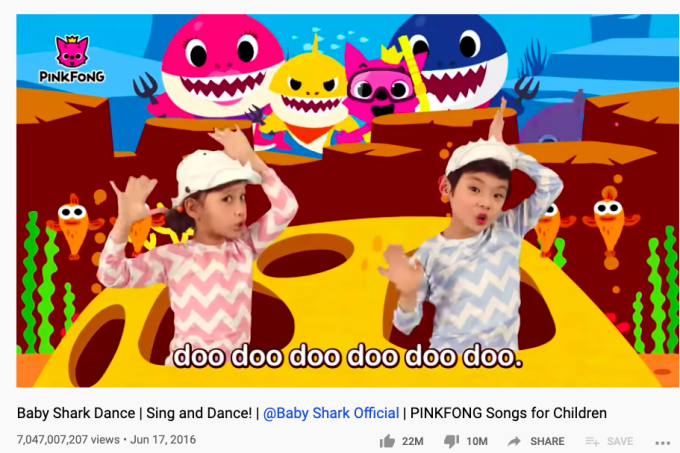
Pinkfong Baby Shark Dance video becomes YouTube's most-watched video, showcasing the iconic Korean animated character Baby Shark

Korean Animation Industry: Pororo, Larva, Pinkfong, and Korea's Global Cartoon Empire

Hyunwoo Cho

Table of Contents

Korean animation is far bigger than most viewers realize. For more than four decades, Korean studios have quietly drawn and inked the world's most famous cartoons, from The Simpsons to SpongeBob SquarePants and Avatar: The Last Airbender. At the same time, homegrown hits like Pororo the Little Penguin, Larva, Tayo the Little Bus, and Pinkfong's Baby Shark have built a global character business worth trillions of won, with Solo Leveling becoming the first Korean anime to sweep the Crunchyroll Anime Awards in 2025.

Pinkfong Baby Shark Dance video becomes YouTube's most-watched video, showcasing the iconic Korean animated character Baby Shark
Pinkfong's Baby Shark Dance, created by Seoul's SmartStudy, became YouTube's most-watched video and a defining face of Korean animation. | Source: KED Global

Korea's Hidden Role as a Global Animation Hub

Since the early 1980s, American and Japanese studios have outsourced labor-intensive animation work to South Korea. Veteran outfits like Rough Draft Korea, Sunwoo Entertainment, DR Movie, AKOM, and Mir Entertainment have produced finished frames for shows such as The Simpsons, Family Guy, SpongeBob SquarePants, Avatar: The Last Airbender, and Rick and Morty. According to The Korea Herald, Korean animators have long been praised for being "far superior when it comes to technical skill," turning Seoul into the unseen factory behind much of the cartoons that defined Western childhoods.

Pororo the Little Penguin: Korea's Mickey Mouse

The modern era of Korean character animation began in 2003 with the debut of Pororo the Little Penguin, produced by Iconix Entertainment with broadcaster EBS and the Korean Ministry of Science and ICT. Pororo, a small blue penguin in pilot goggles, became so beloved that Korean parents nicknamed him "the children's president." The franchise has been broadcast in more than 130 countries, generated some 1,500 licensed product lines, and led to a chain of Pororo Park indoor theme parks across Korea. Korea Times reported the total economic value of the IP at well over 5 trillion won by the mid-2010s.

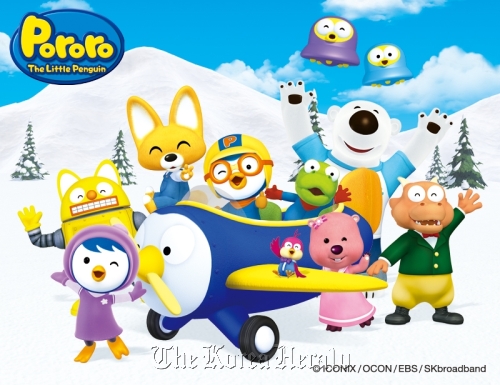
Pororo the Little Penguin and friends including Crong the green dinosaur in a still from the Iconix Korean kids animation series
Pororo and his friends from the Iconix and Ocon series have been sold to 130 plus countries since 2003. | Source: The Korea Herald

Larva, Tayo, and the EBS Generation

Pororo's success opened the door for a wave of Korean preschool and family hits. In 2011, TUBAn launched Larva, a silent slapstick comedy about two larvae named Red and Yellow living under a storm drain. The series has aired in more than 150 countries and was Netflix's first Korean original animation with the spin-off Larva Island in 2018. The same year, Iconix and EBS introduced Tayo the Little Bus, an animated series about anthropomorphic Seoul city buses. Robocar Poli, by Roi Visual, became a fixture of children's road safety education, while early viral hit Mashi Maro, a moody white rabbit from 2000, set the template for Korean character licensing online.

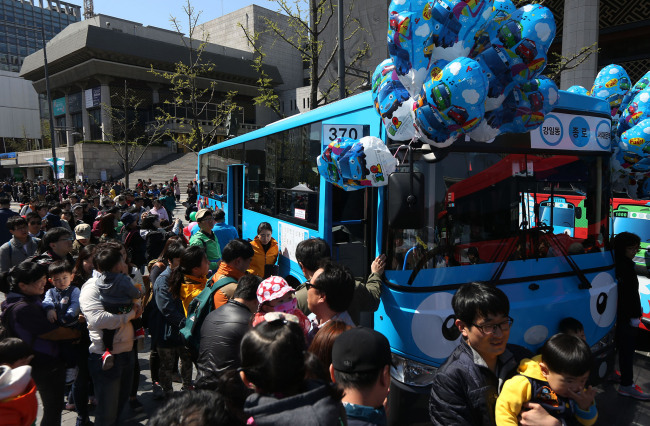
Children and parents lining up to board a Tayo character bus at Gwanghwamun Square in Seoul
Real Seoul city buses wrapped in Tayo the Little Bus livery drew lines of children at Gwanghwamun Square in 2014. | Source: The Korea Herald

Pinkfong and the Baby Shark Phenomenon

In 2015, Seoul-based SmartStudy, now operating as The Pinkfong Company, released a colorful, two-minute children's video called Baby Shark Dance. By November 2020 it became the most-viewed YouTube video of all time, and in January 2022 it became the first video on the platform to cross 10 billion views, a milestone reported by KED Global. The Pinkfong Company, which was founded by former Nexon staff, signed more than 2,000 licensing partnerships with brands such as Kellogg's, Crocs, and Crayola, expanded into Los Angeles, Shanghai, Hong Kong, and Singapore, and reached an estimated valuation of around 1 trillion won, making it Korea's 13th startup unicorn.

Studio Mir and Korean Hands Behind Hollywood Hits

While preschool IP grew at home, Korean studios stepped up as creative partners on adult-leaning Western animation. Studio Mir, founded in 2010 by Yoo Jae-myung, produced Nickelodeon's The Legend of Korra, the sequel to Avatar: The Last Airbender. The studio has since worked on Netflix titles including Voltron: Legendary Defender, Dota: Dragon's Blood, and The Witcher: Nightmare of the Wolf, and signed a multi-year DreamWorks deal in 2014. As Yoo told The Korea Times, "hand drawing is our DNA," pointing to a deep 2D craft tradition that survives in Seoul even as the world moves to 3D.

Studio Mir founder Yoo Jae-myung working in his Korean animation studio in Gasan-dong Seoul
Studio Mir founder Yoo Jae-myung at the Seoul studio that produced Nickelodeon's The Legend of Korra. | Source: The Korea Times

Webtoons to Anime: Tower of God, God of High School, Solo Leveling

The current K-content boom is driven by the pipeline from Korean webtoons to animation. Naver Webtoon's Tower of God by SIU was adapted into a 2020 anime co-produced with Telecom Animation Film and Crunchyroll. The God of High School, drawn by Park Yongje, followed the same year through MAPPA, and a second season is in production. The runaway hit, however, is Solo Leveling, based on the late illustrator Jang Sung-rak's Kakao webtoon. Co-produced by Aniplex and Crunchyroll with animation by A-1 Pictures, it launched in January 2024, swept nine categories at the 2025 Crunchyroll Anime Awards including Anime of the Year, and reached the Netflix global top 10 in 11 countries. A Korean live-action Netflix adaptation starring Byeon Woo-seok has been confirmed.

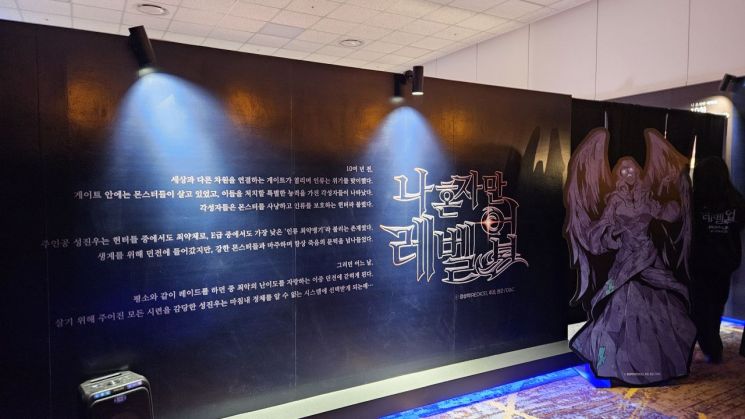
Visitors viewing artwork from the Korean webtoon and anime Solo Leveling at the POP-UP in CECO exhibition in Changwon
A Solo Leveling pop-up exhibition in Changwon showcases the late artist Jang Sung-rak's work and the webtoon's 14.3 billion global views. | Source: The Asia Business Daily

Manhwa, Festivals, and What Comes Next

Korean comics, known as manhwa, are read left to right and increasingly published as digital webtoons rather than print volumes, which sets them apart from Japanese manga. The Seoul International Cartoon and Animation Festival, or SICAF, has run since 1995 and ranks among Asia's largest animation showcases. The Bucheon International Animation Festival and the Korean Animation Awards add further industry profile. Recent successes such as the Teenieping movie franchise, Studio Roomer's Chun Tae-il, and the Sony and Netflix co-production KPop Demon Hunters point to a future where Korean animation increasingly leads original projects rather than just polishing other people's. Even K-pop has joined the IP race: BT21, the BTS character lineup co-designed with Line Friends, shows how Korean character design has become inseparable from the wider Hallyu wave.

Explore More of Korea with Daebak

Want to bring a little piece of Korea into your life? The Daebak Box is packed with the best Korean snacks, ramen, and cultural goodies delivered monthly to your door.

ブログに戻る