Hyunwoo Cho

Hyunwoo Cho

With over 10 years of experience in the Hallyu industry, Hyunwoo has dedicated his career to connecting Korean culture with the world. As the founder of Daebak, he works closely with Korean brands and stays ahead of the latest trends to deliver an authentic taste of Korea to fans globally.

Master hanji artisan Jang Seong-woo scooping mulberry pulp on a bamboo screen in his Gapyeong workshop, demonstrating Korean traditional papermaking

Korean Hanji: Inside the 1,000-Year Mulberry Paper Tradition of Andong, Jeonju and Wonju

Hyunwoo Cho

Table of Contents

Korean hanji (한지) is the handmade mulberry paper that has wrapped books, sealed windows and dressed Joseon kings for more than a thousand years. Made from the inner bark of the paper mulberry tree (닥나무, dak-namu) through a punishing nine-step process, a single sheet of true webal hanji can outlast Western paper by ten times or more. Today, conservators at the Louvre and the Vatican Library reach for hanji to restore priceless manuscripts, while fashion designers in Seoul weave it into cooling summer shirts.

Korean hanji artisan Jang Seong-woo scooping mulberry pulp with a bamboo screen at his Jangjibang workshop in Gapyeong, fourth-generation hanji maker
Fourth-generation hanji master Jang Seong-woo scooping mulberry pulp at his Jangjibang workshop in Gapyeong. | Source: The Korea Times

What Hanji Actually Is

Hanji is not just any paper. It is made from the long, silky inner bark of Broussonetia papyrifera, the paper mulberry tree, which grows wild across the Korean peninsula. The bark is harvested in winter, peeled in three layers, then steamed for four to five hours in an alkaline solution of plant ashes. After bleaching in cold mountain water and pounding the fibers to a soft mash, the artisan mixes in mucilage from the aibika plant (닥풀) as a natural binder. Because hanji contains no chemicals and no acids, the final sheet has a pH close to neutral, which is why a roll of well-made hanji can stay supple and white for a millennium.

The Nine-Step Papermaking Ritual

Master papermakers describe their craft using the old Korean word baekji, meaning "hundred sheets," because each sheet passes through about 100 small actions. The headline steps are familiar: harvest, peel, steam, wash, beat, mix, scoop, press and dry. What sets hanji apart is the scooping step. Korean artisans use a technique called oebaltteugi (외발뜨기, "one-armed scoop"), in which the bamboo screen is rocked horizontally and vertically so the fibers cross in multiple directions. Japanese washi, by contrast, is scooped in only one direction. That woven-style fiber lattice gives hanji its almost cloth-like strength.

Andong Hanji workshop in Gyeongsangbuk-do showing the traditional Korean mulberry papermaking factory at the entrance of Hahoe Village
Andong Hanji workshop at the entrance of Hahoe Village, where visitors can tour the factory and try paper scooping. | Source: VisitKorea

Why Hanji Lasts 1,000 Years

The numbers are striking. Standard machine-made Western paper, full of acidic sizing and lignin, yellows and crumbles in 50 to 100 years. Properly stored hanji has survived for over a thousand. The world's oldest surviving book printed with movable metal type, the Goryeo-era Jikji (1377), is printed on hanji and still legible at the National Library of France. The Library of Congress in Washington has been buying Korean hanji since 2003 to repair its rare collection. Paris-based restorer Kim Min-jung even introduced hanji into the Louvre's conservation studios, where it has since been used to mount 18th-century pastel portraits of the Bourbon family and to repair a 9th-century Quran manuscript.

Andong, Jeonju, Wonju and Goesan: Korea's Hanji Capitals

Not all hanji is created equal, and the best comes from a handful of historic regions. Andong Hanji (안동한지) in North Gyeongsang Province is widely considered the gold standard, prized for the clean spring water that flows past Hahoe Village. Jeonju Hanji (전주한지) in North Jeolla is famous for its supple texture and hosts the country's biggest paper festival each spring. Wonju Hanji (원주한지) in Gangwon Province runs the lively Wonju Hanji Theme Park, and Goesan Hanji (괴산한지) in North Chungcheong is favored by European museums. The Louvre now buys directly from workshops in Andong, Mungyeong and Goesan.

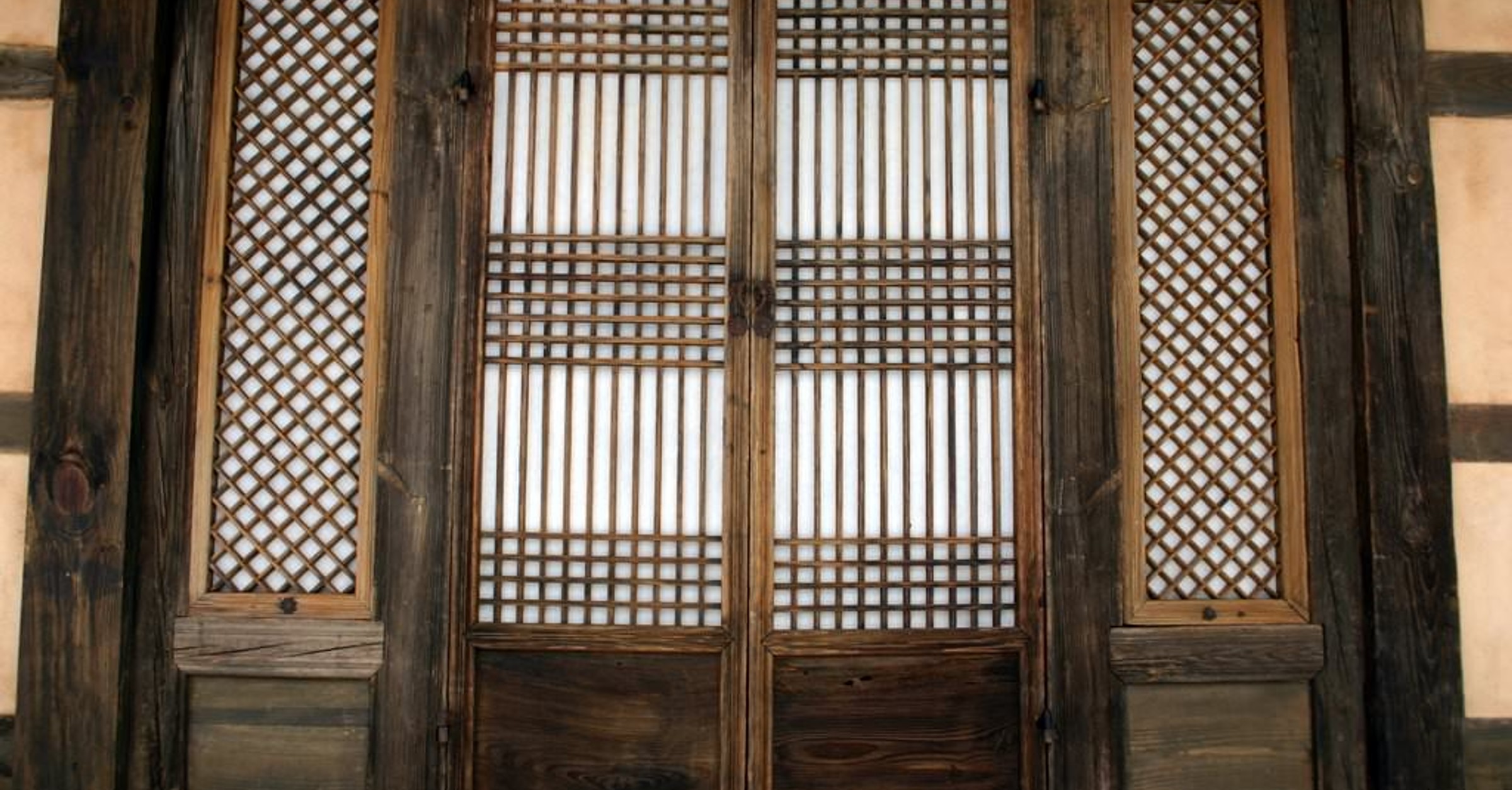
Traditional Korean hanok door and lattice windows covered with handmade hanji paper in snowy Andong, Gyeongsangbuk-do, showing how mulberry paper glows when backlit
Hanji paper doors and windows of a traditional hanok in Andong, Gyeongsangbuk-do, glowing with soft winter light. | Source: World History Encyclopedia

Hanji in Everyday Joseon Life

For centuries hanji was not a luxury but a daily necessity. It papered the walls and floors of every hanok, glowing softly through lattice windows as changhoji (창호지). It became fans, umbrellas, calligraphy scrolls, royal certificates and folding screens. Korean soldiers wore hanji armor that was light, breathable and surprisingly tough. Joseon-era court ladies dressed in jiseung garments, vests, hats and shoes braided from twisted hanji strings. Even babies were welcomed into the world with a hanji-decorated rope strung across the front gate to ward off evil spirits, and the deceased were wrapped in hanji shrouds for burial.

Hanji Reinvented for the 21st Century

The same paper that lined Joseon palaces is now being engineered into modern materials. Beanpole Outdoor, part of Samsung C and T, weaves hanji yarn into shirts that stay cool and odor-resistant through Korea's humid summers. Designers like Sun Lee have built six-piece fashion collections from hanji and ramie. Hyundai Card and Korean architects use hanji as wallpaper and ceiling panels to soften LED lighting in cafes and hotels. At the 2018 PyeongChang Winter Olympics, hanji appeared on uniforms, gift packaging and the cultural exhibits welcoming the world to Korea.

Beanpole Outdoor hanji-yarn summer shirt by Samsung C and T, a modern Korean fashion application of traditional mulberry paper fiber
Beanpole Outdoor shirts made with hanji yarn, blending traditional mulberry fiber with modern performance fabric. | Source: Samsung C&T Newsroom

Where to Experience Hanji in Korea

If you want to scoop your own sheet, the Andong Hanji Experience Hall at the entrance of Hahoe Village offers free factory tours and a 3,000-won hands-on paper-making session, plus longer classes for making hanji lamps and hand mirrors. The Jeonju Hanji Museum inside Jeonju Hanok Village showcases historical hanji documents and stages live demonstrations, and the city's annual Jeonju Hanji Culture Festival each spring fills the streets with paper umbrellas, fans and fashion shows. In Seoul, head to Bukchon Traditional Crafts Center in Bukchon Hanok Village or Hanji Chueok in Insadong, where you can build your own cube lamp from sheets dyed in natural indigo and persimmon.

Hanji as Fine Art and UNESCO Heritage

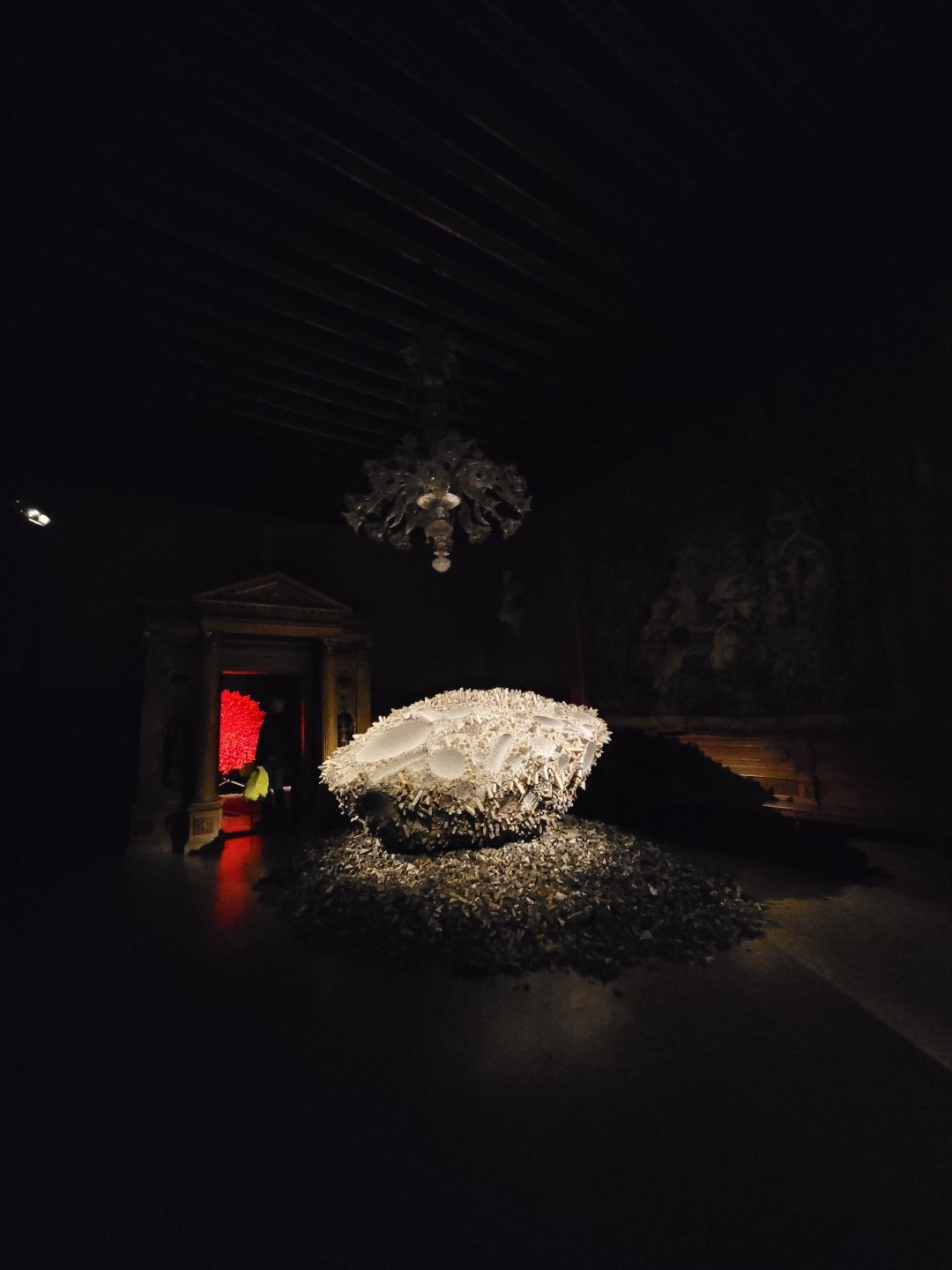
Hanji has become a serious medium for contemporary art. The Korean sculptor Chun Kwang-young, who represented Korea at the 2022 Venice Biennale, builds enormous wall-sized works from triangular packets of hanji torn from old books. Hanji conservation craftsmanship has been on UNESCO's radar for years, and the Korea Heritage Service is pursuing inscription on the UNESCO Intangible Cultural Heritage list. The Wonju Hanji Culture Festival alone drew 430,000 visitors in a recent edition, much of the campaign aimed at bolstering that UNESCO bid.

Sculpture by Korean artist Chun Kwang-young made from triangular hanji packets shown at the 2022 Venice Biennale collateral exhibition Times Reimagined
Sculptor Chun Kwang-young's hanji-package artwork on view at the 2022 Venice Biennale collateral exhibition "Times Reimagined." | Source: The Korea Herald

Hanji vs Japanese Washi

The two papers are cousins and often confused, even by museum curators. Both come from paper mulberry. The differences come from process and chemistry. Washi fibers run mostly in one direction, scooped with a single fluid pull. Hanji fibers run in two directions thanks to the oebaltteugi rocking motion, making the sheet stronger and more dimensionally stable when humidity changes. Hanji also uses only natural plant-ash lye and contains almost no impurities, while many washi grades include light chemical additives. Conservators say hanji feels closer to silk in the hand and behaves better under glue and water.

Buying Hanji as a Gift or Souvenir

Visitors usually take home one of three things. The first is a stack of decorative hanji sheets in natural dyes from a workshop in Andong, Jeonju or Insadong, perfect for bookbinding, calligraphy or framing. The second is a hanji lamp, the soft glow of mulberry fiber over a wooden frame, available everywhere from craft markets to design shops. The third is a hanji-fiber notebook or stationery set, light, durable and a thoughtful gift for a writer or artist friend. Look for labels that specify oebaltteugi hand-scooped paper from a designated workshop, the mark of authentic Korean tradition.

Discover Korean Craft with SULSUL

Bring home a piece of Korea's living craft tradition with the SULSUL Box by Daebak, featuring handcrafted norigae, a dragonfly brooch, and a DIY knotted bracelet kit that celebrate traditional Korean artistry.

ブログに戻る