


Table of Contents
Ten-plus years working alongside K-pop labels taught me one thing about club rotations in Seoul: nothing warms up a dance floor faster than a Korean girl group party track. Around 3AM in Hongdae (홍대), DJs stop pretending. They cue up 2NE1, BLACKPINK, TWICE, or ITZY, and the room resets.
This is not a K-pop bubble phenomenon anymore. Mainstream Korean clubs adopted these tracks years ago because the formula (chant hook, punchy BPM, verse-verse-drop structure) is literally engineered for a room full of people screaming lyrics they half-know. Here is the playlist that actually built the 걸그룹 (girl group) party track category, plus the industry reasoning behind why each one still hits.

2NE1 “I Am the Best” (2011): the template
Every party girl group track in K-pop after 2011 owes something to “I Am the Best” (내가 제일 잘 나가). Teddy Park’s beat under YG was the moment a Korean girl group stopped asking to be liked and started demanding the room. The hook is barely a melody, it is a chant, and that is the entire point.
Chants translate across languages. You do not need to speak Korean to shout “내가 제일 잘 나가” back at a screen. That template (chant hook plus swagger delivery plus minimal harmonic content) is why the song still moved a Coachella main-stage crowd when 2NE1 reunited in 2022. Fans remember it not because of complex songwriting but because the track was designed to be participated in, not passively listened to.

BLACKPINK “DDU-DU DDU-DU” (2018): the trap-era evolution
BLACKPINK inherited the 2NE1 template and dragged it into the trap era. “DDU-DU DDU-DU” is the sound of Teddy applying his 2011 formula to 2018 club music, and it worked so hard it became the first K-pop group MV to cross 1 billion, then 2 billion YouTube views. Fans latch onto the “hit you with that DDU-DU DDU-DU” hook because it is basically onomatopoeia, which is again a chant, again designed for a room.
The bass drop after the pre-chorus is where you can physically feel the room shift, and that is not accidental. YG mastering on BLACKPINK tracks has always leaned bass-heavy specifically for club playback rather than car speakers or earbuds. It is why “DDU-DU DDU-DU” reads flat on cheap headphones but destroys a proper club rig.
TWICE “What is Love?” (2018): the bright JYP formula
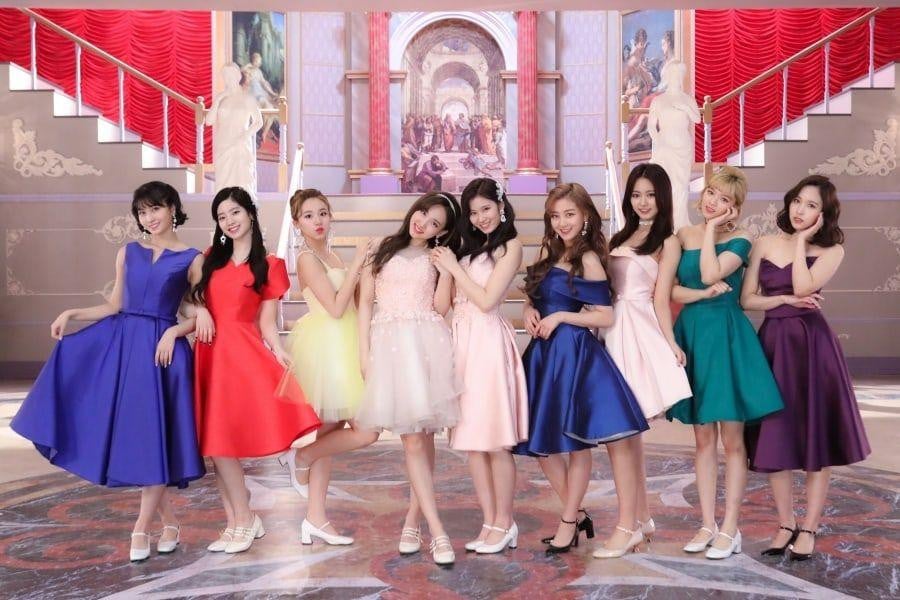
If BLACKPINK owns the “dark club” corner of the girl group party map, TWICE owns the summer daylight side. “What is Love?” charted through 2018 and eventually crossed 800 million YouTube views, and it is the archetype for what industry insiders in Korea call the 밝은 파티곡 (bright party track). Park Jin-young, JYP’s chief producer, built the song around a bouncy, almost bubblegum drop that translates equally well at a house party pre-drink and a wedding reception in Busan.
You do not need alcohol to enjoy TWICE tracks, and that broad-tent appeal is exactly what made TWICE the strongest streaming girl group of the late 2010s. The MV pastiche (movie parody scenes with the members) also gave the song viral legs that harder-edged groups never quite matched.
ITZY “WANNABE” (2020): the post-BLACKPINK generation
“WANNABE” was JYP’s answer to the post-BLACKPINK generation. When ITZY debuted, the label was watching BLACKPINK dominate the “boss girl” party space and needed a track that would land ITZY in the same rotation without directly copying the YG sonic palette. “WANNABE” solves that with a self-empowerment hook (“I wanna be me, me, me”) that reads as a chant, again, because JYP knew what the club needed.
The song landed hard enough in the West to earn RIAA gold certification in the US in 2023, which for a Korean girl group track that was never marketed heavily in the American mainstream is a real signal of organic party-playlist adoption. If you want to know what post-BLACKPINK Korean pop looks like on a dance floor, “WANNABE” is your reference point.

Red Velvet and MAMAMOO: the outliers that round out the rotation
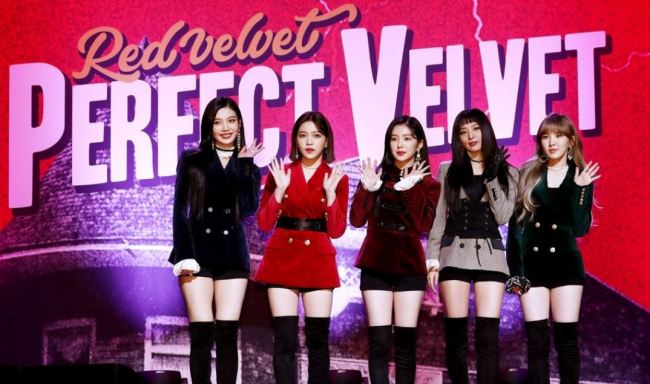
Two acts round out any serious girl group party rotation. Red Velvet’s “Red Flavor” (빨간 맛, 2017) sits on the summer-track shelf next to TWICE, but with a stranger, more percussive edge. It was the song Red Velvet performed in Pyongyang in 2018 for the inter-Korean cultural exchange, which tells you how mainstream the track had become in Korea itself. Watermelon-coded, fruit-themed MV, deceptively syncopated verse: it hits differently at a rooftop party than at a club.
MAMAMOO’s “HIP” (2019) is the outlier of the group. Where the others rely on chant hooks, MAMAMOO leans on actual vocal chops (Solar and Hwasa’s belts) plus a brass line that swings closer to funk than trap. It is the track you cue when the room is full of people who care about singing, not just dancing. “HIP” was MAMAMOO’s first song to hit 200 million Spotify streams, and 노래방 (noraebang, Korean karaoke) rankings have kept it in rotation for years because it lets amateurs actually show off.
How to build the actual playlist
Sequence them in that order and you have covered the four dominant modes of Korean girl group party music: the 2011 chant template (2NE1), the trap-club evolution (BLACKPINK), the bright JYP formula (TWICE and ITZY), and the vocal-forward outliers (MAMAMOO, Red Velvet). Rotate through them and the room follows. If you want extra credit, drop Somi’s “Birthday,” EXID’s “DDD,” or CLC’s “No” between the anchors, all of them run the same chant-plus-swagger playbook.
Want more of what makes Korean pop culture feel this alive? The Daebak Box ships hand-picked K-culture goods (snacks, beauty, lifestyle picks curated by the same team obsessing over the details above) to your door every month.


