


Table of Contents
South Korea runs on coffee. With more than 100,000 cafes packed into a country the size of Indiana, Koreans drink an average of around 400 cups per person each year, far above the global average of about 152 cups. The result is one of the most fiercely competitive cafe markets on the planet, where 1,500 won low-cost chains battle Starbucks for every commuter, student, and office worker walking down a Seoul side street.
Korea's Coffee Republic by the Numbers
The Korean coffee market has grown so saturated that industry watchers call it the country's reddest red ocean. As of late 2022 around 99,000 cafes and beverage shops were operating nationwide, and more than 11,000 of them shuttered during the first 11 months of 2023 alone. Yet new shops keep opening. Per capita coffee consumption topped 400 cups in 2023 according to Euromonitor, putting Korea among the heaviest coffee drinkers in the world. The biggest five chains, Starbucks, Ediya, Mega Coffee, Compose Coffee, and A Twosome Place, run more than 11,000 stores between them.
Ediya Coffee: The Quiet Giant
Founded in 2001, Ediya Coffee long held the title of Korea's largest chain by store count, peaking at around 3,000 outlets nationwide. Ediya built its empire on a mid-priced specialty positioning, hot Americanos around 3,200 won, dense neighborhood coverage, and a franchise model that placed it on almost every block in residential Seoul. The brand became the first major Korean chain to open an overseas store, debuting in Guam in 2022 and following with a launch in Malaysia in 2024.
Mega Coffee: The 1,500 Won King
Mega MGC Coffee opened its first store in late 2015 and exploded during the pandemic by undercutting everyone. A hot Americano costs 1,500 won, less than half Ediya's price and roughly a third of Starbucks. By June 2024 Mega had surged past 3,000 locations to claim the top store count crown. Its marketing leans heavy on celebrity power, plastering Tottenham striker Son Heung-min and K-pop acts like ITZY across every storefront and bus stop in the country.
Compose Coffee: The Rocket Ride
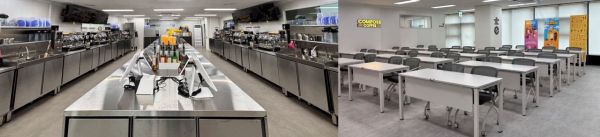
Launched in Busan in 2014, Compose Coffee is Korea's fastest-growing low-cost chain. The brand went from 725 stores in 2020 to more than 2,500 a few years later, riding the same affordable Americano playbook as Mega. Compose drew global attention by signing BTS member V as its ambassador and later expanded into Taiwan, where pre-opening lines stretched two hours long. The chain reportedly posts operating margins north of 40 percent, an eye-watering figure in the cafe business.
A Twosome Place: Dessert Forward
Born under CJ Foodville in 2002 and acquired by Carlyle Group for more than 800 million dollars in 2021, A Twosome Place carved out the dessert-and-coffee niche. Cakes, tarts, and seasonal sweets are the real draw here, paired with mid-premium drinks priced between Mega and Starbucks. With around 1,600 stores nationwide, Twosome Place is the country's clear number two by revenue after Starbucks, posting roughly 480 billion won in 2023 sales.
Starbucks Korea: Still the King of Premium
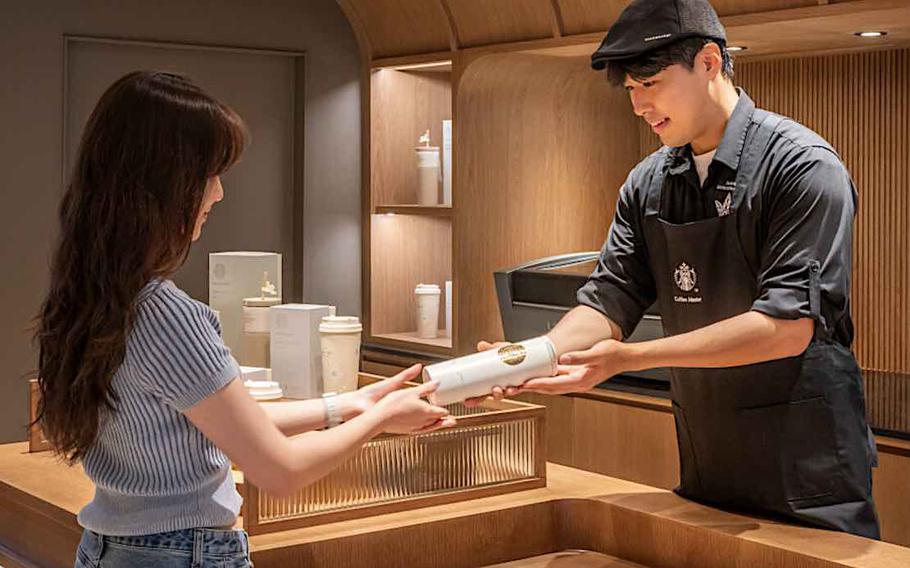
Despite the low-cost stampede, Starbucks rules the high end. In 2024 Starbucks Korea became the first coffee chain in the country to surpass 3 trillion won in annual sales, with more than 2,000 stores nationwide and over 13 million members in its mobile app. Koreans pioneered Siren Order in 2014, the world's first mobile-pre-order app, and the format has since become a defining ritual: tap your phone on the way to the station, swing by the counter to grab a hot Americano, and never break stride. Starbucks Korea is now the brand's third-largest market worldwide by store count.

Hollys, Pascucci, and the Mid-Tier Pack
Behind the big five sits a deep mid-tier bench. Hollys Coffee, founded in 1998, is one of Korea's oldest homegrown chains and pioneered the cafe study culture that later defined Starbucks. Pascucci, the Korean license of an Italian brand, operates around 400 espresso-focused outlets. Paul Bassett, run by Maeil Dairies and named after the World Barista Champion, anchors the specialty premium tier. Caffe Bene, which once exploded to more than 1,000 stores in the early 2010s before collapsing, remains a cautionary tale about overexpansion in Korea's saturated market.
Idol Cafes and Celebrity Coffee Culture
Korea's coffee scene is also a vehicle for fandom. Cafes themed around K-pop groups pop up almost weekly in Hongdae and Seongsu, and BLACKPINK Jennie's family-linked Apple Coffee in Cheongdam became a pilgrimage site for fans. Birthday cafes, where fans rent out indie venues to celebrate idol birthdays with custom drinks and printed photocards, fuel a whole ecosystem of small operators. Even within Starbucks and Twosome Place, limited collaboration drinks with K-pop groups regularly sell out within hours.
The Siren Order Generation and Kakao Coffee Gifts
Korean coffee culture is also a tech culture. Starbucks Siren Order processed more than 500 million transactions by 2023, and almost every major chain now has its own mobile app with stamp rewards, gift cards, and pre-order pickup. KakaoTalk Gifts has turned coffee into Korea's default thank-you present: send a friend a 4,500 won Americano gifticon for passing a job interview, a birthday, or even a small favor. The barcode lands in their KakaoTalk chat instantly and can be redeemed at any Starbucks, Twosome, or Ediya counter.
Maxim, Kanu, and the Instant Coffee Empire
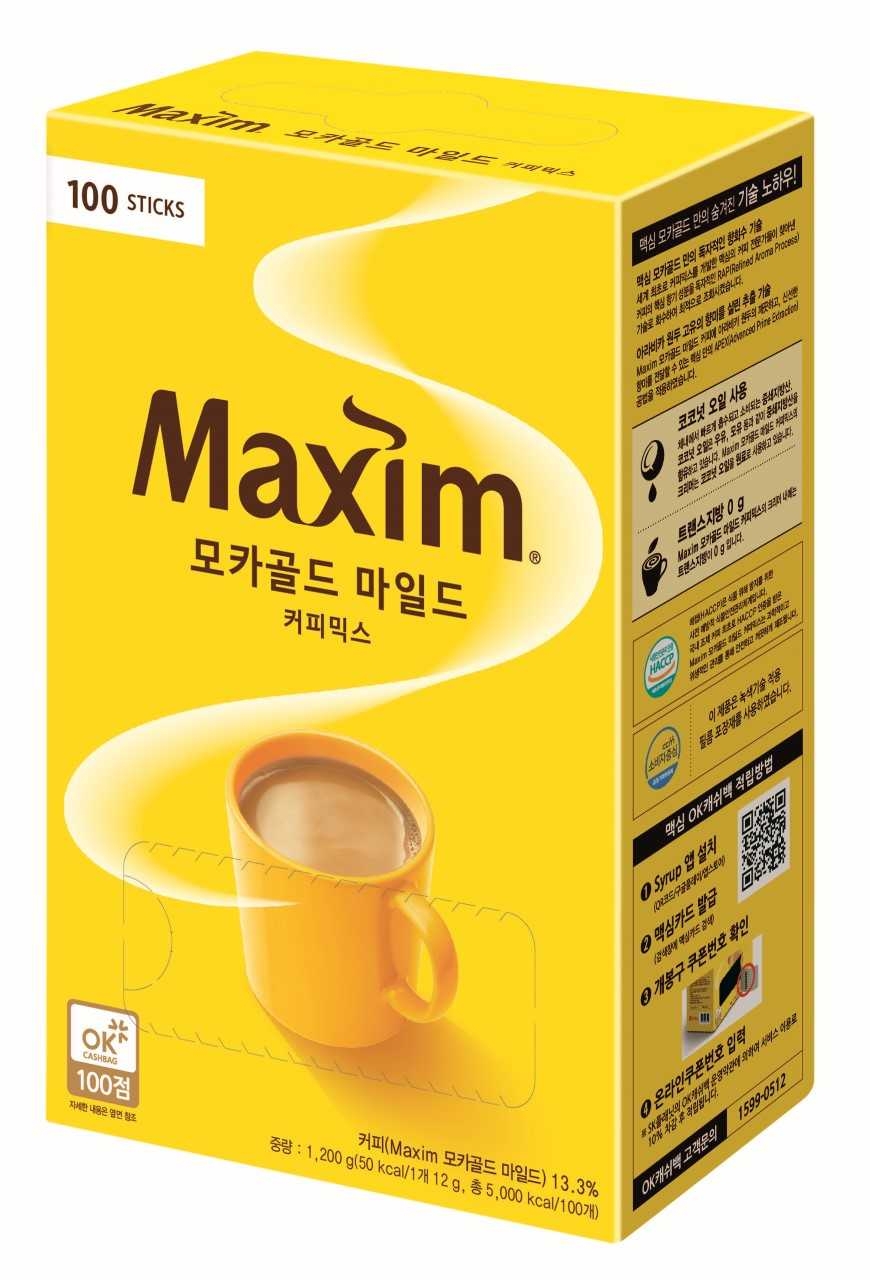
Underneath all the cafe drama, Korea is still the world's leading instant coffee market. Dongsuh Foods's Maxim Mocha Gold, launched in 1989, sells about 5.3 billion sticks a year, roughly 170 sticks every second. Younger drinkers gravitate to Kanu, Dongsuh's premium instant brand introduced in 2011 and once endorsed by actor Gong Yoo. Office workers, students at the library, and ajummas at home rip open a yellow Maxim stick into a paper cup of hot water, stir with the stick itself, and drink it sweet and milky. Even with 100,000 cafes in the country, instant coffee remains the soul drink of Korean daily life.
Why Korea's Coffee Wars Matter
The Korean coffee war is more than a price battle. It is a daily ritual that touches everything: how Koreans meet friends, how they work, how they study, how they gift each other, and how K-pop idols and football stars build personal brands. Whether you grab a 1,500 won Americano at Mega, a peppermint mocha latte at Twosome, or a barista pour-over at a Seongsu renovated factory cafe, you are tapping into one of the most caffeinated cultures on Earth.
Explore Korean Snacks with Daebak
Love Korean food? Get authentic Korean snacks and ramen delivered straight to your door with the SnackFever Box by Daebak.


