


Table of Contents
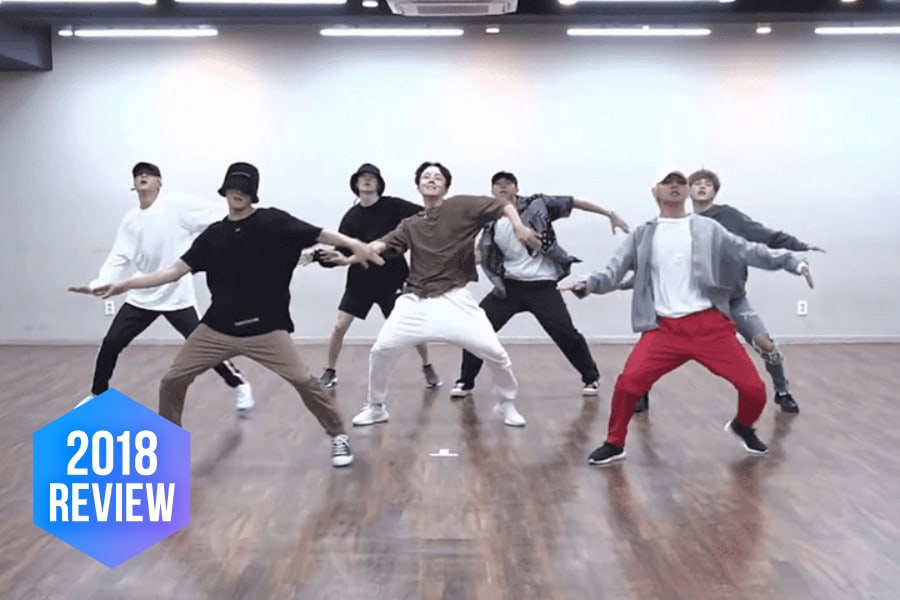
Between roughly 2018 and 2020, a very specific corner of K-pop YouTube exploded. Not fancams, not casual MV reactions, but professional dancers, ballet trainees, hip-hop crew members, and contemporary majors sitting in front of a webcam to pull BLACKPINK, TWICE, SEVENTEEN, and EXO music videos apart eight-count by eight-count. If you were around K-pop 팬덤 during that window, you already know the format. Someone who trains six days a week for a living, watching a K-pop choreography video for the first time, going quiet at the formation change, then rewinding it three times to catch what just happened.
Why professional dancers made 안무 reaction their thing
The reaction video format has always existed on YouTube, but the K-pop dance analysis tier is a different animal. Most reactions are emotional. Someone hears a chorus for the first time, puts a hand over their mouth, cries about the bridge. Dance reactions are technical. A trained mover watches formation load, isolation quality, weight transfer, sync percentage, and where the arrangement lets the camera cheat. That is a completely different audience contract. For channels like The Kulture Study, KA Kult, and Just Dance Team, the pitch was never "look how cute this is". It was "let me tell you as someone who has choreographed for money what is actually happening in this eight-count", which turned out to be exactly the entry point Western viewers who could not read Korean lyrics needed.
BLACKPINK "DDU-DU DDU-DU": the clip that opened the format up
If you had to pick a single trigger for the pro-dancer reaction boom, "DDU-DU DDU-DU" is a fair candidate. The choreography, credited to New Zealand-based Kiel Tutin working with YG's in-house team, is built like a kaleidoscope. Each member's move rolls into the next so the camera never lets the eye rest. That is not the language of casual dance. It is a very specific staging concept where formation change is the storytelling. When a pro watches it, they immediately clock the level of intent behind every frame, and that reaction registers on camera as genuine surprise. Watch enough of those videos and you notice the same beat. Dancer says "wait, wait, rewind that", and then delivers a full technical breakdown of Jennie's kill-shot pose or Lisa's weight commitment on the pre-chorus turn.
TWICE "Likey": why signature moves matter more than difficulty
"Likey" is not the hardest K-pop choreography ever made. Momo, TWICE's main dancer, actually helped design it to be follow-along accessible, which is very JYP-brained thinking. Build a piece the everyday fan can copy on Instagram and loop in a mirror at home. Dancer reactions to "Likey" tend to land on the same point. The choreography reads as easy but the sell is professional-grade. Each member commits to the Insta-heart, the phone-selfie beat, the little chin-tilt, at the exact same micro-second. Reactor after reactor says the same thing on camera, which is that syncing nine bodies to look this casual is harder than syncing four bodies to look this sharp. That is the appeal point Western viewers who cannot follow the Korean lyrics can still see.

SEVENTEEN "Clap": the 94.95 percent sync number that keeps getting quoted
SEVENTEEN reactions are the ones dancers seem to trust the least when they first press play, and then have to walk back their skepticism about 20 seconds in. "Clap" from the TEEN,AGE album is the go-to test track. Hoshi, who leads the performance team and choreographed most of the group's early work, designed "Clap" to look playful while running a formation load that most seven-piece groups would not attempt, let alone a thirteen-member group. The 94.95 percent synchronization figure that gets quoted in reaction videos, generated from later AI sync analysis, is not the point on its own. The point is that trained dancers, who understand how physically difficult synchronization at that group size is, get to that moment where they realize the sync is not editing trickery. It is thirteen people who ran the same eight-count until it looked like one body.

EXO "Monster": when the reactor discovers the NappyTabs credit
"Monster" reactions had a fun pattern. Casual reaction channels would call the vibe dark, sexy, cinematic. Pro dancer channels would clock the choreography language, dig into the credits, and go "wait, this is NappyTabs?" NappyTabs, Napoleon and Tabitha Dumo, had by that point choreographed for Madonna, Christina Aguilera, and BoA. The moment a reactor identifies a Western choreographer they already respect on a Korean release, the tone of the video shifts. It stops being commentary about a foreign act and becomes commentary about industry-level talent that happens to be doing its best work inside the K-pop pipeline. That reframing did quiet but real work for how the Western dance community started treating K-pop as legitimate performance repertoire, not novelty.
How the industry noticed and pulled the reactors in
Here is the mechanic behind the boom that does not get talked about enough. By 2019, marketing teams at HYBE, SM, and JYP were watching reactor view counts the same way they watched TikTok challenge participation. Choreographers from 1Million Dance Studio, the Gangnam collective that trained a huge share of Western reactors' K-pop vocabulary, started appearing as guests on reactor channels. May J. Lee, who co-created TWICE's "Knock Knock" and works with Jay Park, has publicly framed K-pop 안무 as an intentional puzzle-piece exercise designed for exactly this kind of second-order interpretation. That framing gave dancer reactors something to actually analyze on camera, which was much richer content than "let me guess what the chorus means".
The 리액션 영상 pipeline that fed into A&R
By 2022, the format had converted into something else. HYBE had brought in former reactor-adjacent choreographers for internal work, and Kiel Tutin, whose "DDU-DU DDU-DU" set off half of these reaction videos in the first place, ended up as BLACKPINK's creative director for their 2023 Coachella performance. The pipeline is not subtle once you look at it. Global dancer audience gets educated on K-pop choreography through 팬덤-run reaction channels. Choreographers named in those reactions get pulled deeper into agency work. Their next credits generate the next reaction cycle. That loop is why K-pop dance analysis on YouTube is not a niche fandom activity anymore. It is a legitimate feeder system for the industry, and the agencies know it.

What the format looks like in 2026
The peak dancer reaction era around 2018 to 2020 has cooled off in raw view count, but the shape of the content survived. Dancer channels have moved from full MV reactions to shorter breakdown formats. 60-second dance analysis clips, TikTok side-by-sides with the official choreography video, 안무 tutorials that are one part reactor, one part instructor. What used to be "professional dancer watches a K-pop MV for the first time" has matured into K-pop dance literacy for people who cannot read Korean, and that has quietly become one of the more durable Hallyu exports on YouTube. Give it another five years and it will show up in dance program curriculums the way hip-hop history did in the early 2000s. The Korean labels are already treating it that way.
Explore More of Korea with Daebak
Want to bring a little piece of Korea into your life? The Daebak Box is packed with the best Korean snacks, ramen, and cultural goodies delivered monthly to your door.


