


Table of Contents
Korean cinema has spent the past two decades reshaping international film. Bong Joon-ho's 2019 thriller Parasite became the first non-English language film to win the Best Picture Oscar, Park Chan-wook has taken three Cannes prizes across his career, and Yeon Sang-ho's Train to Busan turned a zombie movie into a global box office event. Together with directors such as Lee Chang-dong, Na Hong-jin and Kim Jee-woon, Korean filmmakers have built a body of work that critics regularly rank among the strongest of the 21st century.
This guide collects ten essential Korean films that offer the widest entry point into K-cinema. The selection skews toward award-winning thrillers and dramas with strong international distribution, including titles available on Criterion, Neon, Netflix, Mubi and major streaming platforms. Each entry notes the director, year, festival recognition and where the film sits inside the broader Korean Wave story.

1. Parasite (2019, Bong Joon-ho)
Parasite follows the Kim family, who scheme their way one by one into employment at the wealthy Park household, only for buried secrets in the basement to upend the arrangement. Bong Joon-ho's black comedy thriller won the Palme d'Or at the 2019 Cannes Film Festival and went on to take four Academy Awards, including Best Picture, Best Director, Best Original Screenplay and Best International Feature Film. It was the first Korean film to win at the Oscars and the first non-English language film to win Best Picture in the Academy's 92-year history. Bong has described stairs as the film's central metaphor for hierarchical class structure, with nearly 90 percent of the action taking place in a house split between a basement, ground floor and upstairs level.
2. Oldboy (2003, Park Chan-wook)
Oh Dae-su is abducted and held in a private prison for 15 years without explanation. When he is suddenly released, he has five days to find out who locked him up and why. Park Chan-wook's Oldboy, the centerpiece of his Vengeance Trilogy, won the Grand Prix at the 2004 Cannes Film Festival, where jury president Quentin Tarantino lobbied for it to take the Palme d'Or. The film's three-minute single-take corridor fight, shot with Choi Min-sik wielding a claw hammer against a hallway of attackers, is regularly cited as one of the most influential action sequences of the 21st century. Oldboy was rereleased theatrically in 4K for its 20th anniversary in 2023 through Neon.

3. Memories of Murder (2003, Bong Joon-ho)
Bong Joon-ho's second feature dramatizes Korea's first known serial murder case. Between 1986 and 1991, ten women were killed in the rural area of Hwaseong in Gyeonggi Province, and the case went unsolved for more than 30 years. Detective Park Doo-man, played by Song Kang-ho, and a Seoul detective played by Kim Sang-kyung, lead an investigation that gradually unravels. Memories of Murder drew more than five million viewers in South Korea on first release, making it the highest-grossing Korean film of 2003, and Bong won Best Director at the San Sebastian International Film Festival. The real killer, Lee Chun-jae, finally confessed in 2019. The film was restored and rereleased internationally by Neon following Parasite's Oscar wins.
4. Train to Busan (2016, Yeon Sang-ho)
A divorced fund manager played by Gong Yoo boards a KTX express train from Seoul to Busan with his young daughter just as a viral outbreak turns passengers into fast-moving zombies. Yeon Sang-ho's Train to Busan premiered in the Midnight Screenings section at the 2016 Cannes Film Festival and received a reported ten-minute standing ovation. The film grossed more than 98 million US dollars worldwide on an 8.5 million dollar budget, becoming the first Korean film of 2016 to surpass 10 million domestic admissions. It was Yeon's first live-action feature after a career in animation that included The King of Pigs and The Fake.
.jpg)
5. The Wailing (2016, Na Hong-jin)
A meek police officer in the rural village of Gokseong investigates a string of mysterious killings that locals link to a Japanese stranger living in the mountains. As his own daughter falls ill, the officer hires a shaman to perform a gut, an ancient Korean shamanic ritual. The Wailing, also known by its Korean title Goksung, was Na Hong-jin's first feature since the 2010 thriller The Yellow Sea. It screened Out of Competition at the 69th Cannes Film Festival, drew 6.8 million viewers in South Korea and was named Best Film of 2016 by the Korean Association of Film Reporters. The film mixes shamanism, Christianity and zombie horror across a 156-minute runtime.
6. Burning (2018, Lee Chang-dong)
Lee Chang-dong adapted Haruki Murakami's short story Barn Burning into a slow-burning psychological thriller about a young deliveryman, an old classmate and a wealthy stranger played by Steven Yeun. Burning premiered at the 2018 Cannes Film Festival, where it took the FIPRESCI International Critics' Prize and recorded the highest score on the Screen International jury grid in the festival's history. It was Lee's first feature in eight years after the 2010 drama Poetry. The Los Angeles Times called it a masterpiece of psychological unease, and it became the first Korean film to make the Oscar shortlist for Best International Feature in 2019.
7. The Handmaiden (2016, Park Chan-wook)
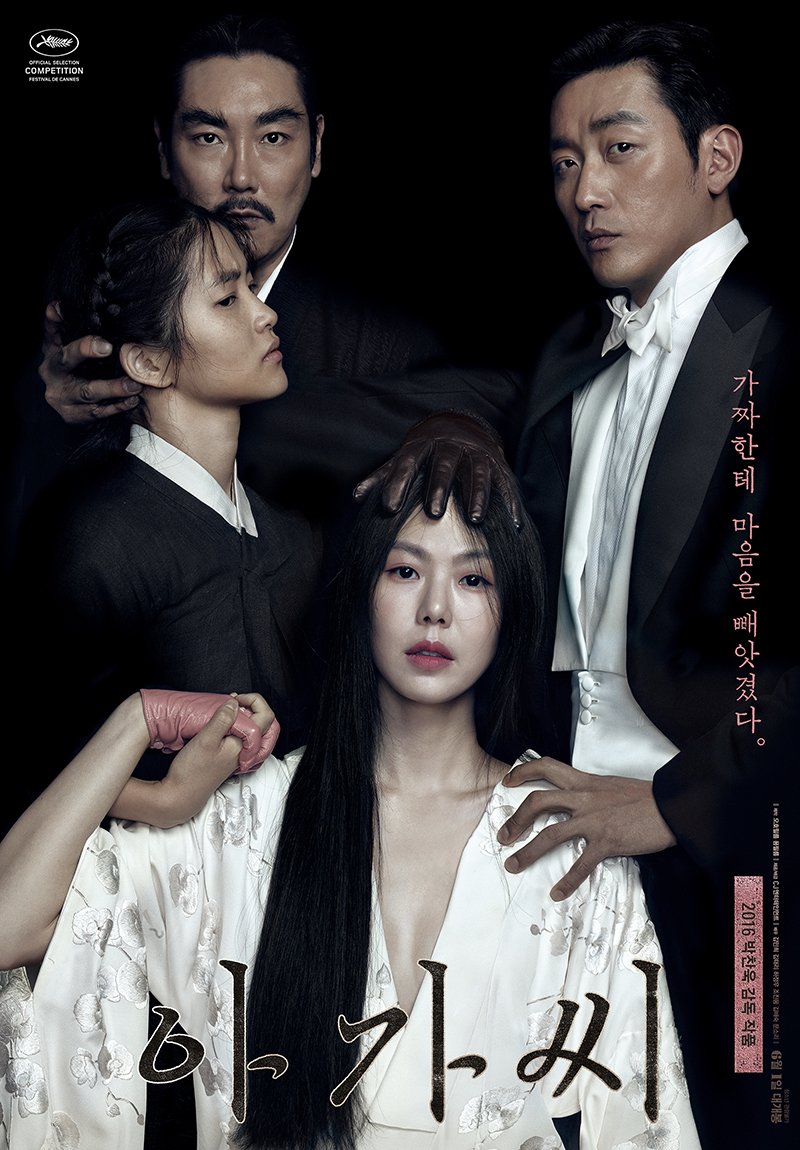
Park Chan-wook moved Sarah Waters' Victorian novel Fingersmith to 1930s Korea under Japanese occupation. A young pickpocket is hired as a handmaiden to a Japanese heiress as part of a conman's scheme to steal her fortune, but the two women fall in love and the plot turns on itself. The Handmaiden premiered in Competition at the 2016 Cannes Film Festival and was sold to 176 countries, a record at the time for a Korean film. It later won Best Film Not in the English Language at the 71st British Academy Film Awards, the first Korean film to take that prize. Park selected Kim Tae-ri from a field of 1,500 candidates for the role of Sook-hee.
8. A Tale of Two Sisters (2003, Kim Jee-woon)
Kim Jee-woon's psychological horror film follows two sisters who return home from a mental institution to find their stepmother behaving with increasing menace. A Tale of Two Sisters, loosely based on the Joseon-era folktale Janghwa Hongryeon-jeon, became the highest-grossing Korean horror film at the time of release and the first South Korean film to screen in American theaters. It was remade in Hollywood in 2009 as The Uninvited. Kim, who also directed I Saw the Devil and the Western The Good, the Bad, the Weird, is regularly listed alongside Bong, Park and Lee Chang-dong as one of the architects of the modern Korean thriller.
9. I Saw the Devil (2010, Kim Jee-woon)
A National Intelligence Service agent played by Lee Byung-hun hunts the serial killer, played by Choi Min-sik, who murdered his pregnant fiancee. Rather than killing the suspect outright, the agent traps and releases him in a cycle designed to inflict the same terror back. I Saw the Devil was theatrically cut twice by the Korea Media Rating Board before release because of its violence. The film screened at the 2011 Sundance Film Festival, the Edinburgh International Film Festival and Fantastic Fest in Austin, where it was a critical hit. Choi Min-sik's performance, his second collaboration with Park Chan-wook regular cinematographer Chung Chung-hoon, is regularly cited as one of his finest.
10. Decision to Leave (2022, Park Chan-wook)
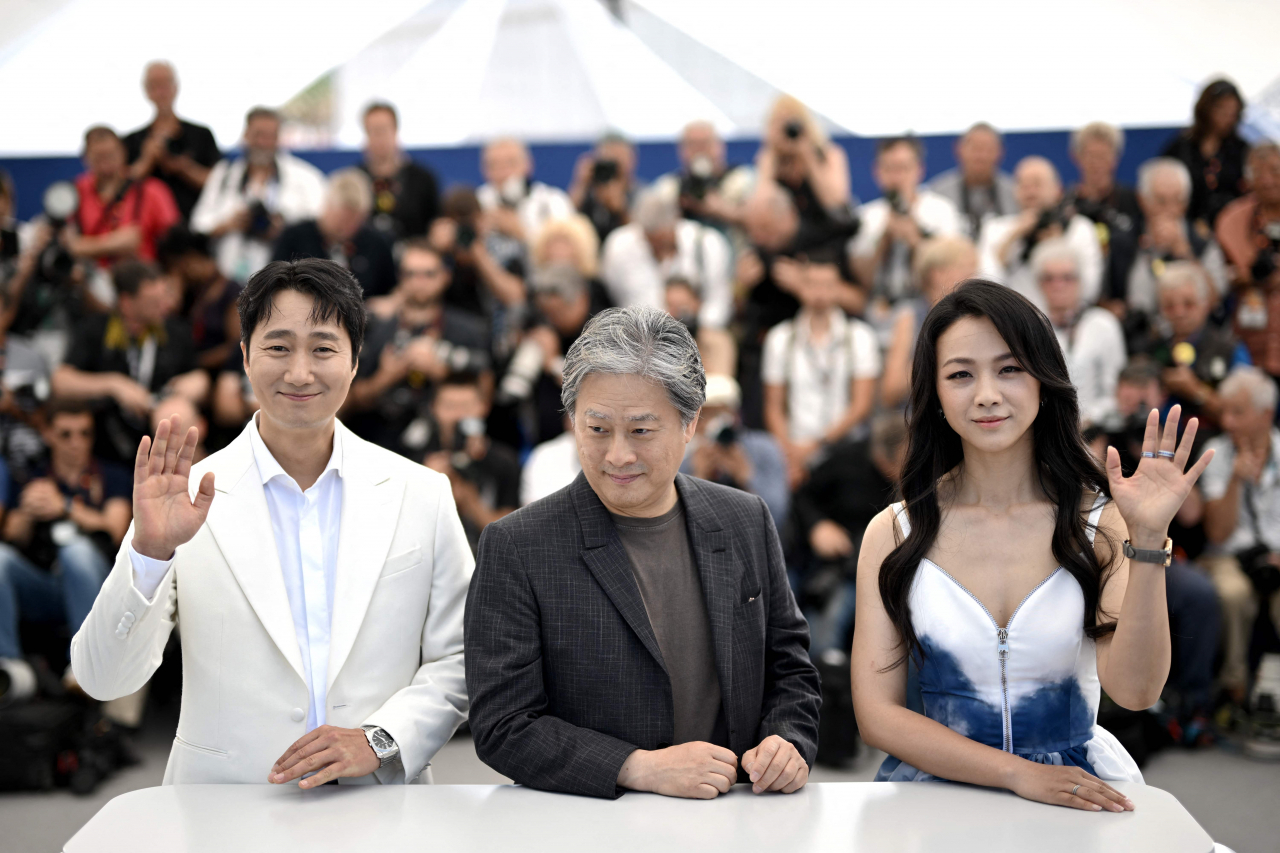
A Busan police detective investigates the death of a man who fell from a mountain and finds himself drawn to the dead man's Chinese wife, played by Tang Wei of Lust, Caution. Decision to Leave won Park Chan-wook the Best Director prize at the 2022 Cannes Film Festival, his third major prize at the festival after the 2004 Grand Prix for Oldboy and the 2009 Jury Prize for Thirst. The film took an average score of 3.2 out of 4 on Screen International's Cannes jury grid, the highest of that festival. The Guardian gave it five stars, calling it Hitchcockian, while Variety praised it as a masterful, dazzling love story wrapped in a mischievous murder mystery.
Where Korean Cinema Goes Next
Each of these ten films represents a different facet of the Korean Wave, from the social satire of Bong Joon-ho and the formal precision of Park Chan-wook to the slow-burn dread of Lee Chang-dong and the genre experimentation of Kim Jee-woon and Yeon Sang-ho. They are also the films most commonly cited by critics and festivals when explaining how Korea, a country with fewer than 52 million people, became the most influential national cinema of the 2010s and 2020s. Newer titles such as Park Chan-wook's No Other Choice, Na Hong-jin's Cannes 2025 entry Hope and Bong Joon-ho's Mickey 17 suggest the wave is far from cresting.
For anyone new to Korean cinema, the films above are widely available on Criterion Channel, Mubi, Netflix and Amazon Prime Video in major markets, with Neon handling theatrical reissues of several Bong and Park titles in North America.
Explore More of Korea with Daebak
Want to bring a little piece of Korea into your life? The Daebak Box is packed with the best Korean snacks, ramen, and cultural goodies delivered monthly to your door.


