


Table of Contents
Korean desserts cover a remarkable range, from centuries-old court sweets eaten at royal banquets and ancestral rites to the viral cafe creations filling Instagram feeds today. They tend to lean on rice, honey, red beans, sesame, fruit and pine, rather than heavy butter or cream, which gives even the richest treats a clean, almost herbal finish. The result is a dessert culture where a single bite can connect you to Chuseok rituals or to the latest Seoul cafe trend.
This guide rounds up 12 of the best Korean desserts, mixing traditional favorites like songpyeon and sujeonggwa with modern street and cafe hits like bingsu, hotteok, bungeoppang and dalgona. Whether you are planning a trip to Seoul or stocking your own snack drawer, these are the sweets that define Korean dessert culture.
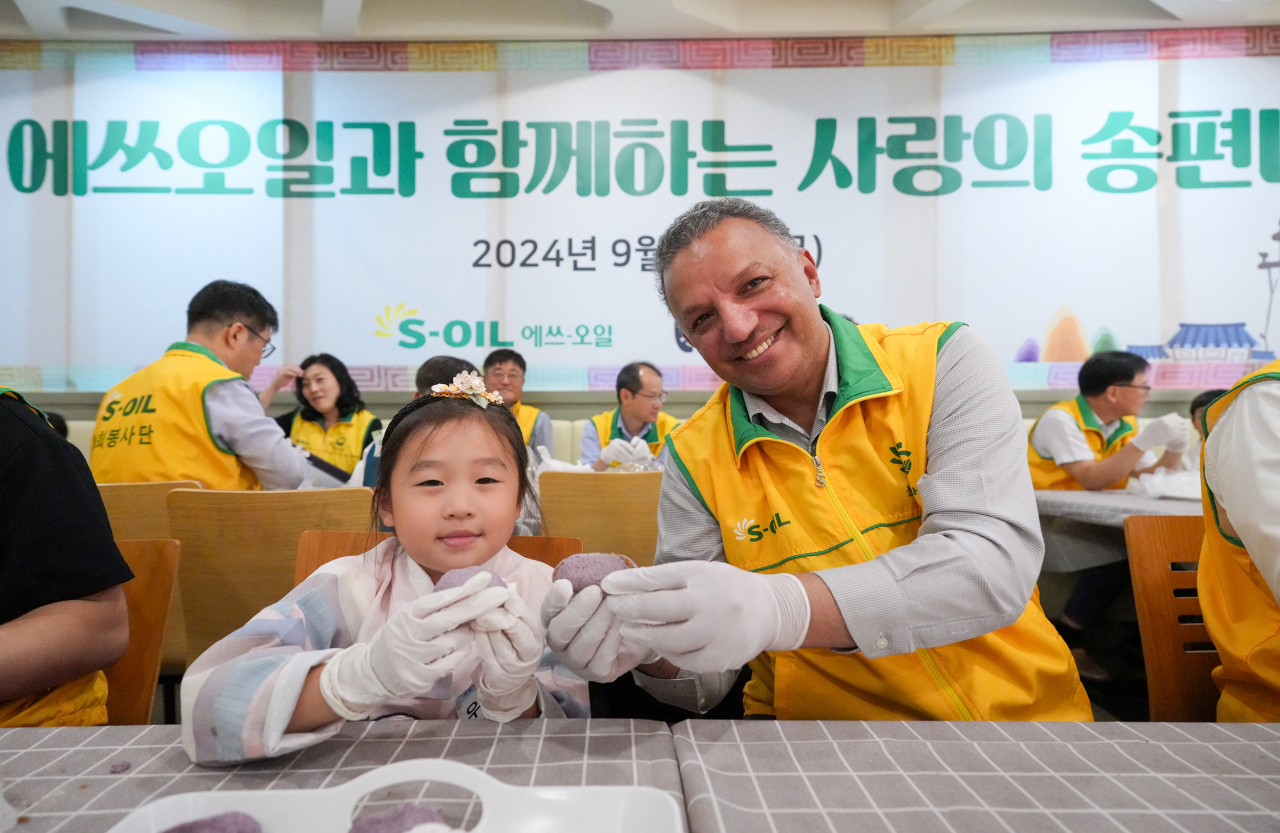
1. Songpyeon: Half-Moon Rice Cakes for Chuseok
Songpyeon are small, half-moon shaped tteok stuffed with sweet fillings like sesame, chestnut, mung bean or honey, then steamed on a bed of pine needles that gives them their signature woody aroma. The name comes from song, meaning pine, and the tradition stretches back at least to the Goryeo Kingdom (918 to 1392). Songpyeon is the centerpiece of Chuseok, Korea's harvest festival, and there is a popular saying that a person who shapes beautiful songpyeon will be blessed with a beautiful child or partner.
Regional variations range from yellow pumpkin songpyeon in Chungcheong to mugwort and five-grain versions across the country, but the core idea is the same: a chewy rice wrapper with a gentle sweetness, eaten with family.
2. Tteok: The Endless World of Korean Rice Cakes
Beyond songpyeon, Korea has hundreds of varieties of tteok, the broad family of rice cakes made by steaming or pounding glutinous and non-glutinous rice. Popular sweet types include injeolmi dusted in roasted soybean powder, baekseolgi snow-white steamed cake, jeolpyeon stamped with floral patterns, and colorful mujigae tteok served at first birthdays and weddings. Rice cake shops, once seen as something only grandmothers visited, have become trendy again with young Koreans embracing them as healthier, less sugary alternatives to Western desserts.
3. Yakgwa: Deep-Fried Honey Cookies
Yakgwa is a deep-fried Korean confection made from wheat flour, sesame oil, honey, rice wine and ginger, then soaked in grain syrup or honey until it turns dense, chewy and richly sweet. Historically reserved for ancestral rites and royal tables, yakgwa has become one of the breakout stars of the recent halmaenial dessert trend, where young Koreans line up at specialty shops for resized, bite-friendly versions paired with coffee.

4. Hangwa: Korea's Traditional Sweet Snacks
Hangwa is the umbrella term for traditional Korean confectionery, with yakgwa as just one branch. The family includes yugwa, puffed rice cakes coated in syrup and sesame seeds; dasik, delicate pressed cakes of bean, pine pollen or sesame stamped with auspicious patterns; and jeonggwa, candied roots, ginger or citron simmered in honey. Long used at weddings, ancestral rites and tea ceremonies, hangwa today appears in upscale boxed sets and at heritage-focused cafes that pair them with traditional Korean tea.
5. Sujeonggwa: Cinnamon and Ginger Punch
Not all Korean desserts are solid. Sujeonggwa is a chilled punch brewed from cinnamon bark, ginger and dark brown sugar, then garnished with softened dried persimmons and pine nuts floating on top. Spicy, warming and sweet all at once, it is traditionally served after a heavy meal during Lunar New Year and Chuseok to aid digestion and refresh the palate. It is one of the original Korean digestifs, and modern cafes increasingly sell bottled versions for everyday drinking.
6. Yaksik: Sweet Spiced Rice with Nuts and Jujubes
Yaksik, meaning "medicinal food," is a sweet steamed dish of glutinous rice mixed with chestnuts, jujubes, pine nuts, sesame oil, honey and soy sauce. The name comes from the historic Korean belief that honey was a healing food. Yaksik is most associated with Daeboreum, the first full moon of the lunar new year, and Buddhist temple cuisine. It is sticky, intensely savory-sweet and packed with texture, falling somewhere between a dessert, a snack and a small meal.
7. Hwajeon: Flower-Topped Rice Cake Pancakes
Hwajeon are pan-fried glutinous rice cakes pressed with edible flower petals: azaleas in spring, chrysanthemums in autumn and rose petals in summer. They are usually dipped in honey or sugar syrup and served as part of hwajeon nori, a centuries-old springtime outing where women gathered by streams to make and eat them. The tradition is being revived today by chefs and craft markets eager to spotlight Korea's seasonal foodways.
8. Bingsu: Korea's Iconic Shaved Ice
Modern Korean dessert culture is unthinkable without bingsu. The basic concept is a mountain of finely shaved milk or water ice topped with sweet additions, but the variations are endless. The most traditional version, patbingsu, uses sweetened red beans, chewy rice cake cubes, fruit and condensed milk. Today, luxury hotels like The Shilla Seoul serve apple mango bingsu with whole slabs of Jeju mango for over 100,000 won a bowl, while chains like Sulbing offer matcha, injeolmi and tiramisu versions year round.
9. Hotteok: Sweet-Filled Street Pancakes
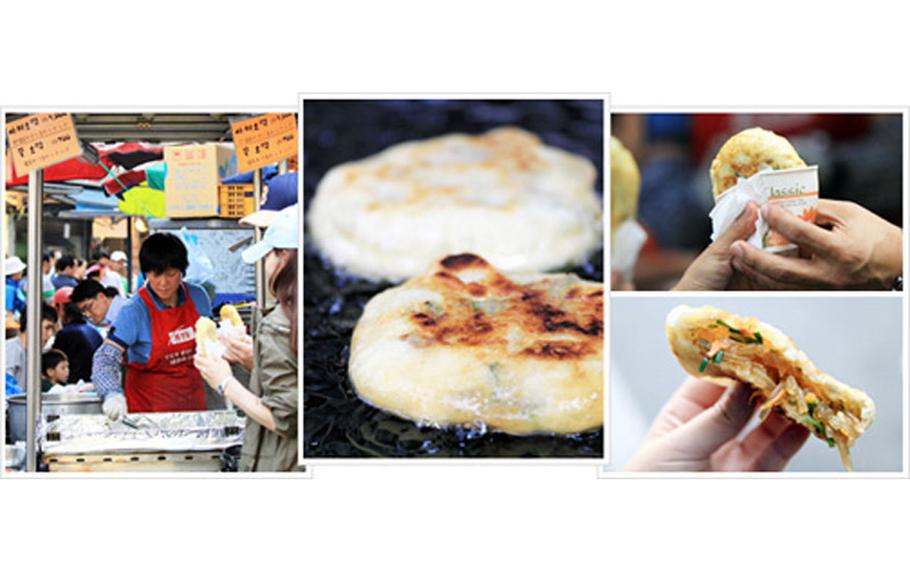
Hotteok is a fried, palm-sized pancake of yeasted wheat or rice dough wrapped around a filling of brown sugar, cinnamon, crushed peanuts and sometimes seeds. The dough is flattened on a hot griddle until the inside turns into a molten syrup, then handed over in a paper sleeve so you can eat it without burning your fingers. Korean Heritage Service traces hotteok's origin to merchants from Qing-era China who arrived in the late 19th century, and today regional twists range from Busan's seed-stuffed ssiat hotteok to yachae hotteok filled with savory glass noodles at Namdaemun Market.
10. Bungeoppang: Fish-Shaped Red Bean Pastry
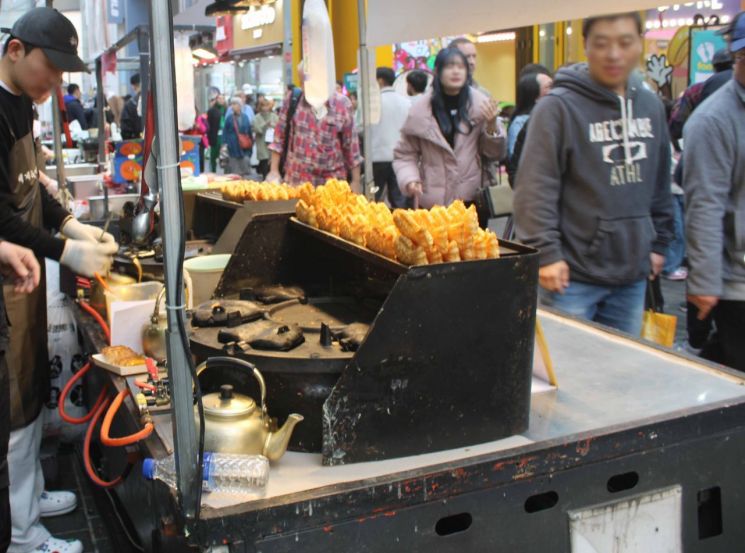
Bungeoppang, literally "crucian carp bread," is a fish-shaped pastry of crisp waffle-like batter filled with sweet red bean paste. It is one of Korea's most beloved winter snacks, with vendors setting up curb-side cast iron molds as soon as the temperature drops. The pastry arrived during the Japanese colonial period as an adaptation of taiyaki and took on a life of its own after the Korean War. Modern cafes now sell premium versions with custard cream, sweet potato, matcha and even pizza fillings, and CJ Bibigo and Ottogi have begun exporting frozen bungeoppang to the United States and Japan.
11. Dalgona: The Squid Game Sugar Candy
Dalgona is a thin, crackly disk of melted sugar puffed up with a pinch of baking soda, then stamped with shapes like stars, umbrellas, hearts or triangles. It started life as a 1960s schoolyard treat sold by street vendors who would offer a second free piece to children who could trim the shape out without cracking the candy. The Netflix series Squid Game turned this nostalgic game into a global phenomenon, and convenience store chain CU even began exporting dalgona kits to Mongolia and Malaysia at the height of the craze.
12. Gukhwa-ppang and Korean Cream Donuts: Today's Cafe Stars
Korea's modern dessert scene moves fast, and two formats currently dominate cafe menus. Gukhwa-ppang, or chrysanthemum bread, is a smaller flower-shaped cousin of bungeoppang filled with red bean paste and often sold from the same carts as a bite-sized companion. At the same time, Korean cream donuts have become a national obsession, with bakeries like Knotted, Cafe Onion and Old Ferry Donut overstuffing brioche-style rings with vanilla cream, injeolmi, black sesame or fresh strawberries. Together with strawberry cream cakes from Tous Les Jours and Paris Baguette, they show how Korean bakers are constantly reinventing classics for Instagram and global export.
How to Try Korean Desserts at Home
You do not have to be in Seoul to enjoy Korean desserts. Songpyeon, yakgwa and dasik are widely sold in Korean grocery stores and on online K-food marketplaces, especially around major holidays. Bingsu and hotteok mixes, frozen bungeoppang and dalgona kits are easy to find at H Mart and similar retailers worldwide. For something even more snackable, look for Korean dessert-flavored chips, biscuits and ice cream bars in monthly Korean snack boxes.
Explore Korean Snacks with Daebak
Love Korean food? Get authentic Korean snacks and ramen delivered straight to your door with the SnackFever Box by Daebak.


