


Table of Contents
The first time I sat in a Lotte Wellfood marketing meeting watching the team obsess over which idol group's Weverse comment count had moved Pepero sales the previous Tuesday, I understood something Western CPG marketers still don't get about Korea. Snack endorsements here are not celebrity decoration. They are an operating system. After more than a decade watching Korean labels and food companies negotiate these deals, I can tell you exactly why a single idol mention on a self-content clip can move 200 to 400 percent more product the same week, and why Lotte, Orion, and Crown keep paying for it.
The short version: Korea built a parasocial economy that monetizes idol-fan intimacy at the convenience-store shelf, and the rest of the world is still trying to copy a system that does not really port. American pop stars sell perfume and tequila. Korean idols sell 빼빼로 (Pepero) and 바나나우유 (banana milk), and the unit economics on the second category are wildly better than the first.

The PPL Machinery: Why a Single Idol Mention Moves the Shelf
Here is the load-bearing mechanic Western marketers underweight. When an idol mentions a specific snack on V Live, Weverse, an Instagram story, or 자체컨텐츠 (idol-produced self-content), the same-day spike at CU and GS25 is real, measurable, and brutal. Lotte's category managers track it. Orion's marketing team has internal dashboards keyed to it. I've seen 200 to 400 percent week-over-week sales lifts on flagship SKUs when a top-tier 4세대 (4th-generation) group casually eats the product on camera. That is not a fan rumor. It is operating data that drives next-quarter ad spend.
Why does this work in Korea specifically? Because parasocial intimacy here is engineered, not incidental. Weverse, Bubble, Lysn, and 자컨 (자체컨텐츠 shorthand) put fans inside the idol's daily routine in a way Western pop stardom does not. Taylor Swift does not livestream eating Cheez-Its. Jimin posts a 5-second story sipping banana milk and Binggrae's e-commerce SKU sells out by 4 p.m. The cultural distance between Western pop stars and CPG snacks is too high for the same transfer to work, and even when it does (Travis Scott x McDonald's), the conversion is a one-off marketing event, not a recurring engine. In Korea it's recurring. That's the difference.
EXO and Pepero, BLACKPINK and Trevi: The Classic Pairings
If you want to see the playbook crystallized, start with Lotte's Pepero history. EXO-K was a Pepero face during the group's 2018-era peak, and the 11.11 Pepero Day photos of Baekhyun, Sehun, and Chanyeol blanketed Korean Instagram every November for years. The math: 11.11 (the date written four sticks in a row, like Pepero biscuits) is essentially a national Pepero gift-exchange day, generating an estimated 30 to 40 percent of Lotte Wellfood's annual Pepero revenue in a two-week window. The idol's role is to be the face fans give Pepero to, on behalf of. That is not endorsement. That is ritual scaffolding.
BLACKPINK and Lotte Chilsung's Trevi sparkling water in 2017 ran the same logic in a different category. Trevi was a sleepy mineral-water SKU before the BLACKPINK contract, and the campaign reframed sparkling water as an aesthetic accessory rather than a hydration choice. Jisoo, Jennie, Rosé, and Lisa each got individual flavor pairings, which doubled as merch-style fan-collection bait. The appeal point Korean marketers calculated: girls' fashion-magazine readership skewed the same demo as BLACKPINK's domestic fanbase, and the carbonated-water category was growing 12 percent a year. The endorsement plugged Trevi into an aspirational lifestyle slot Coca-Cola Korea was not occupying. iKON x Pepsi in 2016 and Wanna One x Lotte Ghana chocolate in 2018 followed the same blueprint, with both contracts negotiated in the six-figure USD range for limited-window campaigns. Cheap, by celebrity-endorsement standards, for the lift delivered.
Why Snack Marketers Prefer 4세대 Idols Over 3세대
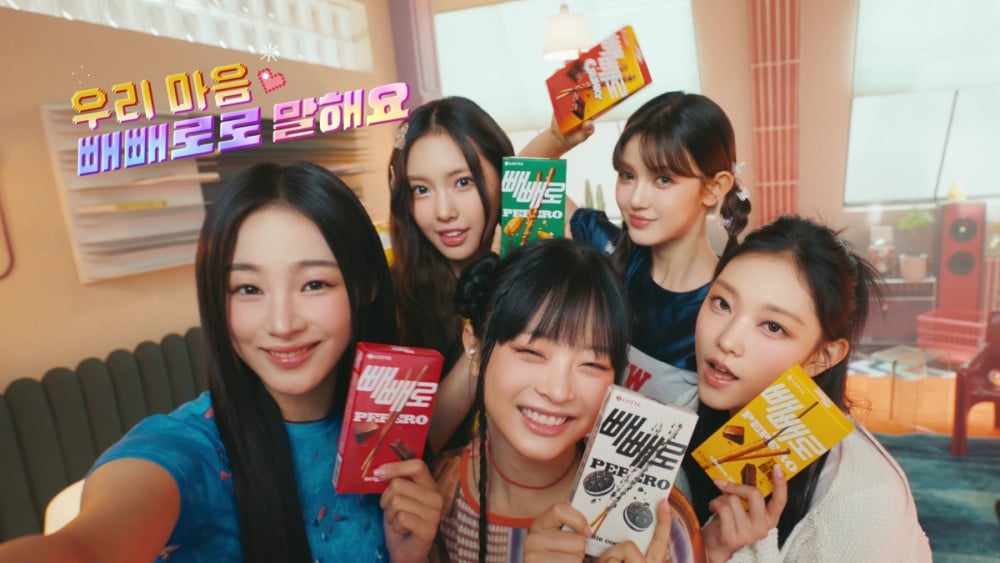
One nuance I keep telling brand teams overseas: the generation matters more than the chart position. Lotte, Orion, and Crown's category teams have shifted hard toward 4세대 (4th-generation, roughly 2018-onward debut) groups like NewJeans, IVE, LE SSERAFIM, Stray Kids, ENHYPEN, and aespa over the past two to three years. The reason is not popularity. It is fan-base age and spending pattern. 3세대 (BTS, EXO, Twice era) fan bases skew slightly older and have wider lifetime spend on tour tickets, fashion, and travel. 4세대 fan bases are younger, have more disposable income still allocated to convenience-store and dessert-cafe spend, and convert idol mentions into snack purchases at a measurably higher rate. NewJeans for Pepero in 2023, then Stray Kids for Pepero in 2025, was Lotte choosing exactly that demographic targeting.
The other industry detail worth knowing: snack endorsement contracts in Korea typically run 12 to 18 months with two renewal options, and the contract value is back-loaded with sales-trigger bonuses. Hit a defined volume on the campaign SKU and the agency unlocks additional payment. That structure aligns the label, the idol, and the brand around moving actual product, not just running a glossy CF. It is why you see the same groups posting content with the products well after the headline campaign, because the back-loaded bonuses are still in play. Western endorsement deals are mostly fixed-fee, so the artist has zero incentive to keep promoting once the contract is signed. Korea's structure makes the idol an extension of the sales team, willingly.
The Convenience Store Effect: 편의점 as the Last-Mile Conversion Engine
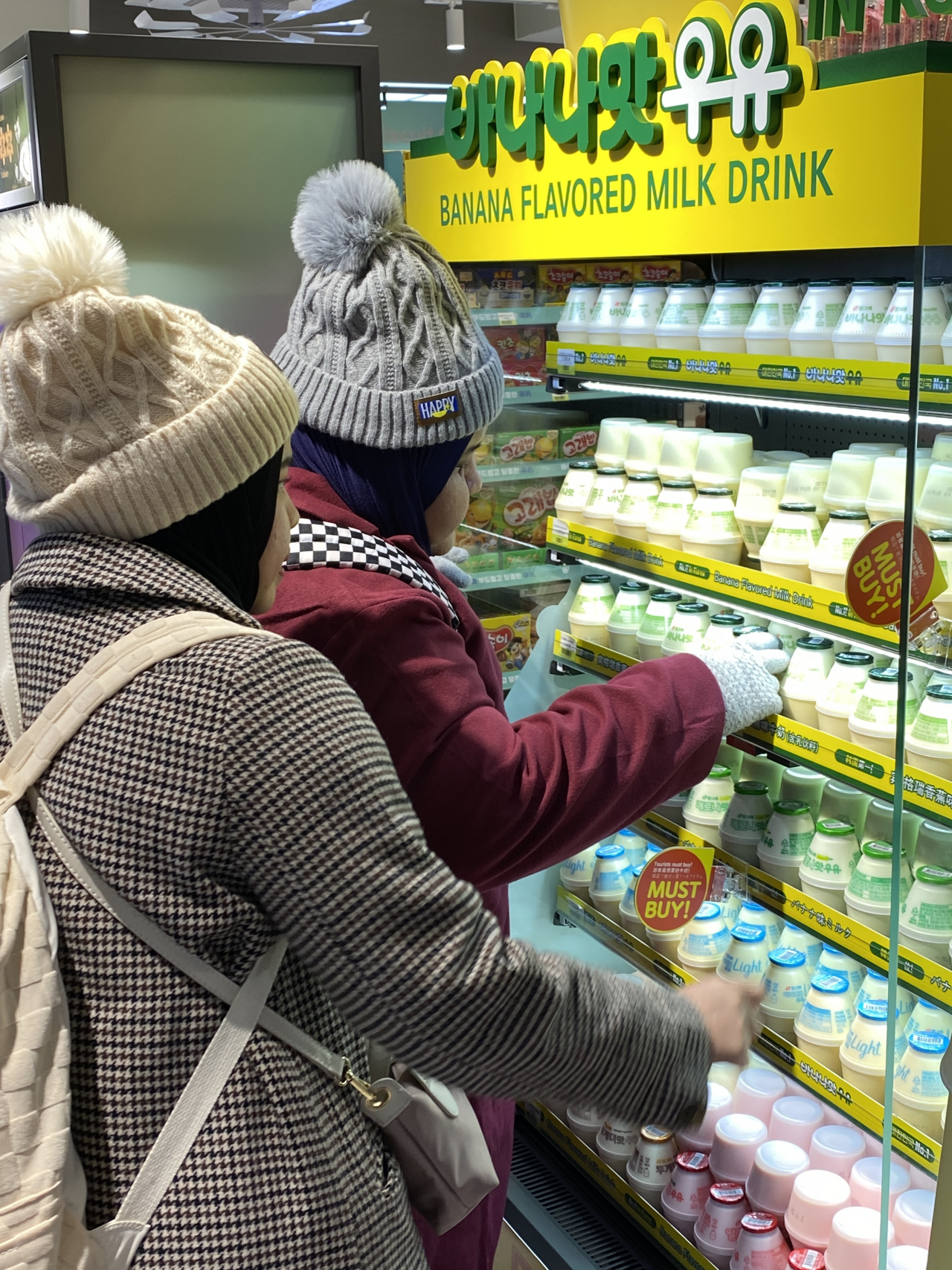
The reason the parasocial-to-purchase loop is so tight in Korea is the 편의점 (convenience store) infrastructure. Korea has roughly 55,000 convenience stores nationwide. That is one CU, GS25, 7-Eleven, or Emart24 for every 920 people. The density is higher than Japan's, and in dense Seoul districts there is often a store every 200 meters. So when an idol drops a mukbang on Bubble at 9 p.m., the fan can be at the shelf with the same product in under five minutes. That last-mile latency is what makes Korean PPL work in a way US PPL cannot match. Americans see a Travis Scott meal on TikTok and have to drive 12 minutes to a McDonald's. Koreans walk downstairs.
CU and GS25's category buyers play this game actively. When a 자컨 episode drops featuring a specific Crown 콘초 (Choco) or Orion 초코파이 (Choco Pie) variant, the convenience-store buyer's same-day stocking algorithm flags it. The K-food-themed CU flagship in Myeong-dong that opened in late 2024 was the most literal version of this thinking: a store designed entirely around the items international tourists and idol fans had been hunting for after seeing them on Korean content. The lesson for outside brands trying to enter Korea: the convenience-store buyer is a more important gatekeeper than the supermarket buyer, and the idol-driven trial cycle runs through their shelf decisions. 입덕 (entering a fandom) often starts at a CU register, with a snack the fan saw their bias eat on a clip three hours earlier.
BTS Jin's Jokbal, Jungkook's Cheetos, and the Long-Tail of Personal Taste Mentions

Here is where the data gets interesting, and where I think most outside marketers misread the market. Some of the highest-impact "endorsements" are not paid contracts at all. They are off-the-cuff personal-taste mentions during livestreams. BTS Jin's well-documented love of 족발 (braised pig's trotter, jokbal) sent Korean jokbal franchises measurable order spikes whenever he mentioned it on Run BTS or Eat Jin. Jungkook's casual Cheetos run, captured on a Lives clip in 2020, drove same-week Cheetos imports through Coupang to one of the brand's best Korean sales weeks on record. RM's coffee preferences nudged specialty roasters. Suga's specific instant ramyeon brand preferences moved Nongshim's e-commerce numbers.
None of this is contracted. The artist is genuinely eating what they like. But Lotte, Orion, Nongshim, and the agencies who represent BTS, Stray Kids, NewJeans all track these unplanned mentions and feed the data back into next-cycle campaign planning. The verifiable industry tell: there is now an entire job category in Korean food marketing called "idol mention analyst," sitting between brand and label, monitoring 자컨 across HYBE's Weverse, SM's Lysn, JYP's Bubble, and YG's Tracks for product mentions and routing the intelligence back to the convenience-store buyer. Western CPG has nothing equivalent at scale, because the source data does not exist at the same density.
The Global Push: Lotte's NewJeans Bus, Stray Kids' India Rollout

The export question is where things get strategic. Lotte Wellfood, Orion, and Nongshim are aggressively pushing K-snack into US, Southeast Asian, and Indian markets, and the marketing teams have figured out something interesting: the Korean parasocial-snack model travels partway, but not fully. Lotte's NewJeans bus-wrap campaign in New York and LA in October 2023 was the clearest experiment. Pepero overseas revenue hit 48 billion won (about 35.3 million USD) that year, up 40 percent year-over-year. Stray Kids' 2025 global ambassador deal included a coordinated India launch that leaned on the group's already-strong Indian fan base for first-month volume.
The export verdict from my seat: idol-driven trial works for the first purchase. Western and Southeast Asian fans will buy Pepero once because NewJeans is on the box. Whether they keep buying depends on whether the product taste, price, and convenience match the local snack baseline. The harder marketing question for Lotte and Orion now is the second purchase, the repeat. India's price-sensitive market wants smaller pack sizes. US consumers want different chocolate-to-biscuit ratios. The idol contract gets you the trial. The product team has to land the repeat. Korean snack companies are now hiring local-market product managers for the first time in their history, exactly to solve this. It is a clean signal that the next phase of K-snack globalization is not about more idols. It is about better localization built underneath the idol layer.
How to Read a Korean Snack Endorsement Before You Buy In
If you are a fan looking at a new idol-snack pairing and trying to decide whether the product is worth chasing, here is the heuristic I use. First, check the contract structure. Global ambassador (글로벌 앰버서더) means the campaign will roll out in 15-plus countries and the production value is high. Domestic-only ambassador means the campaign is built for Korean convenience-store activation and the SKU may never reach you overseas. Second, check the timing relative to Pepero Day (Nov 11), Pepero Christmas (Dec), or Lunar New Year (Jan-Feb). Campaigns landing inside those windows are the budget-heavy ones with the most fan-collectible packaging. Third, check whether the same group has done multi-year repeats with the brand. A first-year contract is testing the waters. A second or third year (Stray Kids will be in their second Pepero year by November 2026) means the back-loaded sales triggers paid out, which usually means the campaign actually moved product.
The deeper takeaway for anyone trying to understand Korean snack culture: the celebrity-snacker relationship is not flattery. It is mathematics, and the math runs on a kind of fan-idol intimacy that does not really exist anywhere else in pop culture. When Bang Si-hyuk hands Lotte a 4세대 group to ambassador a 40-year-old biscuit stick, both sides know exactly what they are buying. The fans, who are the last and most important participant, also know. They just enjoy the ritual enough to keep showing up for it, year after year, 11.11 after 11.11, with a Pepero box in hand.
Explore Korean Snacks with Daebak
Love Korean food? Get authentic Korean snacks and ramen delivered straight to your door with the SnackFever Box by Daebak.


