


Table of Contents
Korean food has a heat problem, and I mean that in the best possible way. After a decade working with K-content and K-food brands, I have watched the gochujang threshold push higher with every product cycle. Samyang's Buldak line keeps climbing the Scoville chart. Tteokbokki tents in Sindang-dong compete on how much red their sauce can hold. And somewhere along the way, dairy became the unspoken safety net underneath all of it. That's the story almost nobody tells correctly: 치즈 (cheese) in Korean cooking is not a flavor addition. It's a heat-balance mechanic.
Why cheese landed in Korean kitchens at all
Until the late 1980s, cheese was barely a category in Korea. Dairy consumption was historically low, and the only cheese most Korean kids knew was the yellow processed slice that arrived in supermarkets after Seoul Dairy and Haitai Confectionery started pumping out sliced product in 1987. The real shift came with the 2000s pizza chain wave. Domino's, Pizza Hut, and Mr. Pizza turned mozzarella into a generational signal of "Western, modern, special-occasion food." When that generation grew up, they started doing what Koreans do with any imported ingredient: bending it to fit gochujang.
By 2023, cheese sales in Korea hit 406.4 billion won, up 5.3 percent year-on-year, with mozzarella driving the curve. Seoul National University food economist Moon Jung-hoon has pointed out that Koreans mostly use cheese as a topping, not as a standalone protein. That topping mindset is the giveaway. Cheese is not the main event. It's the cooling agent.
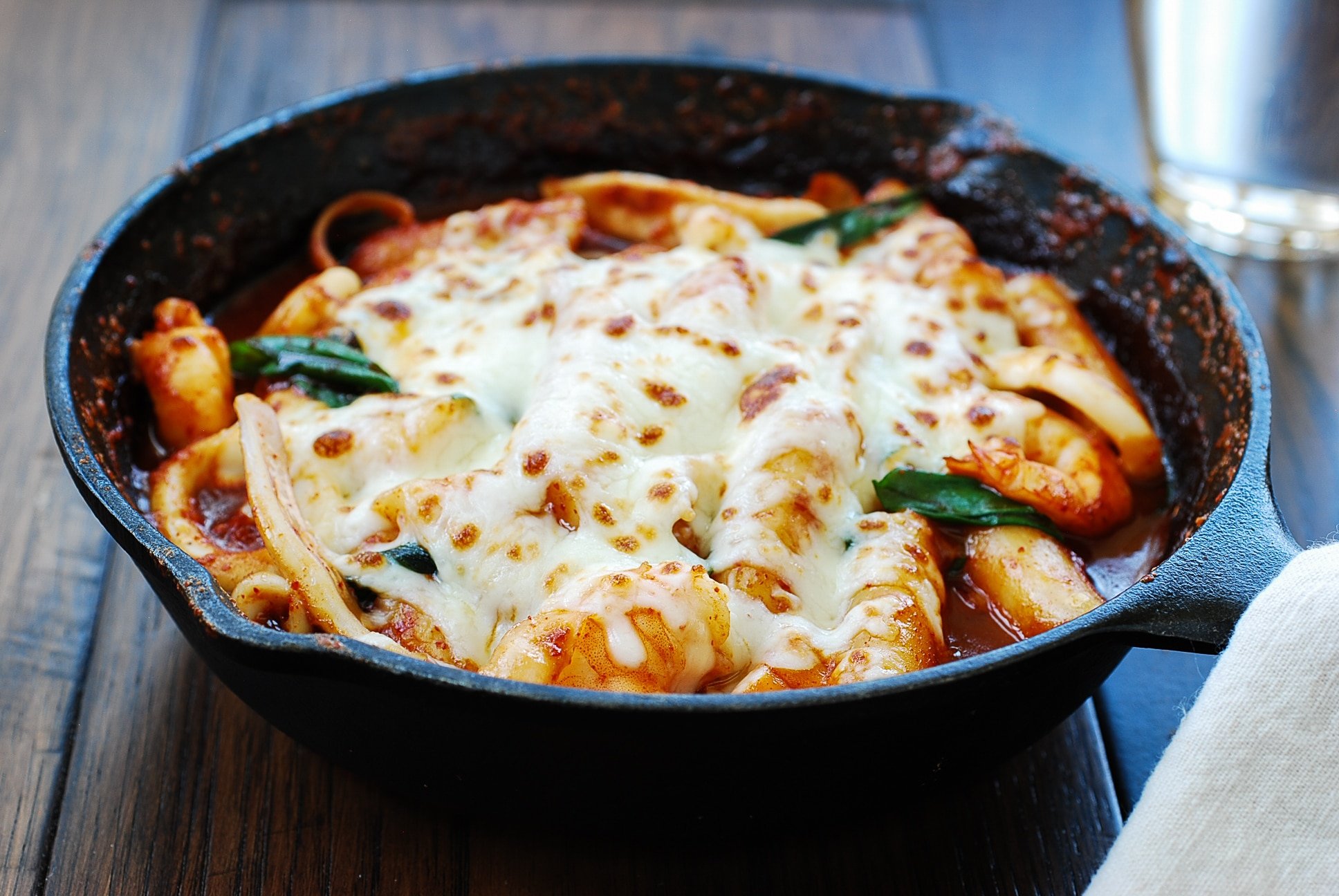
치즈 떡볶이, the Sindang-dong reinvention play
Cheese tteokbokki gets credited to the Sindang-dong tteokbokki alley around 2010, when older tent vendors needed a new hook for a younger Instagram crowd. Mozzarella was the move. The cheese pull was photogenic, the dairy fat softened the gochujang burn just enough to keep customers ordering doubles, and the dish suddenly read as "modern Korean" instead of "old-school street food." That repositioning is the part the food blogs miss. Sindang-dong did not invent a new dish. They cracked the algorithm of MZ세대 (the millennial-Gen Z generation) before MZ세대 was even a marketing term.
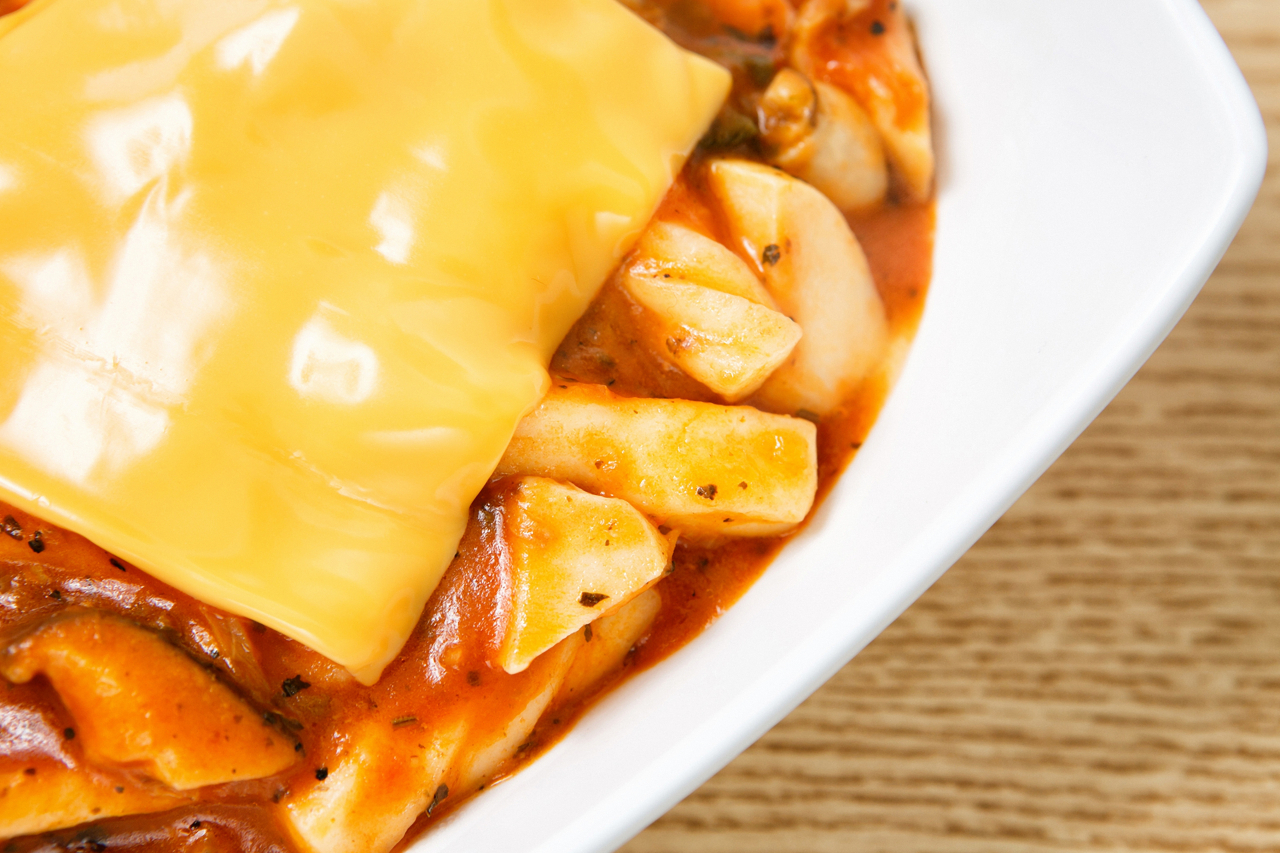
The appeal is mechanical, not aesthetic. Casein protein in cheese binds capsaicin, the compound responsible for chili heat. Professor Lee Hye-ran at Baewha Women's University has framed this as the protein-capsaicin interaction. Translation: cheese works as a chemical fire extinguisher. That is why Korean cheese dishes are almost always paired with the hottest base dishes in the menu, never with mild ones. 매콤한 (spicy in a punchy way) plus 모짜렐라 (mozzarella) is not a culinary contradiction. It is an engineering decision.
치즈 김밥 and the convenience-store cheese era
If cheese tteokbokki was the Instagram play, cheese gimbap was the convenience-store extension. By the mid-2010s, GS25 and CU started rolling out cheese-filled triangle gimbap and roll-style versions where a slice of cheddar or a strip of mozzarella sat right next to the spam, the egg, and the kimchi. The math is straightforward: cheese adds creaminess and protein without adding labor cost. For a 2,000-won lunch product targeted at office workers and university students, that ratio works. The Korean convenience store gimbap market alone is worth over 500 billion won annually, and cheese variants now make up a meaningful slice of that lineup. Traditional gimbap purists hate this. Old-school recipes call for danmuji (yellow pickled radish), sigeumchi (seasoned spinach), egg, and beef. Cheese is the new entrant, and it did not enter through fine dining. It entered through the lunchbox economy, which is exactly why it stuck.
치즈 닭갈비, the Chuncheon export upgrade
Dakgalbi originated in Chuncheon, Gangwon Province, as a 1960s drinking food. The cheese version is much newer, dating to the early 2010s when Hongdae-area Chuncheon-style dakgalbi restaurants started ringing the outer edge of the pan with melted mozzarella for diners to dip stir-fried gochujang chicken into. That is a restaurant theater move. The cheese ring made the dish shareable, dramatic, and TikTok-ready a full half decade before TikTok mattered.
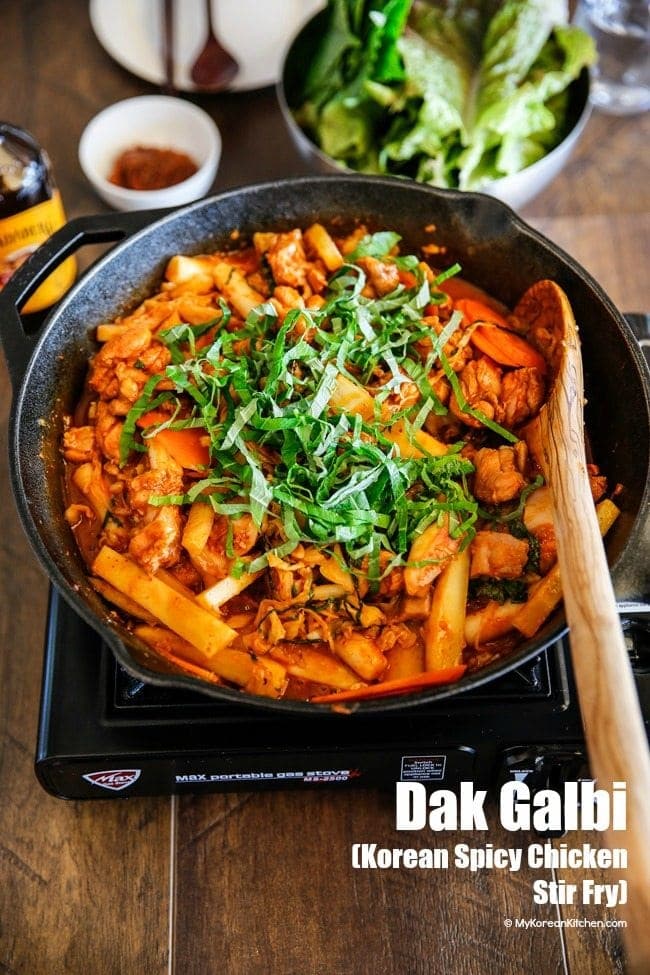
The cheese ring also extended the meal. You eat the spicy chicken first, dip it in cheese as palate relief, then add cooked rice or udon noodles to the leftover sauce and cheese for a second course. From a restaurant operations perspective, that is one ticket generating two course experiences. Margins love it. The cheese is doing double duty as fire extinguisher and revenue extender.
불닭 plus 치즈: Samyang's SKU permutation playbook
Buldak ramyeon launched in 2012. By 2024 it had moved past 5 billion cumulative packets sold, and by mid-2025 it cleared 8 billion. The brand sells in roughly 100 countries and ships around 2 billion units a year, which Samyang has publicly framed as 63 servings every second. That scale does not happen by accident. It happens through SKU permutation, and the cheese variants are the most successful permutation in the franchise.

Cheese Buldak launched in 2021 specifically because Samyang's own market research showed cheese-pairing was the most common user-generated mod for the original. Carbo Buldak followed similar logic, blending creamy and spicy in a single seasoning packet. The strategy is straightforward: identify the most common at-home hack, package it as an official SKU, capture the volume that was previously happening off-platform. That is textbook line extension, executed faster than Western CPG companies typically move on a single category.
The cheese-spice flywheel got an unexpected boost from the 2019 and 2020 viral TikTok cheese pull wave. Korean food creators posting Buldak-with-cheese-slice videos became a global format. By the time fire noodle challenge videos crossed 500 million combined views, Cheese Buldak had a built-in international audience the moment it shipped. Denmark eventually pulled three Buldak SKUs in 2024 for being too spicy. That ban was free marketing worth more than any paid campaign Samyang could have run.
부대찌개 and the older cheese tradition
Before cheese tteokbokki and cheese ramyeon, budae jjigae (army stew) had quietly been doing the cheese-spice fusion since the 1950s. The dish originated near U.S. Army bases in Uijeongbu after the Korean War, when local cooks built spicy stews around surplus American canned meats: Spam, hot dogs, baked beans. American yellow cheese slices entered the recipe almost from the start, melting into the gochujang broth and softening the burn from the chili paste.
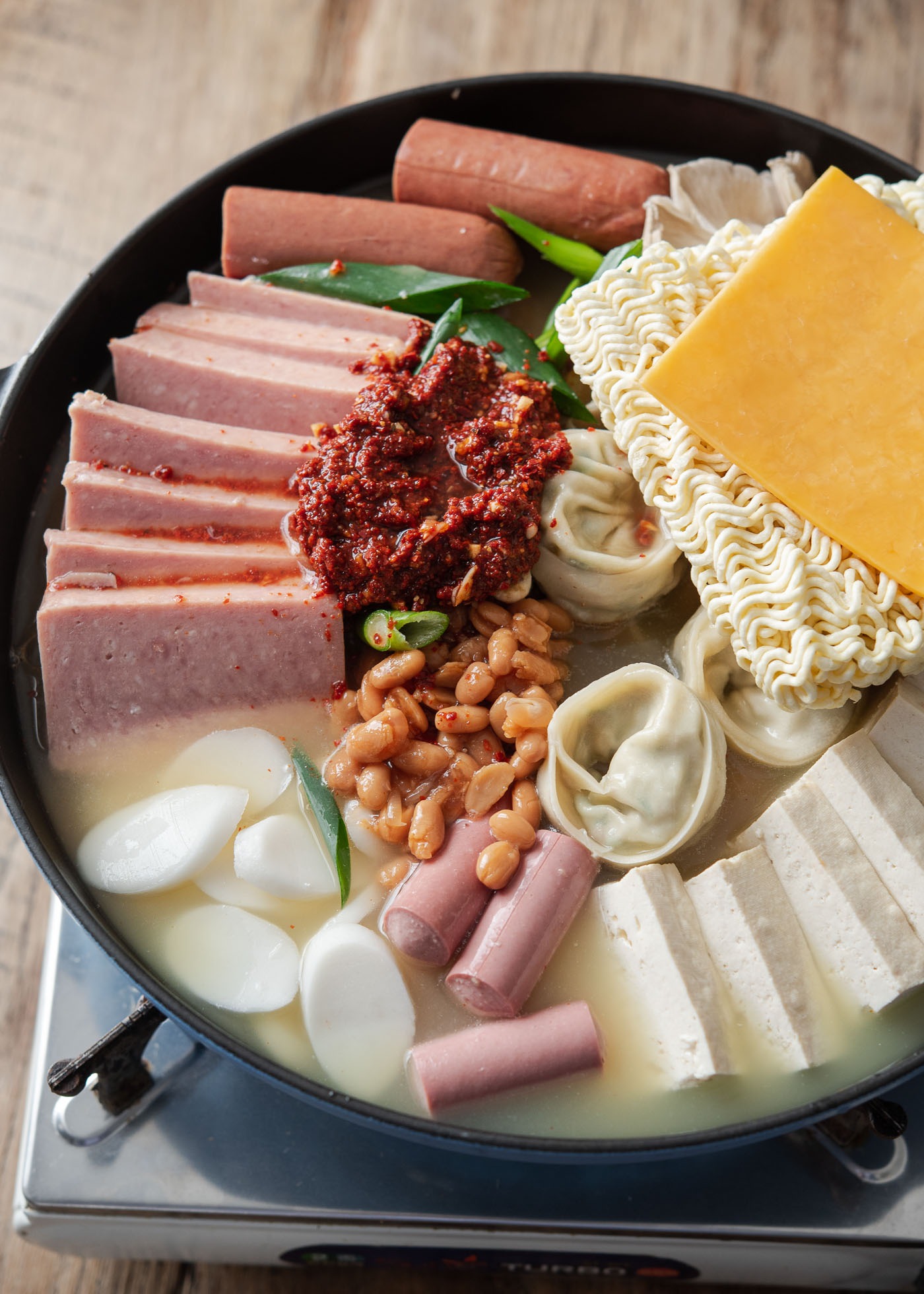
That makes budae jjigae the actual ancestor of every cheese tteokbokki on Instagram today. The mechanic was identical: dairy fat plus casein neutralizing capsaicin. The dish just predated the 한류 (Hallyu) export wave by sixty years. When Korean restaurants in New York and LA started putting cheese tteokbokki on their menus in the late 2010s, they were essentially repackaging a structural idea that had been working in Uijeongbu since the Eisenhower administration.
What 단짠 has to do with all of this
One Korean food concept that helps explain why cheese works in spicy dishes: 단짠 (dan-jjan, the sweet-salty rhythm). Korean palates are tuned to layered contrast rather than single-note intensity. Cheese on cheese tteokbokki is not just adding fat. It is introducing a third axis (creamy) onto the existing sweet-salty-spicy structure. The dish becomes more complex, not less. That is why cheese variants in Korea read as elevated versions of base dishes, not dumbed-down ones. The contrast is the appeal.
That insight matters for anyone watching K-food brands expand globally. The cheese-spice play is not a Western accommodation. It is a Korean palate strategy that happens to translate cleanly for Western audiences who already love both pizza and hot sauce. That is why Samyang's Cheese Buldak moved faster in the United States than the original red Buldak did. The cheese variant lowered the entry barrier without diluting the brand promise.
What to actually try first
If you are new to the cheese-spice fusion category, the order matters. Start with cheese ramyeon at home: cook any Buldak variant (start with the original, not the 2x), then add a slice of American cheese or a handful of mozzarella in the last 30 seconds. The dairy hits the heat exactly where it should. Next level up is cheese tteokbokki from a Korean food court or restaurant. Save cheese dakgalbi for a group dinner. Save budae jjigae for cold weather and a slow night. The dishes are sequenced by spice intensity and commitment level, and that is how Koreans tend to introduce them to first-timers as well.
Explore Korean Snacks with Daebak
Love Korean food? Get authentic Korean snacks and ramen delivered straight to your door with the SnackFever Box by Daebak.


