


Table of Contents
For more than five centuries, the kitchens of the Joseon Dynasty (1392-1910) produced what many Koreans now consider the highest expression of their culinary tradition. Royal court cuisine, or gungjung eumsik, was a meticulous practice of balance, color, and seasonal harmony, designed to nourish kings and queens with the finest ingredients gathered from every province of the country. Today, those same dishes are served in heritage restaurants across Seoul and protected as a national intangible cultural property.
What Is Korean Royal Cuisine?
Korean royal court cuisine refers to the style of cookery once served at the court of the Joseon Dynasty. According to The Korea Herald, the royal culinary art was designated as Korea's Important Intangible Cultural Property No. 38 in 1971, and its preservation has been entrusted to a series of inheritors ever since. Built on principles of cosmic harmony, the cuisine combines animal and seasonal vegetable ingredients so that tastes and colors balance in every meal. The tradition encompasses roughly 350 main dishes, side dishes, rice cakes, desserts, and beverages, all prepared by court ladies known as jubang sanggung and male professional chefs called suksu, both groups trained under strict rules.
The Surasang: Anatomy of a Royal Table
The royal meal itself is called surasang, with sura referring to meals served to the king. As described by VisitKorea, the king received a morning sura around 10 a.m. and a dinner sura between 6 and 7 p.m. A basic surasang featured 12 elements: two types of rice, two soups, two stews, one jjim (braised dish), one jeongol (hot pot), three kimchi, three jang sauces, and twelve side dishes that rotated with the seasons. The spread was laid out across three tables: the large round daewonban, a smaller gyeotban, and a square chaeksangban used by the attending court lady to taste-test for safety.
Sinseollo: The Royal Hot Pot
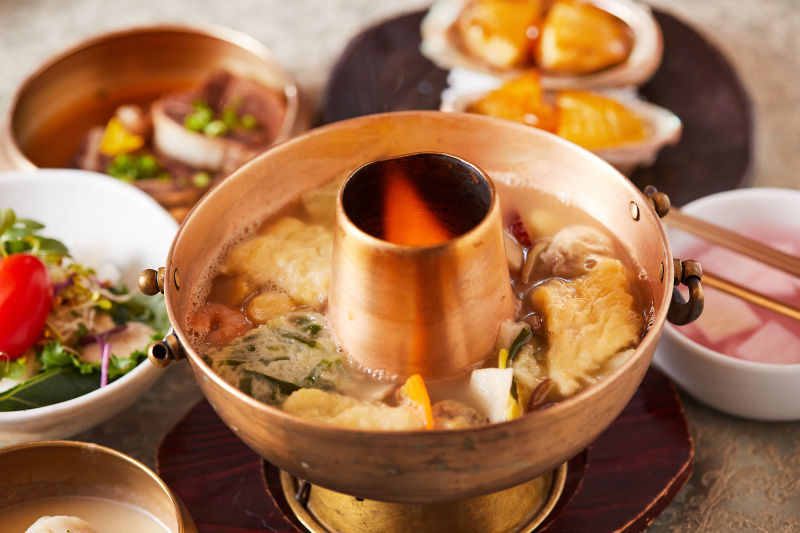
If one dish symbolizes royal luxury, it is sinseollo, the elaborate hot pot named for a Taoist immortal spirit. The dish is cooked at the table inside a brass vessel with a hollow chimney that holds glowing charcoal, keeping the broth hot throughout the meal. VisitKorea notes that the pot is filled with up to 25 ingredients, including thinly sliced beef, beef offal, fish cakes, small jeon pancakes, dumplings, seafood, mushrooms, and vegetables, all simmered together until each layer surrenders its flavor to the broth.
Gujeolpan: The Nine-Section Platter
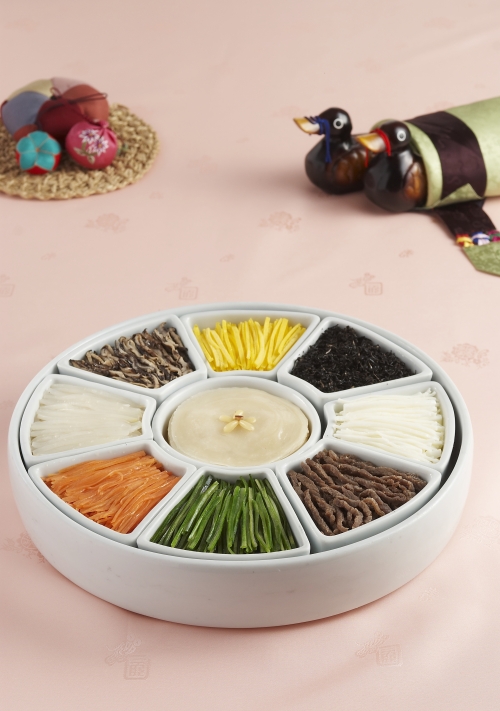
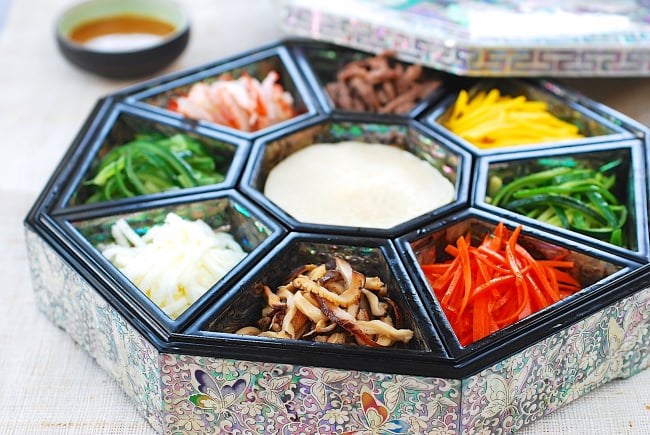
Few dishes are as visually striking as gujeolpan, whose name combines gu (nine), jeol (sectioned), and pan (platter). According to Korean Bapsang, eight small fillings, such as julienned beef, shiitake mushrooms, cucumber, carrot, zucchini, shrimp, and thin egg garnish, are arranged around the rim of a lacquered octagonal tray, with a stack of thin wheat-flour crepes called miljeonbyeong in the center. Diners wrap small bites in the crepes, dipping each one in mustard sauce. The platter intentionally reflects obangsaek, the five traditional Korean colors of white, black, red, yellow, and blue (substituted with green) that symbolize hope and longevity.
Royal Japchae, Neobiani, and Omija Hwachae
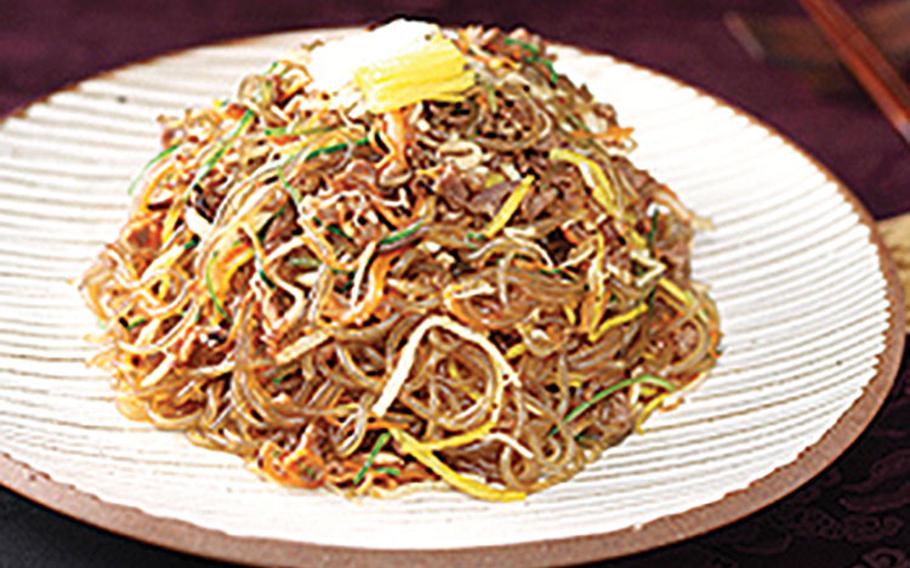
Several dishes that Koreans now consider everyday classics were born inside palace walls. Stripes Korea recounts that japchae was first created in the 17th century when King Gwanghaegun's favorite, Yi Chung, presented the king with stir-fried glass noodles and vegetables at a palace banquet. The royal version is restrained: no chili, plenty of jullienned vegetables, and a glossy sweet-soy seasoning. Neobiani, meaning wide meat slices, was the court name for marinated grilled beef that later evolved into modern bulgogi. For dessert, kings drank omija hwachae, a chilled punch made from five-flavor berries, alongside elegant rice-cake jewels in seasonal hues.
UNESCO Heritage and Master Han Bok-Ryeo
Korean royal cuisine has long been protected as a national intangible cultural property, and in December 2024 the broader practice of jang making, the fermenting of soybean pastes and sauces central to court cooking, was inscribed by UNESCO as the 23rd Korean entry on its Intangible Cultural Heritage list, as reported by The Korea Herald. The keeper of the royal tradition today is Han Bok-Ryeo, the third-generation master and director of the Institute of Korean Royal Cuisine. As recounted by HanCinema, she served as the official culinary consultant for the K-drama Jewel in the Palace (Daejanggeum), researching historical cookbooks and medical texts to recreate authentic 16th-century palace recipes, complete with the absence of carrots, onions, and chili peppers that had not yet arrived in Korea.
Where to Try Royal Cuisine in Seoul
Modern diners can still experience surasang in a handful of Seoul restaurants. Visit Seoul highlights Korea House in Jung-gu, a hanok cultural complex run by the Korea Heritage Agency whose Kohojae program serves royal court menus alongside traditional music and dance. Yongsusan, with branches across Seoul including one near Biwon, has built a 30-year reputation around modern Kaesong-style royal banquets. Hwangudan, set near Deoksugung Palace, draws diners with refined modern interpretations of Joseon court fare. For a more accessible introduction, Hanilkwan, one of Seoul's oldest fine-dining houses, serves classics like sinseollo and gujeolpan as part of its multi-course set menus.
Royal Cuisine in the Fine-Dining Era
A new generation of chefs is rewriting the rules of royal cuisine. Restaurants like Gaon and Jihwaja, both featured in past coverage by The Korea Herald, lean on the same principles of seasonality, balance, and color but plate them with the precision of contemporary tasting menus. Younger diners encounter royal recipes through palace pop-ups at Gyeongbokgung, where seasonal exhibitions invite visitors to sample royal dumplings, jang made by master artisans, and reproductions of dishes documented in Wonhaengeulmyojeongnihjereuwhe, the official royal banquet records. What was once locked behind palace gates is, slowly, becoming a living part of how modern Korea eats.
Explore Korean Snacks with Daebak
Love Korean food? Get authentic Korean snacks and ramen delivered straight to your door with the SnackFever Box by Daebak.


